Category: Techniques

Stem & Leaf Sacrocox: For Tailbone Pain You Can’t Sit Through

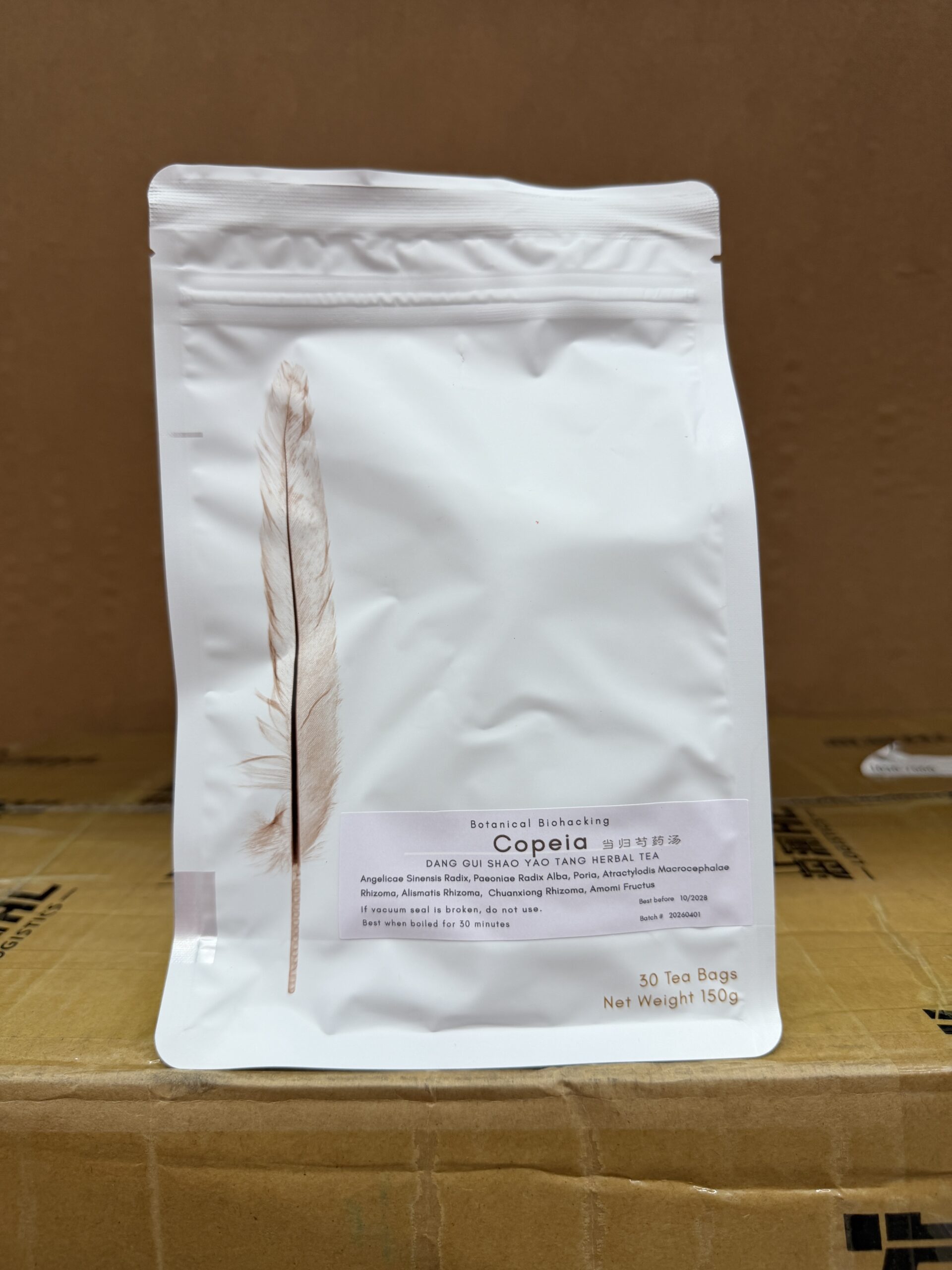
Sacrocox Herbal Tea product mockup
7 minutes read

Materia Medica · The Stem & Leaf Series

Stem & Leaf Sacrocox: For Tailbone Pain You Can’t Sit Through

Willard Sheppy Dipl. OM, LAc, BS

Willard Sheppy is a licensed acupuncturist (LAc) and Founder of Valley Health Clinic specializing in using Traditional Chinese Medicine to treat acute injuries and chronic conditions, and to improve sports performance and rehabilitation.

Sacrocox Herbal Tea product mockup

Table of Contents

Sacral and tailbone pain is the kind you cannot stretch out and cannot sit through.

The sacrum and tailbone anchor everything above them — and in classical herbal medicine, reaching them is a question of not just direction but depth.

Here’s what Stem & Leaf — Sacrocox actually is, how the guide-herb principle works, and what’s inside.

Quick Answer

Stem & Leaf — Sacrocox is the sacrum-and-tailbone formula in Botanical Biohacking’s region-by-region spinal line. Two guide herbs, aimed at one region: Chuan Niu Xi, the classical downward-guiding herb, carries the action all the way to the base of the spine, and Ba Ji Tian warms and strengthens it. It is a companion to the fundamentals — and new, severe, or radiating pain, or pain with numbness, weakness, or loss of bladder or bowel control, needs prompt medical evaluation.

What Stem & Leaf — Sacrocox Actually Is

The Stem & Leaf line takes a region-by-region approach to spinal support. Rather than one general back formula, each product is built around guide herbs — herbs that classical medicine understands as directing a formula’s action to a particular part of the body.

Stem & Leaf — Sacrocox is the sacrum and tailbone formula. Two guide herbs, aimed at one region.

That specificity is the whole idea, and it mirrors how a practitioner actually thinks about a back. The spine is not one thing.

The Guide Herb Principle

A guide herb carries a formula’s action toward a region. For the very base of the spine, the challenge is not just direction but depth — the action has to travel all the way down.

Chuan Niu Xi is the classical answer to that problem. It is used across the tradition specifically to lead other herbs downward, to the lowest reaches of the body.

How It's Sourced and Tested

The same protocol runs across the entire Botanical Biohacking line.

Inside the Formula

Chuan Niu Xi is the herb classical medicine uses when action needs to go down — it is the descending guide, and it is why this formula reaches the sacrum rather than stopping at the lumbar spine. Ba Ji Tian adds warming, strengthening support to the base.

The Sacrococcygeal Guide Herbs

Using the Line Together

A Practitioner’s Note

Spinal support formulas are a companion to the fundamentals, not a replacement. Movement, posture, sleep, and hands-on care do the heavy lifting. New, severe, or radiating back pain — or pain with numbness, weakness, or loss of bladder or bowel control — needs prompt medical evaluation.

The sacrum and tailbone anchor everything above them. Chuan Niu Xi is the herb the tradition uses to send a formula all the way down there. — Will Sheppy, L.Ac.

Stem & Leaf — Sacrocox

The sacrococcygeal formula from the Stem & Leaf line. Region-specific guide herbs, thirty teabags. Available at Valley Health Market.

Research & Resources

  1. Christopher M. Volesky, L.Ac., Rocky Mountain Herb Supply. Stem and Leaf guide herb formulations. Distributor product note, July 2026.
  2. Bensky D, Clavey S, Stöger E. Chinese Herbal Medicine: Materia Medica, 3rd ed. Eastland Press, 2004. (Reference for guide herbs and channel-directing action.)

A note on evidence: the Stem & Leaf line is a practitioner-formulated support product. We are not attaching clinical-trial claims to it. What we can tell you is which herbs are in it, why they were chosen, and who formulated them.

Educational content rooted in 20+ years of clinical practice in Traditional Chinese Medicine. The information provided is for educational purposes and is not intended to replace consultation with a qualified healthcare practitioner. Please consult your physician before starting any new herbal protocol, especially if pregnant, nursing, on anticoagulants, or managing a chronic condition.

Share on

Will Sheppy, Founder and Acupuncturist at Valley Health Clinic
Willard Sheppy
Willard Sheppy is a licensed acupuncturist (LAc) and Founder of Valley Health Clinic specializing in using Traditional Chinese Medicine to treat acute injuries and chronic conditions, and to improve sports performance and rehabilitation.

FAQ's

What is Stem & Leaf — Sacrocox?

Sacrocox is the sacrum-and-tailbone formula in Botanical Biohacking’s Stem & Leaf line, which takes a region-by-region approach to spinal support. It is built around two guide herbs aimed at the sacrococcygeal region and comes as thirty teabags.

A guide herb is an herb that classical medicine understands as directing a formula’s action to a particular part of the body. For the very base of the spine the challenge is not just direction but depth — Chuan Niu Xi is the herb the tradition uses specifically to lead other herbs downward, to the lowest reaches of the body.

Two guide herbs: Chuan Niu Xi (cyathula root), the classical downward-guiding herb that directs the formula’s action to the lowest part of the body, and Ba Ji Tian (morinda root), which traditionally warms and strengthens the base, supporting the low back and legs.

Yes — the Stem & Leaf teas can be used alone or combined to cover the better part of the neck and back: Sir Vickle for the cervical spine (C1–C7), Thoracic Park for the thoracic spine (T1–T12), LumBear for the lumbar spine (L1–L5), and Sacrocox for the sacrum and tailbone.

Spinal support formulas are a companion to the fundamentals — movement, posture, sleep, and hands-on care — not a replacement. New, severe, or radiating back pain, or pain with numbness, weakness, or loss of bladder or bowel control, needs prompt medical evaluation.

Recent Posts

Sir Vickle: For the Neck That Has Hurt for Years

Sir Vickle Herbal Tea product mockup
7 minutes read

Materia Medica · The Stem & Leaf Series

Sir Vickle: For the Neck That Has Hurt for Years

Willard Sheppy Dipl. OM, LAc, BS

Willard Sheppy is a licensed acupuncturist (LAc) and Founder of Valley Health Clinic specializing in using Traditional Chinese Medicine to treat acute injuries and chronic conditions, and to improve sports performance and rehabilitation.

Sir Vickle Herbal Tea product mockup

Table of Contents

If your neck has hurt for years rather than weeks, you have probably already tried the imaging and the ergonomic chair.

Stem & Leaf — Sir Vickle is the neck formula: two guide herbs, aimed at one region, C1 through C7.

Here’s the guide-herb principle behind it, what’s inside, and how the line fits together.

Quick Answer

Stem & Leaf — Sir Vickle is the cervical formula in Botanical Biohacking’s region-by-region spinal line: two guide herbs aimed at C1 through C7. Ge Gen has been used for cervical tension and stiffness for roughly two thousand years; Mu Gua adds the damp-clearing, circulation-moving side. It is a companion to the fundamentals — and new, severe, or radiating pain, or pain with numbness, weakness, or loss of bladder or bowel control, needs prompt medical evaluation.

What Stem & Leaf — Sir Vickle Actually Is

The Stem & Leaf line takes a region-by-region approach to spinal support. Rather than one general back formula, each product is built around guide herbs — herbs that classical medicine understands as directing a formula’s action to a particular part of the body.

Stem & Leaf — Sir Vickle is the neck formula. Two guide herbs, aimed at one region.

That specificity is the whole idea, and it mirrors how a practitioner actually thinks about a back. The spine is not one thing.

The Guide Herb Principle

A guide herb is not a filler. In classical formula construction, certain herbs are understood to carry a formula’s action toward a specific region — the way a courier carries a letter to an address rather than to a city.

For the neck, that herb is Ge Gen. It has been used for cervical tension and stiffness for roughly two thousand years, and it remains one of the first things a practitioner reaches for when someone’s shoulders are up around their ears.

How It's Sourced and Tested

The same protocol runs across the entire Botanical Biohacking line.

Inside the Formula

Ge Gen is the neck herb — it is the reason formulas like Ge Gen Tang exist at all. Pairing it with Mu Gua adds the damp-clearing, circulation-moving side. This is described as a combination commonly used by Dr. Jin Zhao for neck problems, which is exactly the provenance you want on a product like this.

The Cervical Guide Herbs

Using the Line Together

A Practitioner’s Note

Spinal support formulas are a companion to the fundamentals, not a replacement. Movement, posture, sleep, and hands-on care do the heavy lifting. New, severe, or radiating back pain — or pain with numbness, weakness, or loss of bladder or bowel control — needs prompt medical evaluation.

Ge Gen is the herb practitioners reach for when the shoulders have crept up toward the ears and stayed there. Pair it with Mu Gua and you have a formula aimed at one region, not at the whole back. — Will Sheppy, L.Ac.

Sir Vickle Herbal Tea product mockup with a green background by Valley Health Market

Stem & Leaf — Sir Vickle

The cervical formula from the Stem & Leaf line. Region-specific guide herbs, thirty teabags. Available at Valley Health Market.

Research & Resources

  1. Christopher M. Volesky, L.Ac., Rocky Mountain Herb Supply. Stem and Leaf guide herb formulations. Distributor product note, July 2026.
  2. Bensky D, Clavey S, Stöger E. Chinese Herbal Medicine: Materia Medica, 3rd ed. Eastland Press, 2004. (Reference for guide herbs and channel-directing action.)
  3. A note on evidence: the Stem & Leaf line is a practitioner-formulated support product. We are not attaching clinical-trial claims to it. What we can tell you is which herbs are in it, why they were chosen, and who formulated them.

Educational content rooted in 20+ years of clinical practice in Traditional Chinese Medicine. The information provided is for educational purposes and is not intended to replace consultation with a qualified healthcare practitioner. Please consult your physician before starting any new herbal protocol, especially if pregnant, nursing, on anticoagulants, or managing a chronic condition.

Share on

Will Sheppy, Founder and Acupuncturist at Valley Health Clinic
Willard Sheppy
Willard Sheppy is a licensed acupuncturist (LAc) and Founder of Valley Health Clinic specializing in using Traditional Chinese Medicine to treat acute injuries and chronic conditions, and to improve sports performance and rehabilitation.

FAQ's

What is Stem & Leaf — Sir Vickle?

Sir Vickle is the neck formula in Botanical Biohacking’s Stem & Leaf line, which takes a region-by-region approach to spinal support. It is built around two guide herbs — Ge Gen and Mu Gua — aimed at the cervical spine, C1 through C7. It comes as thirty teabags.

In classical formula construction, certain herbs are understood to carry a formula’s action toward a specific region of the body — the way a courier carries a letter to an address rather than to a city. For the neck, that herb is Ge Gen, which has been used for cervical tension and stiffness for roughly two thousand years.

Yes — the Stem & Leaf teas can be used alone or combined to cover the better part of the neck and back: Sir Vickle for the cervical region (C1–C7), Thoracic Park for the thoracic (T1–T12), LumBear for the lumbar (L1–L5), and Sacrocox for the sacrococcygeal region.

New, severe, or radiating back pain — or pain with numbness, weakness, or loss of bladder or bowel control — needs prompt medical evaluation. Spinal support formulas are a companion to the fundamentals, not a replacement: movement, posture, sleep, and hands-on care do the heavy lifting.

Recent Posts

Wind Tea: For When You’re Neither Sick nor Well

Wind Tea with Glass and Tea Bag
8 minutes read

Materia Medica · The Formula Series

Wind Tea: For When You’re Neither Sick nor Well

Willard Sheppy Dipl. OM, LAc, BS

Willard Sheppy is a licensed acupuncturist (LAc) and Founder of Valley Health Clinic specializing in using Traditional Chinese Medicine to treat acute injuries and chronic conditions, and to improve sports performance and rehabilitation.

Wind Tea with Glass and Tea Bag

Table of Contents

Some people don’t get knocked down by a bug. They get stuck halfway.

Wind Tea is the formula for the stage where you are neither sick nor well — not sick enough to stay in bed, not well enough to get your life back.

Here’s what the formula actually is, who formulates it, and its limits.

Quick Answer

Wind Tea is built on Xiao Chai Hu Tang — the Minor Bupleurum Decoction, the definitive formula for the in-between Shaoyang stage — with San Ren Tang-type damp-clearing herbs layered in by Botanical Biohacking, and real Ren Shen (Asian ginseng) rather than the cheaper Dang Shen substitute. It suits the more deficient presentation; its sibling Peak suits excess and heat. It is not a long-term formula: roughly two weeks, never longer than three months — and a high fever, a severe or worsening infection, or trouble breathing needs real medical care, not tea.

What Wind Tea Actually Is

Wind Tea is built on Xiao Chai Hu Tang — the Minor Bupleurum Decoction, one of the most important formulas in the entire Chinese herbal tradition. It is the definitive formula for the Shaoyang stage: the in-between layer where a pathogen is neither fully outside the body nor fully settled inside it.

The classical picture is unmistakable once you’ve seen it. Alternating chills and warmth. A bitter taste. No appetite. That stuck, half-well-half-sick feeling that lingers for weeks after everyone else has bounced back. The formula’s job is not to attack. It is to harmonize — to help the body finish what it started.

Botanical Biohacking then layers in San Ren Tang-type herbs — apricot kernel, coix, talc, white cardamom — for the damp-heat sluggishness that so often rides along with modern constitutions.

Who Formulates This

Dr. Jin Zhao is the main formulator for the Botanical Biohacking line. He practices in Chengdu, sees up to 200 patients a day, and specializes in one thing: dampness. The approach isn’t new — it’s rooted in Qing dynasty herbal theory — but he refined it in clinic across tens of thousands of patients, working through the upper, middle, and lower jiao.

His conclusion, in the company’s own words: clear the dampness and complicated cases become simple again.

Wind was fine-tuned by pharmacology professor Dr. Zhong Shi Hong, who added one thing that matters enormously — super high-grade white ginseng, specifically to strengthen the formula and keep it from draining qi over a course of use.

The Sourcing Detail That Matters

Most Xiao Chai Hu Tang on the market uses Dang Shen (codonopsis) to reduce cost. Wind uses real Ren Shen — Asian ginseng. It’s there for a structural reason, not as a marketing bullet.

Wind or Peak? The Formulators’ Own Rule

Wind has a sibling formula, Peak. Both are San Ren Tang remixes from the same team. They are not interchangeable, and Botanical Biohacking states the difference plainly:

Inside the Formula

Wind marries two classical strategies — harmonize the exterior and interior, and clear damp.

The Harmonizing Core

The Damp-Clearing Layer

An Important Limit

San Ren Tang is not a long-term formula. The makers’ own guidance is roughly two weeks, and not longer than three months, because over time it can drain qi. A high fever, a severe or worsening infection, or trouble breathing needs real medical care — not tea.

Wind is for the stage most people don’t have a name for. Not sick enough to stay in bed. Not well enough to get their life back. That’s a real pattern, and the tradition built a formula for it. — Will Sheppy, L.Ac.

Wind Tea with Glass and Tea Bag

Wind Tea

Xiao Chai Hu Tang with San Ren Tang. Real Ren Shen, not Dang Shen. Formulated by Dr. Jin Zhao, fine-tuned by Dr. Zhong Shi Hong. Available at Valley Health Market.

Research & Resources

  1. Li M, Dan W, Zhang H, Yun Y, He Q. Xiao Chai Hu Tang for Peptic Ulcers: A Systematic Review and Meta-Analysis of Randomized Controlled Trials. Evid Based Complement Alternat Med. 2021;2021:6693677. Link →
  2. Memorial Sloan Kettering Cancer Center. Sho-saiko-to (Xiao Chai Hu Tang) — About Herbs professional monograph. Includes important interaction cautions. Link →
  3. Wu Ju Tong. Wen Bing Tiao Bian (Systematic Differentiation of Warm Diseases), 1813. (Classical source for the San Ren Tang strategy.)
  4. Bensky D, Barolet R. Chinese Herbal Medicine: Formulas & Strategies. Eastland Press. (Standard reference for Xiao Chai Hu Tang.)

Educational content rooted in 20+ years of clinical practice in Traditional Chinese Medicine. The information provided is for educational purposes and is not intended to replace consultation with a qualified healthcare practitioner. Please consult your physician before starting any new herbal protocol, especially if pregnant, nursing, on anticoagulants, or managing a chronic condition.

Share on

Will Sheppy, Founder and Acupuncturist at Valley Health Clinic
Willard Sheppy
Willard Sheppy is a licensed acupuncturist (LAc) and Founder of Valley Health Clinic specializing in using Traditional Chinese Medicine to treat acute injuries and chronic conditions, and to improve sports performance and rehabilitation.

FAQ's

What is Wind Tea?

Wind Tea is built on Xiao Chai Hu Tang — the Minor Bupleurum Decoction, one of the most important formulas in the Chinese herbal tradition — with San Ren Tang-type damp-clearing herbs layered in by Botanical Biohacking. It uses real Ren Shen (Asian ginseng) rather than the cheaper Dang Shen substitute.

It was written for the Shaoyang stage — the in-between layer where a pathogen is neither fully outside the body nor fully settled inside it. The classical picture: alternating chills and warmth, a bitter taste, no appetite, and that stuck, half-well-half-sick feeling that lingers for weeks after everyone else has bounced back.

Both are San Ren Tang remixes from the same team, but they are not interchangeable. More relative deficiency points to Wind — the ginseng holds the person up while the dampness clears. More excess and heat points to Peak, which has no ginseng and strengthens heat-clearing with Yin Chen Hao and Tibetan Plateau Chai Hu instead.

San Ren Tang is not a long-term formula. The makers’ own guidance is roughly two weeks, and not longer than three months, because over time it can drain qi. A high fever, a severe or worsening infection, or trouble breathing needs real medical care — not tea.

Recent Posts

Thoracic Park: For Mid-Back Pain That Gets Minimised

Thoracic Park Herbal Tea product mockup
7 minutes read

Materia Medica · The Stem & Leaf Series

Thoracic Park: For Mid-Back Pain That Gets Minimised

Willard Sheppy Dipl. OM, LAc, BS

Willard Sheppy is a licensed acupuncturist (LAc) and Founder of Valley Health Clinic specializing in using Traditional Chinese Medicine to treat acute injuries and chronic conditions, and to improve sports performance and rehabilitation.

Thoracic Park Herbal Tea product mockup

Table of Contents

Educational content from Valley Health Market. Not medical advice. Statements have not been evaluated by the FDA. This product is not intended to diagnose, treat, cure, or prevent any disease.

Mid-back pain is the one that gets minimised. It rarely shows cleanly on imaging and it does not radiate anywhere dramatic.

Stem & Leaf — Thoracic Park is the mid-back formula: two guide herbs, aimed at T1 through T12.

Here’s what the formula actually is, how the guide-herb principle works, and what’s inside.

Quick Answer

Stem & Leaf — Thoracic Park is the mid-back formula in Botanical Biohacking’s region-by-region spinal line: two guide herbs aimed at T1 through T12. Du Huo works from below and Qiang Huo from above — together they cover the length of the Du channel, which is why the pair appears in spinal formulas going back centuries. It is a companion to the fundamentals — and new, severe, or radiating pain, or pain with numbness, weakness, or loss of bladder or bowel control, needs prompt medical evaluation.

What Thoracic Park Actually Is

The Stem & Leaf line takes a region-by-region approach to spinal support. Rather than one general back formula, each product is built around guide herbs — herbs that classical medicine understands as directing a formula’s action to a particular part of the body.

Stem & Leaf — Thoracic Park is the mid-back formula. Two guide herbs, aimed at one region.

That specificity is the whole idea, and it mirrors how a practitioner actually thinks about a back. The spine is not one thing.

The Guide Herb Principle

A guide herb carries a formula’s action toward a specific region. For the mid-back, the classical answer is a pair rather than a single herb: Du Huo working from below, Qiang Huo from above.

Between them they cover the length of the Du channel, which is why this combination shows up again and again in spinal formulas going back centuries.

How It's Sourced and Tested

The same sourcing and testing protocol runs across the entire Botanical Biohacking line.

Inside the Formula

Du Huo and Qiang Huo together are described as one of the few specific herb combinations that hone to the Du channel — the channel running up the midline of the back — which is what makes the pair particularly suited to the thoracic spine. The same combination is also used for shoulder problems and for musculoskeletal pain that worsens with cold and damp weather changes.

The Thoracic Guide Herbs

Using the Line Together

A Practitioner’s Note

Spinal support formulas are a companion to the fundamentals, not a replacement. Movement, posture, sleep, and hands-on care do the heavy lifting.

New, severe, or radiating back pain — or pain with numbness, weakness, or loss of bladder or bowel control — needs prompt medical evaluation.

The thoracic spine carries the rib cage and absorbs every hour you spend at a desk. It deserves a formula aimed at it specifically, not a general back remedy. — Will Sheppy, L.Ac.

Thoracic Park Herbal Tea product mockup ith a green background by Valley Health Market

Stem & Leaf — Thoracic Park

The thoracic formula from the Stem & Leaf line. Region-specific guide herbs, thirty teabags. Available at Valley Health Market.

Research & Resources

  1. Christopher M. Volesky, L.Ac., Rocky Mountain Herb Supply. Stem and Leaf guide herb formulations. Distributor product note, July 2026.
  2. Bensky D, Clavey S, Stöger E. Chinese Herbal Medicine: Materia Medica, 3rd ed. Eastland Press, 2004. (Reference for guide herbs and channel-directing action.)
  3. A note on evidence: the Stem & Leaf line is a practitioner-formulated support product. We are not attaching clinical-trial claims to it. What we can tell you is which herbs are in it, why they were chosen, and who formulated them.

Educational content rooted in 20+ years of clinical practice in Traditional Chinese Medicine. The information provided is for educational purposes and is not intended to replace consultation with a qualified healthcare practitioner. Please consult your physician before starting any new herbal protocol, especially if pregnant, nursing, on anticoagulants, or managing a chronic condition.

Share on

Will Sheppy, Founder and Acupuncturist at Valley Health Clinic
Willard Sheppy
Willard Sheppy is a licensed acupuncturist (LAc) and Founder of Valley Health Clinic specializing in using Traditional Chinese Medicine to treat acute injuries and chronic conditions, and to improve sports performance and rehabilitation.

FAQ's

What is Stem & Leaf — Thoracic Park?

Thoracic Park is the mid-back formula in the Stem & Leaf line by Botanical Biohacking — a region-by-region approach to spinal support. It is built around two guide herbs, Du Huo and Qiang Huo, aimed at the thoracic spine (T1 through T12), and comes as thirty teabags.

A guide herb carries a formula’s action toward a specific region of the body. For the mid-back, the classical answer is a pair: Du Huo working from below and Qiang Huo from above. Between them they cover the length of the Du channel — the channel running up the midline of the back — which is why this combination appears in spinal formulas going back centuries.

Yes — the Stem & Leaf teas can be used alone or combined to cover the better part of the neck and back: Sir Vickle for the cervical spine (C1–C7), Thoracic Park for the thoracic spine (T1–T12), LumBear for the lumbar spine (L1–L5), and Sacrocox for the sacrococcygeal region.

New, severe, or radiating back pain — or pain with numbness, weakness, or loss of bladder or bowel control — needs prompt medical evaluation. Spinal support formulas are a companion to the fundamentals, not a replacement: movement, posture, sleep, and hands-on care do the heavy lifting.

Recent Posts

Stem & Leaf LumBear: Three Guide Herbs for the Low Back

LumBear herbal tea product mockup
8 minutes read

Materia Medica · The Stem & Leaf Series

Stem & Leaf LumBear: Three Guide Herbs for the Low Back

Willard Sheppy Dipl. OM, LAc, BS

Willard Sheppy is a licensed acupuncturist (LAc) and Founder of Valley Health Clinic specializing in using Traditional Chinese Medicine to treat acute injuries and chronic conditions, and to improve sports performance and rehabilitation.

LumBear herbal tea product mockup

Table of Contents

Educational content from Valley Health Market. Not medical advice. Statements have not been evaluated by the FDA. This product is not intended to diagnose, treat, cure, or prevent any disease.

Chronic low back pain reorganizes a life quietly. It changes how you sleep, what you lift, and which chairs you avoid.

Stem & Leaf — LumBear is the lower-back formula in a line built region by region: three guide herbs, aimed at L1 through L5.

Here’s the guide-herb idea behind it, what’s inside, and when back pain needs a doctor instead.

Quick Answer

Stem & Leaf — LumBear is the lumbar formula in Botanical Biohacking’s region-by-region spinal line: three guide herbs aimed at L1 through L5. Du Zhong and Xu Duan have been paired for the low back for over a thousand years, and Rou Gui adds warming depth. It is a companion to the fundamentals — movement, posture, sleep, hands-on care — and new, severe, or radiating back pain, or pain with numbness, weakness, or loss of bladder or bowel control, needs prompt medical evaluation.

What Stem & Leaf LumBear Actually Is

The Stem & Leaf line takes a region-by-region approach to spinal support. Rather than one general back formula, each product is built around guide herbs — herbs that classical medicine understands as directing a formula’s action to a particular part of the body.

Stem & Leaf — LumBear is the lower back formula. Three guide herbs, aimed at one region.

That specificity is the whole idea, and it mirrors how a practitioner actually thinks about a back. The spine is not one thing.

The Guide Herb Principle

A guide herb carries a formula’s action toward a region. The lumbar spine has the most-developed guide herb tradition of any part of the back, because it is the region that fails most often.

Du Zhong and Xu Duan appear together in low-back formulas going back well over a thousand years. The pairing is close to canonical.

How It's Sourced and Tested

The same protocol runs across the entire Botanical Biohacking line: contamination testing covering heavy metals, pesticide residue, and microbial load.

Inside the Formula

This is the classical low-back trio. Du Zhong and Xu Duan are the two herbs most associated with lumbar support in the entire materia medica, and Rou Gui adds the warming depth that a cold, tired low back tends to want. Three guide herbs rather than two, because the lumbar region carries the most load.

The Lumbar Guide Herbs

Using the Line Together

A Practitioner’s Note

Spinal support formulas are a companion to the fundamentals, not a replacement. Movement, posture, sleep, and hands-on care do the heavy lifting. New, severe, or radiating back pain — or pain with numbness, weakness, or loss of bladder or bowel control — needs prompt medical evaluation.

The lumbar spine is the most heavily loaded region of the back, and it has the deepest guide-herb tradition behind it. Du Zhong and Xu Duan have been paired for the low back for over a thousand years. — Will Sheppy, L.Ac.

LumBear herbal tea product mockup with a green background by Valley Health Market

Stem & Leaf — LumBear

The lumbar formula from the Stem & Leaf line. Region-specific guide herbs, thirty teabags. Available at Valley Health Market.

Research & Resources

  1. Christopher M. Volesky, L.Ac., Rocky Mountain Herb Supply. Stem and Leaf guide herb formulations. Distributor product note, July 2026.
  2. Bensky D, Clavey S, Stöger E. Chinese Herbal Medicine: Materia Medica, 3rd ed. Eastland Press, 2004. (Reference for guide herbs and channel-directing action.)

A note on evidence: the Stem & Leaf line is a practitioner-formulated support product. We are not attaching clinical-trial claims to it. What we can tell you is which herbs are in it, why they were chosen, and who formulated them.

Educational content rooted in 20+ years of clinical practice in Traditional Chinese Medicine. The information provided is for educational purposes and is not intended to replace consultation with a qualified healthcare practitioner. Please consult your physician before starting any new herbal protocol, especially if pregnant, nursing, on anticoagulants, or managing a chronic condition.

Share on

Will Sheppy, Founder and Acupuncturist at Valley Health Clinic
Willard Sheppy
Willard Sheppy is a licensed acupuncturist (LAc) and Founder of Valley Health Clinic specializing in using Traditional Chinese Medicine to treat acute injuries and chronic conditions, and to improve sports performance and rehabilitation.

FAQ's

What is Stem & Leaf LumBear?

LumBear is the lower-back formula in the Stem & Leaf line, made by Botanical Biohacking. Instead of one general back formula, the line is built region by region around guide herbs — herbs classical medicine understands as directing a formula’s action to a particular part of the body. LumBear is aimed at the lumbar spine, L1 through L5, and comes as thirty teabags.

Three guide herbs: Du Zhong (eucommia bark), the classical lumbar herb that traditionally strengthens the low back and knees; Xu Duan (dipsacus root), whose name means “restore what is broken” and which traditionally knits and strengthens sinew and bone; and Rou Gui (cinnamon bark), which warms the deep interior and the lower back.

Yes — the Stem & Leaf teas can be used alone or combined to cover the better part of the neck and back: Sir Vickle for the cervical spine (C1–C7), Thoracic Park for the thoracic spine (T1–T12), LumBear for the lumbar spine (L1–L5), and Sacrocox for the sacrococcygeal region.

LumBear is a practitioner-formulated support product, and we are not attaching clinical-trial claims to it. What we can tell you is which herbs are in it, why they were chosen, and who formulated them. Du Zhong and Xu Duan have appeared together in classical low-back formulas for well over a thousand years.

New, severe, or radiating back pain — or pain with numbness, weakness, or loss of bladder or bowel control — needs prompt medical evaluation. Spinal support formulas are a companion to the fundamentals, not a replacement: movement, posture, sleep, and hands-on care do the heavy lifting.

Recent Posts

Peak Tea: For the Illness That Never Fully Left

Peak Tea product mockup
8 minutes read

Materia Medica · The Formula Series

Peak Tea: For the Illness That Never Fully Left

Willard Sheppy Dipl. OM, LAc, BS

Willard Sheppy is a licensed acupuncturist (LAc) and Founder of Valley Health Clinic specializing in using Traditional Chinese Medicine to treat acute injuries and chronic conditions, and to improve sports performance and rehabilitation.

Peak Tea product mockup

Table of Contents

This one is for the illness that never fully left.

Here’s where the formula comes from, how Botanical Biohacking rebuilt it, how to tell Peak from its sibling Wind, and what’s inside.

Quick Answer

Peak Tea is San Ren Tang — Wu Ju Tong’s 1813 formula for the lingering damp pattern — remixed with Xiao Chai Hu Tang by Dr. Jin Zhao, with Yin Chen Hao and Tibetan Plateau Chai Hu strengthening the heat-clearing side. It suits the more excess, heated presentation; its sibling Wind (with white ginseng) suits relative deficiency. It is a targeted tool, not a daily tea: roughly two weeks, never longer than three months.

Where This Formula Comes From

Wu Ju Tong described this pattern in 1813, and the description still reads like a modern chart note.

San Ren Tang — the Three-Kernel Decoction — has a specific, datable origin, which is more than most herbal products can claim. It appears in the Wen Bing Tiao Bian (溫病條辨, Systematic Differentiation of Warm Diseases), published in 1813 by Wu Ju Tong.

His original description of the pattern reads almost like a modern symptom checklist: headache, aversion to cold, a heavy aching body, a pale tongue without thirst, a yellowish complexion, chest tightness, no appetite, and a fever that rises in the afternoon.

What makes his account genuinely sophisticated is the section on errors. He warns that sweating the patient makes them foggy and unwell, purging causes qi to leak away, and moistening drives the dampness deeper. It is a catch-22 — and San Ren Tang was his answer to it.

How Botanical Biohacking Rebuilt It

Peak is not a straight copy. It is a deliberate remix, formulated by Dr. Jin Zhao, DTCM and fine-tuned by pharmacology professor Dr. Zhong Shi Hong.

Dr. Jin brings in Xiao Chai Hu Tang, the Shang Han Lun classic, to help the Shaoyang layer govern the body. Then, for Peak specifically, they strengthen the heat-clearing side with Yin Chen Hao and Chai Hu sourced from the Tibetan Plateau.

Notably, they leave ginseng out of Peak. Its sibling formula, Wind, gets high-grade white ginseng added. Peak does not — because it is aimed at a different person entirely.

Peak or Wind? The Formulators’ Own Rule

This settles a question people ask constantly. Both are San Ren Tang remixes from the same team. They are not interchangeable:

Inside the Formula

Peak opens all three burners — the classical three seeds anchor each level.

Open the Top

Transform the Middle

Drain the Bottom

An Important Limit, From the Makers

San Ren Tang is not a long-term formula. Botanical Biohacking’s own guidance is roughly two weeks, and not longer than three months, because over time it can drain too much qi. Classical texts also caution against it when heat clearly outstrips damp. This is a targeted tool, not a daily forever-tea.

As with any new herbal protocol: talk with your practitioner or physician first, especially if you are pregnant, nursing, on anticoagulants, or managing a chronic condition.

Wu Ju Tong warned that you cannot sweat this pattern out, cannot purge it out, and cannot moisten it away. That is why he needed a new formula. Two hundred years later it is still the answer. — Will Sheppy, L.Ac.

Peak Tea product mockup with a green background by Valley Health Market

Peak Tea

San Ren Tang remixed with Xiao Chai Hu Tang, by Dr. Jin Zhao. Yin Chen Hao and Tibetan Plateau Chai Hu. Thirty teabags. Available at Valley Health Market.

Research & Resources

  1. Wu Ju Tong. Wen Bing Tiao Bian (溫病條辨, Systematic Differentiation of Warm Diseases), 1813. (Original source text for San Ren Tang.)
  2. Yin Y, et al. Hepatic transcriptome delineates the therapeutic effects of Sanren Tang on high-fat diet-induced non-alcoholic fatty liver disease. J Tradit Chin Med. 2023;43(6):1092-1102. Link →
  3. Andrew Miles, DOM & Qiu Xuelan, PhD, Botanical Biohacking. How to use Wind and Peak. Practitioner guidance, June 2025.

Educational content rooted in 20+ years of clinical practice in Traditional Chinese Medicine. The information provided is for educational purposes and is not intended to replace consultation with a qualified healthcare practitioner. Please consult your physician before starting any new herbal protocol, especially if pregnant, nursing, on anticoagulants, or managing a chronic condition.

Share on

Will Sheppy, Founder and Acupuncturist at Valley Health Clinic
Willard Sheppy
Willard Sheppy is a licensed acupuncturist (LAc) and Founder of Valley Health Clinic specializing in using Traditional Chinese Medicine to treat acute injuries and chronic conditions, and to improve sports performance and rehabilitation.

FAQ's

What is Peak Tea?

Peak Tea is San Ren Tang — the Three-Kernel Decoction, first published by Wu Ju Tong in 1813 — remixed with Xiao Chai Hu Tang by Dr. Jin Zhao, DTCM, and fine-tuned by pharmacology professor Dr. Zhong Shi Hong. The heat-clearing side is strengthened with Yin Chen Hao and Chai Hu sourced from the Tibetan Plateau. It comes as thirty teabags.

It was built for the lingering damp pattern Wu Ju Tong described: a heavy aching body, chest tightness, poor appetite, a pale tongue without thirst, and a fever that rises in the afternoon — the illness that never fully left. Within that pattern, Peak is the version for the more excess, heated presentation.

Both are San Ren Tang remixes from the same team, but they are not interchangeable. More excess and heat points to Peak, which has extra heat-clearing (Yin Chen Hao, Tibetan Plateau Chai Hu) and no ginseng. More relative deficiency points to Wind, which adds high-grade white ginseng so the formula doesn’t drain qi.

San Ren Tang is not a long-term formula. Botanical Biohacking’s own guidance is roughly two weeks, and not longer than three months, because over time it can drain too much qi. Classical texts also caution against it when heat clearly outstrips damp. It is a targeted tool, not a daily forever-tea.

Please consult your physician before starting any new herbal protocol, especially if you are pregnant, nursing, on anticoagulants, or managing a chronic condition. This is educational content, not medical advice.

Recent Posts

Purple Star: Xiao Yao San for Emotional Balance

Purple Star Xiao Yao Wan tea from Botanical Biohacking and Valley Health Clinic
7 minutes read

Materia Medica · The Formula Series

Purple Star: Xiao Yao San for Emotional Balance

Willard Sheppy Dipl. OM, LAc, BS

Willard Sheppy is a licensed acupuncturist (LAc) and Founder of Valley Health Clinic specializing in using Traditional Chinese Medicine to treat acute injuries and chronic conditions, and to improve sports performance and rehabilitation.

Purple Star Xiao Yao Wan tea from Botanical Biohacking and Valley Health Clinic

Table of Contents

This one is for the patient who is tired, but not the kind of tired sleep fixes.

She is not in crisis. She has just been carrying too much, for too long.

Here’s what the formula actually is, the pattern it was written for, and what’s inside.

Quick Answer

Purple Star is Xiao Yao San — the Free and Easy Wanderer — an eight-herb classical formula with nearly a thousand years of continuous clinical use, for liver qi stagnation with spleen weakness: the tight, irritable, sighing, bloated, running-on-fumes pattern. This batch reduces the Bo He dose and uses wildcrafted Tibetan Chai Hu. It never replaces care for a diagnosed mood condition — if you take psychiatric or sedative medication, or you’re pregnant, talk with your practitioner first.

What Purple Star Actually Is

Purple Star is Xiao Yao San — the Free and Easy Wanderer. Eight herbs, nearly a thousand years of continuous clinical use, and still one of the most-prescribed formulas in the entire tradition.

It is the classical prescription for Liver qi stagnation with Spleen weakness: the tight, irritable, sighing, bloated, running-on-fumes pattern that shows up when tension outpaces resilience. Its whole purpose is to let stuck energy wander freely again while quietly rebuilding the digestion underneath.

In the classical model, the Liver governs the smooth movement of qi. When that movement is blocked — by chronic stress, held emotion, overwork, or sleep that’s been thin for too long — the qi pools where the channels run. At the ribs and breast. At the temples and around the eye. In the shoulder. At the throat, where it becomes the lump the texts call mei he qi, plum-pit qi.

Ten Complaints, One Pattern

Botanical Biohacking’s herbal pharmacologist, Dr. Lan, PhD, describes this patient better than we could. She comes in for the headache. Or the PMS. Or the chest tightness her cardiologist couldn’t explain. Or the irritability that has begun to alarm her family. Or the digestive heaviness after small meals. Or the breast tenderness, the eye strain, the shoulder tension she has carried for two years.

She rarely connects these to each other. She often apologizes for mentioning them.

They are one pattern. Western diagnostic categories run sideways to this — they name each symptom but miss the connection, and the patient ends up with a folder of partial labels and no integrated approach.

What This Batch Does Differently

This is where Botanical Biohacking’s attention shows. The formula has been adjusted, deliberately, by people who use it clinically:

Inside the Formula

Purple Star keeps the classical scaffolding: soothe the liver, nourish the blood, support the spleen.

Soothe and Spread

Nourish the Blood

Support the Middle

A Note on Scope

“Stress formula” is a convenient shorthand, but Xiao Yao San is specifically for the liver-qi-stuck, spleen-tired pattern. It pairs well with the basics — sleep, movement, boundaries — and it never replaces care for a diagnosed mood condition. If you take psychiatric or sedative medication, or you’re pregnant, talk with your practitioner first.

Prescribe the formula and prescribe the conversation. Patients holding this much rarely have anyone in their week who simply asks how they are doing. — Will Sheppy, L.Ac.

close up of xiao yao wan with tea bag

Purple Star — Xiao Yao Wan Tea

Xiao Yao San with a reduced Bo He adjustment and wildcrafted Tibetan Chai Hu. Nearly a thousand years of clinical use, in a daily cup. Available at Valley Health Market.

Related Reading

Research & Resources

  1. Zhang Y, Han M, Liu Z, Wang J, He Q, Liu J. Chinese herbal formula Xiao Yao San for treatment of depression: a systematic review of randomized controlled trials. Evid Based Complement Alternat Med. 2012;2012:931636. (26 RCTs, 1,837 participants.) Link →
  2. Lin J, Ji Y, Si J, Wang G, Li X, Shen L. Evaluation of the Safety and Efficacy of Xiao Yao San as a Treatment for Anxiety: A Systematic Review and Meta-Analysis. Evid Based Complement Alternat Med. 2022;2022:1319592. Link →
  3. Bensky D, Barolet R. Chinese Herbal Medicine: Formulas & Strategies. Eastland Press. (Standard reference for Xiao Yao San.)

Educational content rooted in 20+ years of clinical practice in Traditional Chinese Medicine. The information provided is for educational purposes and is not intended to replace consultation with a qualified healthcare practitioner. Please consult your physician before starting any new herbal protocol, especially if pregnant, nursing, on anticoagulants, or managing a chronic condition.

Share on

Will Sheppy, Founder and Acupuncturist at Valley Health Clinic
Willard Sheppy
Willard Sheppy is a licensed acupuncturist (LAc) and Founder of Valley Health Clinic specializing in using Traditional Chinese Medicine to treat acute injuries and chronic conditions, and to improve sports performance and rehabilitation.

FAQ's

What is Purple Star?

Purple Star is Xiao Yao San — the Free and Easy Wanderer — an eight-herb classical formula with nearly a thousand years of continuous clinical use, made by Botanical Biohacking as a daily tea. It is still one of the most-prescribed formulas in the entire tradition.

It is the classical prescription for liver qi stagnation with spleen weakness: the tight, irritable, sighing, bloated, running-on-fumes pattern that shows up when tension outpaces resilience — the patient who is tired, but not the kind of tired sleep fixes. The headache, the PMS, the chest tightness, the digestive heaviness, and the shoulder tension are often one pattern, not ten separate problems.

“Stress formula” is a convenient shorthand, but Xiao Yao San is specifically for the liver-qi-stuck, spleen-tired pattern. It pairs well with the basics — sleep, movement, boundaries — and it never replaces care for a diagnosed mood condition.

If you take psychiatric or sedative medication, or you’re pregnant, talk with your practitioner before starting this formula.

Recent Posts

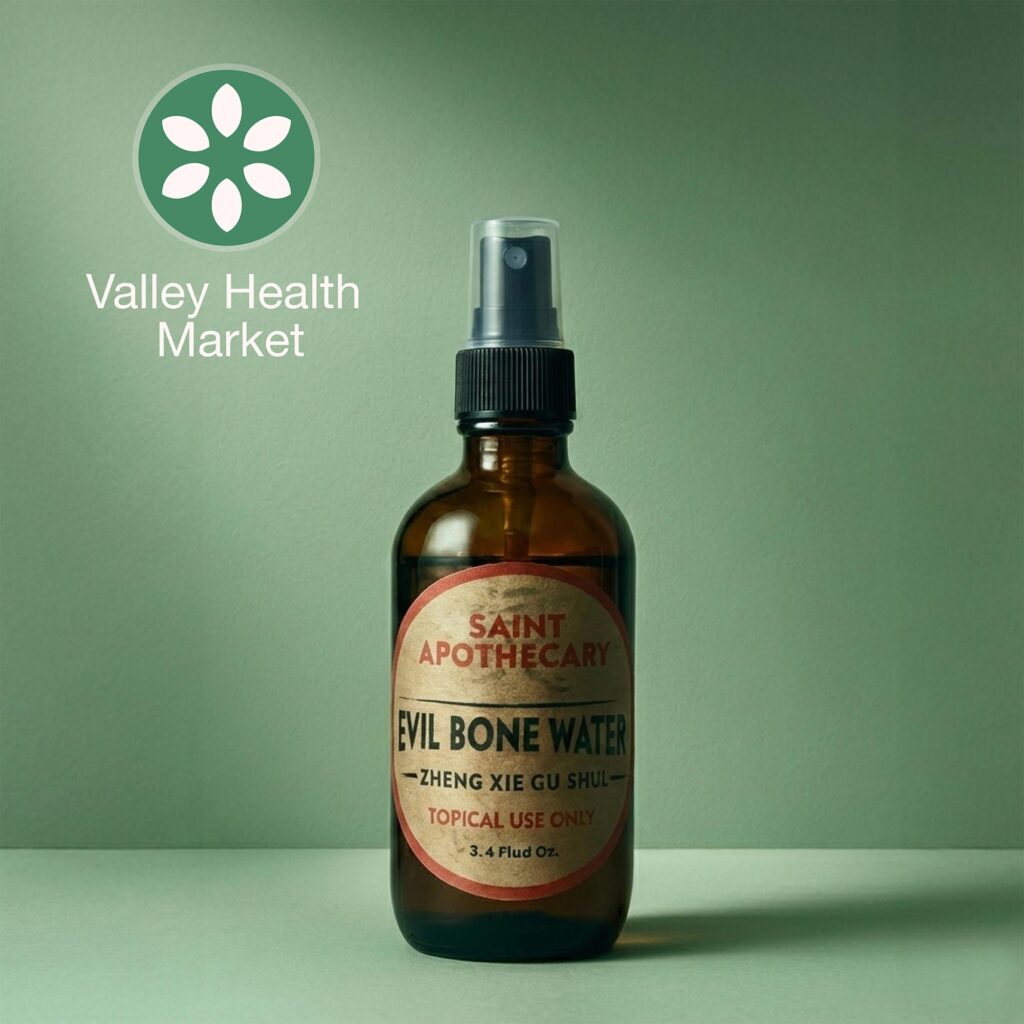
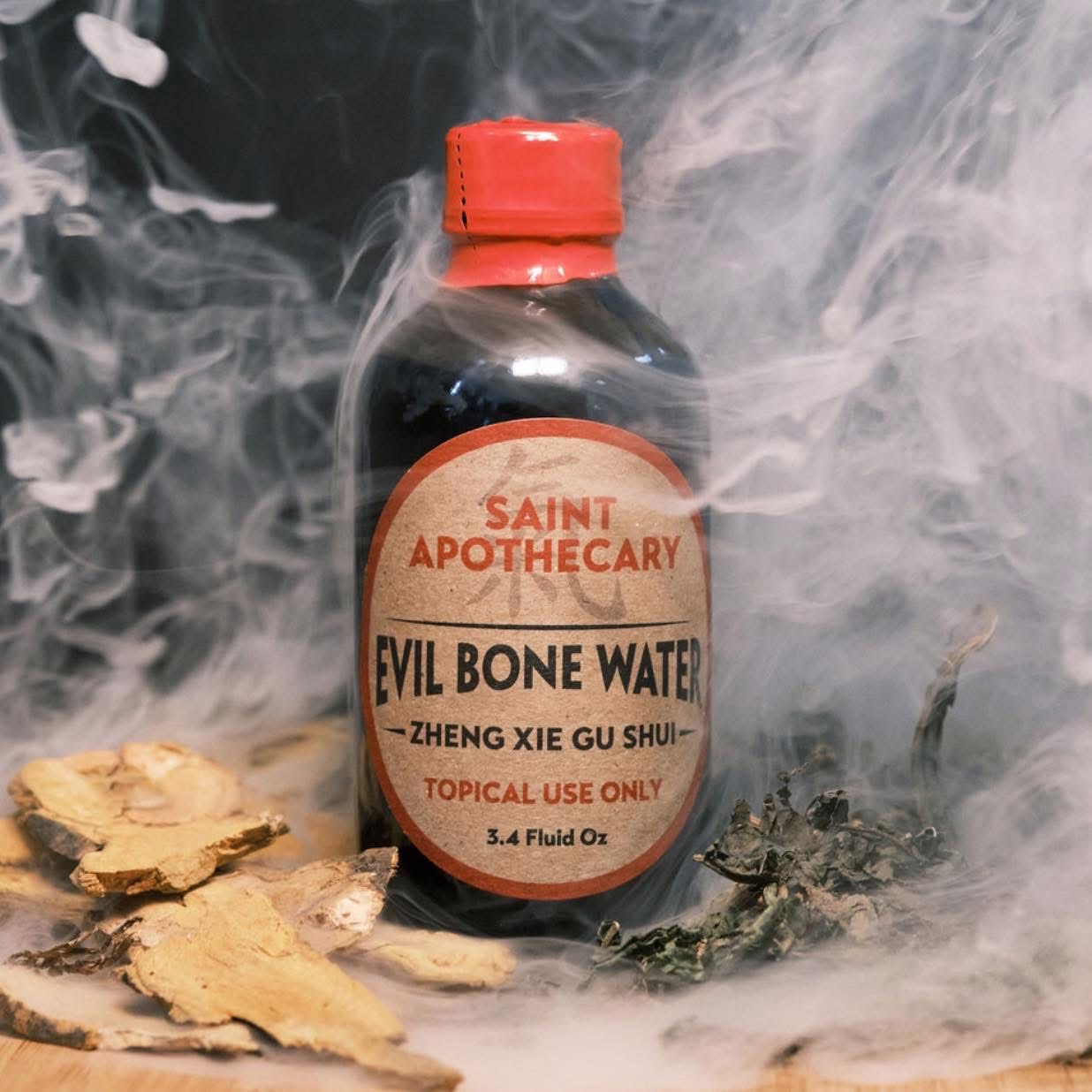
Combining Evil Bone Water and Tibetan Foot Soaks

Combining Evil Bone Water and Tibetan Herbal Foot Soaks: A Powerful Solution for Diabetics and Foot Fungus Sufferers

For centuries, foot soaks have been a popular and effective way to promote relaxation, stress relief, and overall foot health. People with diabetes and foot fungus can benefit from foot soaks as they help improve circulation, reduce inflammation, and soften the skin. This blog post will explore the advantages of combining Evil Bone Water, a traditional Chinese medicine remedy, with Tibetan Herbal Foot Soaks. We will also provide guidance on how to prepare an effective foot soak at home

Foot Soaks: A natural solution for diabetics and foot fungus patients

Improved circulation: Foot soaks, especially when using warm water, help dilate blood vessels and enhance blood flow to the feet and lower legs. This is particularly beneficial for those with diabetes, as the condition often results in poor circulation in the feet.

Reduced inflammation: Foot soaks can reduce inflammation, providing relief for swollen or achy feet. This is particularly helpful for individuals with diabetes and foot fungus.

Skin health: Foot soaks can soften and moisturize the skin, which is beneficial for people with dry or cracked skin on their feet. Adding ingredients such as Epsom salt, essential oils, or herbs to the foot soak can enhance these benefits and provide additional therapeutic effects.

The power of Evil Bone Water

Evil Bone Water is a traditional Chinese medicine remedy that has shown promising results in helping some people manage foot fungus. When combined with foot soaks, Evil Bone Water may provide additional antifungal benefits, making it an even more powerful ally in the fight against foot fungus.

The benefits of Tibetan Herbal Foot Soaks

Tibetan Herbal Foot Soaks have been used for centuries to promote relaxation, relieve stress, and improve foot health. They are particularly beneficial for people with conditions such as diabetes, which can cause poor circulation in the feet. Additionally, the herbs used in these foot soaks can provide additional therapeutic effects that can help with skin health and inflammation reduction.

Learn more about what Evil Bone Water does

Purchasing Evil Bone Water and Tibetan Herbal Foot Soaks

Valley Health Clinic offers both Evil Bone Water and Tibetan Herbal Foot Soaks for purchase through their online store. To buy these products, visit https://shop.valleyhealthclinic.comThese high-quality products can help enhance your foot soak experience and provide additional health benefits.

How to prepare an Evil Bone Water and Tibetan Herbal Foot Soak at home

Preparing a foot soak at home is easy, and the addition of Evil Bone Water and Tibetan Herbal Foot Soaks can further enhance its effectiveness. Follow these steps to create a soothing foot soak:

  • Fill a basin or foot spa with warm water (make sure it’s not too hot, especially for diabetics who may have reduced sensation in their feet).
  • Add two tea bags of Tibetan Herbal Foot Soak to the water. (If you don’t have that, then try)
  • Add 1/2 cup of Epsom salt to the water and stir until dissolved.
  • Add a few drops of tea tree oil or lavender oil for their antifungal and soothing properties.
  • Add a tablespoon of apple cider vinegar for extra antifungal action.
  • Add 5-10 sprays of Evil Bone Water to the water until it is nice and yellow
  • Mix well
  • Soak your feet for 15-20 minutes.
  • Gently dry your feet with a clean towel, making sure to dry between the toes to prevent fungal growth thoroughly.
  • After the foot soak, apply Evil Bone Water to your feet and the affected areas, allowing it to dry naturally. This can further aid in managing foot fungus.

Conclusion

Foot soaks provide numerous benefits, from relaxation and stress relief to improved circulation and skin health. For individuals with diabetes or foot fungus, incorporating foot soaks combined with Evil Bone Water and Tibetan Herbal Foot Soaks into their wellness routine can be a simple yet effective way to promote overall foot health. Creating a DIY foot soak at home allows for customization and control over the ingredients used, including the addition of Evil Bone Water for enhanced antifungal action and Tibetan Herbal Foot Soaks for their therapeutic properties.

Purchasing high-quality products like Evil Bone Water and Tibetan Herbal Foot Soaks from Valley Health Clinic can help maximize the benefits of your foot soak. Always consult with a healthcare provider before using foot soaks or Evil Bone Water as a treatment for any medical condition. With consistent use and the right combination of ingredients, foot soaks can be a powerful tool in managing diabetes-related foot issues and combating foot fungus.

https://valleyhealthclinic.com/tibetan-herbal-foot-soaks/

Shu Point Booklet

Shu Point Booklet

Back Shu Point Theory – Fast Facts

  • The Shu points are often used diagnostically.
  • Testing the Shu points allows you to get a sense of a patient’s response as it happens.
  • There’s no specific needling technique—it’s about testing to figure out which technique works best in each situation.
  • Shu Point diagnosis can impact your physical treatment/needling, as well as herbal treatments, but should mostly inform physical treatment.

Back Shu Points in Practice

  • Affected Shu points can change throughout the day.
    • Often, Shu point diagnosis can resemble “chronotherapy” because the time of day matters.
    • The same point may be affected on multiple patients at the same time of day.
  • Back Shu points tend to be (but aren’t always) paired.
    • Occasionally a paired meridian, or you could have bleed-through to other points.
    • Not always on the same channel.
  • Back Shu points are easier to access while the patient is lying supine (face-up).
    • You can get a more neutral reaction from the areas that aren’t involved.
    • You get feedback from a patient’s face that lets you know how the treatment is going.
  • The ANGLE of needling matters.
    • A point will sometimes respond a little, then respond more as you change the direction of your needle angle.
    • A point will sometimes not respond unless it is angled correctly.
  • Testing the Shu points can help balance and relax the patient.
    • Testing Shu points early in the appointment can promote better treatment later on.
  • Think of having a conversation with each Shu point you’re testing. “Ask” the point, “How is this?” by your palpation and listen to its response.

What if you find multiple tight spots when you scan the Shu points?

  • Combine what you feel with what the patient feels, but rely mostly one what YOU feel. Many people don’t live inside their bodies enough to realize they have tight points in multiple places.
  • Often multiple points are related. Look for pairings and anglings that address both.
  • The number of points you treat during a session depends on the individual—whether they’re new or experienced, etc.
  • Take note of which areas were tight, and which points were affective, for reference at the next appointment.

Watching Your Patient
In the supine position, you can check in with your patient more easily. Things to check include verbal cues, as well as their color and expression.

Color

  • Yellow – A slight yellow tinge is a good sign.
  • Pink or red – Time to check in.
  • Green or pale – Time to slow down!

Musculature/expression

  • Facial expression or musculature seems to melt – patient is relaxed and will likely respond better to further treatments.
  • Tightening up – Time to check in or slow down.
Shi Acupuncture Points

Treatment Flow Using the Shu Points

Check in with your patient if they’re new: what’s their experience with acupuncture? How do they feel about needles?

General Flow of Treatment:

  • Assess the patient’s concerns—is it more musculoskeletal or more internal medical? Ask related questions based on their condition to gain information on which points to test.
  • Test the tongue and pulse if it is the patient’s first appointment, or if they are a repeat patient with internal medical concerns.
  • Start with patient in supine position to test the muscles, abdomen, and Shu points. You can then have them flip over when and if necessary.
  • Palpate and test (light to medium pressure).
    • Try changing from puling or pushing to lifting. Sometimes, the direction you push or pull a point makes all the difference.
    • Strum the Shu point with each touch point.
    • Start with the side closest to you. If nothing shows up, move to the other side of the table and test the same points on the other side.
  • If no points apparently work, you may needle locally.
  • You may needle the front mu points before addressing other areas to calm down patients who are Type-A, or in sympathetic mode. (Always make sure your patient is present and relaxed before treating tenser, knottier areas.)
  • Place your needles and let the patient sit.
  • Depending on the patient’s tolerance level and experience with acupuncture, come back and layer more or take out the needles and assess.

Your treatment flow may vary depending on the patient, their experience, and their needs:

Musculoskeletal concern (shoulder problem, etc.)

  • Check tongue and pulse if it is a new patient. (If it’s a repeat patient with the same concern, you don’t need to do this each time.)
  • Scan Shu points (helps to balance and relax the patient)
  • Manual muscle testing takes primacy.

Internal medical concern (menstrual issues, etc.)

  • TCM takes primacy – check tongue and pulse each appointment.
  • Scan the Shu points (Spleen 10 is a good point for gynecology, Liver 13 is the move point for the Spleen.)
  • Tension points will most likely be bilateral.

Treatment Examples

1. You’re at the insertion point at the levator scapula, and you notice it’s very tight. You put one finger on that point. You then put the fingers of your other hand on the motor point of the flexor carpi ulnaris, which is often very affective for this point. The levator scapula melts away immediately. From this, you know that the flexor carpi ulnaris will be the affective point for the levator scapula.

2. You check your patient’s pulse and notice that their liver pulse is a little empty, tight, and wiry. To decide whether to focus on tonifying or on moving, you test Liver 14 and notice it releases Bladder 18 completely, therefore making moving your focus area.

3. You’re scanning the patient, and notice that the medial scapula area is extremely tight. You palpate point 42, and the patient reacts with a strong, “Ow!” However, they never told you they had a should problem when they came in. You palpate some lung and pericardium points and feel the tension melt. (Remember to base treatment off of what YOU feel, as well as what the patient tells you!)

About the Author

Author Willard Sheppy Exporing the Coast

Willard Sheppy is a writer and healthcare practitioner who seamlessly melds scientific knowledge with practical applications in engaging and authoritative articles. He holds a Bachelor of Science in Environmental Science from Oregon State University and a Master’s in Acupuncture and Oriental Medicine from the distinguished Oregon College of Oriental Medicine.

In his work, Willard skillfully combines his extensive educational background in scientific research with his practical experience as a healthcare practitioner. Willard balances his life with martial arts and cherished family adventures. As a father of three, he often leads his family on camping and hiking trips along the breathtaking Oregon coast.

Connect with Willard on LinkedIn at linkedin.com/in/valleyhealthclinic or learn more about his services at valleyhealthclinic.com. Embark on this journey towards holistic health with Willard!

Stephens Shu Point System

Stephens Shu Point System

This is a simple technique that I have developed over the past many years that I have found to be extremely useful to help with the treatment of my patients. For me acupuncture is most exciting when you are able to evaluate techniques and points in real time and make immediate changes. And it’s often more interesting and engaging for patients as well. And this is a way to do that. It is simple to learn and can be used in combination with all of the other techniques you employ with your patients. Some of the features of it:

  • It often forms the basis of the balancing work I do with patients.
  • It helps refine diagnosis.
  • It helps with point choice and fine tuning point location
  • It helps with evaluating if the stimulation used was sufficient
  • It provides another method for distal release of areas of tightness on people’s backs

I first was exposed to touching points to see how they affect other areas when I started to study with Kiiko Matsumoto. I was impressed with how one could find points that would make changes immediately and that you could “audition” points before you used them to assess their likely effectiveness.

Palpating the Shu points have become an important part of my diagnosis and treatment strategy. It has formed a reflex system similar to the Japanese acupuncture reflexes but it jives with the theory of TCM really well and helps to refine diagnoses and treatments. And the points identified with this method forms the foundation of points that I use to start a treatment to relax and balance a patient. And treating the points indicated by the Shu points will often lead to a better treatment outcome and easier time with the other points you want to include for other reasons, such as a local musculoskeletal problem.

In English we talk about these points as Associated points. Usually this is meant in the sense that these points are useful for the treatment of the organ that is associated with each of them. This is true, but another more important aspect of these points as I have discovered is their importance in diagnosis.

Usually the Mu points are spoken of as being the special points for palpatory diagnosis. And whereas they are useful, I find that they don’t react often unless things are really bad. Back Shu points, on the other hand are often very sensitive barometers of what is happening. Also they are dynamic and can change in their palpation quality very quickly and can, due to their dynamism, help you arrive at a diagnosis, choose points, and determine if your treatment is likely to be effective.

This dynamism is reflected by some of the sense of “Shu” in Chinese. When I asked Dr. Hong Jin about this, she told me that the word “Shu” of the back Shu has a meaning of transformation. These are the points where transformation happens. They are like switching stations in my view, nodes in the flow where the information on the associated meridian, energy system, or organ can become available for very easy evaluation. This dynamism of “transformation” is reflected in them having multi-functions in palpatory diagnosis and in the fact that they are extremely sensitive to quick change in how they feel.

And whereas I palpate the pulse, the hara, and the channels, I have found that palpating the Shu points has become the most powerful technique I have for diagnosis, point choice, likely efficacy of treatment, and teaching tool for bringing patients on board with the process. And the further beauty of it is that is nearly instantaneous, it’s feedback in real time.

Palpating a person’s Shu points has become an integral part of my intake. Sometimes I will go over all of them but often I will go to specific ones or general areas to check out something that I may have suspected from their history, symptoms, pulse, or other sign. I usually palpate the Shu points with the person lying on them. I know this sounds counterintuitive but since they are nearly the only points from the main channels on the back side of the body, it leaves the rest of the body available for confirmation and also for watching the reactions of the person on his or her face.

It takes a little practice doing it but it is easy enough to learn with a little practice. Can you do it with them prone? Sure, provided that you give them enough pillows to support them in the right places so that their back is really relaxed. That’s another advantage to happen the person lying supine. With them on their back and the knees lightly supported, the back should be doing absolutely nothing, so that any areas of tightness stand out and are, from my perspective, significant.

How to get under them? First form your hands like a blade, fingers together and stiff. At the upper part of the back and often at the lumbar area one can often get your fingers to the Shu points directly by essentially shoving them under the person, perhaps with compressing down the foam on the table with your knuckles as you are going in. You’ll want to keep your four fingers together for this.

The middle and lower thoracic Shu points can be more challenging. A good technique for getting into position there is to take your blade hands and place them palm down on the table with the thumbs tucked under their body as much as you easily can. Then lift their body up slightly with the posterior thumb while at the same time supinate and ulnar deviate at the wrist, thus flipping your hand over. And if you do it right, your fingers will land just about right on top of the inner Bladder line. And you can also use your non-palpating hand to gently lift up the edge of the person’s body, allowing the other hand to slide underneath.

Once your hand is underneath, feel for the bundle of paravertebral muscles. Or go to the spine and then pull back toward you about two inches. What you are looking for are areas of tightness that stand out from the areas above and below the area of tightness. You can curl your fingers of your palpating hand to strum across the muscles. Or another method that works better for some people is to put the four fingers together with the fingers in a fixed position with the fingers slightly curved, and, rather than actively curling the fingers, rock the fingers across the muscle bundle using the knuckles of the hand at the metacarpal-phalangeal joints as a fulcrum.

So how do you know where you are?

Most people know how to find where C7/T1 while looking at it, but that supine, it is usually at about the level of GB 21 if the arms are down by the sides with the shoulders down as well.

The level of the spine of the scapula is about T3 and is also about the level of Lung 1 on the front.

The tip of the scapula (and often about the top of the bra strap on women) is at the level of T7/T8 and Bl 17.

Bl 18 is about the same level as Liv 14.

The narrow part of the waist at about the bottom of the ribs, about the level of CV 10, is at the level of Bl 23.

And the height of the iliac crest on the mid-axillary line is at L4-L5 on women, just slightly lower than that on men.

Between these landmarks you can easily interpolate. Or if you prefer you can actually count the vertebra. It sounds hard but it is a pretty doable with a little practice.

So when you palpate what should you do exactly and what are you looking for? Generally you are looking for areas of notable tightness, the really tight areas will be very dramatic, both to your palpation and to the patient. Many times the patient will have no ideas that the area in question is so tight or sensitive. When the tension is moderate or more subtle, one can bend at the metacarpal-phalangeal joints with the still straight fingers, and in doing so, lever your fingers up into their muscles over the Shu points using the knuckles as a fulcrum. Then you can take the fingertips and strum the muscles from medial to lateral and back for further clarification.

Think of having a conversation with each Shu point you’re testing. “Ask” the point, “How is this?” by your palpation and listen to its response as you look for points to release it.

Most of the time, you will have no doubt as to what is significant. You will clearly feel it and so will the patient. And that’s part of the beauty of it. Both you and the patient will be clear that something funky is going on there. And if you do your work properly, palpating, watching and listening to them as you proceed with this, both of you will know after your treatment that something changed in a positive direction.

Have them practice trying to locate.

Now once you’ve found the tight areas, what do you do with them? While keeping contact with the tight Shu point with one hand, palpate points with the other hand to evaluate the effectiveness of that point for balancing and releasing that localized area of tightness. For most of the areas that we will find, the points that will best release them will be on the associated meridian of the Shu point.

Palpating the points to determine their effectiveness for Shu point release does not need to be done very firmly. And as you get better with this, you just need to just touch the individual point to properly assess its utility. The release sensation on the Shu point with usually happen within a second or two of contacting the appropriate point on the meridian with the other hand. There are a few people I have seen that it takes their body a few seconds more to react, but this is not common. The release you may feel in the Shu points may often not be complete, but when you find the right one you will feel a significant softening of the Shu point. This is what you are looking for with this method.

You ever learn alternate locations of points on the body? With this technique you can audition the various locations to see which is most effective for the person at the particular time you are seeing them. You can also evaluate what angle to insert the needle to have the best effect by giving a vector to your palpation of the release point.

The most effective point will change, depending on the day. It seems like this method will often key into the point that is “open” on a particular day. And somedays it will seem like many people will have the same point that is effective on a particular morning for a particular Shu point. There are systems that attempt to find the point that is open on a particular day and time of day. Some days it will seem like you are keying into this.

And by the points that are most effective, you can hone a diagnosis. Let’s take an example. You have a patient with a Liver pulse that is somewhat wiry but is also empty when you press into it. The sides of the tongue are pale, but the tongue sides are pulled in giving the tongue a spatulate appearance. They have other signs that point to both Liver Blood deficiency as well as Liver qi constraint. Well, each of those diagnoses can lead to the other condition. How can we determine which is the most important feature to focus on during today’s treatment?

You go to Bl 18 and find a notable tightness there and then with your other hand, you start palpating points on the Liver channel. If points like Liver 8 and Spleen 6 are the points that release Bl 18, it indicates that treating the deficiency is the most important thing to address today. If a point like Liver 4, 5, or 14 releases Bl 18, moving the qi is the most important focus for today’s treatment. And this can help you skew the focus of your herbal formula that you might give them at that treatment.

Shu Points and the distal points most often useful for the Shu point release

The points for release of the Shu points I focus on are most often are the points distal to the elbow and the knee. As you know from your studies, these are very powerful points, in general. They often have special functions as elemental points according to the five phases. They also have functions according to the delineation of jing well, Shu stream, he sea points, etc. These points prove to be the effective point for Shu point release about 70% of the time. About 15% of the time, the effective point will be a point in the upper arm or thigh. And another 15%of the time, the effective point will be on the trunk of the body.

Let’s go over the various Shu points and the most likely points to look at for release. I will try and list the points with the ones most often effective listed first.

Bladder 11 is a point that I don’t find much utility so far.

Bladder 12 is the wind Shu point. This will get tight when someone has an acute wind invasion. But it will also be tight with someone who got sick some time ago and never fully recovered. This person may have “retained pathogen”. This will provide a diagnostic clue as to this phenomenon and also guide you to points that may best release this.
So which points do you suspect would be most effective? L7, LI4, TH5, GB 31, GB20. Test them out to see which one is best.

Bladder 13 is the Shu point for the Lung. The most effective points are often L7, L5, L9, and sometimes L1, 6. Occasionally L3 (often with someone with retained grief) or L 8

Bladder 14 is the Shu point for the Pericardium. The most effective points tend to be P6, P3. Sometimes look to P5, P7, and occasionally P1

Bladder 15 is the Shu point for the Heart. The most effective points tend to be H3, 7. Also look to H9, especially with someone with Heart Blood deficiency (it’s the tonification point). And occasionally it can be H 6 or 5.

A special note about the upper jiao and about the Shu points in general. Sometimes when you feel a tightness at a Shu point and you can’t find a good point to release it, the tightness you feel may, in fact, be bleeding over from an adjacent Shu point that you didn’t yet notice or perhaps you may have mismeasured your location. And one of the things that I have noticed is in the upper jiao area, in particular, is that there seems to be more bleed over among the Lung, Pericardium, and Heart. That is, you may be pretty sure you are on a Lung Shu point and the effective release point is a Pericardium point. Perhaps this is because they are all affected by the zong qi generally.

Another note is that the outer Shu points are also diagnostic and can be found to be released by the points associated with the inner Shu points. Thus Bl 43 can be released by a point such as P6. And this upper jiao bleed over can be seen in the outer Shu points as well.

Bladder 17 is the Diaphragm Shu. Tightness here will often be accompanied by infracostal tightness in the belly. The best point for releasing this tightness and the diaphragm is the Ear Diaphragm point. Also useful is Stomach 20.

Bladder 18 is the Liver Shu point. The most common points for release are Liver 3, Spleen 6 (because it is also on the Liver channel), and Liver 8. Also effective are Liver 4, 5, 13, and 14, and occasionally Liver 2.

Bladder 19 is the Gall Bladder Shu point. The most common points for release are GB 41, 34, 36, and Dang Nan Xue. Also effective are GB 40, 31-32. Sometimes look to GB 42, 39, 38, or 37 for release of Bl 19.

Bladder 20 is the Spleen Shu point. The most common points for release are Sp 6, 4, 10. Also effective are Sp 9, 8, 3. Rarely Sp 2 or even Liver 13 (it’s the front Mu of the Spleen).

Bladder 21 is the Stomach Shu point. The most common points for release are Stomach 36, Lan Wei, 40, and 37. Also useful to try are St 42, 43, 34.

For the Liver and GB, sometimes I’ll find that it’s an area encompassing both Shu points, so one needs to check both meridians for the release point. Similarly one will find this on the Spleen and Stomach. You’ll focus on one them as being the primary area of interest when actually the release is to be found on the paired meridian.

Bladder 22 is the Triple Heater Shu point. The most common points for release are TH 9, TH5, and TH3. Also effective are TH 6 and TH4 and occasionally TH 8.

Bladder 23 is the Kidney Shu point. The most common points for release are K7, K2, K 10. Also useful is K3 and K 6 and sometimes Sp 6.

Bladder 25 is the Large Intestine Shu point. I have not found many times that the LI points are effective. In fact, once we get to the lumbosacral region a special relationship seems to hold forth.

This region, along with the upper shoulder and neck region, is so often an area of discomfort in our patients, from a purely musculoskeletal perspective. And each of these two areas seems to have some special associations that are helpful to keep in mind.

The meridian that seems to rule the sacrum, in my experience, is the Gall Bladder channel. The internal pathway of the Gall Bladder channel courses through the sacrum and the most effective points to relieve the tightness and discomfort there are the points mentioned in the Gall Bladder section above.

I’ll give you some ideas for release of the other special area of the upper shoulders and neck. One of my teachers used to say that L7 is the master point for treating the neck area. This point can be remarkably effective, but many times you may need to use and alternate location or a specific angling. We will talk about this in the next section. Many times the area that is tight and needs release is the SI 15 up into the bai lao area (on the Bladder channel). The most effective points tend to be SI 3, 7, 6. Or the area of discomfort is around TH15, in which case the point to look at could be TH 3, 5, 9, etc. Another point to look at for this area is the motor point for the flexor carpi ulnaris. This point is special for the tightness that so often happens at the attachment of the levator scapula. It is located at one third of the way from H3 to H 7.
And L7 angled toward L8 can be a special point for the anterior scalenes.

Variant Point Locations

One of the uses of this Shu point system is the ability is gives you to find the most effective location of a point for a particular person on a particular day. If can even help you find the best angle to insert the point.

I’d like to share with you some of the locations for some of the above mentioned points that I have found useful in my years of practice. Some of them may seem strange compared to what is currently taught. But in fact, some of them were taught in these alternate locations when I studied many years ago. Others are ones that I have discovered in my poking around the past many years.

Let’s follow our outline from above regarding the Shu points and go from the top down and I’d like to point out some locations I like.

Lung

So for the Lung points, Lung 7 I most often find in line with L 9, just proximal to the radial stylus. I’ll often needle it from radius to the ulna.
But sometimes, especially for the neck region, I’ll find it most effective when it’s needled from this location toward L 8.

So how do you audition various angles? Place your finger on the point and traction it in a particular direction that you may want to needle it. You will sometimes find that a particular direction will give a much better effect.

I will sometimes locate L5 more lateral, in what some people call Japanese L5. And sometimes angling this point toward L6 will give the best release.

And speaking of L 6, I tend to find it just distal to the flexor muscle bundle in the hole on the anterior surface of the radius. This is the xi cleft point and can be a dandy point. And for L 1 I will often palpate around an area a little bigger than a quarter to find the most effective location.

Heart

For the Heart points I think I start with the points on the forearm at a different location than many of you. I start with H 7 on the wrist crease on the radial side of the pisiform. You can feel the hole there and then there are three more holes going up the forearm each a half cun apart. And when you get to H4, that’s the last hole you will feel.

Triple Heater

On the Triple Heater, I will check TH4 on either side of the extensor tendon to see if one is more effective than the other. And for TH 9, the location I am most likely to find effective is a Japanese location about two-thirds of the way from TH4 to LI 11 in a hole there.

Liver

For the Liver points, I will look for Liver 4 on both sides of the tendon. The preferred location is medial to the big tendon, but many times I will find the effective location is just lateral to the tendon and can be sometimes best used with an angle proximally.

Liver 5 I will check on the bone where you are taught, but more often I find it effective in the hole just medial to the bone.

Liver 8 I will often audition several locations, but my most dependable location is in the big hole proximal to the medial knee.

Liver 13 I like to find at the anterior inferior corner of the eleventh rib.

Liver 14 I like to find in the 6th costal interspace, but more lateral than many of you find it. The location I like tends to line up with the lateral edge of the areola on men. It is also at the angle where the rib changes direction. There is a hole there and is often tender. The angle I favor there is angling it laterally between the ribs (sort of toward the axilla).

Gallbladder

For the Gall Bladder, I most often find GB 39 on the anterior surface of the fibula. You slide your thumb up the fibula to where it stops as the fibula dives under muscle. One of my earliest teachers said that one the names of this point is “no bone”. And I’ve found that a number of people that were trained many years ago were taught to find it here.

GB 34 can be in a variety of locations, but one of my favorite locations is to take the prominences of the tibia and fibula and make an equilateral triangle with GB 34 being the third point. When I am looking at Gb 31 or 32 as a location to release Bl 19 or the sacral area, I will sometimes palpate with three fingers, and then if I get a release, find out which of the three locations is best.

Spleen

On the Spleen, one non-standard place to check is just a little proximal to Sp 3, in the hole just proximal to Sp 3, in what some of the Japanese acupuncture people such as those studying with Kiiko Matsumoto call Sp3.2.

Kidney

For the Kidney, I will often locate K2 in a hole just inferior and posterior to the navicular. For K 6 I will look between the two tendons just inferior to the malleolus (and often needle it posteriorly), but I will also check a location about one cun inferior to that.
On K 7 I will often check an angle I learned from Dr. Tran. Sometimes the magic angle is one that he says he uses regularly, which is to angle the insertion anteriorly toward K8. And for K 10 the location that I find most often works the best is one that is one to two cun proximal to the popliteal crease, in the hole between the two hamstring tendons. This location seems to be particularly effective.

Checking your work

One of the nice features of this system is to go back and quickly check your work. That is to say, go back and repalpate the Shu points you found to be noteworthy. Sometimes you will find that one of the points has not released well. What this usually means is that you need to back and give the release point some additional stimulation. Or sometimes you need to try a different angle. And for extra effectiveness, leave your one hand on the Shu point and lightly tickle it while stimulating the distal point.

Some patients, who were aware of the tight spots when you started, will be amazed at the changes that have happened immediately.

What to do when all of the Shu points seem tight

Occasionally you will have a patient whose whole paravertebrals are like cables. It’s hard to differentiate any stand-out tight area. What I will often do with these patients is to use the Master and Coupled points for the Du Mai, SI3 and Bl 62. And if you have a set of Japanese ion pumping cords, put the black clip on SI3 and the red on Bl 62 and maybe add the ear Shen Men point. Let these points rest for maybe 10 minutes or so. Almost always when you come back, the generalized tightness will have dissipated and the field will have cleared so that you can find the key areas for treatment.

Flow of treatment session when using the Shu point system

It doesn’t replace what you have normally done. It provides you with another tool to evaluate and come up with effective treatment for your patient. For me, I may not examine the pulse in detail or check the tongue at each and every treatment. But I usually will examine the abdomen and check the Shu points at each treatment. I will palpate the hara to see if there is an extra meridian or other finding that is standing out that may be important in the first set of needles is use. And several points from my Shu point findings will often be a part of my first set of needles. And with the Shu points I will often scan for one noteworthy finding in the upper, middle, and lower jiaos. I won’t always find one, but I do scan in that way.

And then in my second set of needles there may be points that I know to be effective for a condition from my TCM training or other information. Or if it’s a musculoskeletal problem, I will probably have done some manual muscle testing to inform what points might be most effective for treating that condition and I will include them then. But of course, if they have some sort of back pain, the work that was done with the Shu point system, will have already gone a long way toward diffusing the congestion in the area of their back that they are having trouble in.

Of course there is a good deal of variability in how I work, but this gives you an idea of how the flow might likely go when I’m seeing a patient.

I hope this material will prove useful to you in your practice. Try it out. Experiment with it. You will probably make further refinements with it that will suit you and the way you practice. I think you will find it useful and interesting to incorporate. Let me know if you find it useful.

About the Author

Author Willard Sheppy Exporing the Coast

Willard Sheppy is a writer and healthcare practitioner who seamlessly melds scientific knowledge with practical applications in engaging and authoritative articles. He holds a Bachelor of Science in Environmental Science from Oregon State University and a Master’s in Acupuncture and Oriental Medicine from the distinguished Oregon College of Oriental Medicine.

In his work, Willard skillfully combines his extensive educational background in scientific research with his practical experience as a healthcare practitioner. Willard balances his life with martial arts and cherished family adventures. As a father of three, he often leads his family on camping and hiking trips along the breathtaking Oregon coast.

Connect with Willard on LinkedIn at linkedin.com/in/valleyhealthclinic or learn more about his services at valleyhealthclinic.com. Embark on this journey towards holistic health with Willard!