
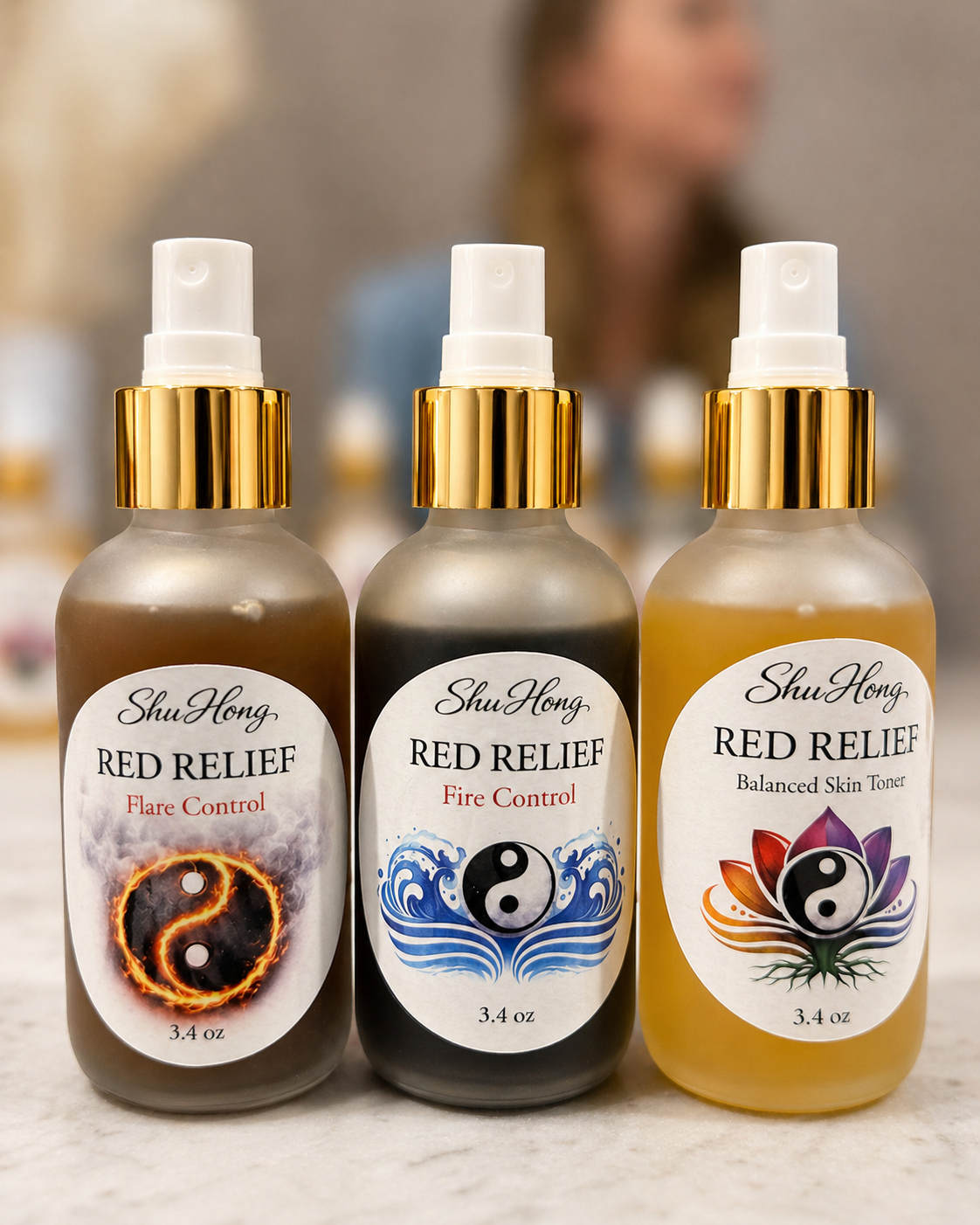
Psoriasis Flare Ups and Why You Need Three Sprays
Dr. Meli, in her own words, on why she and her husband built the Shu Hong


Willard Sheppy is a licensed acupuncturist (LAc) and Founder of Valley Health Clinic specializing in using Traditional Chinese Medicine to treat acute injuries and chronic conditions, and to improve sports performance and rehabilitation.
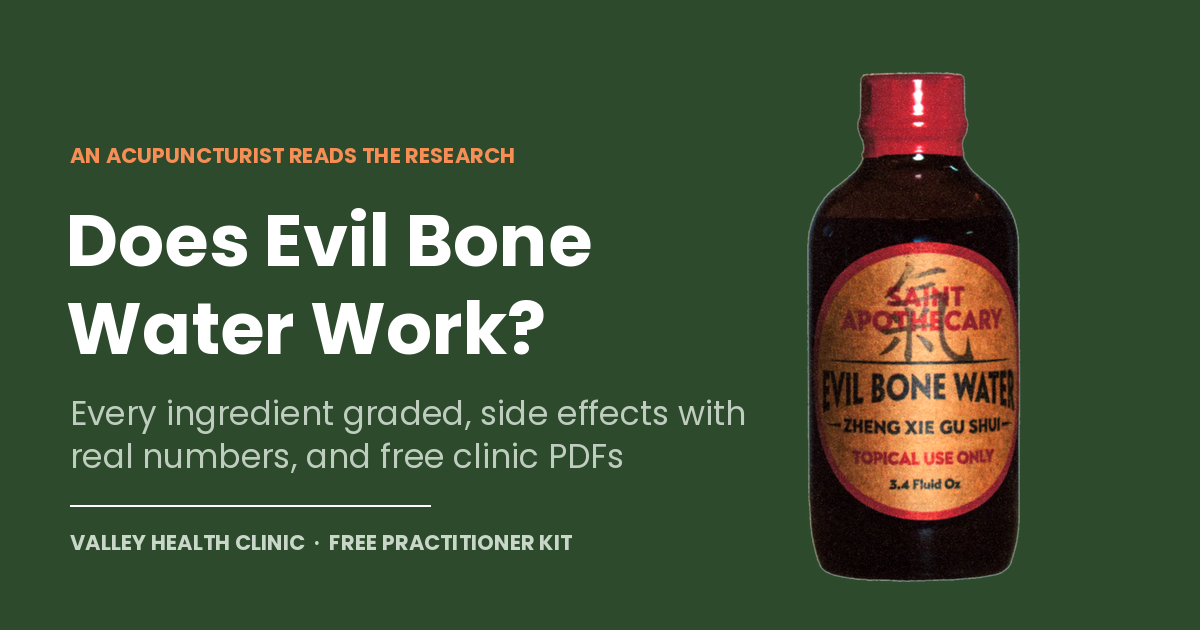
Pull up the FDA drug listing for Zheng Gu Shui and you find something most practitioners have never noticed. Camphor and menthol are the listed active ingredients. Japanese knotweed, zedoary, and the rest of the herbs that give the formula its name — and its entire traditional rationale — are listed as inactive.
In US regulatory terms, the herbs are excipients. The tradition says the reverse: that this is an herbal trauma formula in which camphor and menthol are the vehicle, and Hu Zhang, San Qi and the others are the medicine. Two authorities look at the same bottle and disagree about what is doing the work, and neither of them is lying.
You do not have to resolve that argument to practise well. But it explains almost everything about how this liniment behaves — why it works fast and shallow, why the effect is unmistakable in the first ten minutes, and why the research file is thinner than the marketing copy suggests. Here is what the evidence actually supports.
There is no published trial of Evil Bone Water itself — a PubMed search for Zheng Gu Shui returns no trials, no case series, no case reports. What is well supported is the mechanism of camphor and menthol on the skin’s nerve channels, both of which have human data behind them. So: a fast, reliable, low-risk topical for temporary relief of minor aches and pains, with a five-hundred-year track record and a thin research file. External use only, and it belongs stored well away from children.
Evil Bone Water is a Zheng Xie Gu Shui liniment made by Saint Apothecary and formulated by Mark T. Brinson, DOM. Zheng Gu Shui is the broader formula family — a Chinese trauma-liniment tradition — and quality varies enormously between makers.
The name is a literal read of zheng xie gu shui. Xie is the pathogenic factor, the evil qi lodged in the tissue; zheng means to correct or set right, as in setting a bone. The name is about driving something out, which tells you how the tradition understood this formula long before anyone measured a plasma level.
The regulatory read is much narrower: camphor and menthol are the actives, and everything else is an excipient. Both readings sit on the same label, and knowing that is what lets you talk about this bottle without overselling it. For the full formula history, see Evil Bone Water: benefits, ingredients and the history of Zheng Gu Shui.
I tell patients the truth: a fast, reliable, low-risk topical with a five-hundred-year track record and a thin research file. That framing has never once cost me a sale, and it buys a lot of credibility for the moments when I say something is well supported.
— Will Sheppy, L.Ac.
Three things are true about this liniment at the same time, and most practitioners only ever hold one of them.
Hold all three and you end up somewhere honest: the delivery system is well evidenced, the herbal claim is traditional rather than trialled, and the product is low-risk enough that the gap between those two things is not dangerous — only worth being straight about.
| Component | Evidence | What was actually tested |
|---|---|---|
| Zhang Nao — camphor | Strong | TRPV1 activation then rapid desensitization; TRPA1 block; TRPV3 in keratinocytes; Kv7 inhibition |
| Bo He Nao — menthol | Strong | TRPM8 cold receptor; randomized human topical crossover trial at 40% |
| Alcohol base + terpenes | Strong | Permeation through human epidermis, measured against other vehicles |
| Gui Pi — cinnamon bark | Moderate | Cinnamaldehyde as TRPA1 agonist; human skin temperature, perfusion, axon-reflex flare |
| San Qi — Panax notoginseng | Moderate | Topical Ft1 wound closure in diabetic mice; collagen in human dermal fibroblasts |
| Hu Zhang, E Zhu, Ba Dou, Qian Jin Ba, Tu Mu Xiang, angelicas | No topical human data | Traditional rationale only — the part to stop calling proven |
Graded by route: an oral rodent study says little about a compound wiped onto human skin in an alcohol base.
Route matters more than most ingredient lists admit: an oral rodent study tells you very little about what happens when a compound is wiped onto human skin in an alcohol base. Graded that way — by whether anyone tested the thing on skin — five components of this formula carry real support.
Notice what the strong column has in common: every entry was tested on skin, and three of the five were tested on human skin. That is the bar.
Hu Zhang, E Zhu, the angelicas, Ba Dou, Qian Jin Ba and Tu Mu Xiang carry the traditional rationale — and, at present, no topical human data. That is not a reason to stop using the formula. It is a reason to stop claiming those herbs are the proven part.
Camphor has a genuinely frightening toxicology, and almost all of it is about ingestion. Practitioners who have read the case reports sometimes get nervous about the bottle itself. The numbers are worth knowing, because they point the caution at the right thing.
In adults wearing eight camphor patches for eight hours, peak plasma camphor came in around 41 ng/mL. The pediatric deaths in the literature involve swallowing roughly 500 mg, with 750–1000 mg more commonly associated with seizures.
Evil Bone Water is 5.6% camphor, so 500 mg of camphor is about 9 mL — under two teaspoons. The FDA ceiling for camphor as a counterirritant in OTC topicals is 11%, meaning the product sits at roughly half the allowed concentration. The topical risk is low. The bottle-on-a-low-shelf risk is not.
Not on the abdomen or sacrum during pregnancy, and not on the breasts while nursing — apply after a feed and wipe before the next one. There is no human data either way here; this is a conservative default drawn from an absence of evidence, not a research finding.
Minor cuts, scrapes and abrasions are an accepted traditional first-aid use, and the camphor concentration is relatively low — it will sting. Not on deep or puncture wounds, or on burns beyond superficial. Keep it away from the eyes and mucous membranes, and check with a physician before using it on a child under two.
The traditional indication list is broad: incidental and sports injuries, joint pain, spinal pain, muscle and ligament pain, bruising, sprains and strains, general overuse, minor cuts and insect bites, swelling, minor burns, first aid. External use only — do not ingest.
The part that is not on the label is the sequencing, and it is the thing that decides whether patients love this stuff or flinch at it. Evil Bone Water goes on before acupuncture, never after. It is quick-drying: apply it, let it flash off, and needle straight over it with no sting. Over fresh insertion sites it stings, and patients remember the sting.
The post-treatment slot belongs to other things. Red Emperor’s Immortal Flame for warmth — olive-oil based, no sting. Corydalis Relief Salve when a strong smell or a warming effect is unwelcome. And honestly, Biofreeze for a quick gua sha session, so nobody leaves greasy.
Evil Bone Water makes kinesiotape refuse to stick. If tape is going on, degrease with Biofreeze instead and send the Evil Bone Water home with the patient. It is a small thing that costs a whole taping if you learn it the hard way.
Homework is the difference between eighty percent better and one hundred percent better — and a topical the patient can feel working inside two minutes is a topical they will actually keep using.
— Will Sheppy, L.Ac.
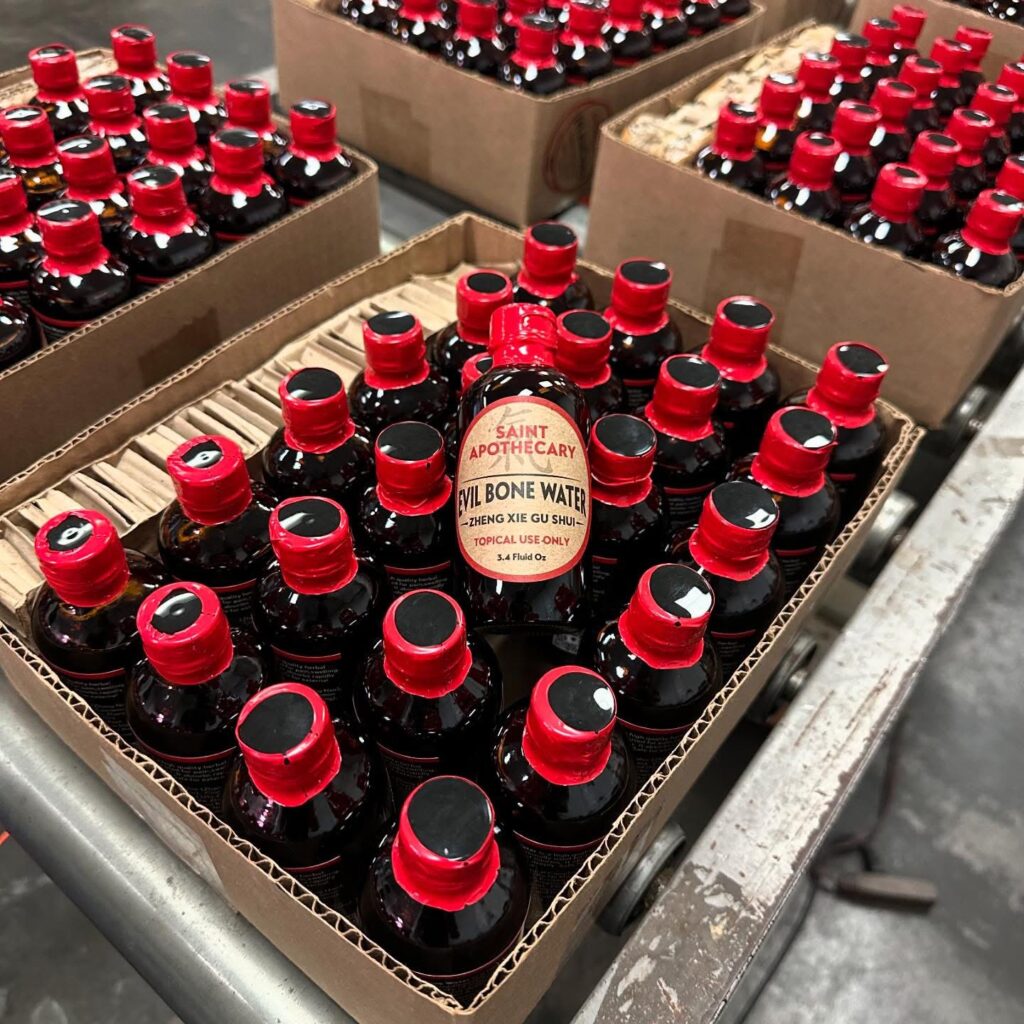
American-made Chinese medicine, stocked and shipped from Oregon. Practitioner pricing on Evil Bone Water and the rest of the topical line, with the quart size that refills your treatment-room bottles.
If I had to name the two presentations where this liniment earns its shelf space, it is osteoarthritic knees and sore shoulders — as homework, not as an in-room treatment. Patients go home with a bottle and a twice-daily instruction, and the sensation arrives inside a minute or two, which is exactly why they keep using it.
The quart refills the treatment-room bottles and the cotton-ball pump; retail bottles are what go home. Keeping both means the rooms never run dry and the dispensary shelf never gets raided.
Patients smell it, ask what it is, and buy it. There is no pitch involved. That is worth naming honestly, because a product that sells itself deserves more scepticism from the practitioner, not less — which is the whole reason for grading the evidence above.
Everything below is free and ungated — no email required, built to be printed and left in a treatment room.
Print page seven of the kit — the patient handout — and put it in the treatment rooms. That is the highest-frequency use of this whole thing, and the one that saves you repeating the same six answers all week.
Derry S, Matthews PRL, Wiffen PJ, Moore RA. Topical rubefacients for acute and chronic musculoskeletal pain in adults. Cochrane Database Syst Rev. 2014;11:CD007403. PMID 25425092
Xu H, Blair NT, Clapham DE. Camphor activates and strongly desensitizes the transient receptor potential vanilloid subtype 1 channel. J Neurosci. 2005;25(39):8924-37. PMID 16192383
Moqrich A, et al. Impaired thermosensation in mice lacking TRPV3, a heat and camphor sensor in the skin. Science. 2005;307(5714):1468-72. PMID 15746429
Vetter I, et al. Camphor activation and sensitization of TRPA1. 2013. PMID 24133266
McKemy DD, Neuhausser WM, Julius D. Identification of a cold receptor reveals a general role for TRP channels in thermosensation. Nature. 2002;416(6876):52-8. PMID 11882888
Olsen RV, et al. Effects of topical menthol on cutaneous sensory and vascular responses in humans. 2014. PMID 24664788
Bandell M, et al. Noxious cold ion channel TRPA1 is activated by pungent compounds and bradykinin. Neuron. 2004;41(6):849-57. PMID 15046718
Vaddi HK, et al. Terpenes in ethanol: permeation and partition through human skin. 2003. PMID 12576684
Kaplun-Frischoff Y, Touitou E. Testosterone skin permeation enhancement by menthol. J Pharm Sci. 1997;86(12):1394-9. PMID 9423153
Zhang E, et al. Notoginsenoside Ft1 promotes wound healing in diabetic mice. 2015. PMID 26567319
Martin D, et al. Camphor plasma concentrations following topical patch application. 2004. PMID 15342616
Love JN, et al. Are one or two dangerous? Camphor exposure in toddlers. J Emerg Med. 2004;27(1):49-54. PMID 15219304
US Food and Drug Administration. OTC Monograph M017, External Analgesic Drug Products. §M017.12(b)(1).
Saint Apothecary. Evil Bone Water product literature and patient handout. 2026.
Externally, for temporary relief of minor aches and pains: sore muscles, sprains and strains, bruising, stiff joints, back and neck pain, overuse soreness, and minor cuts, scrapes and insect bites. In clinical practice it is applied before acupuncture and before cupping, and it shines as a take-home for knee and shoulder pain.
Evil Bone Water is a specific Zheng Xie Gu Shui liniment made by Saint Apothecary and formulated by Mark T. Brinson, DOM. Zheng Gu Shui is the broader formula family, and quality varies enormously between makers.
It is a literal read of zheng xie gu shui. Xie is the pathogenic factor, the evil qi lodged in the tissue; zheng means to correct or set right, as in setting a bone. The name is about driving something out.
On minor cuts, scrapes and abrasions, yes — a traditional first-aid use, and the camphor concentration is relatively low. It will sting. Not on deep or puncture wounds, burns beyond superficial, or anything requiring referral.
There is no human data either way. Standard practice is to avoid the abdomen and sacrum during pregnancy and the breasts while nursing. This is a conservative default from an absence of evidence, not a research finding.
Dr. Meli, in her own words, on why she and her husband built the Shu Hong

Learn which acupuncture points Will Sheppy uses for Ménière’s disease, vertigo and dizziness, plus treatment frequency
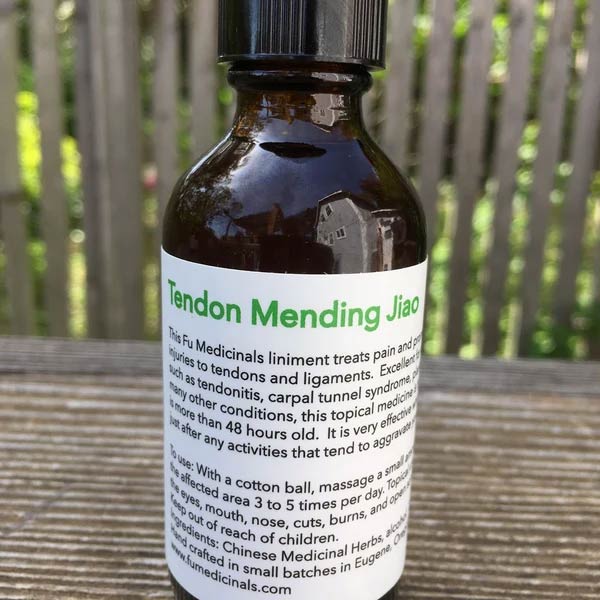
Learn how Gu Sui Bu and Tendon Mending Jiao are traditionally used to support chronic tendon,