The best stretch for Ménière’s disease and Vestibular Migraines is not about forcing muscles to lengthen. It is about calming the nervous system, reducing cervical and jaw tension, and improving how the brain interprets balance signals coming from the neck and inner ear. For people living with Ménière’s disease or vestibular migraines, this distinction matters.
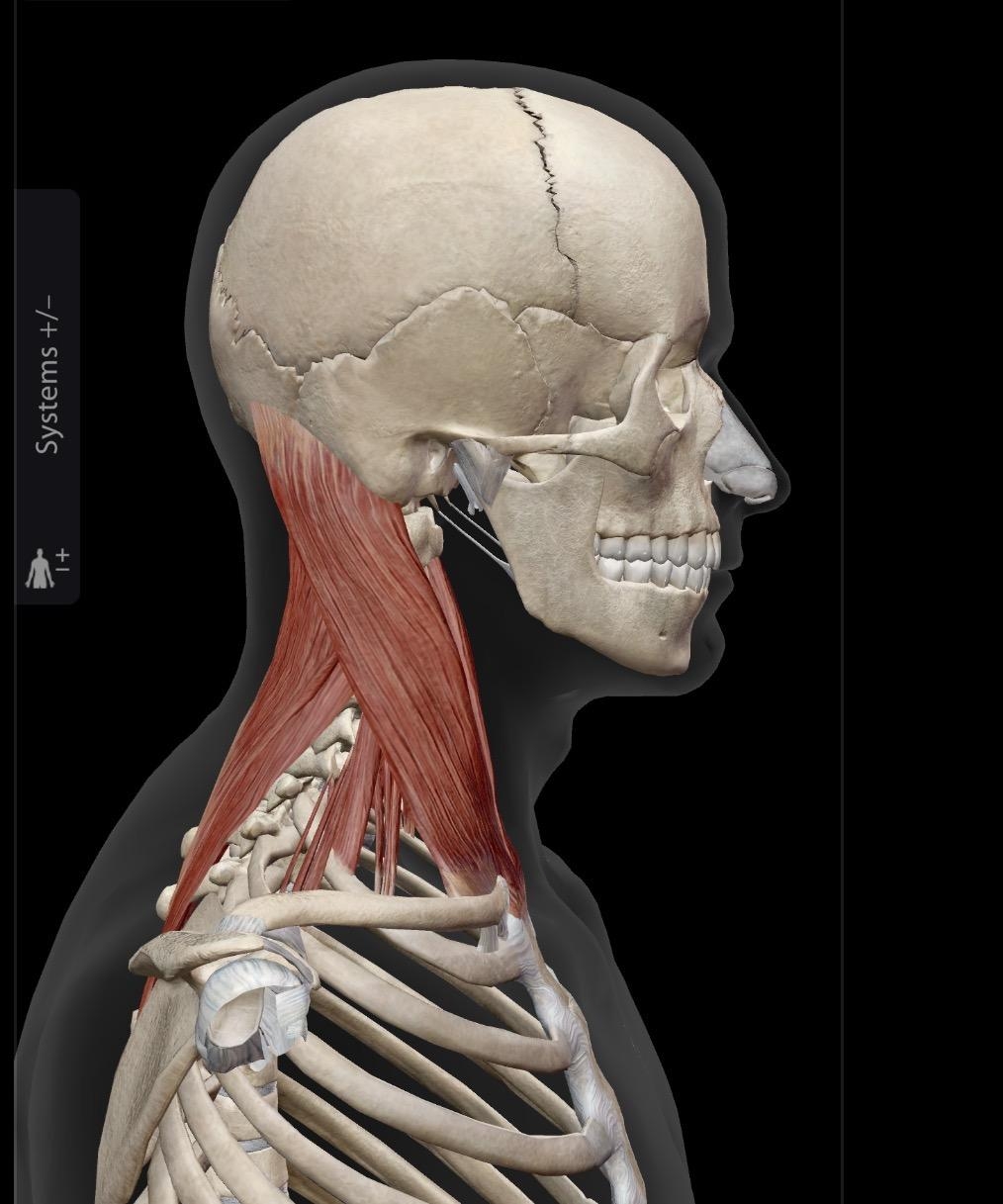
Research increasingly shows that the cervical spine plays a critical role in balance. The upper neck contains dense proprioceptive input that feeds directly into vestibular processing centers in the brain. When these tissues are tense or inflamed, the brain receives distorted information, which can worsen dizziness and vertigo.
Muscles are not rubber bands. When people “stretch harder,” they often activate protective reflexes that increase tension instead of releasing it. In Ménière’s disease and vestibular migraine, this backfires.
The goal is nervous system down-regulation. This happens through three mechanisms used together:
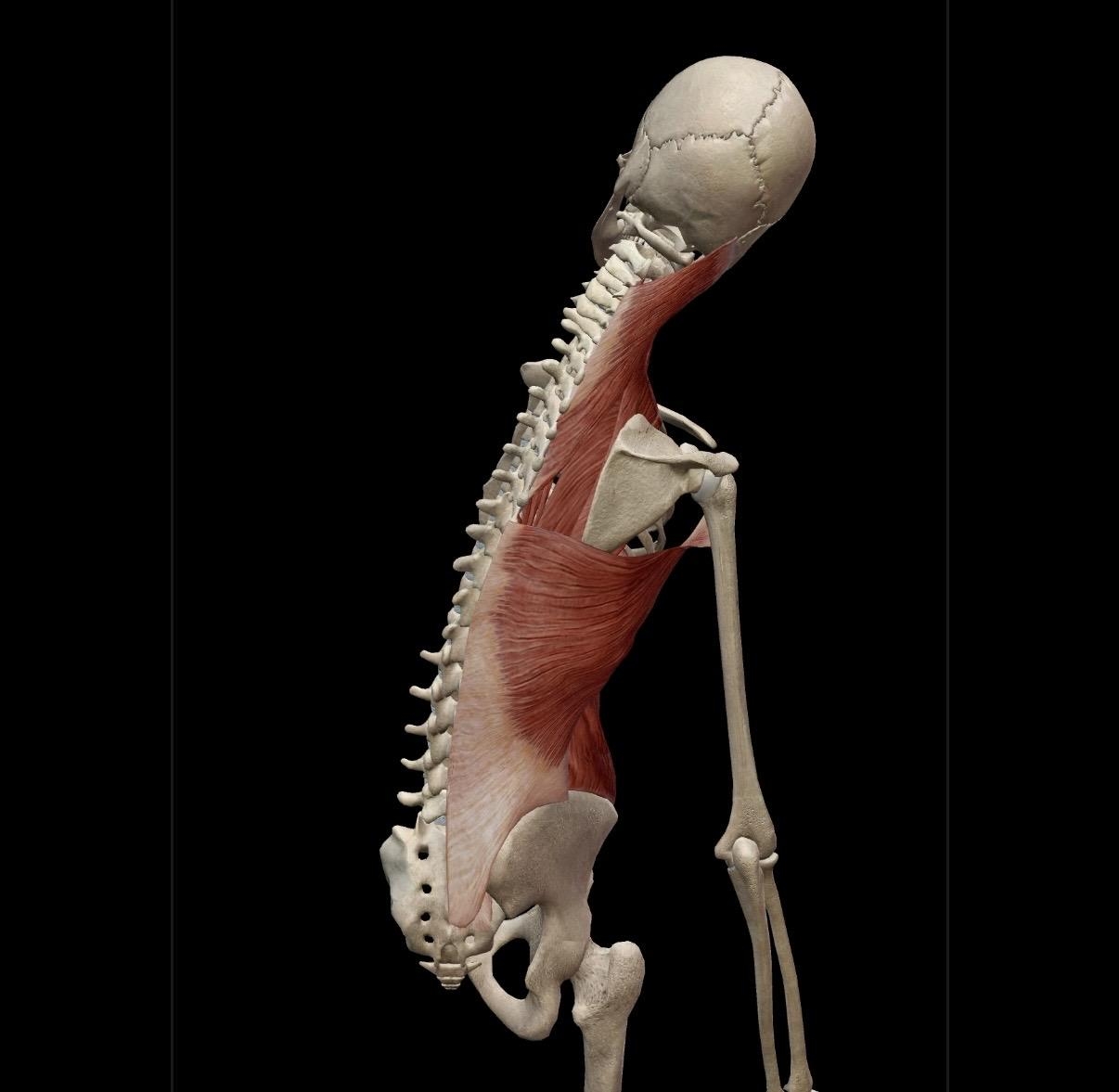
This stretch works because it connects the lower back, pelvis, shoulders, and neck. Releasing tension in larger, more accessible muscle groups allows the upper cervical region and jaw to relax indirectly, which is often more effective than trying to “stretch the neck” directly.
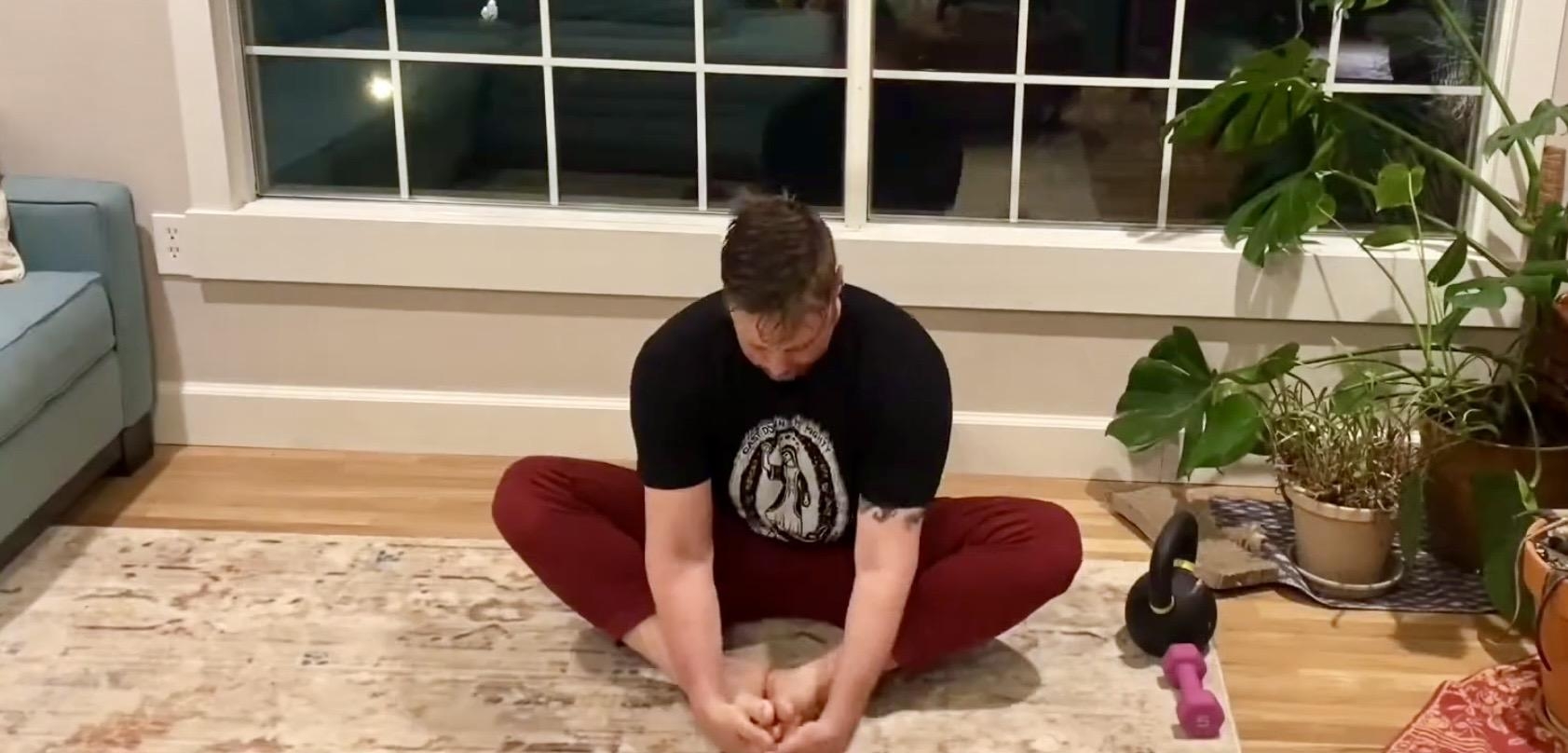
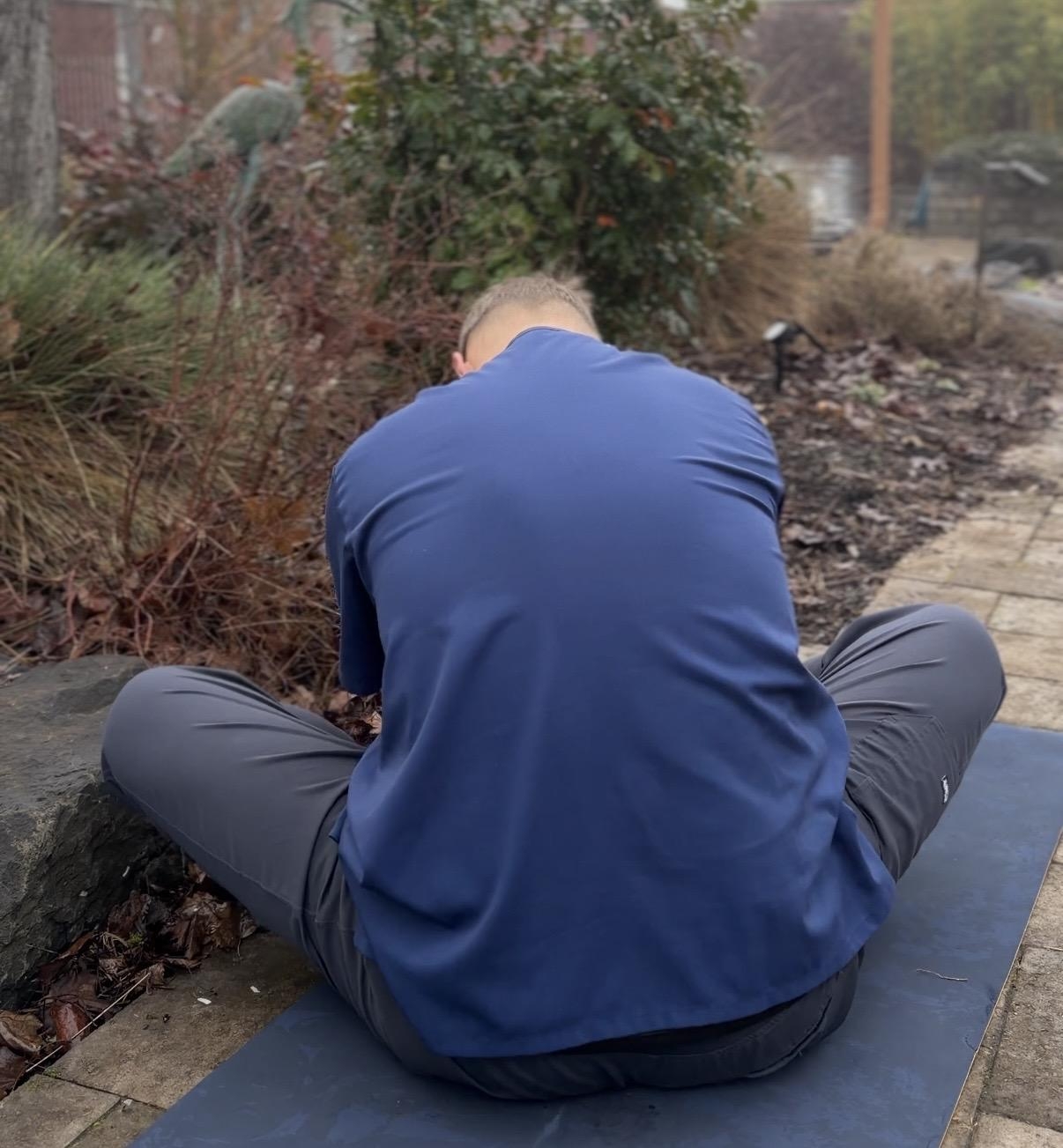
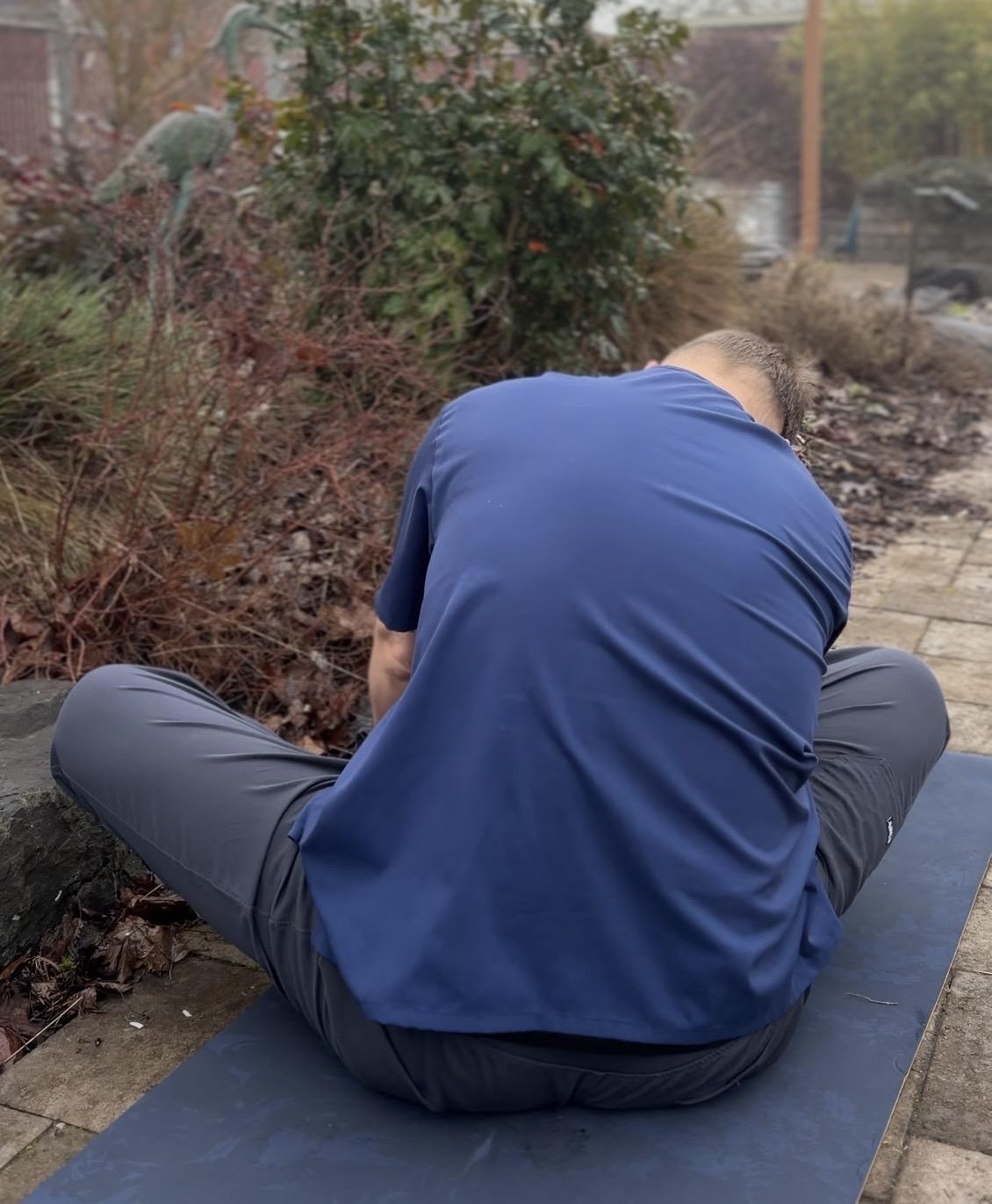
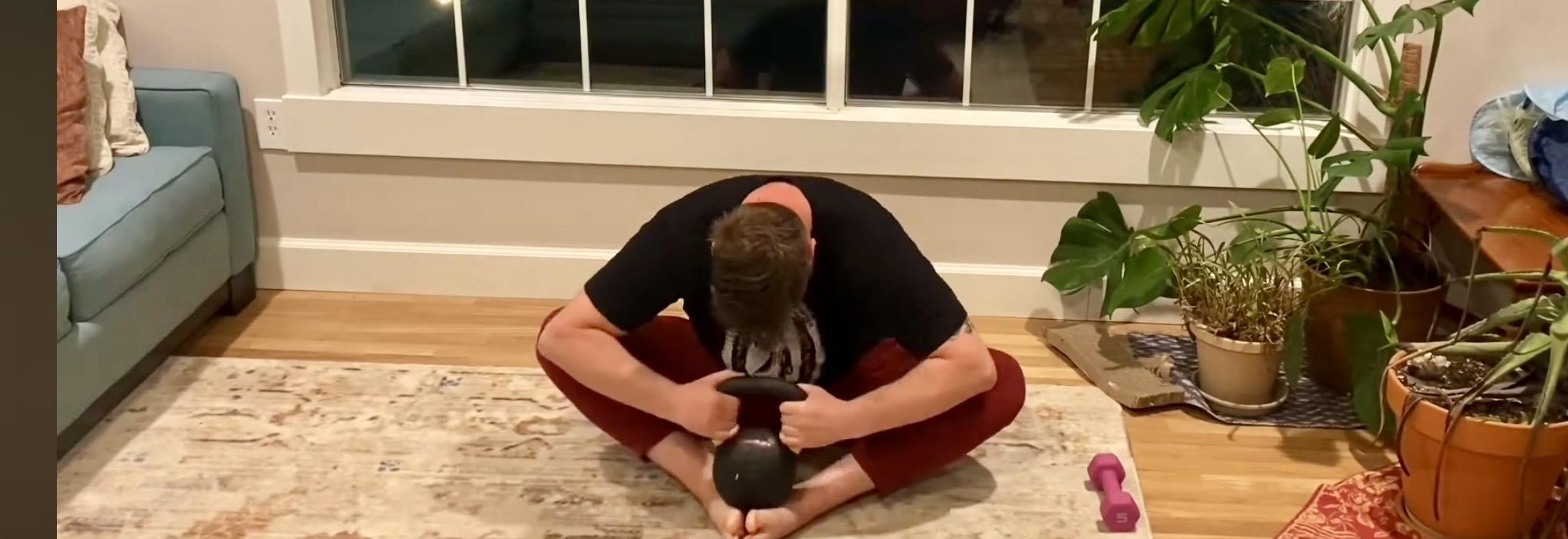
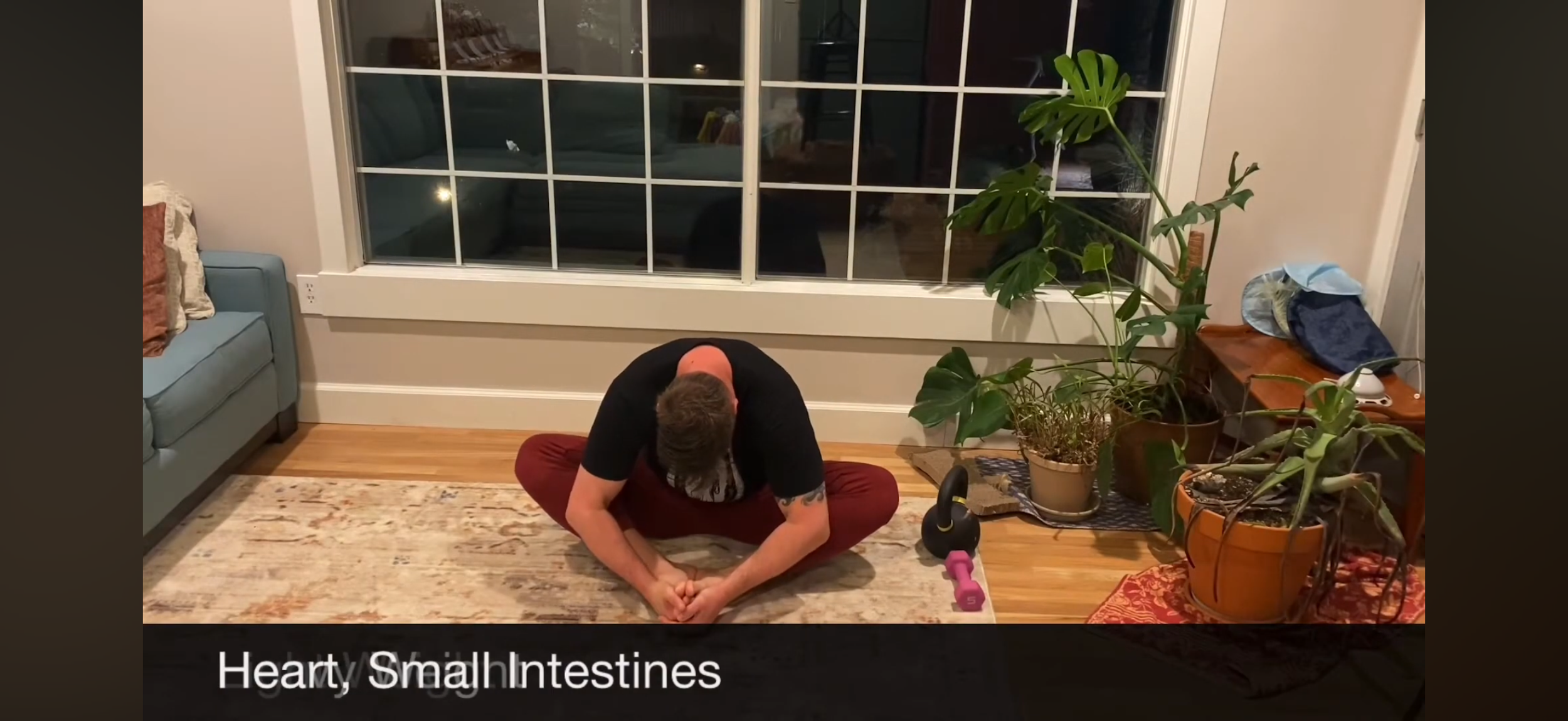
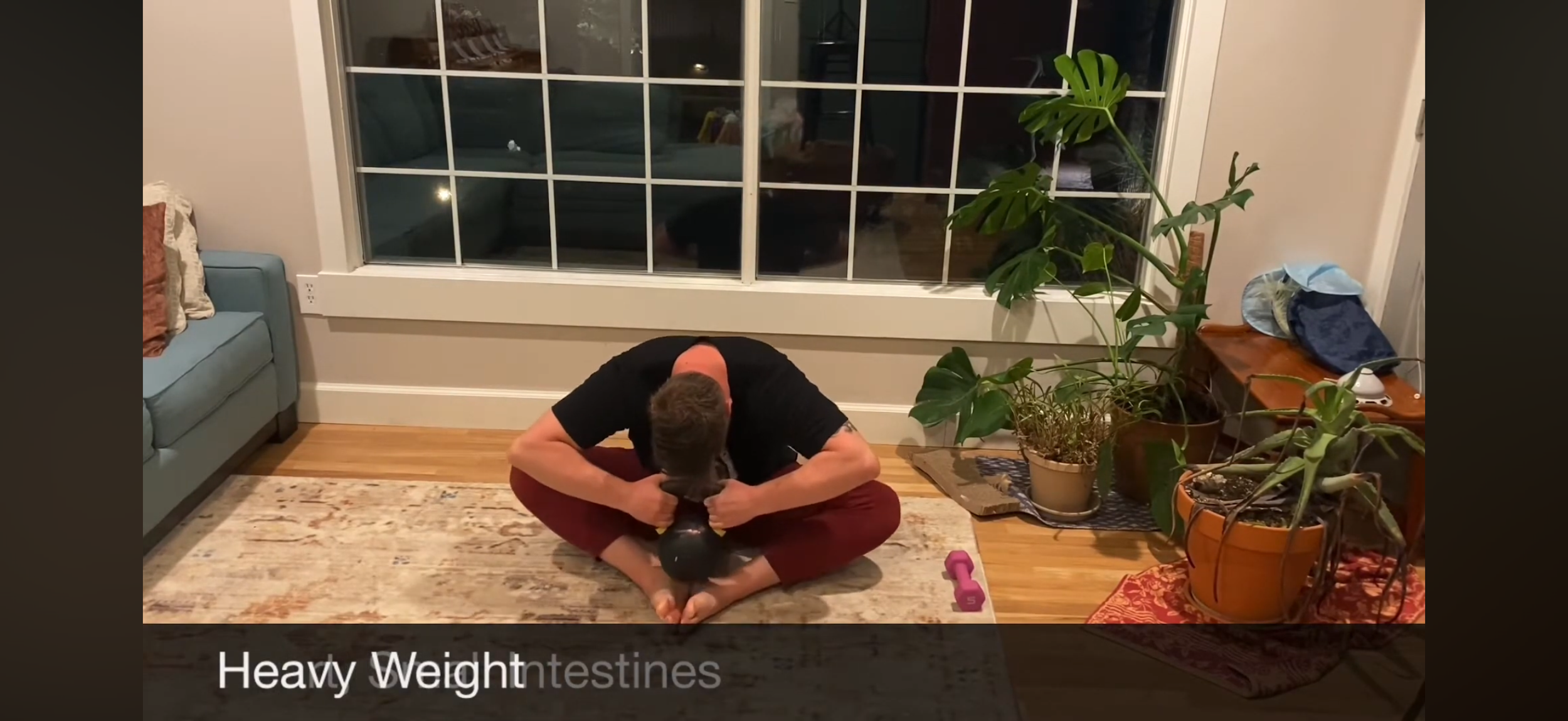
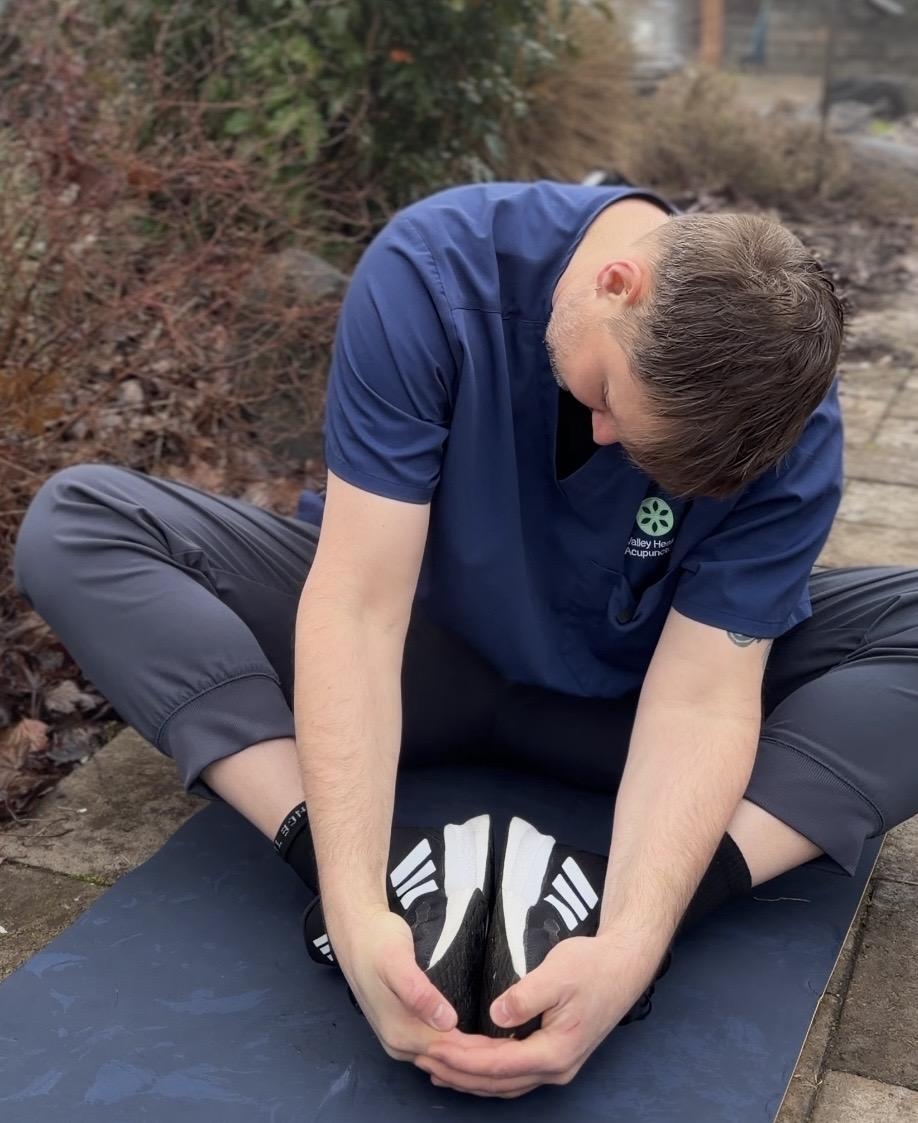
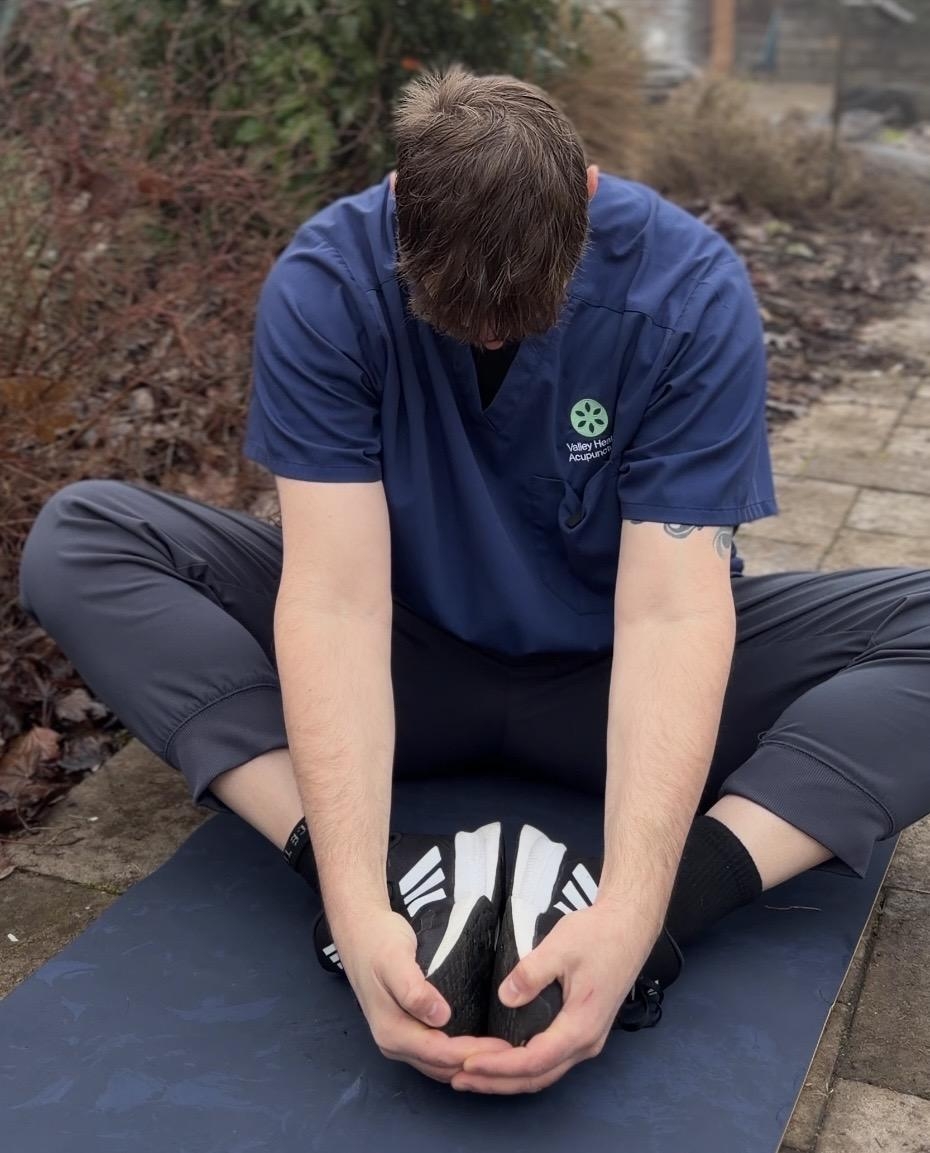
Sit on the floor or a firm surface and bring the soles of your feet together. Hold your toes, ankles, or thighs, whatever feels comfortable. Let your spine naturally fold forward without forcing it. The first step is simply to relax.
Take a slow breath in, gently contract your whole body just a little, then release with a long, sighing exhale. As you exhale, notice that your body naturally settles deeper without effort. This is the nervous system letting go.
From here, gently rock side to side. This allows you to find areas of stored tension, often in the shoulders, upper back, neck, or along the sides of the body. When you find a tight area, breathe into it, then release on the exhale. Many people feel tension travel down the spine or into the shoulders before dissipating.
This indirect release is key. When the lower back, quadratus lumborum, and thoracic spine relax, the upper neck and jaw often follow
The reason I like the best stretch for Ménière’s disease is that it immediately puts the body in a position of safety and relaxation. You are sitting on the ground, supported, not standing or challenging your balance. For people with Ménière’s disease or vestibular migraines, that matters. When the body feels stable, the nervous system is far more willing to let go of tension, and that alone can reduce dizziness.
This stretch is essentially a butterfly stretch, but done with a very different intention. Instead of forcing flexibility, you are able to relax, breathe, and move slowly. Because you are seated, you can gently flex the spine, hinge forward, or rock side to side. That makes it easy to “scan” the body and find different lines of tension,neck, shoulders, upper back, lower back, without provoking symptoms. Rather than isolating one small muscle group, you are influencing the entire spine as a connected system.
From a Makko-ho perspective, this position is often described as a Heart–Small Intestine / Fire stretch. That is significant for Ménière’s disease. Fire patterns are frequently associated with agitation, overactivation, and difficulty settling the mind. This stretch encourages a softening of the chest, shoulders, and upper spine, which many people feel as an immediate calming effect rather than a mechanical stretch.
Another reason this stretch works so well is that it does not only address the back of the neck and spine. By bringing the soles of the feet together, you are also opening the inner legs. In East Asian medicine, the inner leg pathways are yin channels, which are closely tied to nourishing, grounding, and calming functions. When these areas are restricted, people often feel restless, wired, or unable to fully relax symptoms that commonly overlap with Ménière’s disease.
What makes this stretch especially useful is that you can easily integrate grounding techniques at the same time. While seated, you can rub the bottoms of your feet, especially the center of the sole. This area is traditionally used to anchor excess upward activity and help the body feel settled. Doing this while gently releasing the neck creates a simultaneous effect: calming excessive yang above while supporting yin below.
In practical terms, you are stretching the neck and spine, opening the inner legs, and grounding through the feet all at once. This is why the stretch feels different from most neck stretches. You are not just “loosening muscles.” You are coordinating posture, breath, sensation, and touch in a way that helps the nervous system downshift.
That combination is why this is my preferred stretch for Ménière’s disease. It allows you to relax first, explore tension safely, calm the mind through the yin channels, and ground the body through the feet—all without forcing anything. When done slowly and consistently, it supports the same goal that every Ménière’s treatment is aiming for: less reactivity, better regulation, and a more stable internal sense of balance