
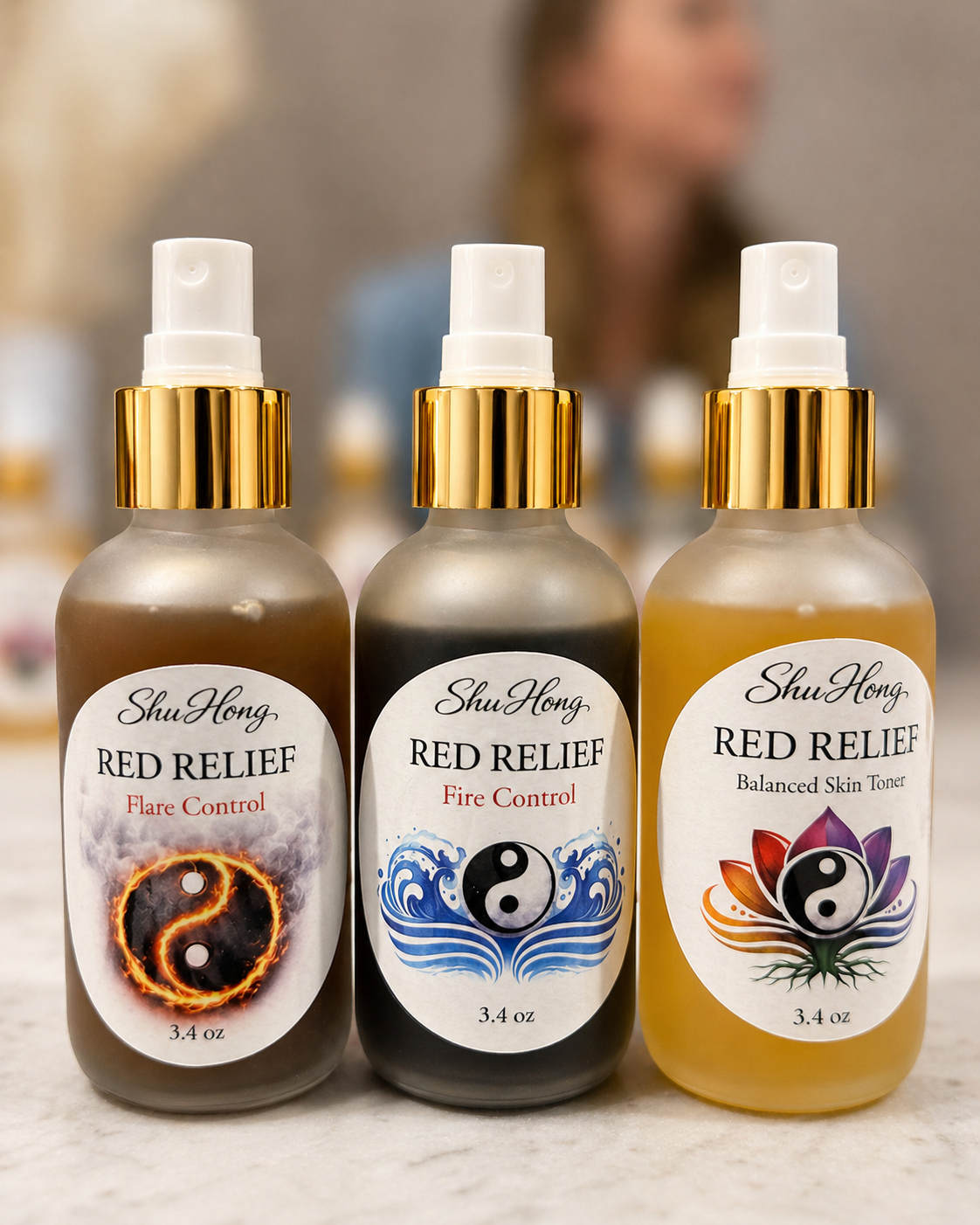
Psoriasis Flare Ups and Why You Need Three Sprays
Dr. Meli, in her own words, on why she and her husband built the Shu Hong

Materia Medica · The Formula Series

Willard Sheppy is a licensed acupuncturist (LAc) and Founder of Valley Health Clinic specializing in using Traditional Chinese Medicine to treat acute injuries and chronic conditions, and to improve sports performance and rehabilitation.
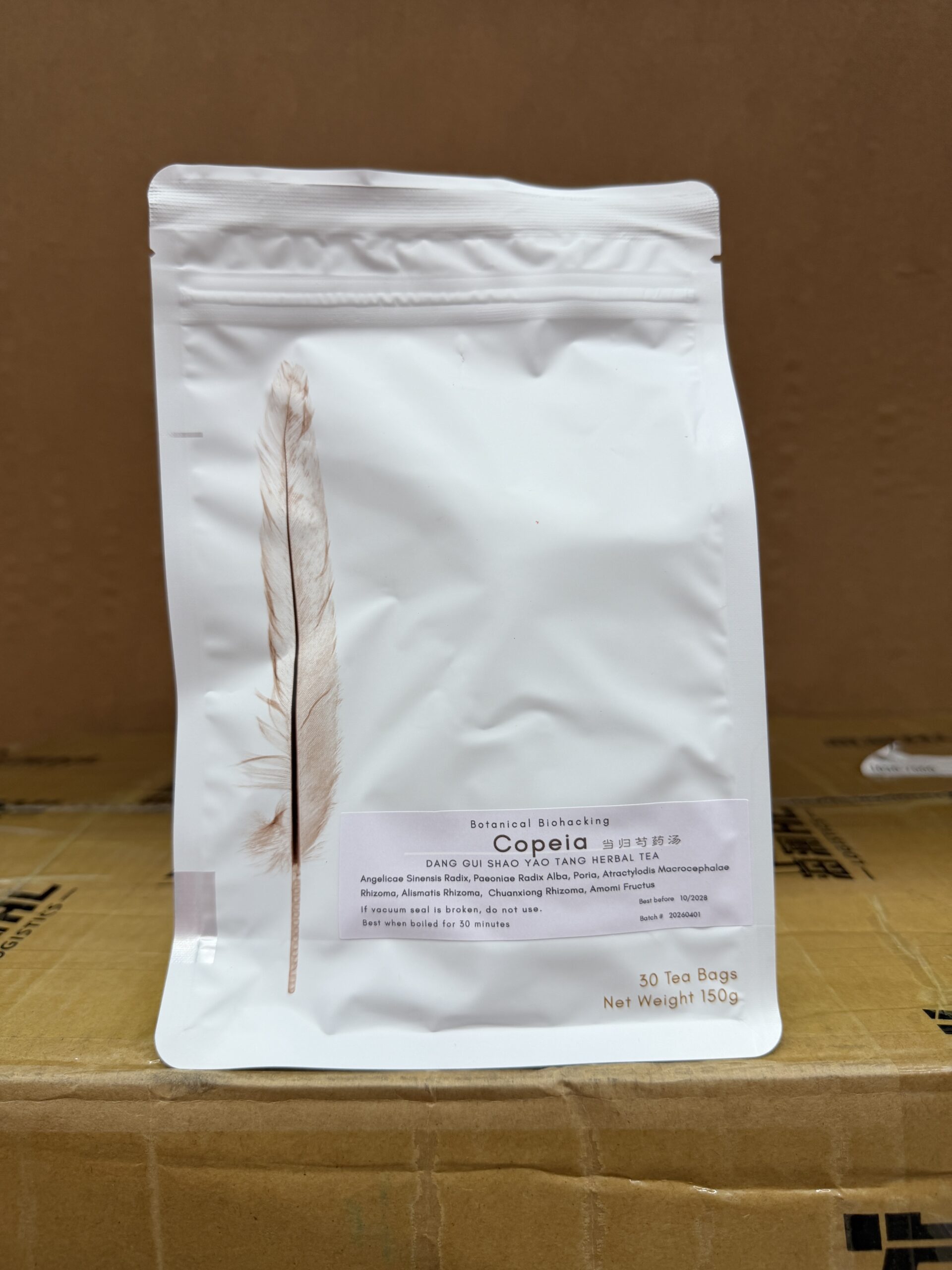
This one is for being depleted and waterlogged at the same time.
It is a more common pattern than it sounds, and it is one that straight tonics tend to fail. Here’s the formula, the diagnostic tell that points to it, and why the order you do things in matters more than which herbs you pick.
Copeia Tea is built on Dang Gui Shao Yao San, with Sha Ren added. It is for the patient who is depleted and holding fluid at once — dull cramping, puffiness, fatigue, and a pale tongue underneath whatever else is going on. It nourishes blood and drains damp at the same time, which is the point: dampness is what stops blood from replenishing in the first place.
Dang Gui Shao Yao San — Angelica and Peony Powder — is one of the most heavily used formulas in East Asian gynecology, and it comes from the same book and the same author as Glow: the Jin Gui Yao Lue, attributed to Zhang Zhongjing, around 200 CE. Zhang placed it in the chapter on the diseases of pregnancy and again in the general gynecological chapter.
Traditionally it addresses liver depression with spleen deficiency and dampness — a body that has been quietly under-nourishing itself for longer than it noticed, while fluid piles up in the middle.
What makes it so widely used is its symmetry. Three herbs build and move blood. Three drain fluid. It supports without being cloying and drains without depleting.
Here is the piece that explains the whole formula: dampness prevents the blood from replenishing.
That single line reframes the problem. If you have a depleted patient with a damp, sluggish middle, you cannot simply tonify your way out of it. Pile blood-building herbs onto a system that is not absorbing and most of it goes nowhere — you get a patient who has been taking tonics for six months and is no less pale than when she started.
Copeia does both jobs at once. It nourishes spleen qi and blood while draining damp, which is why it works in cases of chronic malabsorption where straight tonics stall out.
That is also the idea behind the name. Copia is the Latin word for abundance — a formula built to help a depleted body receive nourishment again.
Botanical Biohacking’s herbal pharmacologist, Dr. Lan, PhD, describes Copeia in one line to practitioners: Dang Gui Shao Yao with Sha Ren — builds blood for the pale-tongue patient.
That shorthand does most of the work. Look at the tongue. If it is pale underneath everything else the patient is describing, this is often the formula that was missing.
The fuller picture:
It is not only a cycle formula. Dr. Lan also reaches for it when the tongue is pale underneath a more obvious complaint — cognitive fog, fatigue, the practitioner who cannot get her breath back down at the end of a long clinic day. It does foundational work.
Copeia is not the first move.
The instruction from Botanical Biohacking is specific: use Wind, Peak, or Atone first to clear away the majority of the dampness. Then Copeia holds the ground — a safe and reliable way to keep dampness from returning while nourishing liver blood.
Clear, then hold. Skip the clearing step and you are nourishing into a swamp, which is exactly what the “dampness prevents blood from replenishing” logic predicts will fail.
If it is pale underneath everything else the patient is describing, this is often the formula that was missing.
— Will Sheppy, L.Ac.
Seven herbs, split down the middle.
Three herbs that build and move.
Three that move fluid out, plus one that protects the digestion while they work.
A traditional case record supplied by Botanical Biohacking, reproduced as an illustration of how the pattern presents. One patient’s course is not evidence of what a tea will do for anyone else.
Shao, 28, female. Carrying a diagnosis of chronic pelvic inflammatory illness.
She was given Dang Gui Shao Yao San. Abdominal pain and dizziness settled after three doses, and the discharge followed. She stayed on the formula for three months — not to chase symptoms that were already gone, but to strengthen the root.
Two things worth pulling out of that. The tongue and pulse are the diagnosis: pale with a slight coat, a pulse between soft and slippery — deficiency and damp together, which is why the formula that does both was the right one instead of a straight blood tonic.
And the three months after the symptoms resolved is the actual lesson. Fast relief is not a repaired foundation. Patients stop when they feel better, and this pattern comes back when they do.
Daily as a morning tea, eight to twelve weeks, reassessed at the twelve-week mark. Thirty teabags to a bag, one month’s supply.
Dr. Lan pairs it with daily Microgard for the spleen ground it builds on. Her practice note is worth passing to patients in advance: sleep tends to repair before the day feels lighter. Say that up front or they quit at week four.
Copeia is built for the blood-deficient, damp-stuck pattern — not every kind of cycle discomfort. If pain is severe, new, or paired with other symptoms, that deserves a proper look from a qualified provider.
Of the two fertility formulas, this is the gentler one. It sits in the pregnancy chapter of its source text and is used through pregnancy in Japan under its Kampo name, Tokishakuyakusan. That said, my own rule with pregnant patients is to stop formulas — and the reason has more to do with peace of mind than with the herbs.
If you are pregnant, trying to conceive, or taking hormonal or anticoagulant medication, talk with your practitioner first.

Dang Gui Shao Yao San with Sha Ren. Seven Imperial-grade herbs, thirty teabags. Nourishes and drains at once.
Educational content rooted in 20+ years of clinical practice in Traditional Chinese Medicine. Not intended to replace consultation with a qualified healthcare practitioner. Please consult your physician before starting any new herbal protocol, especially if pregnant, nursing, on anticoagulants, or managing a chronic condition.
Copeia Tea is built on Dang Gui Shao Yao San — Angelica and Peony Powder — from the Jin Gui Yao Lue, around 200 CE, with Sha Ren added. Thirty teabags of seven Imperial-grade herbs, a one-month supply.
The patient who is depleted and waterlogged at once: dull cramping, puffiness, fatigue that arrives with the cycle, thirst without much desire to drink. The diagnostic tell is a pale tongue underneath whatever else is going on.
Because dampness is what prevents blood from replenishing. Tonify a damp, malabsorbing middle and most of the nourishment goes nowhere. Copeia nourishes and drains at the same time, which is why it works where straight tonics stall.
No. It is used as a blood-builder whenever the tongue is pale underneath a more obvious complaint — including cognitive fog and fatigue. It does foundational work, not only cycle work.
Dang Gui Shao Yao San sits in the pregnancy chapter of its source text and is used through pregnancy in Japan. Even so, my general rule is that patients stop formulas once pregnant — mostly for peace of mind. Talk with your practitioner.
Dr. Meli, in her own words, on why she and her husband built the Shu Hong

Does Evil Bone Water work? An acupuncturist reviews the evidence for Zheng Gu Shui, camphor, menthol,

Learn which acupuncture points Will Sheppy uses for Ménière’s disease, vertigo and dizziness, plus treatment frequency