Category: Skin Health and Beauty

Shu Hong Red Relief Skincare

26 minutes read

Shu Hong Red Relief Skincare

Will Sheppy, Founder and Acupuncturist at Valley Health Clinic
Willard Sheppy Dipl. OM, LAc, BS

Willard Sheppy is a licensed acupuncturist (LAc) and Founder of Valley Health Clinic specializing in using Traditional Chinese Medicine to treat acute injuries and chronic conditions, and to improve sports performance and rehabilitation.

Table of Contents

Introduction — What Is Shu Hong?

Shu Hong (舒红) translates roughly as “soothe the redness.” It is a three-product topical system developed over 20+ years of clinical practice in Traditional Chinese Medicine (TCM) dermatology. The system was created by a husband-and-wife practitioner team — one of whom has lived with severe psoriasis since age 16 — after finding that conventional Western dermatology, dietary modification, and even classical internal herbal formulas alone were insufficient to fully resolve chronic, pattern-based skin conditions.
The system consists of three distinct spray-on botanical formulas, each targeting a different depth and pattern of skin pathology:
Together, they represent a progressive treatment framework that mirrors the classical TCM treatment sequence: Clear → Transform → Regulate → Nourish. Each phase prepares the skin for the next. No single product does everything — and that is the point.

Every herb in every formula has been individually researched, extracted by a specific method tailored to preserve its target therapeutic property, and combined in a multi-distillation process. This is how medicine is made — not how consumer skincare is manufactured.

The Problem — Why Chronic Skin Conditions Keep Coming Back

If you have lived with eczema, psoriasis, rosacea, or chronic dermatitis for any length of time, you already know the cycle: a flare erupts, a treatment is applied, the condition settles — and then it returns. Often worse. Often sooner.
The Western dermatological approach to chronic inflammatory skin disease relies primarily on suppression: corticosteroids reduce visible inflammation, antibiotics knock back bacterial overgrowth, antiseptics clean the surface. These interventions work — for a time. But they share a structural limitation: they address what is visible without modifying the underlying environment that keeps producing it.

The Suppression Cycle

Corticosteroids thin the skin over repeated use, making the barrier more fragile and future flares more likely. Antibiotics reduce bacterial populations but simultaneously disturb the commensal microbiome — the beneficial organisms that compete with pathogenic species. Antiseptics clean indiscriminately, removing both harmful and protective surface ecology. In each case, the acute symptom improves while the systemic vulnerability worsens.

In TCM terms, this is described as “suppressing the fire without resolving the toxin.” The visible manifestation is addressed while the underlying condition remains intact — entrenched, undisturbed, and waiting to re-emerge.

The Biofilm Dimension

Modern microbiome science has arrived at a remarkably parallel understanding through an entirely different research tradition. Chronic inflammatory skin conditions increasingly show evidence of biofilm involvement — structured microbial communities embedded in a self-produced extracellular matrix that resists immune clearance, antibiotics, and standard antiseptics.

Research published in 2024 in Experimental Dermatology confirms that the skin microbiome is not merely altered in conditions like atopic dermatitis and psoriasis, but is directly implicated in disease pathophysiology — including through biofilm formation and bacterial aggregation. Biofilms have been identified in up to 60% of chronic wounds and are increasingly recognized as a factor in persistent, relapsing inflammatory skin conditions.

A biofilm is not an infection in the conventional sense. It is an ecological structure. And ecological structures do not respond to the same interventions that work on individual organisms. This is why suppressive therapy — even when it works initially — fails to prevent recurrence: it addresses organisms without addressing the ecology that sustains them.

"Damp-Heat toxin that has congealed and lodged in the skin and flesh." — Classical TCM description of entrenched skin pathology

What strikes a TCM practitioner reading modern biofilm research is how precisely the language maps onto classical descriptions written centuries before microscopy existed. The concept of a “hidden pathogen” — one that retreats from treatment, lies dormant, and re-emerges — describes biofilm behavior with unusual clinical accuracy.

The TCM Framework — Fire, Damp-Heat, and Terrain

To understand why the Shu Hong system is three products rather than one, it helps to understand how Traditional Chinese Medicine categorizes inflammatory skin disease. TCM does not treat “eczema” or “psoriasis” as single diseases — it treats them as presentations of underlying patterns, and different patterns require different interventions.

Damp-Heat (Shi-Re)

Damp-heat is the most common TCM pattern in inflammatory skin disease. It presents with visible, wet, surface-level inflammation: oozing, weeping, scaling, redness, and intense itching. In Western terms, this maps closely to the clinical picture of active eczema, contact dermatitis, and many stress-triggered skin eruptions. The pathology is at the surface and mid-layer — not deeper.
Flare Control was designed for this pattern. Its six herbs are classical damp-heat clearing agents — each chosen for a specific action on the surface-to-mid-layer zone where this pathology lives.

Fire Toxin (Huo-Du)

Fire toxin is a deeper, more intense pattern. It indicates that inflammation has penetrated past the mid-layer into the channels (jing-luo) and nerve interfaces. The presenting symptoms shift: itch gives way to burning. Stinging. Electric or crawling sensations. Pain that may come and go without a visible rash. In Western terms, this maps to neurogenic inflammation — peripheral nerve irritation and sensitization that standard dermatological topicals cannot reach.
Fire Control was designed for this pattern. It has the highest herb concentration and the highest alcohol content of the three formulas — both of which are required to achieve the penetration depth this pathology demands.

Terrain (Ti-Zhi)

Terrain is the daily environment of the skin. It encompasses the acid mantle, the moisture barrier, the microbiome, and the baseline inflammatory state. When the terrain is healthy, the skin can resist insults, recover from stress, and maintain equilibrium. When the terrain is compromised, every trigger — dietary, environmental, emotional — finds purchase more easily.
Balanced was designed to modify the terrain. It is the daily product that keeps the skin environment stable enough that damp-heat and fire toxin are less likely to establish and less likely to persist. It does not treat flares. It prevents them from happening.

The Three-Phase System

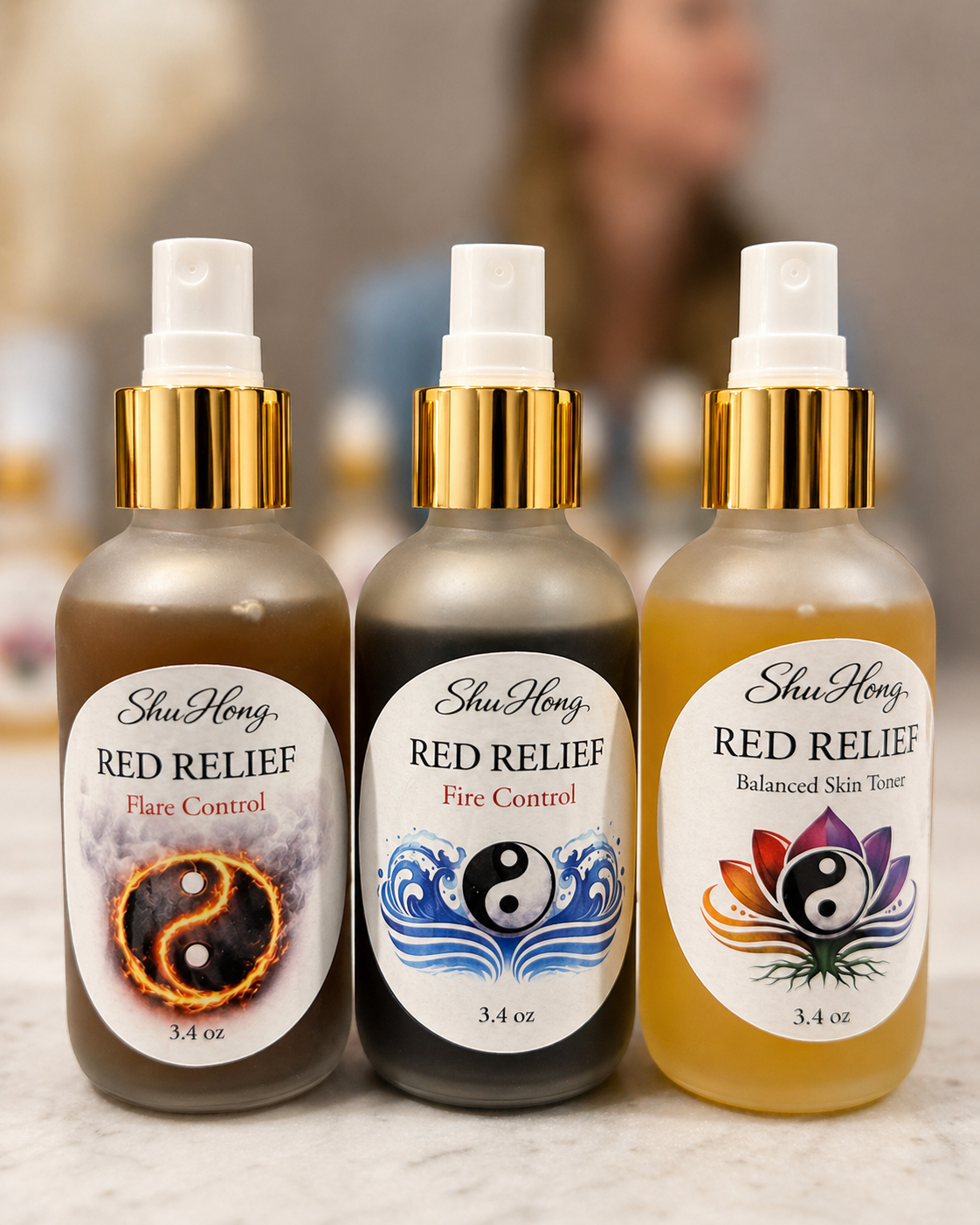
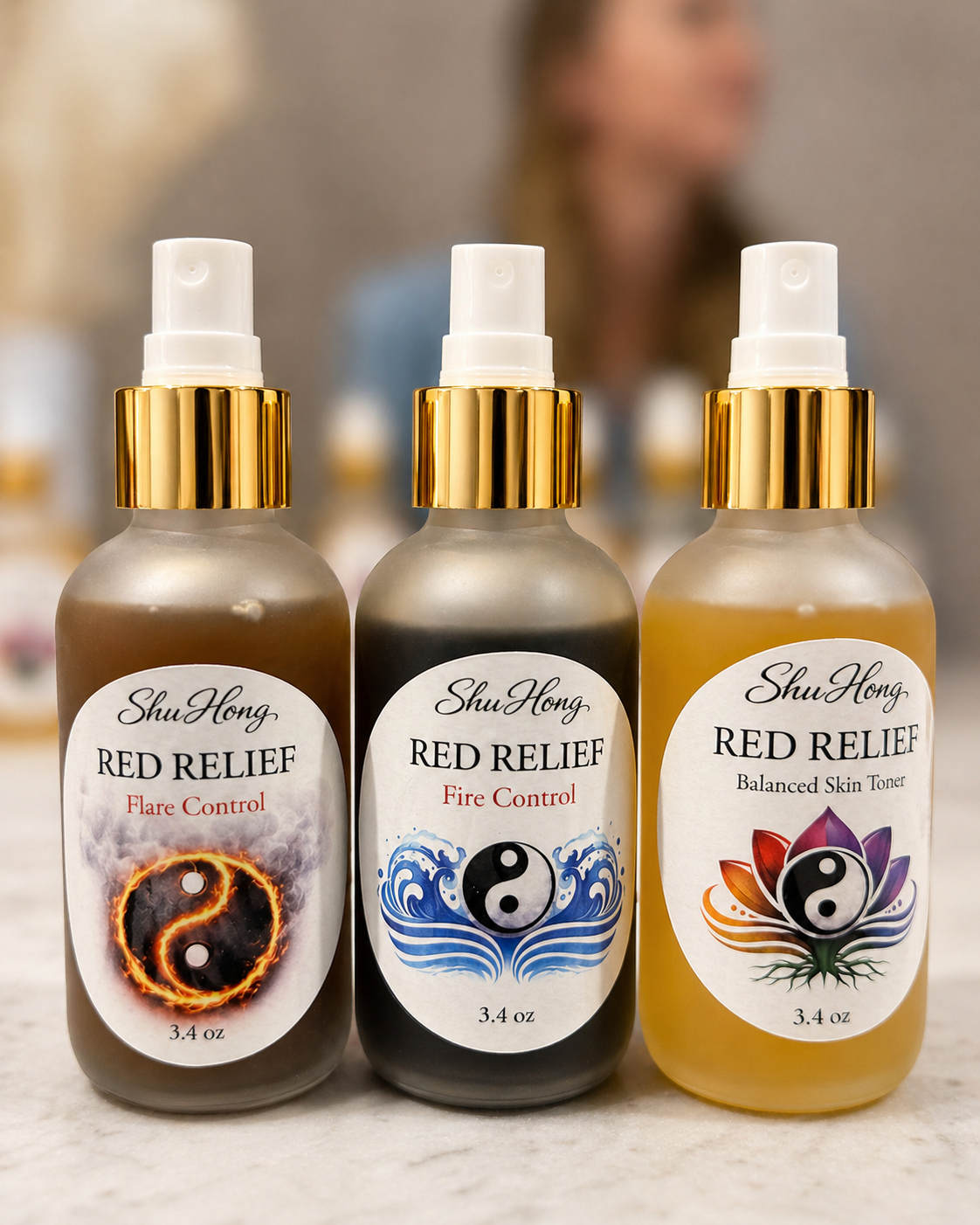
Each product in the Shu Hong system addresses a different depth of skin pathology, uses a different herbal strategy, and is formulated with a different alcohol-to-glycerin ratio calibrated for that depth. The color of each product — visible through the bottle — directly reflects its herb saturation.

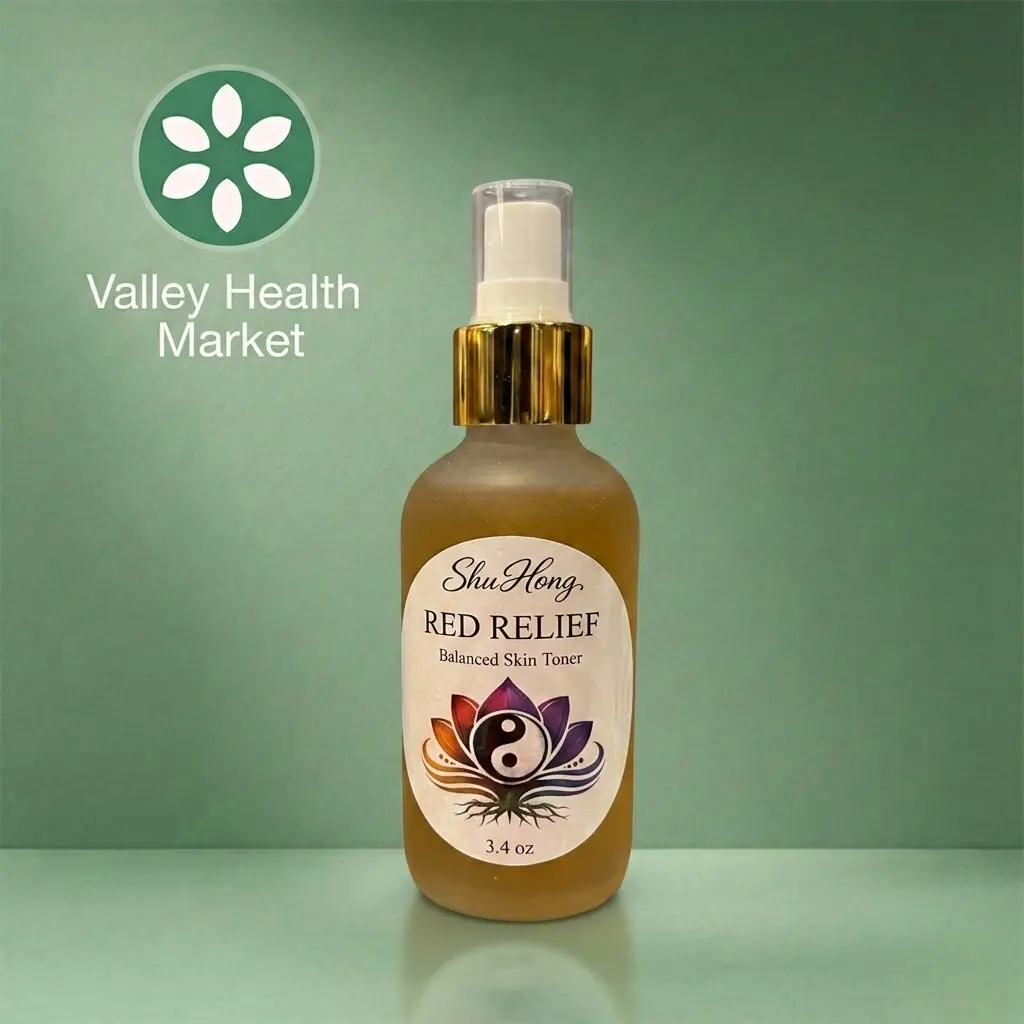
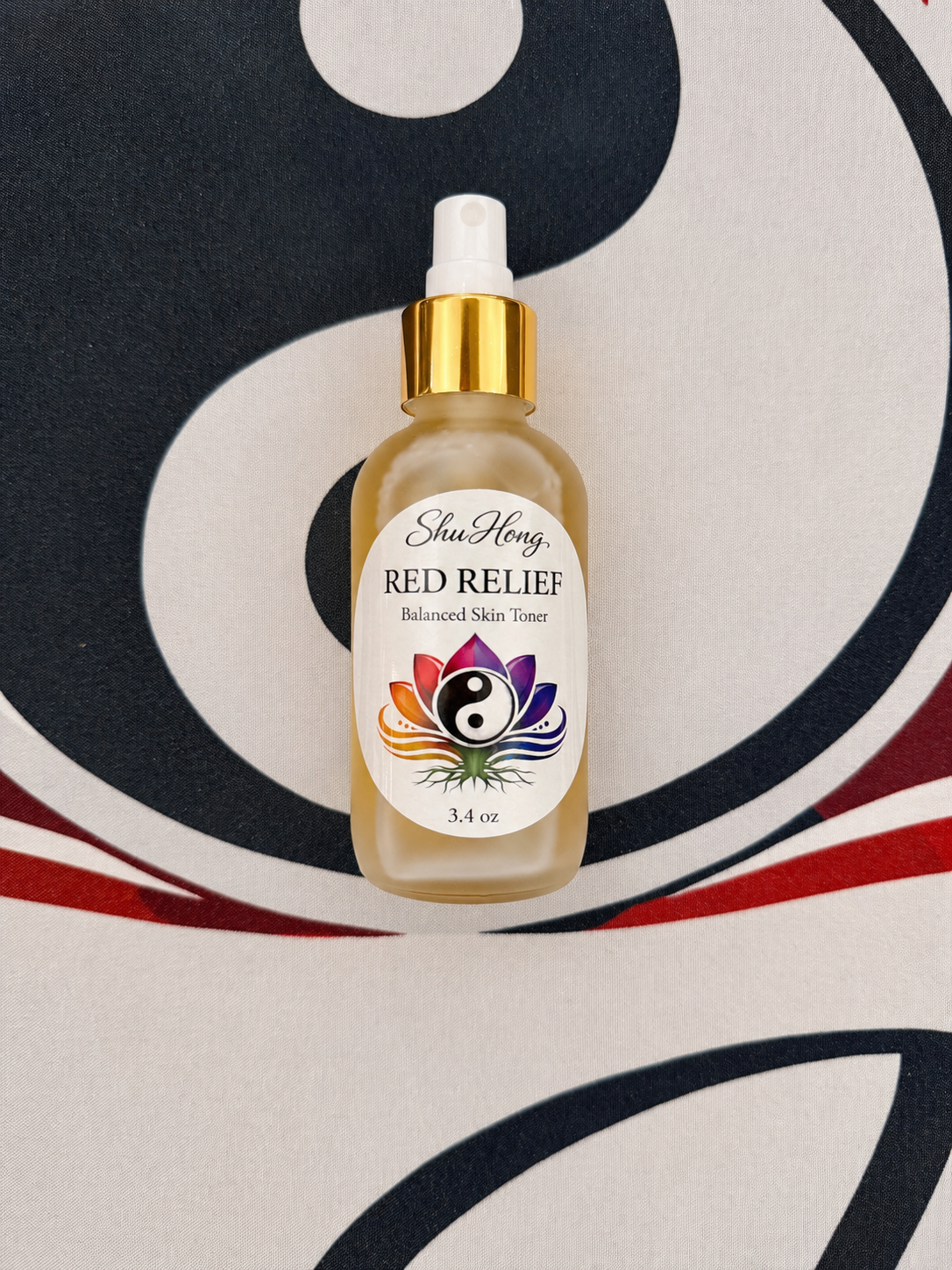
Phase 1: Red Relief Balanced Skin Toner

Daily terrain regulator · Glycerin-based · Tremella mushroom · pH 5.0–5.5 · Lowest alcohol · 18+ month shelf life
Balanced is the foundation of the system and the only product designed for full-body, daily use by all skin types. It is glycerin-dominant with the lowest alcohol content of the three formulas — enough to draw herbs into the skin without drying it.
Its central ingredient is Tremella mushroom (Snow Fungus) — one of the most powerful natural humectants available. Research demonstrates that Tremella polysaccharides can hold up to 500 times their weight in water, deliver moisture deeper into the epidermis than many forms of hyaluronic acid, and offer additional antioxidant, anti-inflammatory, and skin-protective properties.
Critically, Tremella is extremely fragile during manufacturing. Standard emulsification and heat processing degrade its moisturizing properties before the product is bottled. Shu Hong adds Tremella at the end of the process, separately emulsified, to preserve its full potency — a manufacturing decision that most skincare companies do not know to make.
Balanced is formulated at pH 5.0–5.5, matched to the skin’s natural acid mantle. Most toners default to alkaline pH because preservation is easier. Shu Hong solved the preservation problem at the correct pH.
Many users replace their moisturizer entirely. The practitioner who developed it uses it daily on healthy skin as her only product.

"I wash my face, close my eyes, and spray it all over. I also spray the décolletage area — the neck and chest. It's really hydrating, tightens the skin, and that's all I use. No moisturizer, nothing else." — Clinical Practitioner, Shu Hong Botanicals

Herb Also Known As Function
Tremella Mushroom Snow Fungus Key moisturizing agent. Seals moisture barrier and locks active herbs into the skin. Added last in manufacturing to preserve potency.
Ku Shen Sophora Root Clears heat and damp-heat; stops itching. Provides antibacterial and antifungal support. Foundational across all formulas.
Bai Shao White Peony Root Nourishes blood and yin at the skin surface. Helps reduce reactivity and hypersensitivity.
Jin Yin Hua Honeysuckle Flower Clears heat-toxin. Reduces redness and surface inflammation, including rosacea.
Pu Gong Ying Dandelion Root Clears damp-heat and supports liver-skin connection. Helpful for hormonal and stress-related breakouts.
Du Huo Pubescent Angelica Root Dispels wind-damp. Addresses deep surface tension, roughness, and chronic dryness.
Gan Cao Licorice Root Harmonizes the formula. Reduces irritation and enhances the effectiveness of other herbs.
Huang Qi (Astragalus) Astragalus Root Strengthens the skin’s defensive (wei qi) layer and supports long-term barrier resilience.

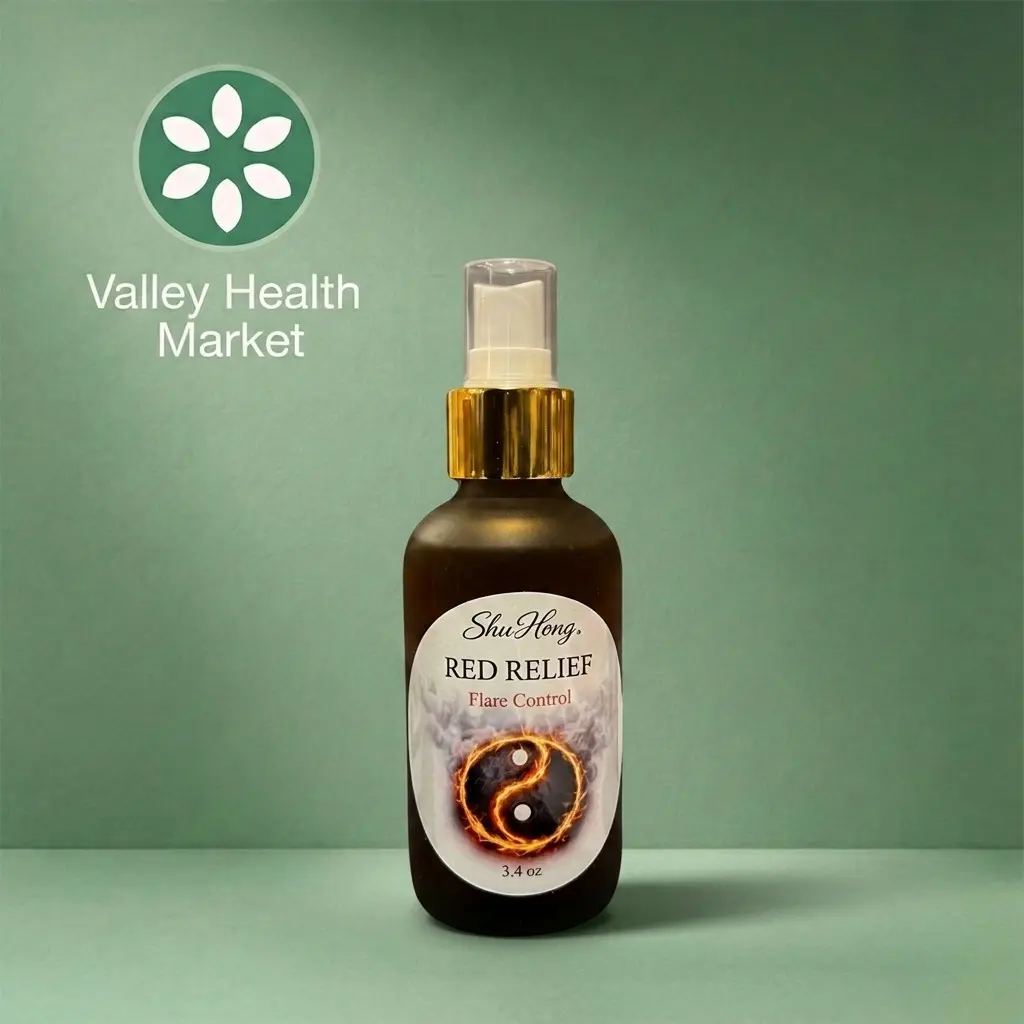
Phase 2: Red Relief Flare Control

Active flare management · Damp-heat clearing · Six targeted herbs · Moderate alcohol · 18+ month shelf life
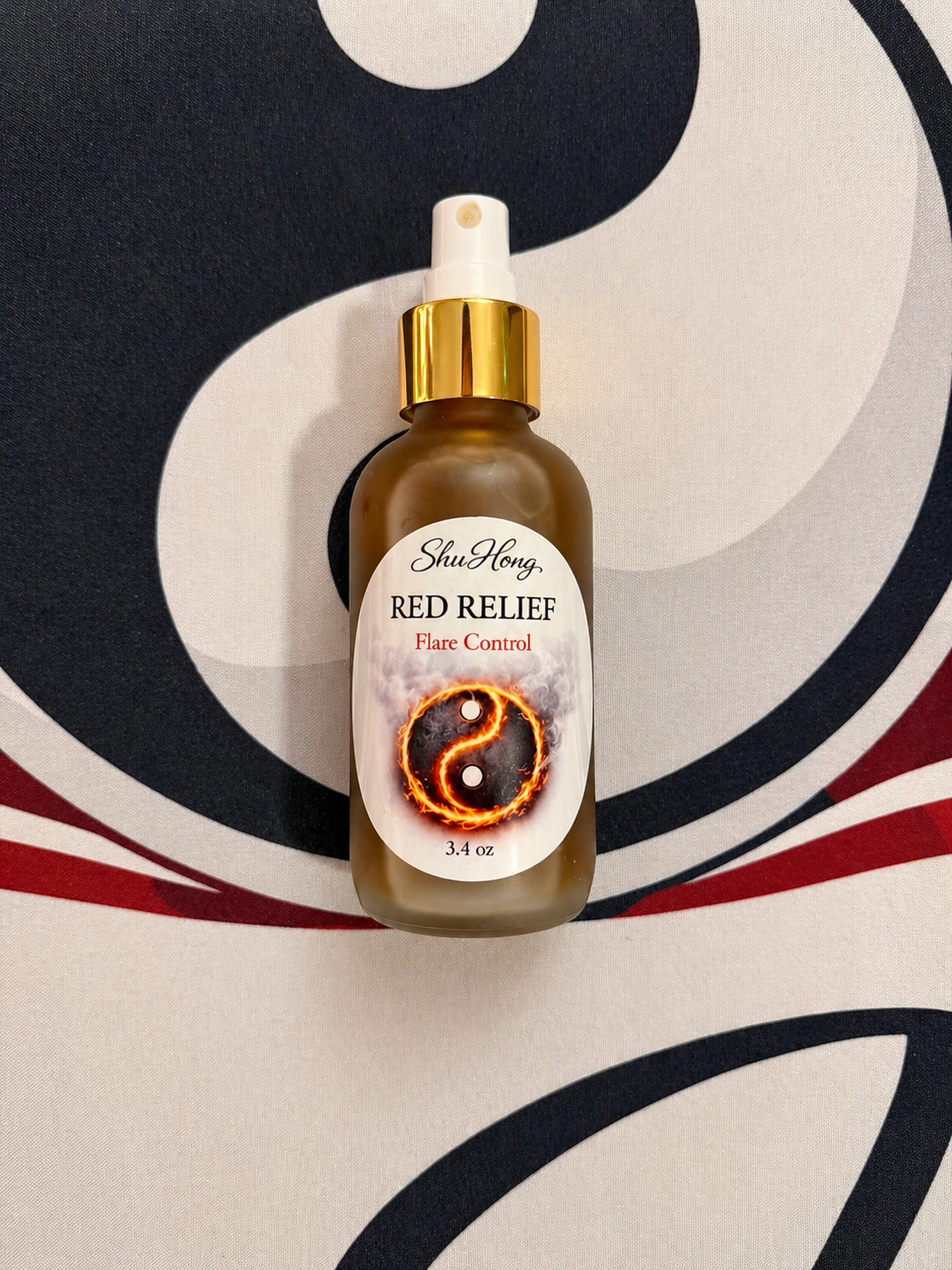
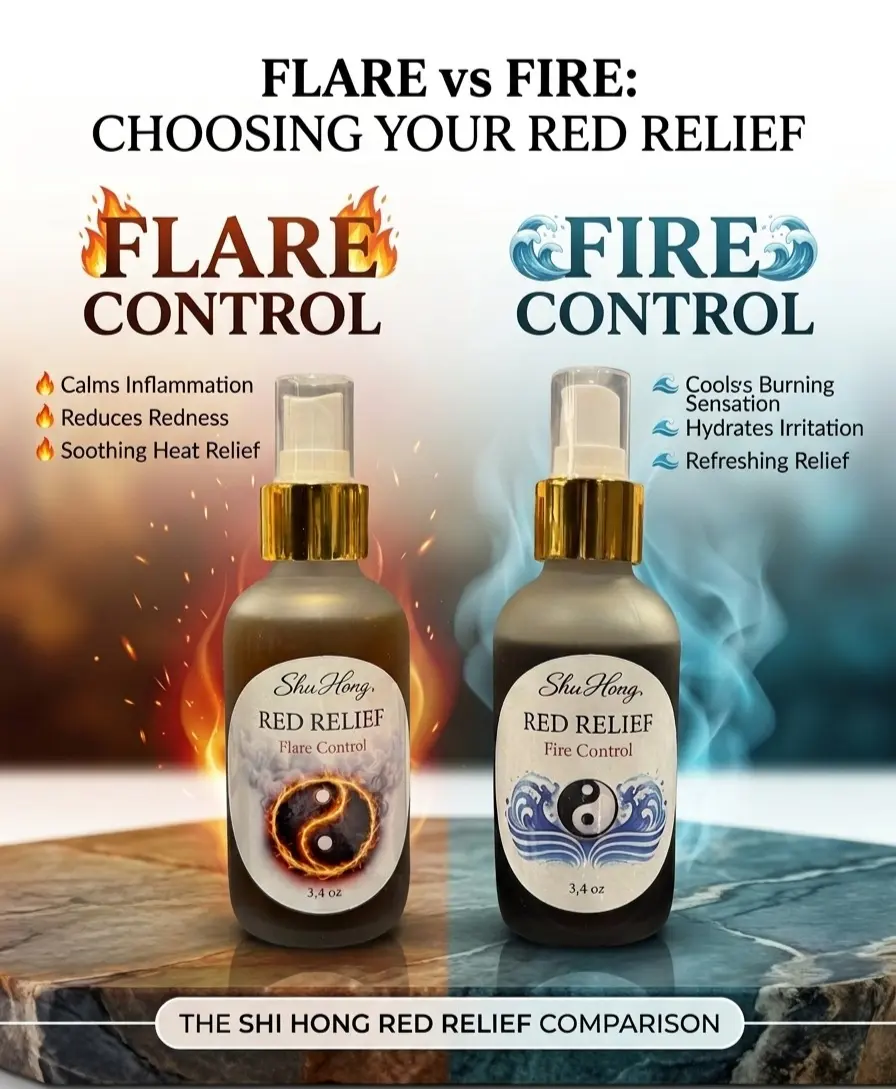
Flare Control is the targeted mid-layer intervention for active skin inflammation. It is deliberately more drying than Balanced — designed for the wet, oozing, scaling presentations of active damp-heat. It goes directly on affected areas during an outbreak, not on the entire face or body.
Its six-herb formula contains TCM dermatology’s most targeted agents for surface-to-mid-layer damp-heat: Bai Xian Pi for oozing and weeping eruptions, She Chuang Zi for dampness and itch, Di Fu Zi for mid-layer damp-heat, Huang Bai for its potent anti-inflammatory and antimicrobial action, and Jin Yin Hua for heat-toxin at the surface — all anchored by Ku Shen as the foundational herb.
For eczema, Flare Control is the primary targeted product. For psoriasis, it is the second step — applied after Fire Control has addressed the deeper layer. This distinction matters clinically.
Herb Also Known As Function
Ku Shen Sophora Root Clears heat and damp-heat; stops itching. Antibacterial and antifungal. Present in all three Shu Hong formulas.
Bai Xian Pi Dictamnus Root Bark Primary herb for oozing, weeping, and scaling eruptions — the classic eczema and dermatitis presentation.
She Chuang Zi Cnidium Seed Dries dampness; stops itching; antimicrobial. Indicated for wet, damp-type skin conditions.
Di Fu Zi Kochia Fruit Clears damp-heat and relieves itching at the surface and mid-layer. A classical dermatology herb.
Huang Bai Phellodendron Bark Drains damp-heat; strongly anti-inflammatory with antibacterial and antifungal properties.
Jin Yin Hua Honeysuckle Flower Clears heat-toxin and reduces surface inflammation. Helps address the toxic component in active skin flares.

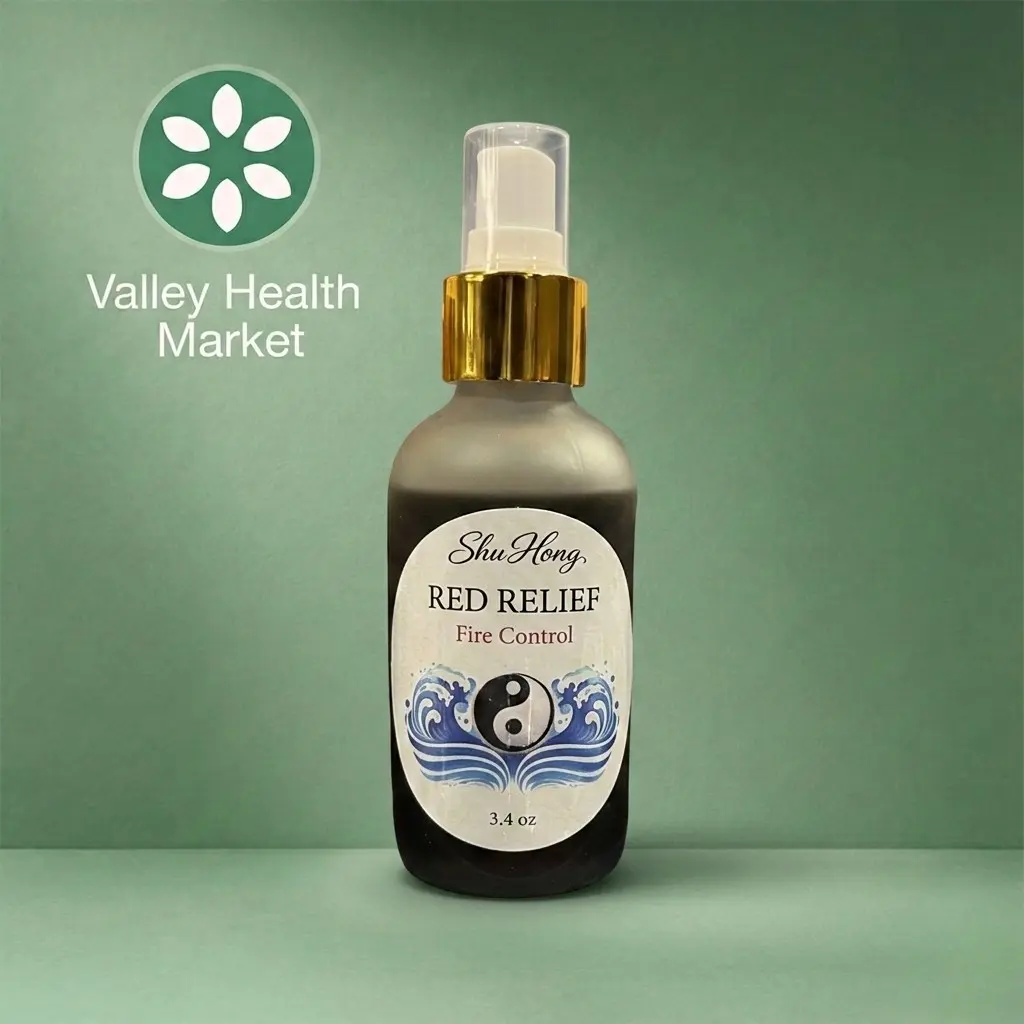
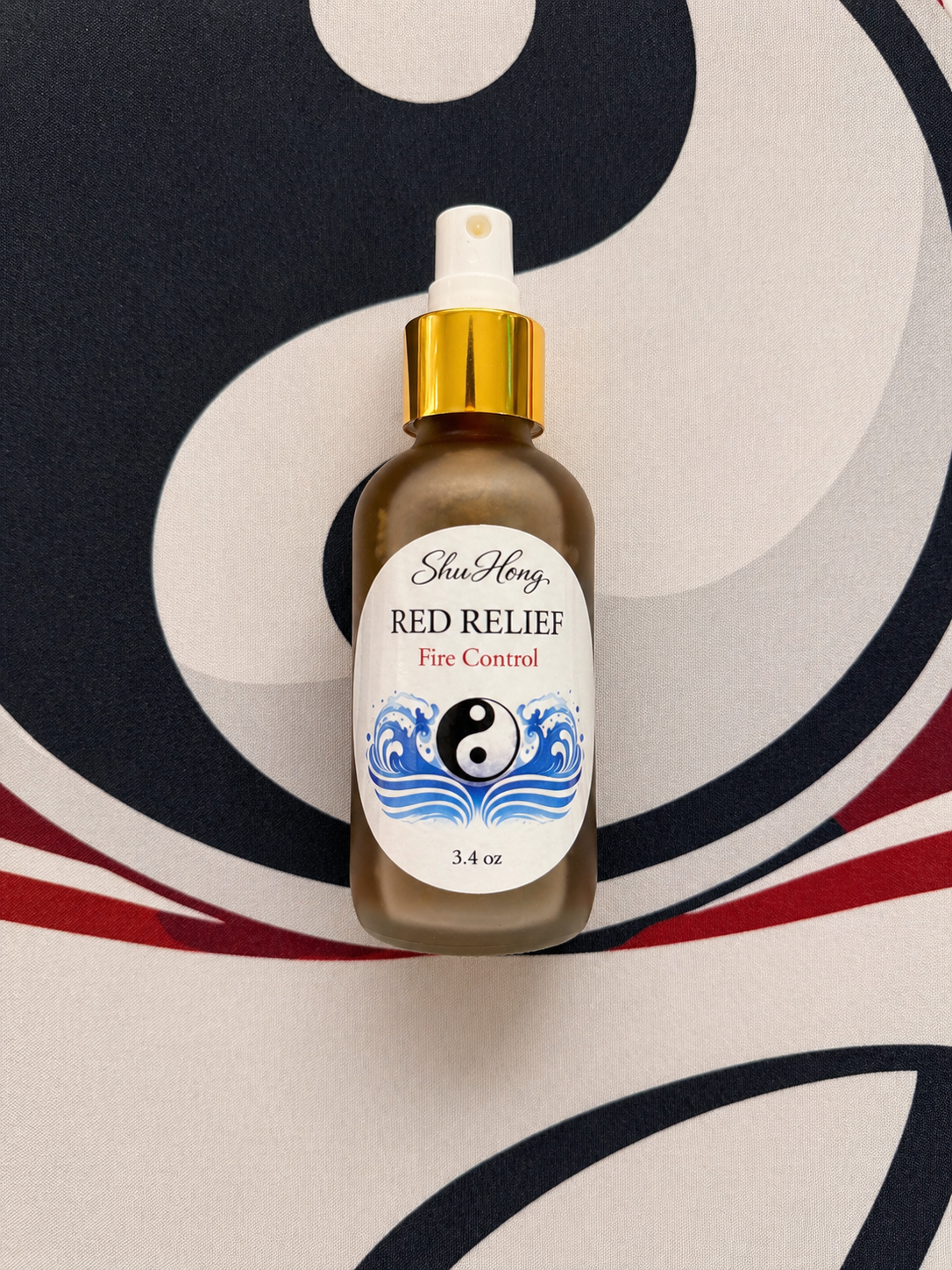
Phase 3: Red Relief Fire Control

Deep heat & nerve modulation · Highest herb concentration · Highest alcohol · No expiration date · Deepest penetration
Fire Control is the most potent formula in the system. It targets the deepest pathology: fire toxin that has penetrated to the channel and nerve level. Its clinical presentations include burning skin pain, electric or crawling sensations, neuralgic symptoms with or without a visible rash, severe scalp itch from neurological causes, and the deep immune-dysregulation pattern of psoriasis.
Fire Control has the highest herb concentration of any product in the line — visible in its deeply saturated, dark color. Its high alcohol content serves two purposes: it enables penetration to the nerve-level tissue that lower-alcohol formulas cannot reach, and it provides complete long-term preservation. Fire Control is the only Shu Hong product with no expiration date.
For psoriasis, Fire Control is the lead product — applied first to address viral, fungal, and deep stress-response components before Flare Control addresses the surface eruption. For neuropathy, combining Fire Control with Evil Bone Water produces results significantly greater than either product alone.

For neuropathy — that stinging, burning pain where Evil Bone Water helps a little but doesn't quite meet the mark — combining it with Fire Control produces an incredible response. The two together are notably more effective than either alone."— Clinical Practitioner, Shu Hong Botanicals

Herb Also Known As Function
Ku Shen Sophora Root At highest concentration in Fire Control. Antifungal and antibacterial; clears deep heat. Foundational across all three formulas.
Lian Qiao Forsythia Fruit Clears heat-toxin at the tissue level. Helps address deep infectious components in treatment-resistant conditions.
Huang Qin Chinese Skullcap Root Clears heat from the blood; anti-inflammatory and neuroprotective. Indicated for nerve-related skin conditions.
Chuan Xiong Sichuan Lovage Root Moves blood and qi through channels. Reaches head, scalp, and peripheral nerve territories.
Gou Teng Uncaria Stem with Hooks Anchors yang, calms neurological irritation, and reduces peripheral nerve excitability and burning sensations.

Ingredient Deep Dive — Every Herb, Every Purpose

Ku Shen (Sophora Root) — The System Anchor

Ku Shen appears in all three Shu Hong formulas and is the single most important herb in the system. Sophora flavescens has been used in TCM dermatology for over 2,000 years to clear heat, drain damp-heat, and treat eczema, psoriasis, acne, rosacea, and fungal skin infections. Modern pharmacological research has confirmed its anti-inflammatory, antibacterial, antifungal, and antipruritic (anti-itch) properties. Research published in Frontiers in Pharmacology demonstrated that Sophora-derived compounds can suppress the expression of key inflammatory markers including IL-6, IL-1β, TNF-α, and COX-2, primarily through the NF-κB signaling pathway.
In 2025, ScienceDirect research specifically confirmed the efficacy of Sophora flavescens extract delivered via microneedle in improving psoriatic skin lesions in animal models — further validating the classical TCM indication that Ku Shen’s anti-inflammatory and anti-proliferative properties are directly relevant to psoriasis management.

Tremella Mushroom (Snow Fungus) — The Moisture Key

Tremella fuciformis is an edible, translucent, jelly-like mushroom with a centuries-long history in Chinese medicine and cuisine. Its primary value in skincare is its extraordinary polysaccharide content — polysaccharides capable of holding up to 500 times their weight in water. A 2012 study published in the Journal of Anhui Agricultural Sciences found that at 0.05% concentration, Tremella fuciformis provided superior moisture retention compared to 0.02% hyaluronic acid — the industry standard humectant.
A 2023 review published in PubMed confirmed that Tremella polysaccharides demonstrate antioxidant, anti-inflammatory, wound-healing, and skin barrier-protective properties in multiple studies. Research in the Journal of Cosmetic Dermatology showed that Tremella polysaccharides can inhibit UVA-induced photodamage in human dermal fibroblasts. A 2022 study in Frontiers in Pharmacology demonstrated that Tremella polysaccharides can alleviate induced atopic dermatitis in mice by regulating immune response and gut microbiota — a finding directly relevant to eczema patients.
Unlike hyaluronic acid, Tremella’s smaller molecular size enables deeper epidermal penetration. And unlike synthetic humectants, it offers a multi-functional profile that extends well beyond hydration.

The Preservation System

Shu Hong uses three plant-derived, Cosmos-certified preservatives across all products:
Each preservative was chosen specifically because it independently benefits the skin — not merely because it stabilizes the formula. This is a material distinction from conventional cosmetic preservation, where shelf stability is the sole objective and preservatives are tolerated rather than therapeutic.

Clinical Protocols — How to Use the System

Daily Skincare (All Skin Types)

Cleanse. Pat dry. Close eyes and spray Balanced directly across the face. Extend to neck and chest if desired. Use 1–3 times daily. No additional moisturizer required for most users. Safe for all intact skin.

Eczema Protocol

During a flare: apply Flare Control to affected areas only. Allow to dry completely. Follow with Balanced over the broader surrounding area. For sensitive skin, apply Balanced first, dry, then Flare Control. Do not use Fire Control for eczema — it is too drying for the atopic pattern. Post-flare: Balanced daily for barrier repair and relapse prevention.

Psoriasis Protocol

Stage Sequence Goal
Acute Outbreak Fire Control → dry → Flare Control → dry → Balanced Deep clearance, surface calming, and barrier restoration.
Calming Down Flare Control → dry → Balanced Manages surface symptoms while rebuilding the skin barrier.
Stable Skin Balanced (daily) Maintains skin terrain and helps prevent relapse.

Neuropathy Protocol — With Evil Bone Water

Apply Evil Bone Water broadly to the area first to move structural stagnation. Allow to absorb. Then apply Fire Control specifically over the nerve-pain zones. Follow with Balanced if desired for surface hydration. The EBW + Fire Control combination addresses two distinct dimensions of the same problem and is reported to be significantly more effective than either product alone.

Severe Scalp Itch

Part the hair. Spray Fire Control directly to the scalp. Work in with fingertips like a serum. Safe for hair and scalp. Particularly effective for itch driven by cervical compression or neurological involvement. If any product remains, it can be worked through the hair.

Enhanced Penetration for Stubborn Lesions

Apply Fire Control to gauze and hold or secure against the area. Adding gentle heat (a heating pad) over the gauze increases penetration into entrenched, thick, or chronic lesions.

The Science — Tremella, Biofilm, and Modern Parallels

The Shu Hong system was developed within a classical TCM framework. But its mechanisms intersect meaningfully with modern dermatological research in at least three areas:

Tremella and Barrier Function

Research confirms Tremella fuciformis polysaccharides protect against UVA-induced photodamage, alleviate atopic dermatitis through immune and microbiome modulation, and demonstrate moisture retention superior to hyaluronic acid at comparable concentrations. The finding that Tremella's smaller particle size enables deeper epidermal penetration is directly relevant to why Balanced performs as a moisturizer rather than merely a surface film.

Biofilm and the Hidden Pathogen

Biofilms — structured microbial communities embedded in a self-produced extracellular matrix — have been identified in up to 60% of chronic wounds and are increasingly implicated in persistent inflammatory skin conditions. The 2024 Experimental Dermatology review confirmed that the skin microbiome is directly involved in atopic dermatitis and psoriasis pathophysiology, including through bacterial aggregation and biofilm formation.

The classical TCM concept of "hidden pathogen" — a disease factor that retreats from treatment, persists in latency, and re-emerges when conditions are favorable — describes biofilm behavior with striking accuracy. The Shu Hong system's graduated approach — surface clearing (Flare), deep channel clearing (Fire), and daily terrain management (Balanced) — parallels the emerging understanding that ecological interventions, not single-target suppression, are required to address biofilm-associated chronic disease.

Ku Shen and Modern Pharmacology

The anti-inflammatory mechanisms of Sophora flavescens have been mapped via network pharmacology, demonstrating activity through IL-6, IL-1β, VEGFA, TNF-α, and COX-2 pathways, mediated primarily by NF-κB signaling. The Kushenol F compound specifically has been shown to improve atopic dermatitis in animal models. These findings validate the classical TCM indications for Ku Shen in skin disease while providing a molecular framework for understanding its clinical effects.

What Makes Shu Hong Different — Formulation Integrity

The Shu Hong formulator conducted extensive research across Korean skincare, European luxury lines, and US premium products — including products at $100 and above per unit. The finding was consistent: even high-end skincare contains minimal active botanical ingredients relative to total volume, a large proportion of filler and carrier ingredients, and multiple synthetic chemical preservatives.
Shu Hong was built as a direct response to that finding. Its claims are specific:

These are not claims that can be made about products built around filler and synthetic stabilizers. They are the result of 20+ years of clinical formulation, a commitment to preserving each herb's specific therapeutic property through the manufacturing process, and an unwillingness to make ingredients that benefit the label rather than the skin.

Quick Reference — All Three Products at a Glance

Balanced (Phase 1) Flare Control (Phase 2) Fire Control (Phase 3)
Use Daily — all skin types Active flares only Deep burning / nerve pain only
TCM Pattern Terrain support Damp-heat; wind-heat Fire toxin; neurogenic
Key Herb Tremella mushroom Bai Xian Pi + She Chuang Zi Gou Teng + Chuan Xiong
Alcohol Low (glycerin-dominant) Moderate Highest
Penetration Surface Surface to mid-layer Mid-layer to nerve interface
Shelf Life 18+ months 18+ months No expiration
Eczema? Yes — daily maintenance Yes — primary flare product No — too drying
Psoriasis? Yes — maintenance phase Yes — second step (after Fire) Yes — lead product (apply first)
Colour Lighter gold-yellow Medium orange-red Darkest (highest saturation)

Reseller Information & MAP Policy

Shu Hong Botanicals enforces a Minimum Advertised Price (MAP) and MSRP Protection Policy across all sales channels. All authorized retailers, distributors, and wholesale partners agree to uphold the established MSRP when advertising Shu Hong products.

Key Policy Points

  • MSRP pricing is provided directly by Shu Hong Botanicals and may be updated periodically
  • Retailers may sell at any price within their practice, but publicly advertised pricing must not fall below MSRP
  • “Add to cart to see price,” bundling tactics, or discount codes that reduce advertised price below MSRP are violations
  • First violation: temporary suspension of wholesale privileges + 48 hours to correct
  • Second violation: permanent loss of wholesale account
  • Unauthorized resellers will be terminated and may face legal action

Contact

For pricing clarification, policy updates, or wholesale inquiries: shuhongbotanicals@gmail.com

Share on

Will Sheppy, Founder and Acupuncturist at Valley Health Clinic
By Will Sheppy, L.Ac
Will Sheppy, L.Ac., is the founder of Valley Health Clinic and Valley Health Marketplace in Albany, Oregon. He specializes in sports acupuncture, pain management, and Chinese topical medicine. Valley Health Marketplace carries only products he has personally tested in his clinic.

FAQ's

Can I just use Balanced and skip the other two?
Yes — if your skin is currently stable and you have no active flares. Balanced is a complete daily skincare product on its own. Many users with no active skin condition use it as their only toner and moisturizer. The other two products are for when your skin needs more.
Balanced has been tested on all skin types and all intact skin areas. For infants or very young children, a patch test is always recommended. Consult a pediatric practitioner before use on children under 2.
Yes. Balanced can be layered under or over other products. For best results, apply Balanced first and allow it to absorb before adding other products. Do not mix Flare Control or Fire Control with other active skincare in the same application.
Most users notice a visible difference in redness and skin texture within 1–2 weeks of consistent Balanced use. Terrain regulation is cumulative — sustained improvement in flare frequency and barrier resilience builds over 4–8 weeks of daily use. Active flare intervention with Flare Control or Fire Control often produces noticeable improvement within the first applications.
Fire Control’s high alcohol content provides complete long-term preservation without additional stabilizers. The alcohol concentration is a formulation decision, not a limitation — it is the same property that enables Fire Control to penetrate to the nerve and channel level that lower-alcohol products cannot reach.
Yes — and for neuropathy, this combination is specifically recommended. Apply Evil Bone Water first to move stagnation, then layer Fire Control over the nerve-pain zones. The clinical observation is that the combination is significantly more effective than either product alone.
No. All ingredients are plant-derived. The preservation system is Cosmos-certified and entirely plant-based.
No. Shu Hong products are cruelty-free.

Recent Posts

Natural Room Sprays for Massage & Wellness Clinics | Emily Skin Soothers

Sage Your Space Sage and Lavender Front Label Valley Health Market Green Background
14 minutes read

Natural Room Sprays for Massage & Wellness Clinics | Emily Skin Soothers

Will Sheppy, Founder and Acupuncturist at Valley Health Clinic
Willard Sheppy Dipl. OM, LAc, BS

Willard Sheppy is a licensed acupuncturist (LAc) and Founder of Valley Health Clinic specializing in using Traditional Chinese Medicine to treat acute injuries and chronic conditions, and to improve sports performance and rehabilitation.

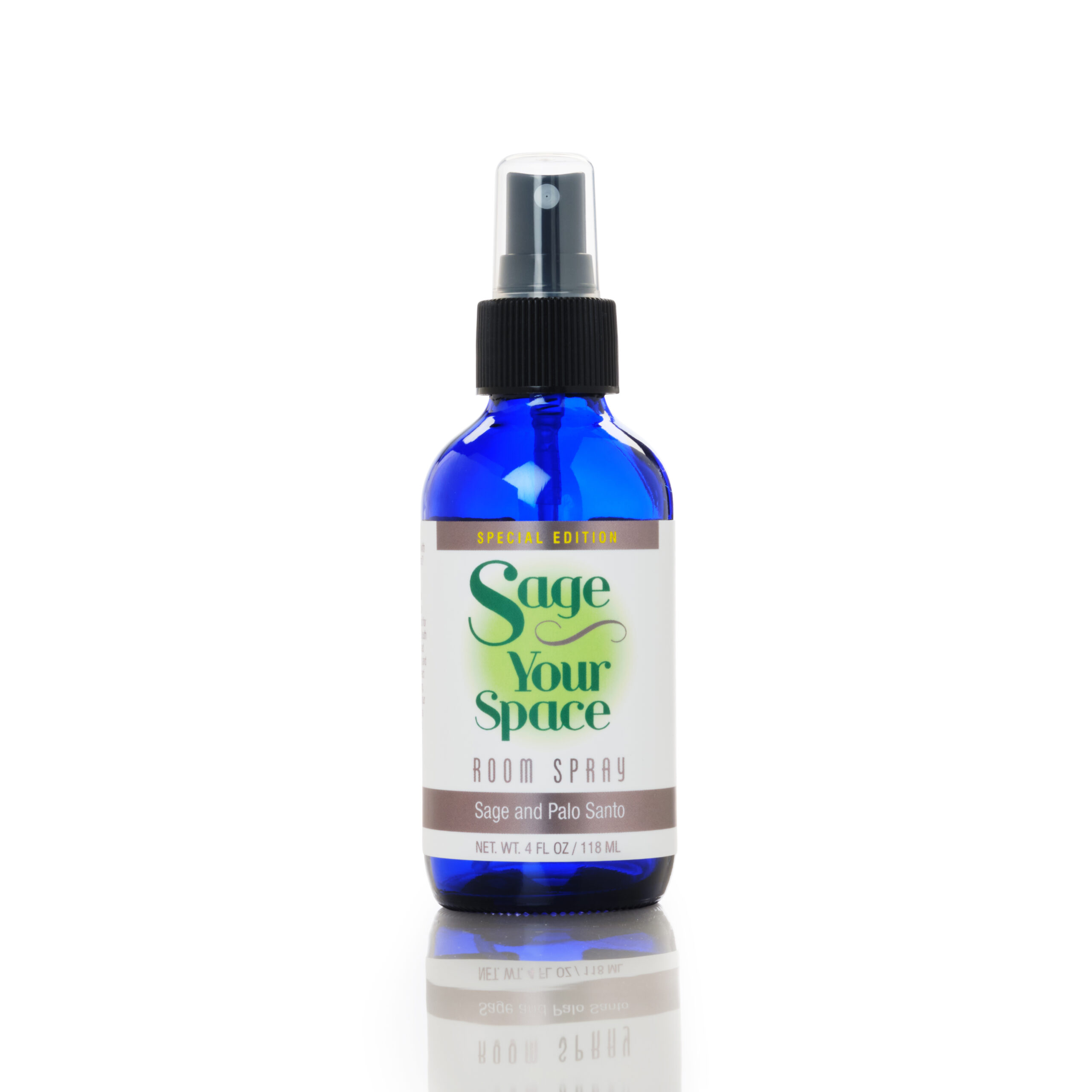
Sage Your Space SAGE AND PALO SANTO Front Label white background
Sage Your Space Sage and Lavender Front Label Valley Health Market Green Background

Table of Contents

The Problem Nobody Wants to Talk About

Let’s be honest: you’ve had patients come in who smell. Maybe they’ve been working all day and haven’t showered. Maybe they’re wearing too much cologne. Maybe there’s a pet smell clinging to their clothes. Maybe their body chemistry just produces more odor than usual—and hey, that’s not their fault, and I’m not judging.
But here’s the reality: that smell lingers in your treatment room.
No matter how clean you keep your space—no matter how many times you sanitize the tables, wash your hands, open the windows—the next patient walking in is going to catch a whiff of the previous appointment. And that’s not the first impression you want to make.

Top Room Freshener Benefits: Why Smell Matters More Than You Think

Smell is one of the most primal and powerful senses we have. It’s directly linked to memory and emotion. Think about the psychology of retail: why do bakeries and real estate agents bake cookies or bread before showings? Because they know that smell is one of the first ways people create lasting impressions.
When a client walks into your clinic, you want them to feel:
A fresh, pleasant-smelling space communicates all of that in seconds, before you even say hello. It sets the tone. It builds trust. It tells them they’ve come to the right place.
Conversely, if they walk in and smell the previous patient, they immediately wonder: How clean is this place really? What haven’t they cleaned?
Even if you’re impeccably clean, a lingering odor undermines that first impression.

Why Room Spray Matters for Massage Therapists

A room spray helps do three important jobs in a massage practice.
That third point matters more than many people admit. Sometimes the previous session was physically intense. Sometimes it was emotionally heavy. Sometimes the room simply feels stale and needs a shift. A subtle room spray can be part of clearing the space and helping you refocus before the next client walks in.
Massage therapists spend all day helping other people regulate. Having a simple ritual that helps reset the room and your own attention can make the work feel cleaner and more sustainable.

The Problem With Commercial Room Sprays, Air Sprays, and Fragrance Oils for Room Spray

I realized that if I was recommending natural, plant-based medicine to my patients, I needed to apply that same standard to my clinic environment.

Why I Like Emily Skin Soothers Room Sprays for Massage Therapy

These room sprays were created by Mike Arsenault because he wanted subtle essential oil blends for his own acupuncture office. That origin matters. These were made for treatment spaces, not for people trying to recreate a candle aisle or a synthetic perfume experience.
They are clean, light, and easy to use in practice.
Emily Skin Soothers room sprays are made without overpowering perfumes, aerosols, alcohol, synthetic fragrance, or parabens. Instead, they use purified water, essential oils, saponified oils, vegetable glycerin, rosemary extract, and organic aloe vera. That gives them a softer feel in the air and makes them much easier to use in a professional setting throughout the day.
Another thoughtful detail is the use of clary sage instead of white sage. White sage is an overharvested ceremonial plant. Clary sage is cultivated, more appropriate for everyday use, and has a naturally calming scent profile that works well in massage rooms.
These sprays are a good fit for massage therapists who want something that feels clean, grounded, and professional rather than overly scented.

A Better Scented Oil Air Freshener for Treatment Spaces

That’s when I discovered Emily Skin Soothers room sprays—specifically created for treatment spaces like acupuncture clinics, massage studios, and wellness practitioners.
Why I switched:
Emily’s room sprays are fundamentally different from Bath & Body Works and other commercial options. They’re:
I now use them between every client. It’s a ritual. It clears the energy. It resets the space. And every person who walks through that door knows they’re stepping into a fresh, intentional environment.

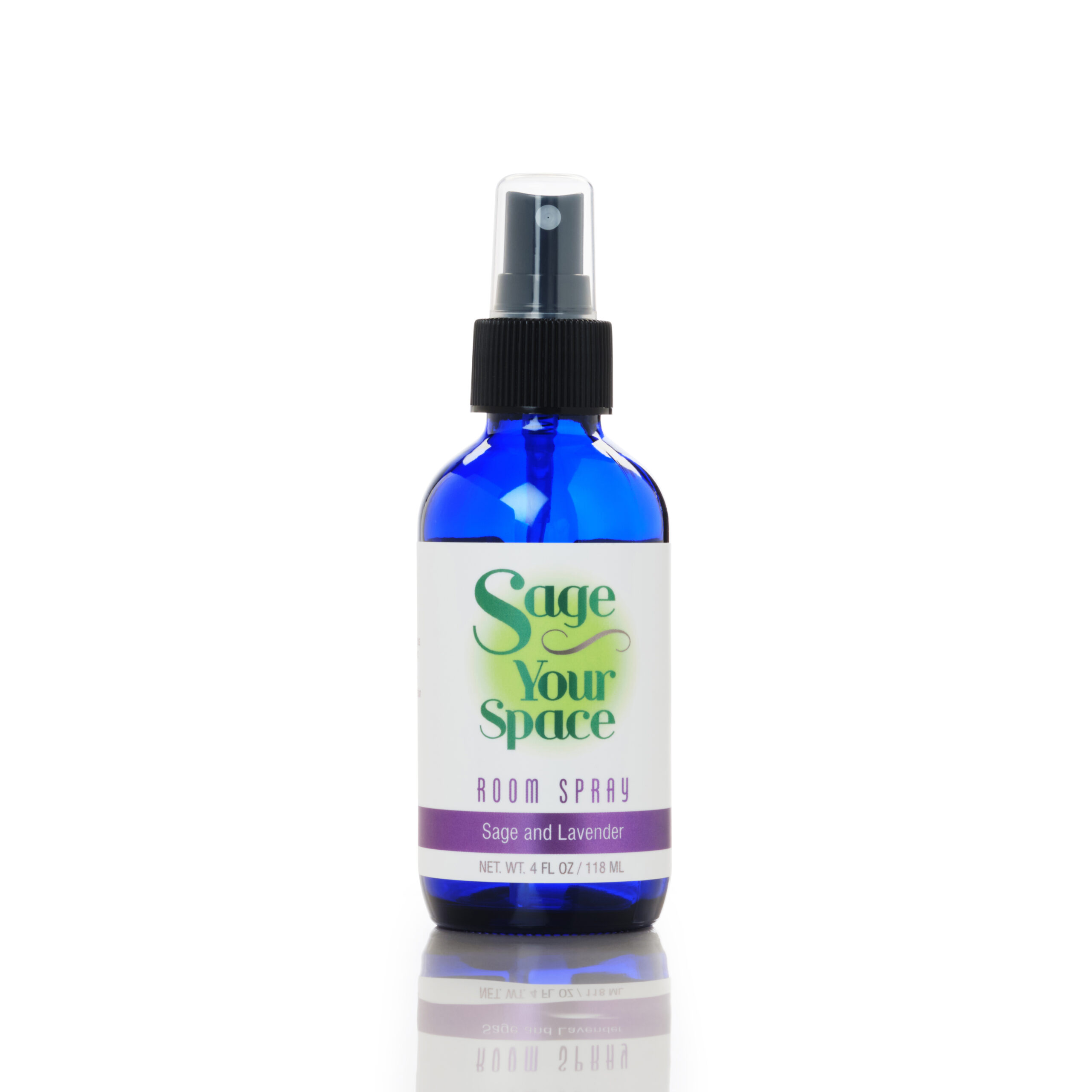
Sage Your Space Spray - Sage and Lavender (4 oz.)

Created for acupuncture clinics, this light mist uses clary sage and lavender to shift the mood without overpowering the room. It is a clean, subtle spray gentle enough for pillows and effective enough to create an immediate sense of calm.

Two Natural Air Sprays I Use in My Practice

Sage Your Space, Sage & Lavender

If you want the most broadly appealing option for a massage office, this is the one I would start with
Sage and Lavender combines clary sage and lavender into a soft, calming, and easy-to-work-with scent. It has a sweet, herbaceous, and floral profile, but it stays subtle rather than overpowering. That is important in a bodywork setting where clients may already be stressed, sensory-sensitive, or headache-prone.
Mike describes clary sage and lavender together as a strong, calming combination, and that fits how many massage therapists want their treatment room to feel.
It is a good choice when you want the room to support stress relief, relaxation, decompression, and sleep-oriented care.

When I use it:

Throughout the day between appointments, and especially when I want to deepen relaxation and ease in the treatment space.

The blend:

Clary sage (herbaceous, grounding) + lavender (calming, nurturing). According to research, both of these essential oils have documented calming and relaxing properties—so together, they’re like a 1-2 punch for the nervous system.

Clean formula:

Purified water, lavender essential oil, clary sage essential oil, saponified coconut/olive/jojoba oils, vegetable glycerin, rosemary extract preservative, organic aloe vera.

Sage Your Space, Sage & Palo Santo

This version has a different feel.
Sage and Palo Santo is more layered, more atmospheric, and more complex. Palo santo has a distinctive aroma that people often describe as woody, citrusy, warm, minty, and grounding. On its own, it can be strong. Paired with clary sage, it becomes more balanced and more suitable for treatment spaces.
This makes it a good option for massage therapists who want a spray that feels more like a reset. It is especially useful after a heavy session, after a client with strong odor or perfume, or anytime you want the room to feel cleared out and ready for a fresh start.
Mike notes that the palo santo oil is sourced directly from an artisan co-op in Ecuador. They work from sustainably harvested fallen trees and ongoing replanting rather than careless mass-market sourcing.
That makes this a better fit for practitioners who care about product story and sourcing as well as scent.

When I use it:

When I want to clear negative energy, reset the space after a difficult appointment, or create a ceremonial feel for a client who needs deeper clearing.

The blend:

Clary sage (grounding) + palo santo (citrus, pine, lemon notes—uplifting and clearing). Palo santo means “holy wood.” It’s sustainably harvested from fallen trees in Ecuador and has been used for centuries in shamanic and religious ceremonies to clear the negative and invite the good.

Why I chose this source:

Mike sources directly from an artisan co-op in Ecuador that practices true forest stewardship—they’ve replanted over 12,000 trees in recent years. Palo santo alone can be overpowering, but combined with the sweet herbaceousness of clary sage, it becomes complex, intriguing, and just right.

Perfect for:

Resetting energy between intense sessions, or when you want to help a client arrive with a clean slate.

Which Top Room Freshener Is Better for Massage Therapists?

Both sprays work well. The better choice depends on the feel you want in your office.
Choose Sage and Lavender if you want a softer, more universally relaxing scent that works well with almost any client.
Choose Sage and Palo Santo if you want something more grounding, more distinctive, and more suited for resetting the room after intense sessions.
For many massage therapists, the best setup may be to have both. Keep Sage and Lavender as your everyday between-client room spray, and use Sage and Palo Santo when the room needs a deeper reset.

The Science Behind Essential Oils, Air Sprays, and Scented Oil Air Freshener Use

Here’s what most people don’t realize: essential oils aren’t just pleasant-smelling. There’s real biochemistry happening.
Research shows that certain essential oil vapors can reduce the presence of bacteria, fungi, and viruses in the air. This isn’t about replacing proper sanitation—but it’s a meaningful complement. Traditional practices across cultures have used aromatic plant medicines to clear spaces and support energetic cleansing for thousands of years. Modern science is beginning to validate what healers have always known.
When you spray a natural essential oil room spray, you’re not just masking odor. You’re introducing plant compounds that have antimicrobial properties, that calm the nervous system, and that support the psychological and emotional tone of your space.

How to Use Air Sprays in a Massage Practice

Use it lightly after you reset the room. The goal is not to cover odor with a heavy cloud of fragrance. The goal is to make the space feel clean, calm, and ready.
Good times to use it include after a client with strong perfume, after a physically demanding treatment, after an emotionally intense session, before a new client enters, or at the end of the day when the room feels stale.
One or two light sprays are usually enough. In a massage office, subtle works better than strong.
Using natural room spray has become part of my between-appointment ritual. It takes 10 seconds. It costs pennies per use. And it transforms how clients experience my space.

Here’s how I do it:

The room feels clear. The next person walks in and feels the difference before they even sit down.

Why Emily Skin Soothers, Not Bath & Body Works Room Spray?

Let me be direct: Bath & Body Works room spray isn’t bad, but it’s not designed for a healing space. Their products prioritize shelf appeal and mass-market scent profiles over clinical appropriateness. They’re stronger, they linger longer, and they’re full of ingredients that don’t belong near someone receiving treatment.
Emily Skin Soothers exists because a practitioner (Mike) created it for practitioners. It’s:
It’s the difference between a commercial room spray and a clinical-grade tool.

Ready to Upgrade Your Treatment Space With Palo Santo Room Spray?

If you’re tired of commercial room spray options and want something that actually supports the healing experience you’re creating, I recommend starting with Emily Skin Soothers.
Try the Sage & Lavender blend for everyday use—it’s perfect for promoting calm and deepening relaxation between sessions. Or go with Sage & Palo Santo if you want something more ceremonial, more clearing, more intentional.
Both are available through our marketplace, and both will change how you think about your treatment space.
Shop Emily Skin Soothers Room Sprays and start creating the first impression you want for every client.

The Bottom Line on Top Room Freshener and Natural Room Spray Options

Your treatment room is a sacred space. Every detail matters—especially the ones your clients notice in the first five seconds.
A natural room spray isn’t a luxury. It’s a tool. It’s part of how you say, I care about your experience. I’ve thought about every detail. You’re in good hands.
That’s worth 30 seconds and a few spritzes.

Share on

Will Sheppy, Founder and Acupuncturist at Valley Health Clinic
By Will Sheppy, L.Ac
Will Sheppy, L.Ac., is the founder of Valley Health Clinic and Valley Health Marketplace in Albany, Oregon. He specializes in sports acupuncture, pain management, and Chinese topical medicine. Valley Health Marketplace carries only products he has personally tested in his clinic.

FAQ's

Can I use more than one Emily Skin Soother product?
Absolutely. Many people use the original for general maintenance and switch to the Hot Skin Soother or Diaper Plus during flares. The products are designed to work together.
Yes — the full line (except the pet products) is formulated to be gentle enough for children, including babies. The Diaper Plus is specifically safe for infants. If your child has severe or infected eczema, consult your pediatrician.
No. Emily Skin Soothers are herb-based with simple, clean ingredient lists. They do not contain steroids, synthetic fragrances, or harsh chemicals.
The Super Dry Skin Soother is my first recommendation for psoriasis. Pair it with the Mild Soap for cleansing.
Yes — both the shampoo and skin soother are formulated for dogs and cats. The lick-safe formula is particularly important for cats, who groom constantly.
Herbal topicals work best with consistent daily use. Give any new product at least two to three weeks before evaluating results. If your skin is worsening rather than improving, or if you see signs of infection, please see a clinician.

Recent Posts

How To Get Rid of Hot Tub Rash Naturally

12 minutes read

How To Get Rid of Hot Tub Rash Naturally

Will Sheppy, Founder and Acupuncturist at Valley Health Clinic
Willard Sheppy Dipl. OM, LAc, BS

Willard Sheppy is a licensed acupuncturist (LAc) and Founder of Valley Health Clinic specializing in using Traditional Chinese Medicine to treat acute injuries and chronic conditions, and to improve sports performance and rehabilitation.

Table of Contents

By Will Sheppy, Valley Health Clinic
I still remember waking up one morning with red bumps all over my face and feeling completely thrown off. I went to the doctor, got the answer, and it was not a very satisfying one: hot tub rash, also called hot tub folliculitis. The message was basically to keep the skin clean and wait it out. If you have dealt with it before, you know that is a long week.
That experience changed how I think about pools, spas, and hot tubs. Now I think less about “Does the water look clean?” and more about “What am I doing to protect my skin before and after exposure?”
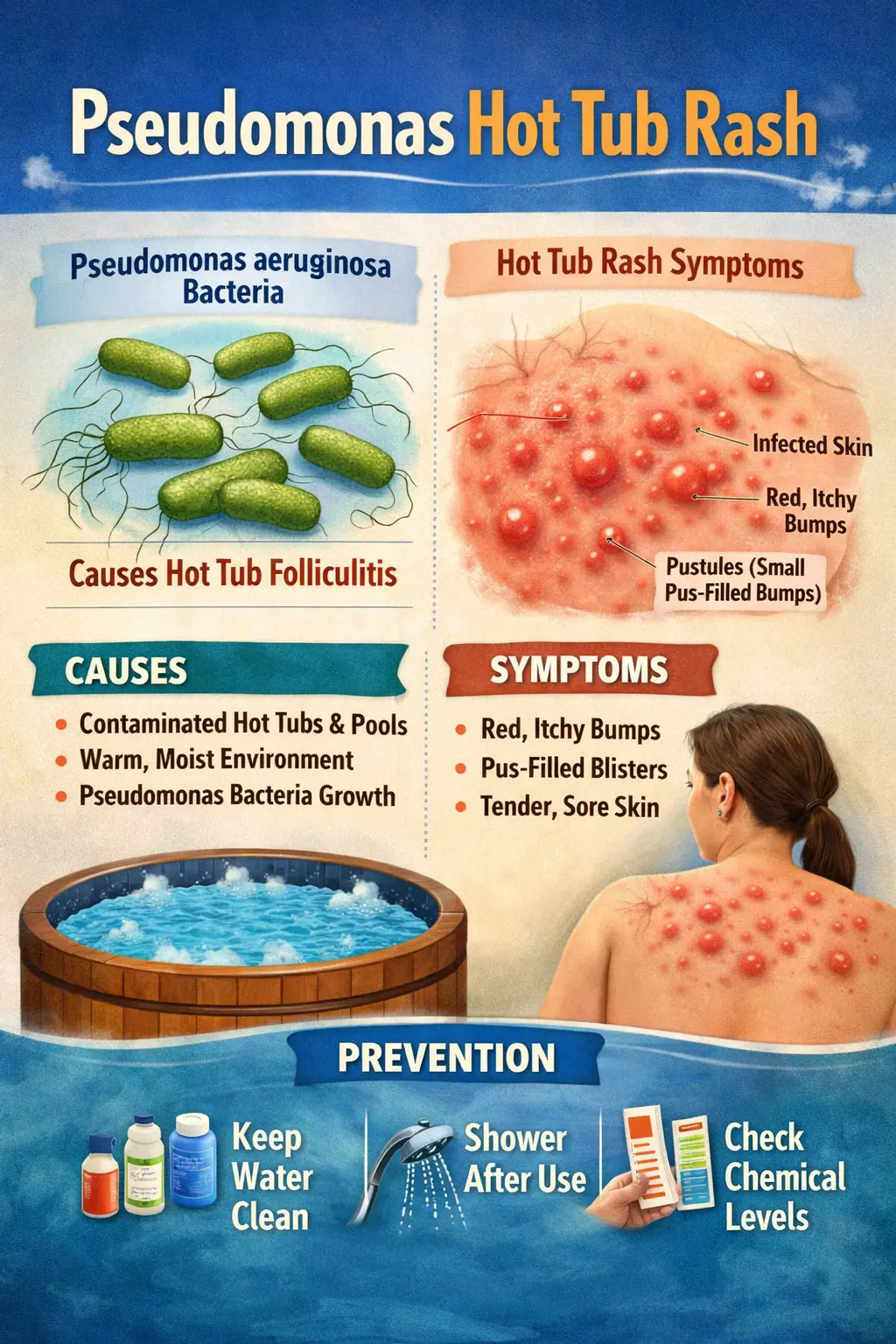
Hot tub folliculitis, also called hot tub rash or pseudomonas folliculitis, is an infection of the hair follicles caused by Pseudomonas aeruginosa. The CDC says contaminated water left on the skin can trigger this rash, and a 2026 dermatology review notes that P. aeruginosa is an important skin pathogen that can cause folliculitis along with other skin infections.

What is hot tub folliculitis?

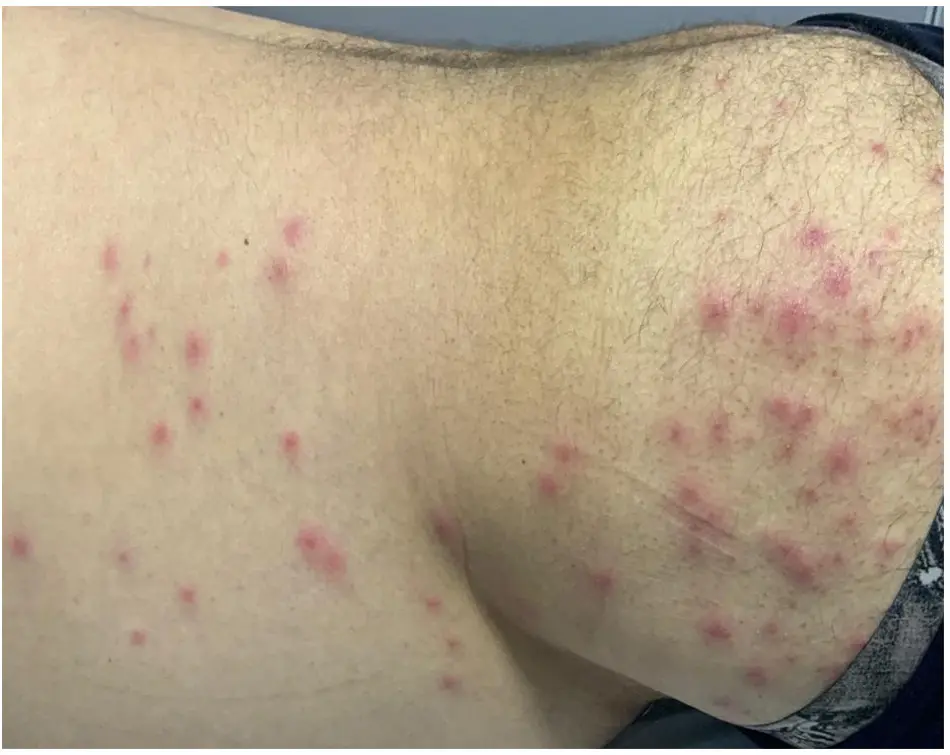
Hot tub folliculitis is a bacterial irritation and infection centered around the hair follicles. It tends to show up as itchy, red, bumpy skin, and in some cases, the bumps can become pus-filled. It is often worse in areas where a swimsuit keeps contaminated water against the skin.
One reason this condition catches people off guard is timing. The rash does not always show up right away. Symptoms can appear several hours after exposure or take up to 5 days, and the CDC notes that they often appear a few days after sitting in a poorly maintained hot tub. So yes, skin irritation showing up two or three days later still fits the pattern.

Why is hot tub rash so frustrating?

The frustrating part of hot tub rash is that there is often no dramatic moment where you know the exposure happened. The water can look fine. Cleveland Clinic notes that you usually cannot tell whether a hot tub is safe just by looking at it, which is why asking about maintenance and checking disinfectant and pH levels are important.
Once folliculitis starts, mild cases often improve on their own, but that does not make the experience pleasant. treatment may not be needed in mild cases because it often clears on its own. Hot tub folliculitis usually resolves within one to two weeks.

What Is Pseudomonas aeruginosa?

Pseudomonas aeruginosa is best understood as a highly adaptable, opportunistic, non-fermenting gram-negative rod with a strong capacity for environmental survival and clinically important antimicrobial resistance.
What makes P. aeruginosa medically important is the combination of virulence plus resistance.

Natural treatments for Hot Tub Rash

When people search for natural treatments for folliculitis, I think the first category should be practical skin care, not magic claims. The goal is to lower irritation, keep the skin clean, and support the skin barrier.
The prevention advice is very straightforward: remove the swimsuit, shower with soap after getting out of the water, and wash the swimsuit before wearing it again. Cleveland Clinic also advises avoiding shaving right before hot tub exposure, since freshly irritated skin gives bacteria an easier opening.
In real life, that means a few simple habits matter a lot:

1. Wash off as soon as possible

Do not wait until bedtime if you have just been in a spa or pool all afternoon. Showering promptly and using soap are among the clearest prevention steps the CDC recommends.

2. Get out of the wet swimsuit

Hot tub rash is often worse where the swimsuit holds water against the skin. That is another reason I am big on changing quickly after getting out.

3. Avoid over-stripping the skin

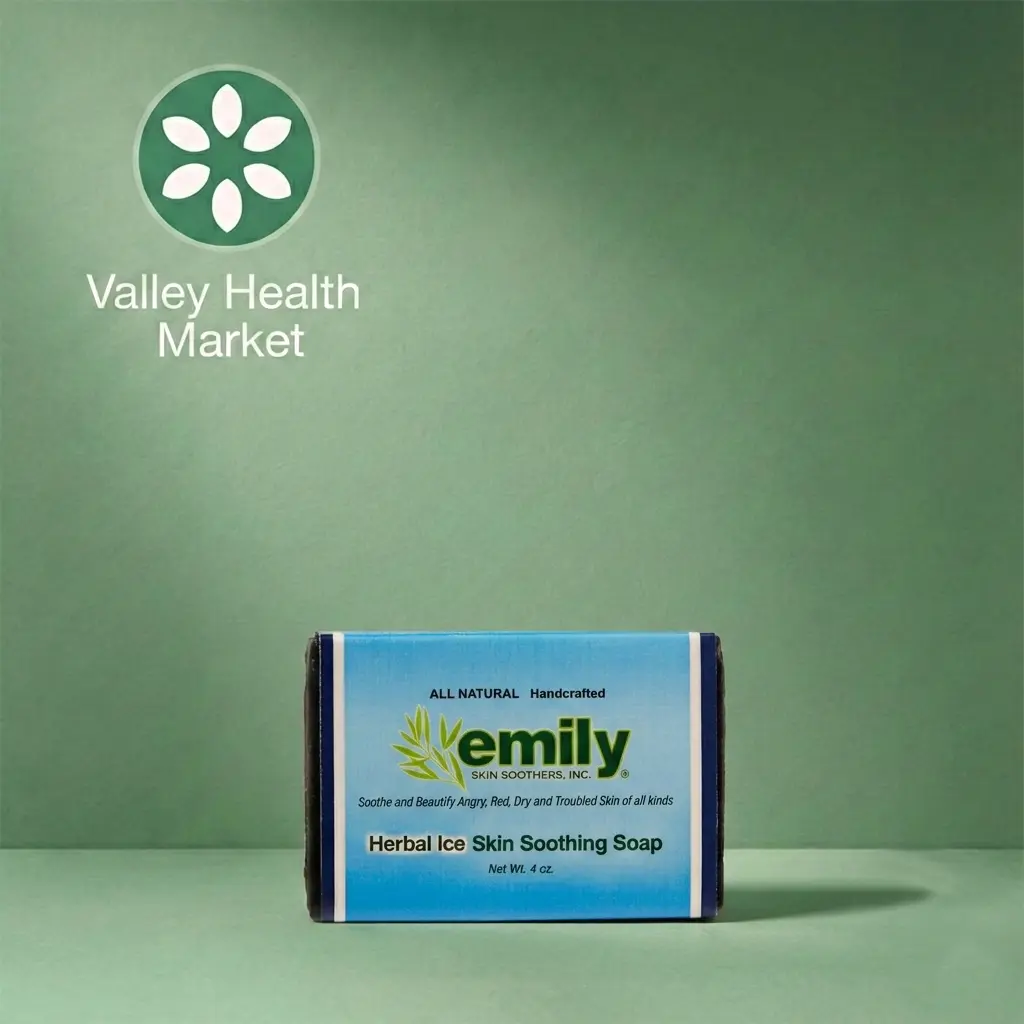
This is where I think people make mistakes. They try to “scrub away” the problem with harsh cleansers, long hot showers, or aggressive exfoliation. That can leave the skin barrier more irritated, not less. A gentler rinse-off cleanser makes more sense for already reactive skin. Emily Skin Soother Herbal Ice is a mild daily-use bar for red, inflamed, reactive skin.

Why I like Emily Skin Soother Herbal Ice

Herbal Ice Soap

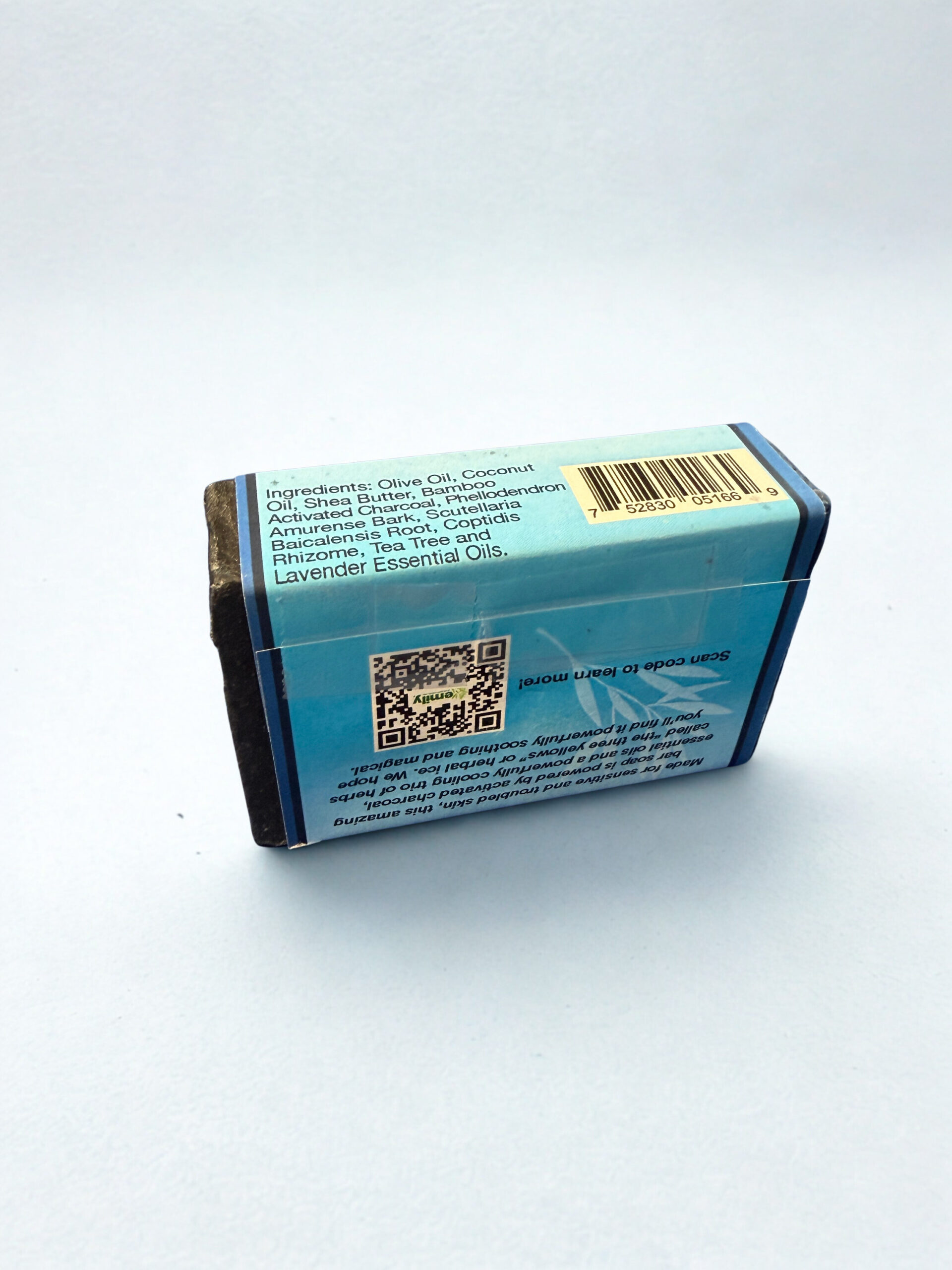
Emily Skin Soother Herbal Ice is a mild bar soap formulated to address the vulnerabilities that lead to folliculitis. It contains activated charcoal, which draws out impurities and bacteria, paired with traditional herbal compounds known for their antibacterial and anti-inflammatory properties.

The difference is in the formulation: it’s gentle enough for daily use but substantive enough to actually reduce bacterial load and inflammation. Unlike harsh scrubs or antibacterial soaps that damage your skin barrier, this soap supports your skin while protecting it.
It also includes bamboo activated charcoal plus the “Three Yellows”: Huang Bai (Phellodendron amurense bark), Huang Qin (Scutellaria baicalensis root), and Huang Lian (Coptidis rhizome). On the product page, these herbs are described as traditional ingredients for redness, heat, itching, and discomfort, with tea tree and lavender included for support of irritated, reactive skin.
The “Three Yellows” are three classic Chinese medicinal drugs with a strong research focus on anti-inflammatory, antimicrobial, antioxidant, and anti-cancer activity, largely driven by alkaloids and flavonoids such as berberine, palmatine, baicalin, and wogonin.

My routine to help prevent hot tub rash

Before getting in, avoid shaving or waxing the area that day. After getting out, remove the swimsuit, shower promptly with soap, and wash the swimsuit before using it again. If you are at a private hot tub, use test strips and make sure the disinfectant and pH are in range. The CDC recommends chlorine of at least 3 ppm for hot tubs, bromine 4 to 8 ppm, and pH 7.0 to 7.8.
For people with reactive skin, I would rather see a consistent, gentle routine than a once-in-a-while harsh one. Emily Skin Soother Herbal Ice fits that idea well because it is designed as a daily-use rinse-off cleanser for inflamed, sensitive skin.

When to see a doctor

Most mild cases settle down on their own. But you should not ignore symptoms that worsen, recur, or look more aggressive than a standard rash.
P. aeruginosa is not limited to hot tub folliculitis. There are other cutaneous pseudomonas presentations, including green nail syndrome, interdigital infections, swimmer’s ear, and, in more serious situations, deep ear infections, ecthyma gangrenosum, and necrotizing infections. Those are very different from a simple hot tub rash, but they serve as a reminder that this organism has a wide clinical spectrum.
There is also a growing problem of antimicrobial resistance in P. aeruginosa. That is one more reason I would rather focus on exposure reduction, skin hygiene, and early attention to worsening symptoms than assume every case will stay mild and self-limited.
Prevention is Key.
That is why I focus on simple things that are easy to repeat: get out of the wet swimsuit, shower quickly, use a gentle soap, and do not assume the water is safe just because it looks clean. For that routine, I like Emily Skin Soother Herbal Ice because it is mild enough for daily use and built for angry, reactive skin.
If hot tubs or pools tend to set your skin off, build your routine before the next exposure, not after the next rash.

Share on

Will Sheppy, Founder and Acupuncturist at Valley Health Clinic
By Will Sheppy, L.Ac
Willard Sheppy is a licensed acupuncturist (LAc) and Founder of Valley Health Clinic specializing in using Traditional Chinese Medicine to treat acute injuries and chronic conditions, and to improve sports performance and rehabilitation.

FAQ's

How soon after being in water should I wash my skin?
As soon as possible. The longer the Pseudomonas bacteria sit on your skin, the more time it has to enter hair follicles. Ideally, wash within 30 minutes of leaving the water. If you’re at a resort or pool facility, rinse off right away with fresh water and use your soap as soon as you can.
Yes. The bar is designed for daily use, which is ideal if you’re around pools or hot tubs frequently. Regular use helps maintain your skin’s natural defenses and reduces the bacterial load on your skin surface.
Keeping your skin clean is the foundation. Beyond that, avoid shaving or waxing right before or after water exposure—small cuts in the skin give bacteria an easier entry point. Keep your skin moisturized and avoid tight clothing immediately after exposure to water. But the soap is the critical first step.
Continue to keep the area clean with a gentle soap and avoid further exposure to water until it’s healed. If the rash is severe or doesn’t improve after a week or two, see a doctor. For prevention and faster recovery, the herbal ice soap supports your skin’s healing process.
Yes. It’s formulated to be gentle yet effective. The herbal compounds and activated charcoal are chosen specifically because they’re effective without being harsh. If you have known sensitivities, test it on a small area first.

References

Centers for Disease Control and Prevention. (2025, May 30). Preventing hot tub rash.

https://www.cdc.gov/healthy-swimming/prevention/preventing-hot-tub-rash.html (CDC).

Cleveland Clinic. (2022, June 28). Hot tub folliculitis: Rash, symptoms, causes & treatment.

https://my.clevelandclinic.org/health/diseases/23358-hot-tub-folliculitis (Cleveland Clinic)

Hartmann, D., Ibaceta Ayala, J., & Morgado-Carrasco, D. (2026). Cutaneous infections caused by Pseudomonas aeruginosa. Clinical presentation, diagnosis and treatment. Actas Dermo-Sifiliográficas, 117(3), 104590.

https://doi.org/10.1016/j.ad.2025.104590 (ScienceDirect).

MedlinePlus. (2024, October 14). Hot tub folliculitis. U.S. National Library of Medicine.

https://medlineplus.gov/ency/article/001460.htm (MedlinePlus)

Valley Health Clinic. (n.d.). Herbal Ice skin soothing mild bar soap. Retrieved March 30, 2026, from

https://shop.valleyhealthclinic.com/products/herbal-ice-skin-soothing-mild-bar-soap (Valley Health Clinic).

Recent Posts

Bai Zhu Balance is specifically designed for Ménière's

Bai Zhu Balance was designed specifically for the underlying issues that worsen Ménière’s
If you’re looking for a herbal formula specifically designed for Ménière’s Bai Zhu Balance is it!

Which Emily Skin Soother Is Right for You?

17 minutes read

Which Emily Skin Soother Is Right for You?

Will Sheppy, Founder and Acupuncturist at Valley Health Clinic
Willard Sheppy Dipl. OM, LAc, BS

Willard Sheppy is a licensed acupuncturist (LAc) and Founder of Valley Health Clinic specializing in using Traditional Chinese Medicine to treat acute injuries and chronic conditions, and to improve sports performance and rehabilitation.

Table of Contents

Which Emily Skin Soother Is Right for You?

A Complete Guide to the Full Product Line
One of the most common questions I get from customers at Valley Health Marketplace is some version of this: “I know I want Emily Skin Soothers, but I don’t know which one to get.”
It’s a fair question. The product line has grown, and from the outside, several of these look similar. They’re all herbal, they’re all gentle, they’re all made by Mike Arsenault with the same deep commitment to quality. But they’re not interchangeable — and picking the right one for your skin type or condition is going to make a real difference in your results.
I’ve been using and recommending Emily Skin Soothers in my clinic for a while now. In this guide, I’m going to walk you through every product in the line, tell you exactly who each one is for, and give you the clearest possible answer to the question: which one is right for me?
Let’s start with the most important thing: understanding your skin’s biggest complaint.

The Quick Answer: Match Your Skin to the Right Product

Your Skin Complaint Start Here Add-on for Better Results
Dry, itchy, red — eczema, mystery rashes, “chicken skin” Emily Skin Soother (Original or Lavender) Add Mild Bar Soap (daily gentle cleansing)
Psoriasis, cracked heels, extreme dryness Super Dry Skin Soother Add Mild Liquid Soap (daily gentle cleansing)
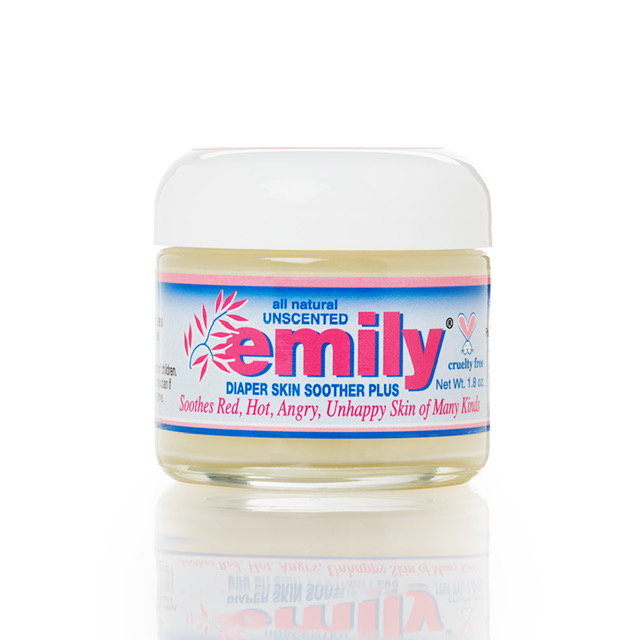
Diaper rash, yeasty or fungal rashes, hot skin folds Diaper Plus Skin Soother
Hot, sweaty rashes, burns, fungal skin issues (adults) Hot Skin Soother Add Herbal Ice Mild Bar Soap
Do you have a tail, 4 legs, and like to scratch? Furry Friend Shampoo & Skin Soother
Your Skin Complaint Start Here Primary Recommendation Add-on for Better Results Optional Support
Dry, itchy, red — eczema, mystery rashes, “chicken skin” Emily Skin Soother (Original or Lavender) Add Mild Bar Soap (daily gentle cleansing)
Psoriasis, cracked heels, extreme dryness Super Dry Skin Soother Add Mild Liquid Soap (daily gentle cleansing)
Diaper rash, yeasty or fungal rashes, hot skin folds Diaper Plus Skin Soother
Hot, sweaty rashes, burns, fungal skin issues (adults) Hot Skin Soother Add Herbal Ice Mild Bar Soap
Do you have a tail, 4 legs, and like to scratch? Furry Friend Shampoo & Skin Soother

Emily Skin Soother — The Original (Unscented & Lavender)

Best for: Eczema, keratosis pilaris, rosacea, dry itchy mystery rashes
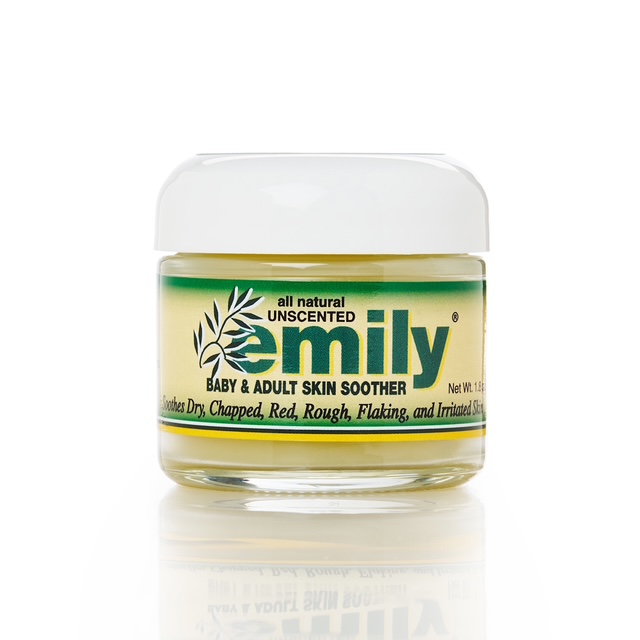
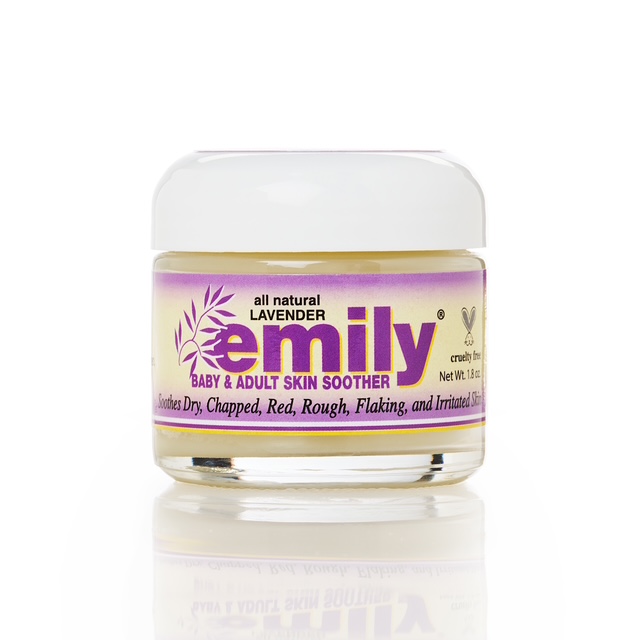
This is where it all started, and for good reason. The original Emily Skin Soother is the most soothing product in the entire line for eczema — and honestly, it’s one of the most soothing things I carry in the whole store. Five simple ingredients. No unnecessary fillers. No added fragrance in the unscented version. Just a clean, barrier-supporting formula that gets out of its own way and lets the herbs do the work.
If you or your child have eczema and you haven’t tried this yet, this is your starting point.

What Does it Do?

Beyond eczema, I’ve watched this formula surprise people in a few specific ways. It’s genuinely effective on keratosis pilaris — that rough, bumpy “chicken skin” that shows up on the backs of arms and legs, and often flares worse after swimming or pool exposure. The salve calms the irritation and smooths the texture in a way that drugstore lotions just don’t.
I’ve also seen it work well for rosacea-related redness. The lavender version in particular seems to have an extra edge here — the cooling, anti-inflammatory properties of lavender pair well with the base formula for flushed, reactive skin. If you have rosacea or persistent facial redness, I’d point you to the lavender version first.
And for those frustrating “mystery rashes” — the itchy, dry, red patches that show up seemingly out of nowhere and don’t fit any neat category — this formula consistently helps. Whether it’s a contact reaction, a stress flare, or just dry winter skin with inflammation on top, the original Emily Skin Soother is usually my first recommendation.

Unscented vs. Lavender: Which One?

Unscented: Best for babies, very sensitive skin, fragrance-reactive skin, or anyone who wants the cleanest possible formula. Also better for the drier types of eczema.
Lavender: Adds a gentle anti-inflammatory and cooling quality. Great for rosacea, flushed redness, and anyone who doesn’t have fragrance sensitivity.
When in doubt, start unscented. You can always add the lavender version later.

Super Dry Skin Soother

Best for: Psoriasis, severely cracked heels, extreme dryness, windburn, sunburn, winter skin
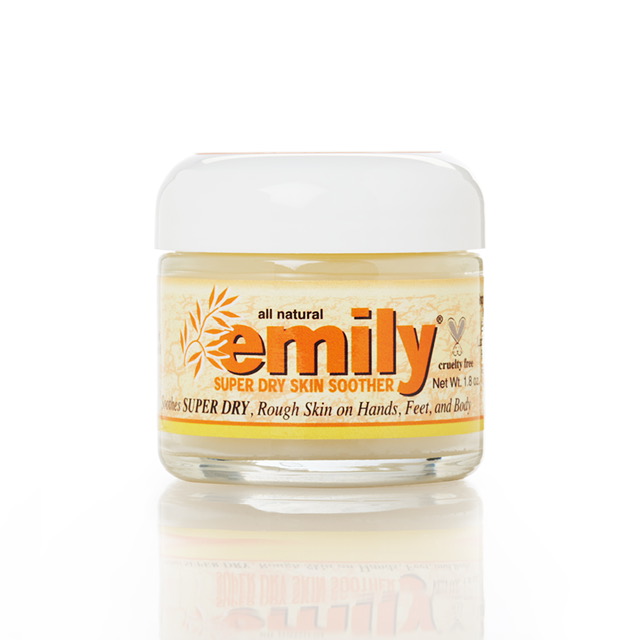
If the original Emily Skin Soother is the everyday workhorse for eczema, the Super Dry Skin Soother is what you reach for when things are seriously, stubbornly dry. This is the cream I point people to when they describe skin so dry it’s cracking, peeling, or painful.
It’s our best option for psoriasis. The extra emollient richness in this formula helps address the thick, scaly, moisture-starved quality of psoriatic skin in a way that lighter creams can’t.

What does it do?

The feedback I hear most often about this product involves feet. Cracked heels, “sandal feet,” rough calluses — the kind of dryness that builds up over time and resists everything you throw at it. The Super Dry Skin Soother is genuinely impressive here. People report softened, healed heels within days of consistent use, not weeks.
It’s also excellent for winter skin: chapped lips, cracked knuckles, dry nostrils, cracked cuticles, and the kind of windburn that comes from spending time outside in cold, dry air. If your skin feels parched and tight in winter, this is the cream.
I also recommend it for sunburn — not the acute, blistering kind, but the dry, peeling aftermath when your skin is trying to repair itself and desperately needs moisture. Apply a thin layer after cooling the skin, and it noticeably speeds up the comfort and recovery phase.

Who This Is For?

Diaper Plus Skin Soother

Best for: Diaper rash, yeasty or fungal rashes, hot skin folds, angry red skin of any kind
The name says “diaper,” but don’t let that limit your thinking. This product is for any hot, angry, red, inflamed skin — it just happens to be formulated in a way that’s also completely safe for babies and cloth diapers (no staining, no buildup, cloth-diaper safe).
The key distinction with this product is the type of skin problem it addresses: hot, damp, reactive skin. Think skin folds, the groin, underarms, anywhere that traps moisture and heat. This is the formula for rashes that look red and irritated, rashes that smell funky, and rashes in areas where yeast or fungal overgrowth is a factor.

When to Choose Diaper Plus Over the Original

This is one of the most common points of confusion, so I want to be clear about it:
– If your eczema is dry, flaky, and itchy — reach for the original Emily Skin Soother
– If your eczema is hot, red, weeping, or inflamed — reach for the Diaper Plus.
The Diaper Plus has herbs specifically chosen for their cooling, antimicrobial, and antifungal properties. That makes it the right tool for the “angry” type of eczema, not the dry type.
For swimmers, this is also a standout product. Swimmer’s rash — that hot, irritated reaction from prolonged chlorine exposure in warm, damp areas — responds beautifully to this formula.

Who This Is For

Hot Skin Soother

Best for: Adult sweat rashes, burns, fungal skin issues, hot inflamed skin, sore muscle massage
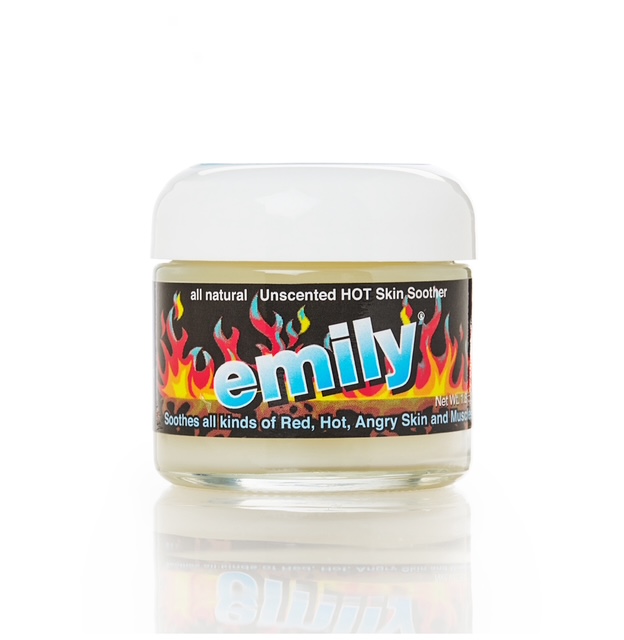
Think of the Hot Skin Soother as the adult version of the Diaper Plus — same core idea (cooling, antimicrobial, antifungal herbs), but slightly tweaked for adult skin concerns. It contains herbs that promote circulation and cooling, as well as antifungal and antimicrobial compounds.
One thing that makes this product stand out from the rest of the line: some of the herbs are analgesic. They actually reduce discomfort from skin irritation. That means it doesn’t just address the appearance of irritated skin — it helps with the pain and burning sensation too. This makes it useful beyond rashes: it works as a massage balm for sore muscles in areas where you’d also benefit from its antimicrobial qualities.

When to choose Hot Skin Soother

Sunburns and windburns are a strong use case. The cooling herbs calm the heat quickly, and unlike many after-sun products that contain alcohol or fragrance, this one won’t sting on already-angry skin.
For anyone who deals with sweat-related skin issues — heat rash, chafing, rashes in high-friction areas — this is the product. The antimicrobial herbs address the bacterial component that often contributes to chronic skin problems in those areas, while the cooling herbs bring down the inflammation.
Fungal and bacterial skin issues like athlete’s foot, ringworm, or recurring skin infections in warm, damp areas also respond well here.

Who This Is For

Mild Bar Soap & Mild Liquid Soap Soother

Best for: Daily cleansing for sensitive, dry, eczema-prone, or psoriasis-prone skin
I wrote a full blog on these two products recently, so I’ll keep it brief here — but they deserve a place in this guide because they’re an essential part of the Emily Skin Soother system.
Here’s the core principle: if you’re using Emily Skin Soother salves and balms to heal your skin, but you’re washing daily with a harsh, SLS-laden body wash, you’re undoing your own work. Soap is something you do every single day. What you do most of the time matters more than what you do some of the time.
The mild soap line was built to complement the balms — to clean without stripping the skin barrier that everything else is trying to rebuild.
Both soaps are unscented, emollient, and herb-powered. They won’t sting on eczema or sunburned skin. They clean without drying — which matters a lot for conditions like cracked heels and dry feet where the cleanser itself is often making things worse.
Choose the Bar Soap if you prefer a classic lather, want the simplest formula, and want palm oil-free construction.
Choose the Liquid Soap if you want a head-to-toe daily wash with a super-fatted formula that leaves skin feeling more moisturized after washing.
Both are appropriate for children. Both pair beautifully with the salves.

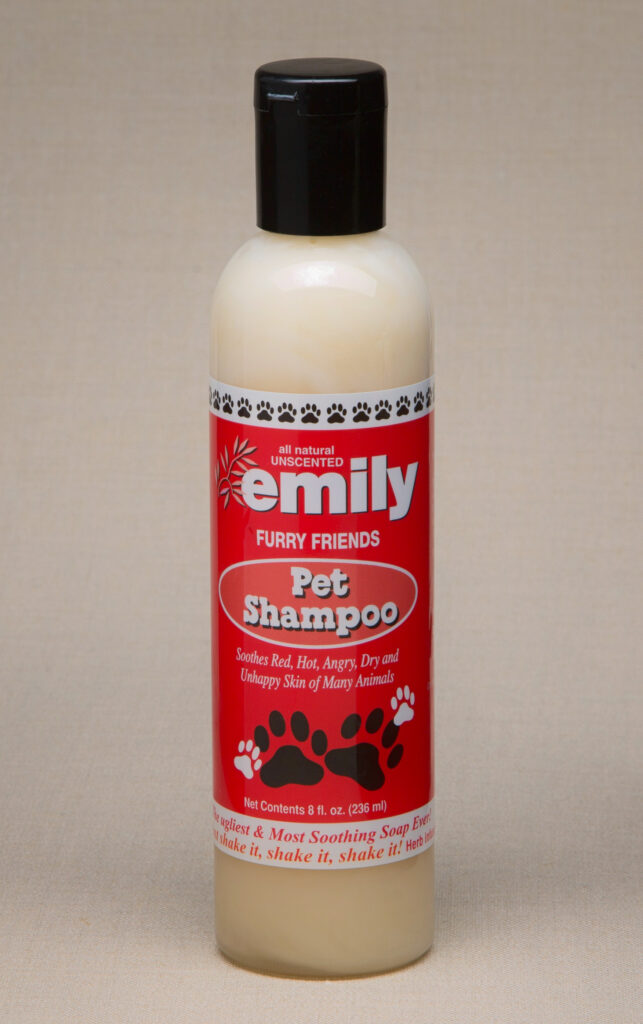
Furry Friend Shampoo & Furry Friend Skin Soother

Best for: Dogs and cats with hot spots, itchy skin, allergies, lick sores, sensitive or reactive skin
I’ll be honest — I didn’t expect to carry pet products when I started Valley Health Marketplace. But Mike Arsenault’s Furry Friend line earned a place on our shelves the same way all our products do: it works, it’s made with the same integrity as everything else in the line, and it fills a real need.
Our pets get many of the same skin conditions we do. Hot spots, seasonal allergies, itchy patches, lick sores, happy tail (the raw, irritated tip of a wagging tail that just keeps re-injuring itself) — these are common, frustrating problems that often get treated with steroids or antifungals when a gentler herbal approach can be just as effective.

What Makes These Products Different

Both the shampoo and the skin soother are unscented — intentionally. A dog’s sense of smell is roughly 40 times more sensitive than ours. Heavily fragranced pet products can be genuinely unpleasant for animals. The Furry Friend products are scented only by their raw herbal ingredients, which is subtle and not overwhelming to a sensitive animal nose.
They’re also **lick-safe**, which matters enormously for any product going on a dog or cat. Animals groom themselves and lick their skin — whatever you put on them, they’re going to ingest some of it. These formulas are safe for that.
The line is carried by holistic veterinarians, which is the kind of endorsement I take seriously. These aren’t novelty pet products; they’re real herbal medicine formulated for animal skin.

Who This Is For

How to Layer Products for Best Results

One of the things I love most about the Emily Skin Soother line is that the products work together. You don’t have to pick just one. Here are some combinations I recommend regularly:

For eczema that has both dry and hot phases:

Use the original Emily Skin Soother during calm periods and the Diaper Plus or Hot Skin Soother during flares. Your skin condition isn’t static — your product choice doesn’t have to be either.

For daily skin care routine:

Wash with the Mild Bar or Liquid Soap, pat dry while still slightly damp, then apply your salve while the moisture is still in the skin. This sequence supports barrier repair at every step.

For psoriasis:

Super Dry Skin Soother as your primary moisturizer, Mild Soap for cleansing. Consistent daily use matters more than occasional heavy application.

For pets:

Shampoo with the Furry Friend Shampoo, dry well, then apply the Furry Friend Skin Soother to problem areas. For hot spots, apply the soother multiple times daily to the affected area.

The One Question That Points You to the Right Product

Is your skin primarily dry and itchy, or primarily hot and inflamed?

Dry and itchy

Start with the original Emily Skin Soother (unscented or lavender)

Extremely dry and scaly

Super Dry Skin Soother

Hot, red, and angry — in a damp area

Diaper Plus Skin Soother

Hot, red, and angry — adult skin, burns, fungal

Hot Skin Soother

Most people find that once they nail that distinction, the right product becomes obvious. And if you’re still unsure, reach out. I’m happy to help you figure it out.
Emily Skin Soothers earned their place at Valley Health Marketplace the same way every product we carry does: I used them, I tested them in my clinic, and I watched them work. Mike Arsenault built this line with the same philosophy I practice — simple, quality ingredients, traditional herbal knowledge, and genuine care about outcomes.
The right product for you comes down to knowing your skin. Dry and itchy gets the original. Hot and inflamed gets the Diaper Plus or Hot Skin Soother. Severely parched gets the Super Dry. And whatever salve or balm you choose, pair it with the Mild Soap for a cleansing routine that works with your healing instead of against it.
If you have questions or want a personal recommendation, I’m always reachable at will@valleyhealthclinic.com or (541) 760-9670. That’s part of what Valley Health Marketplace is — not just a store, but someone who actually knows these products and wants you to find the right one.

Share on

Will Sheppy, Founder and Acupuncturist at Valley Health Clinic
By Will Sheppy, L.Ac
Will Sheppy, L.Ac., is the founder of Valley Health Clinic and Valley Health Marketplace in Albany, Oregon. He specializes in sports acupuncture, pain management, and Chinese topical medicine. Valley Health Marketplace carries only products he has personally tested in his clinic.

FAQ's

Can I use more than one Emily Skin Soother product?
Absolutely. Many people use the original for general maintenance and switch to the Hot Skin Soother or Diaper Plus during flares. The products are designed to work together.
Yes — the full line (except the pet products) is formulated to be gentle enough for children, including babies. The Diaper Plus is specifically safe for infants. If your child has severe or infected eczema, consult your pediatrician.
No. Emily Skin Soothers are herb-based with simple, clean ingredient lists. They do not contain steroids, synthetic fragrances, or harsh chemicals.
The Super Dry Skin Soother is my first recommendation for psoriasis. Pair it with the Mild Soap for cleansing.
Yes — both the shampoo and skin soother are formulated for dogs and cats. The lick-safe formula is particularly important for cats, who groom constantly.
Herbal topicals work best with consistent daily use. Give any new product at least two to three weeks before evaluating results. If your skin is worsening rather than improving, or if you see signs of infection, please see a clinician.

Recent Posts

A Mild Soap Worth Recommending

14 minutes read

A Mild Soap Worth Recommending

Will Sheppy, Founder and Acupuncturist at Valley Health Clinic
Willard Sheppy Dipl. OM, LAc, BS

Willard Sheppy is a licensed acupuncturist (LAc) and Founder of Valley Health Clinic specializing in using Traditional Chinese Medicine to treat acute injuries and chronic conditions, and to improve sports performance and rehabilitation.

Table of Contents

By Will Sheppy, L.Ac

I didn’t want to sell Mild soap.
That’s the honest truth. When I started Valley Health Marketplace, I was focused on topical Chinese medicine — liniments, salves, herbal oils for pain. Soap felt like a completely different category, and I wasn’t interested in adding it just to have more stuff on the shelf.
Then my daughters started telling me their skin itched and turned red after every shower.
And it wasn’t like we were using cheap, dollar-store soap. We had decent products. But decent wasn’t cutting it. And that moment forced me to think about something I say to patients all the time when it comes to pain management:
What you do most of the time is more important than what you do some of the time.
I say that about exercise, diet, topical medicine. But I had never applied it to skin care. Soap is something most of us use every single day. If you’re trying to heal your skin — eczema, dryness, irritation, nerve sensitivity — and your daily cleanser is quietly making things worse, you’re fighting yourself twice a day, every day.
That realization sent me looking for a truly mild soap. And that search led me to Mike Arsenault and Emily Skin Soothers.

What "Mild Soap" Actually Means (And Why Most Soaps Miss the Mark)

Before I get into the specific products I now carry, I want to explain what mild soap actually means — not from a marketing perspective, but from a skin science perspective.
Your skin has an outer layer called the stratum corneum — think of it as a brick wall made of lipids and proteins. Its job is to hold moisture in and keep irritants and pathogens out. When this barrier is healthy, your skin feels soft, resilient, and calm. When it’s compromised — which is the baseline for people with eczema, psoriasis, rosacea, or chronically dry skin — your skin becomes reactive, itchy, and hard to heal.
A truly mild soap is one that cleans without stripping that barrier. Research published in the International Journal of Cosmetic Science confirms that traditional soaps can significantly disrupt the skin barrier, raise skin pH, and leave residue that continues to irritate after rinsing — especially in people with already-compromised skin. Milder cleansing formulations (sometimes called syndets, or carefully formulated natural soaps) are consistently preferred for reactive or damaged skin.
The problem is that most commercial soaps — even ones labeled “sensitive” or “gentle” — still contain ingredients that undermine barrier health:

Sodium Lauryl Sulfate (SLS):

A well-studied irritant surfactant. Research published in Contact Dermatitis has shown that even brief, repeated SLS exposure can disrupt the skin barrier and provoke irritant dermatitis in susceptible individuals. If your skin is already reactive, this is the last thing you want in a daily cleanser.

Added fragrances:

One of the most common skin sensitizers. Fragrance is in hundreds of personal care products, and for someone with eczema or rosacea, it's often an invisible trigger.

Hot water and long showers:

This one isn't about ingredients, but it matters. Research confirms that prolonged hot water exposure increases transepidal water loss (TEWL), dryness, and barrier stress. A mild soap used incorrectly — in a long, hot shower — still causes damage.

if your skin flares up every time you shower, your cleanser is probably part of the problem. Changing to a genuinely mild soap can be one of the highest-impact, most repeatable changes you make for your skin — precisely because you do it every single day.

Why I Trust Emily Skin Soothers

Mike Arsenault didn’t set out to sell soap either. He developed Emily Skin Soothers because his own daughters had eczema and nothing on the market worked well enough. Sound familiar?
What I noticed immediately when I received my first order was the smell. It didn’t smell like soap. It didn’t smell like fragrance. It smelled fresh — like quality raw ingredients. That might sound like a small thing, but when you work with herbal products daily, you know the difference between a product that smells like its ingredients and one that smells like what someone sprayed on top of the ingredients. This was the former.
Mike also has an extraordinary track record. His reviews speak for themselves — people healing skin conditions all across the country. And as someone who uses Chinese herbal medicine in my clinic every day, I can see exactly why his formulas work. He’s pulling from the same tradition I practice, applying herbs that have thousands of years of use for reactive, inflamed skin.
I now carry two of his products: the Mild Bar Soap and the Mild Liquid Soap Soother. Let me walk you through both.

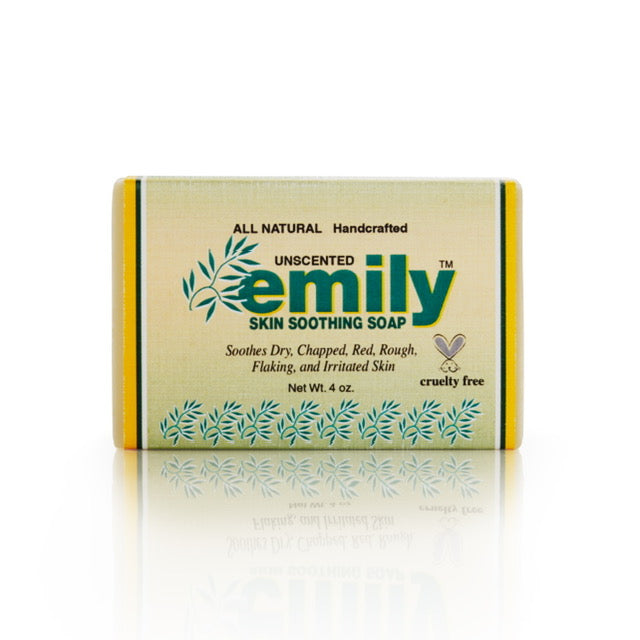
Emily Skin Soother: Mild Bar Soap

Size: 4 oz | Skin Type: Sensitive, dry, reactive | Palm Oil Free
This is the bar I reach for when people ask me about a mild soap for eczema or a mild soap for sensitive skin. It’s formulated around a simple principle: what you leave out matters as much as what you put in.

What's Not in It

No added fragrances. No added colors. No unnecessary fillers. No palm oil.
The palm oil decision is worth mentioning. About 85% of global palm oil comes from Indonesia and Malaysia, where production is linked to deforestation, habitat destruction, and the endangerment of orangutans and Sumatran tigers. Mike made the decision to go completely palm oil-free — not because it changes outcomes for most skin types, but because of where he stands ethically. I respect that. So do my customers.

What Is in It

The cleansing base is saponified olive, avocado, and coconut oils, plus shea butter. It’s a simple formula designed to clean without stripping. You’ll notice a gentle, natural scent — that’s coming from the raw ingredients, not from anything added.
The bar is also powered by three traditional Chinese herbs — the same trio used in Emily’s Baby and Adult Skin Soother salves:The cleansing base is saponified olive, avocado, and coconut oils, plus shea butter. It’s a simple formula designed to clean without stripping. You’ll notice a gentle, natural scent — that’s coming from the raw ingredients, not from anything added.
Mike told me directly: “Bei Zi Cao is rarely used and is great to clear toxic heat and especially alleviate itch — which is a real issue in eczema.” When a maker knows their herbs at that level of specificity, you’re not dealing with someone who just threw popular ingredients into a bottle. You’re dealing with a craftsperson.

Who It's For

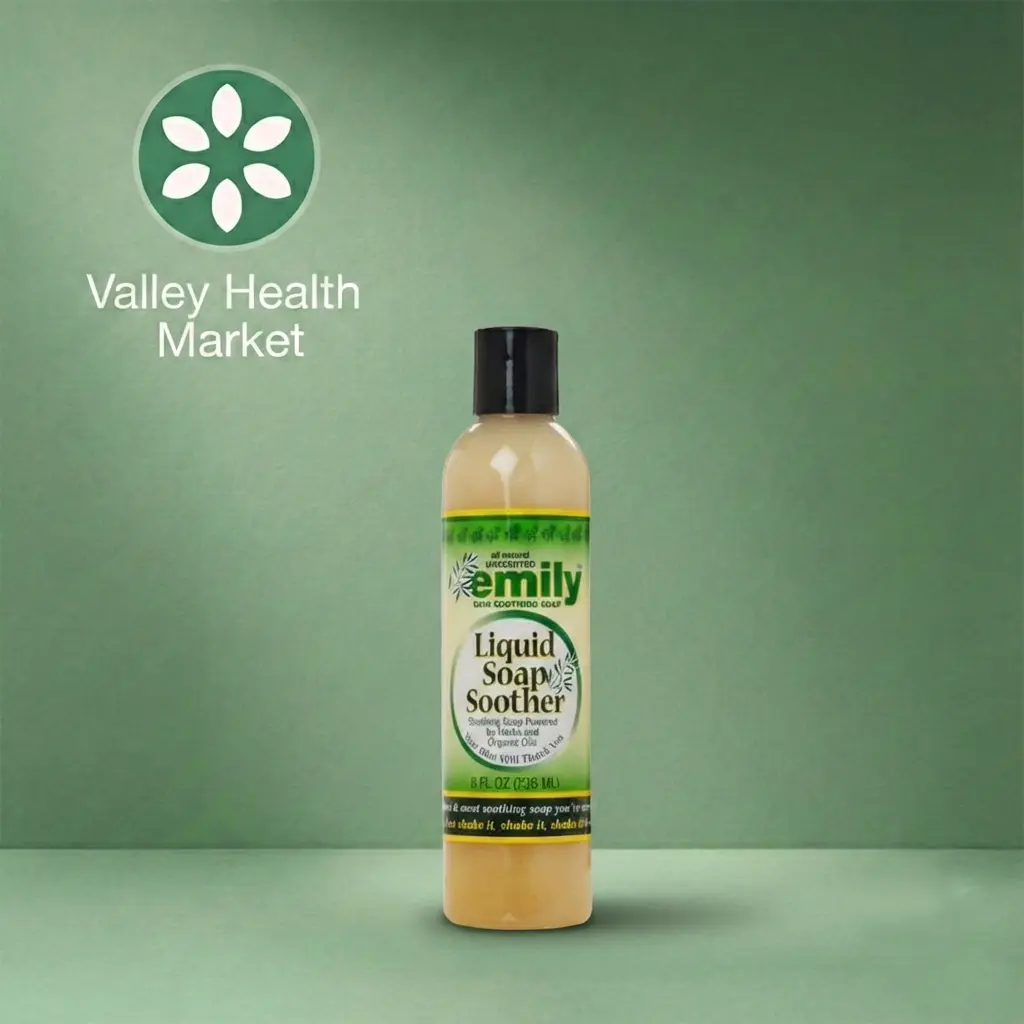
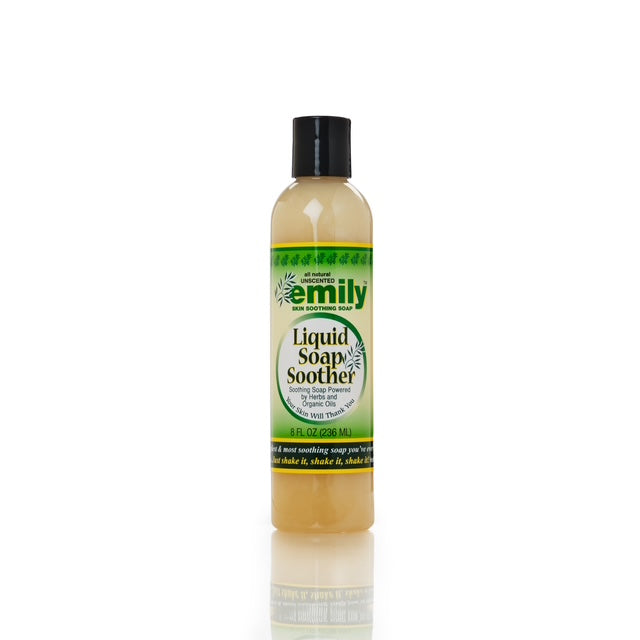
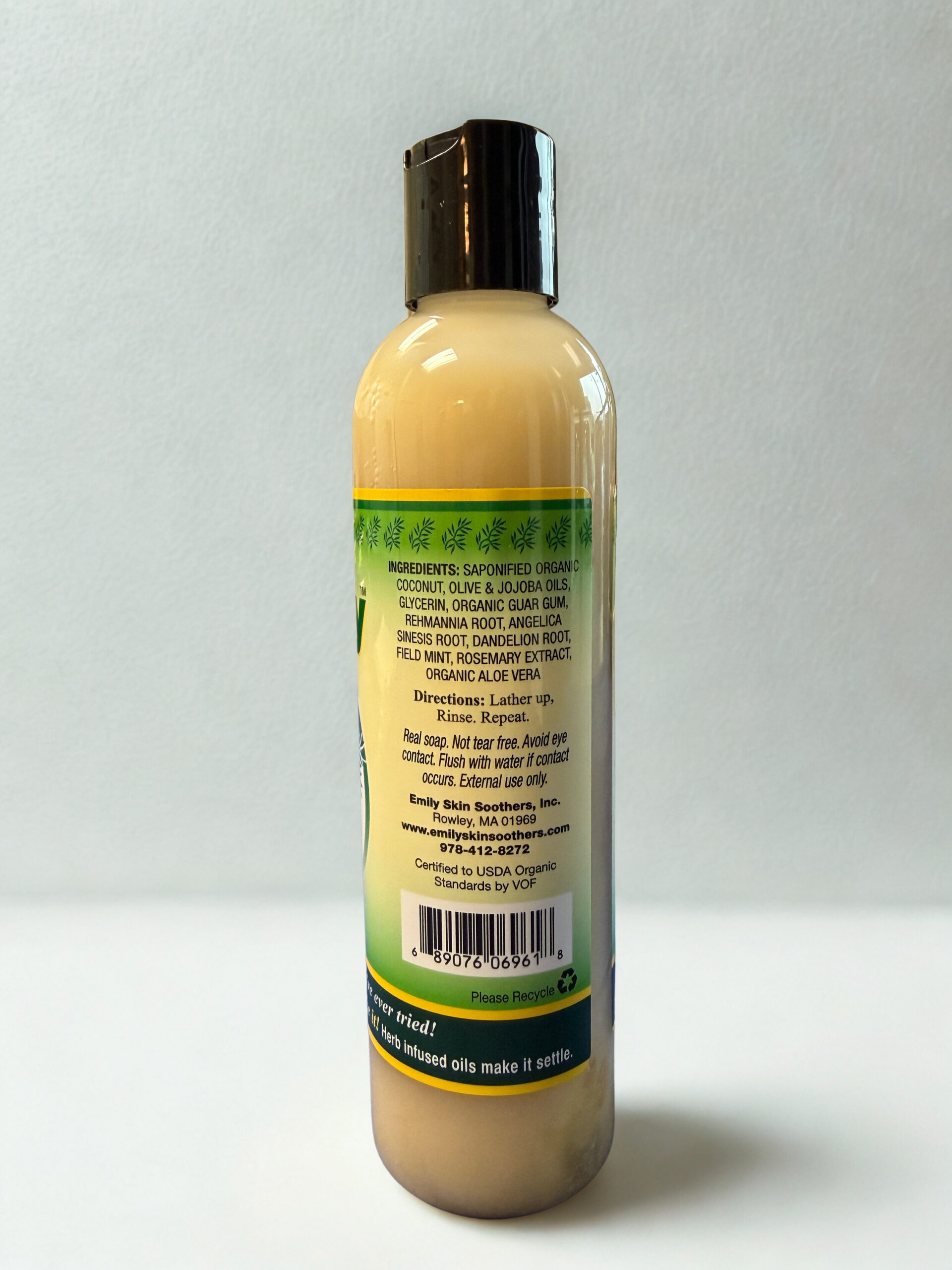
Emily Skin Soother: Mild Liquid Soap Soother

Size: 8 fl oz | Certified Organic | Head-to-Toe Free of: Parabens · SLS · Fragrances · Added Colors
If the bar soap is for your morning routine, the liquid soap is your everything-wash. It’s certified organic, head-to-toe safe, and built around a feature you almost never see in liquid cleansers: it’s super-fatted.

What "Super-Fatted" Actually Means

In traditional soap making, super-fatting means adding extra oils back into the finished product — oils that don’t saponify (convert to soap) but instead remain in the formula as free emollients. The result is a wash that leaves your skin feeling moisturized and silky instead of tight and dry.
You’ll notice that over time, the oils may settle to the bottom of the bottle. This is not a defect. It’s the mechanism. Shake before use.

The Formula

The base is saponified organic coconut, olive, and jojoba oils, plus organic aloe vera — a genuinely moisturizing foundation. No SLS. No parabens. No added fragrance or color. For people with reactive or eczema-prone skin, removing those ingredients from a daily wash is a significant shift.
The liquid also contains four skin herbs (a different blend from the bar, intentionally, so you have options if you have sensitivities to specific botanicals):

Who It's For

How to Get the Most Out of Your Mild Soap

Changing your cleanser is step one. How you wash matters just as much.

Use warm water, not hot.

Hot water stresses the skin barrier and increases moisture loss. Warm is enough.

Keep your shower shorter.

Long showers strip oils, even with mild soap. This isn't folk wisdom — it's barrier biology.

Focus soap where you need it.

For many people with eczema or dry skin, you don't need to lather every inch of your body with soap every day. Use cleanser on the high-soil areas (hands, underarms, groin, feet) and rinse the rest with water.

Pat dry, don't rub.

Rubbing is mechanical irritation on skin that's already reactive.

Moisturize while skin is still damp.

This is the move that makes the biggest difference. Apply your salve or balm while your skin still has a little moisture — it locks water in and helps the barrier rebuild.

Patch test when trying anything new.

Apply a small amount to a healthy, uninfected patch of skin. Wait. Repeat a few times before applying to problem areas.

How Mild Soap Fits Into Your Topical Routine

One of the reasons I finally decided to carry soap was this: I was seeing patients use our herbal salves and get great results, then unknowingly undo a lot of that work by washing with a harsh cleanser the next morning.

Our topicals — Evil Bone Water, Corydalis Relief Salve, Dragon Blood Balm, Red Emperor’s Immortal Flame — are formulated to support and heal tissue. But they work best when paired with a cleanser that respects the barrier rather than dismantling it daily.

Think of it as protecting your investment. Every time you use a great salve and then follow it with a stripping, SLS-loaded body wash, you’re starting over. Emily Skin Soothers’ mild soaps are designed specifically to complement and enhance the effects of topical medicine.

The Research Behind What We're Doing

I mentioned this above, but I want to be specific, because I think it matters that this approach is backed by science, not just tradition:
Research from the International Journal of Cosmetic Science (PMC) confirms that traditional soaps disrupt the skin barrier, raise skin pH, and leave post-rinse residue that continues to irritate compromised skin. Mild cleansers — particularly those without harsh surfactants — show significantly better outcomes for barrier integrity in reactive and eczema-prone skin.
Research published in Contact Dermatitis (PubMed) specifically demonstrates that SLS causes measurable skin barrier disruption even with brief, repeated exposure. If your daily soap contains SLS and your skin is already reactive, you are applying a documented irritant every single day.
Removing those triggers from your daily routine, and replacing them with a genuinely mild, barrier-aware soap, is one of the most practical and impactful steps you can take.

Mild Bar Soap

A mild cleanser for sensitive skin that actually respects your skin barrier. This palm oil-free bar is formulated to be noticeably less drying than standard soaps, with a simple base of saponified olive, avocado, and coconut oils plus rich shea butter. It was designed to pair perfectly with our salves, so your skin feels clean without feeling “stripped.”

Read More from Valley Health:

Blue Skies Bliss Mist Face Spray – water-based Hydrating mist for refreshing and

Botanical Beauty Combo – Both Water and Oil Herbal skincare set for natural beauty and skin nourishment

Share on

Will Sheppy, Founder and Acupuncturist at Valley Health Clinic
By Will Sheppy, L.Ac
Will Sheppy, L.Ac., is the founder of Valley Health Clinic and Valley Health Marketplace in Albany, Oregon. He specializes in sports acupuncture, pain management, and Chinese topical medicine. Valley Health Marketplace carries only products he has personally tested in his clinic.

FAQ's

Mild Soap
Is mild soap actually better for eczema than regular soap?
For most people with eczema or reactive skin, yes — because it reduces daily barrier disruption, which reduces itch, dryness, and flare cycles. The research consistently supports using gentle, fragrance-free, SLS-free cleansers for compromised skin.
It depends on your routine and preferences. Choose the bar if you want a very simple formula with no extras, palm oil-free construction, and you prefer a classic lather. Choose the liquid if you want a head-to-toe wash, love the aloe base, or have very dry skin that benefits from the super-fatted formula.
Because it’s super-fatted — extra oils are intentionally added and they settle over time. This is not a flaw. Shake before use.
Yes. Both the bar and liquid are gentle enough for use on sunburned skin — wash with lukewarm water, minimal friction, and pat dry immediately after.
Both formulas are appropriate for sensitive pediatric skin. For infants or children with severe eczema, discuss your cleanser choice with a pediatric clinician.
Mild soap is ideal here — it cleans without worsening dryness. Pair it with a good balm applied immediately after washing while skin is still damp, and you’ll notice a significant difference over time.
I say it in my clinic all the time: what you do most of the time is more important than what you do some of the time. I had just never applied that to soap.
If your skin itches or flares after every shower, your cleanser is part of the problem. Switching to a genuinely mild soap — one with no SLS, no added fragrance, no unnecessary irritants, and a formula built around barrier support — is one of the most repeatable, high-impact changes you can make, because it happens every single day.
That’s why I carry Emily Skin Soothers. Not because I wanted to sell more products. But because good medicine is daily medicine — and that includes how you wash.