Tag: Joint Pain

Chinese Herbs for Tendons and Ligaments: Gu Sui Bu

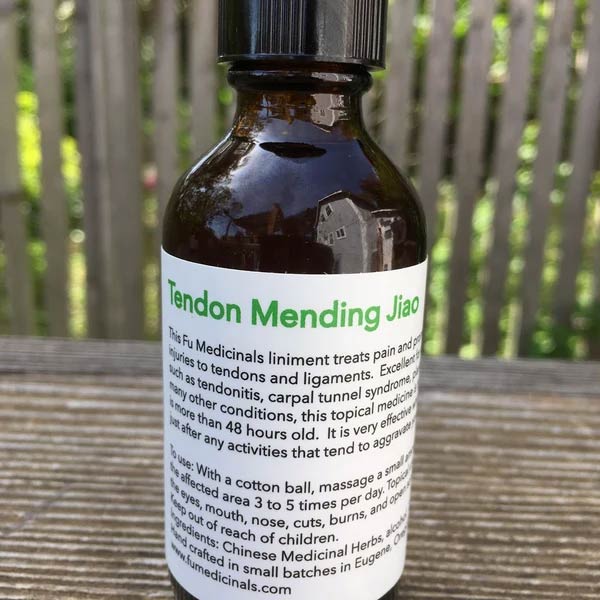
Tendon Mending Jiao by Fu Medicinals
12 minutes read

Chinese Herbs for Tendons and Ligaments: Gu Sui Bu

Willard Sheppy Dipl. OM, LAc, BS

Willard Sheppy is a licensed acupuncturist (LAc) and Founder of Valley Health Clinic specializing in using Traditional Chinese Medicine to treat acute injuries and chronic conditions, and to improve sports performance and rehabilitation.

Tendon Mending Jiao by Fu Medicinals

Table of Contents

Tendons and ligaments are the slowest-healing tissue most of us ever injure. Muscle strains settle down in a couple of weeks. A cranky Achilles, a tennis elbow, an ankle you rolled last spring that still complains on uneven ground — those drag on for months, and the advice you get is usually some version of rest it.

In the clinic, that is the conversation I have most often about tendons: not “what is wrong with it,” but “why is this taking so long, and is there anything I can actually do while I wait?” It is a fair question. Poor blood supply is a real part of the answer, and it is also the part traditional Chinese medicine has been aiming at for a very long time.

Which brings me to a herb with an unforgettable name. Below, what Gu Sui Bu is, what the research does and does not show, and how to tell whether a topical Chinese herbal formula belongs in your recovery plan.

Quick answer

Gu Sui Bu (Drynaria rhizome) is a Chinese herb whose name translates roughly as “mender of shattered bones.” It is traditionally used for broken bones and for tendon and ligament injuries, and it is the chief herb in Fu Medicinals’ Tendon Mending Jiao, a topical salve for chronic tendonitis, tendinosis, and old sprains.

The modern research on Drynaria is real but mostly about bone — lab and animal work on bone formation, plus some evidence it supports blood-vessel growth and cell migration. Direct human research on tendons is not there yet. Treat it as a well-established traditional strategy with promising mechanism data behind it, not a proven tendon cure. External use only; check the safety section before you use it.

Why Tendons and Ligaments Heal So Slowly

Muscle is thick with blood vessels. Tendon and ligament are not. They are dense, fibrous, built for tensile strength rather than metabolic activity — which is exactly what makes them good at their job and bad at repairing themselves. Less circulation means fewer of the raw materials of repair arriving, and it means they arrive slowly.

That is also why the picture changes name over time. What starts as tendonitis — genuine inflammation in the first days and weeks — often becomes tendinosis, where the inflammation has largely burned out and what is left is disorganised, degenerated tissue that simply never finished rebuilding. Anti-inflammatories are aimed at the first problem. Most people who are still hurting at the six-month mark have the second one.

In Chinese medicine the framing is different but it points at the same target: an old injury leaves behind stagnant blood and obstructed circulation in the sinews, and the job is to move it. Whatever vocabulary you prefer, the practical question is the same — how do I get more circulation into a tissue that does not have much?

Which is where one particular herb has been the traditional answer for a very long time.

"Gu Sui Bu in Chinese means the mender of broken bones. And not only is it fantastic for broken bones, it is really good for your tendons and ligaments."
— John Ditmars, Fu Medicinals

Gu Sui Bu: The Herb Called Mender of Shattered Bones

Gu Sui Bu (骨碎补), known botanically as Drynaria fortunei, is the rhizome of a fern that grows on rocks and tree trunks. It is covered in a golden-brown fuzz, and it looks nothing like a pharmaceutical. It has been used in Chinese medicine for bone and sinew injuries for centuries, and it is the reason John Ditmars — the practitioner-maker behind Fu Medicinals, whose liniments we carry — built the Tendon Mending formula around it.

What does the name actually mean?

Gu Sui Bu translates literally as something close to “mend the shattered bone.” Ditmars calls it the Great Mender of Broken Bones, and that is a fair reading of the classical use. What is less obvious to English speakers is that in Chinese medicine, bone and sinew are treated as neighbours rather than separate departments — the same herbs that address one are routinely reached for with the other. So a bone herb heading up a tendon formula is not a stretch of the tradition. It is the tradition.

The research

Drynaria has a genuine and growing modern literature — but nearly all of it is about bone. Animal and cell studies show its flavonoid fraction stimulates bone-forming cells and improves bone density and bone strength, and a 2023 study traced that effect to the TGF-β signalling pathway. A small randomised trial in older women with postmenopausal osteoporosis found improvements in bone density and inflammatory markers.

The finding most relevant to a tendon, though, is a 2018 Taiwanese study showing that Drynaria extract promoted new blood-vessel formation and cell migration in lab and embryo models, working through VEGF and matrix metalloproteinase pathways. Circulation and cell migration are precisely what a poorly-vascularised tendon is short of. That is a mechanism worth taking seriously.

What does not exist is a human trial of Gu Sui Bu for tendonitis, and none of the research above tested a topical preparation. 

A long traditional track record, plausible mechanism, real bone data, and no direct tendon proof. That is better than most herbs and less than a guarantee. Sources are listed at the end.

Why a topical, and not a pill?

A jiao is a salve — herbs extracted into an oil-and-wax base and rubbed in. The appeal for tendon problems is location: an Achilles, a lateral elbow, a wrist or a finger sits close to the surface, and you can put the medicine directly over it and massage it in, several times a day, for as long as it takes. You are combining the herbs with mechanical work on the tissue, which is a large part of why topicals earn their keep in a sports practice.

The Other Herbs Working Alongside It

Gu Sui Bu is the chief, but a jiao is a formula, not a single herb. Tendon Mending Jiao carries 28 botanicals in an organic coconut oil and beeswax base. A few of the ones doing recognisable work:

The full ingredient list is on the product page. If you have a known herbal allergy, read it before you buy — with 28 botanicals, that is not a formality.

Is Tendon Mending Jiao Right for Your Injury?

Fu Medicinals does not make one universal liniment — the line is deliberately split by injury type, and picking the wrong one is the most common way people get a disappointing result. Here is how I sort it.

Reach for it when...

Look elsewhere when...

Tendon Mending Jiao by Fu Medicinals

Tendon Mending Jiao

Fu Medicinals’ Tendon Mending Jiao is the formula built around Gu Sui Bu — 2 fl oz, small-batch, made in Oregon in an organic coconut oil and beeswax base. We carry it because it is the one I reach for with the chronic tendon and old-sprain cases that come through the clinic, and because John makes it the way it should be made.

These statements have not been evaluated by the FDA. This product is not intended to diagnose, treat, cure, or prevent any disease.

Keep Reading

References

Research located via PubMed.

Huang ST, Chang CC, Pang JS, et al. Drynaria fortunei promoted angiogenesis associated with modified MMP-2/TIMP-2 balance and activation of VEGF ligand/receptors expression. Front Pharmacol. 2018;9:979. Link

Zhao Y, Cai X, Sun J, Bi W, Yu Y. Active components and mechanisms of total flavonoids from Rhizoma Drynariae in enhancing cranial bone regeneration. J Ethnopharmacol. 2023;319(Pt 3):117253. Link

Lee YE, Liu HC, Lin YL, Liu SH, Yang RS, Chen RM. Drynaria fortunei J. Sm. improves the bone mass of ovariectomized rats through osteocalcin-involved endochondral ossification. J Ethnopharmacol. 2014;158(Pt A):94-101. Link

Wong KC, Pang WY, Wang XL, et al. Drynaria fortunei-derived total flavonoid fraction and isolated compounds exert oestrogen-like protective effects in bone. Br J Nutr. 2013;110(3):475-485. Link

Lu L, Wang Z, Zhang H, Liu T, Fang H. Drynaria improves lipid profiles of elderly patients with postmenopausal osteoporosis via regulation of Notch1-NLRP3 inflammasome-mediated inflammation. Gynecol Endocrinol. 2022;38(2):176-180. Link

Ditmars J. Fu Medicinals: Gu Sui Bu and the Tendon Mending formula. Video interview, 2026.

Share on

Will Sheppy, Founder and Acupuncturist at Valley Health Clinic
Willard Sheppy
Willard Sheppy is a licensed acupuncturist (LAc) and Founder of Valley Health Clinic specializing in using Traditional Chinese Medicine to treat acute injuries and chronic conditions, and to improve sports performance and rehabilitation.

FAQ's

Does Gu Sui Bu have side effects?

Most reported concerns about Gu Sui Bu come from taking it internally, which should be supervised by a trained herbalist. Used topically in a salve, the main cautions are about the formula as a whole: external use only, never on broken skin, avoid sensitive areas, and keep it away from children. Stop if your skin reacts, and check the full ingredient list if you have known herbal allergies.

Tendon tissue turns over slowly, so a week is not a verdict. Use it consistently, several times a day over several weeks, while you keep loading the tendon sensibly. If nothing has shifted after a fair trial, or the problem is getting worse, get the injury properly examined rather than continuing on your own.

For fresh trauma that is hot, swollen, and bruised, a dit da trauma liniment is the better fit. Tendon Mending Jiao is built for the chronic stage. If you cannot bear weight, the joint looks deformed, or you have numbness or tingling, that needs imaging and a hands-on exam first.

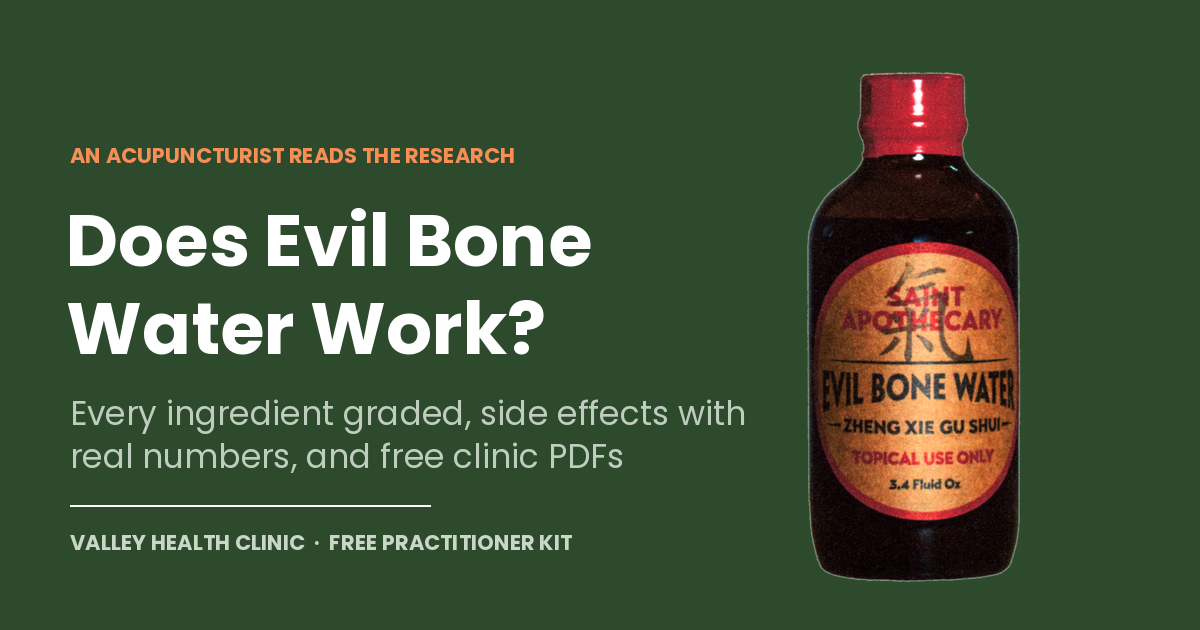
Evil Bone Water is the broad-use foundation for general aches, bruises, sprains, and stiff joints, and it is what most people apply first. Tendon Mending Jiao is targeted at chronic tendon and ligament injury. They layer rather than compete, foundation first and the targeted salve on top.

Consult your doctor before using it if you are pregnant or might be, as several herbs in this formula are blood-moving, which is traditionally avoided in pregnancy. If you take anticoagulants or have a bleeding disorder, run it past your prescriber first.

Recent Posts
Why Joint Pain Gets Worse in Cold, Damp Weather

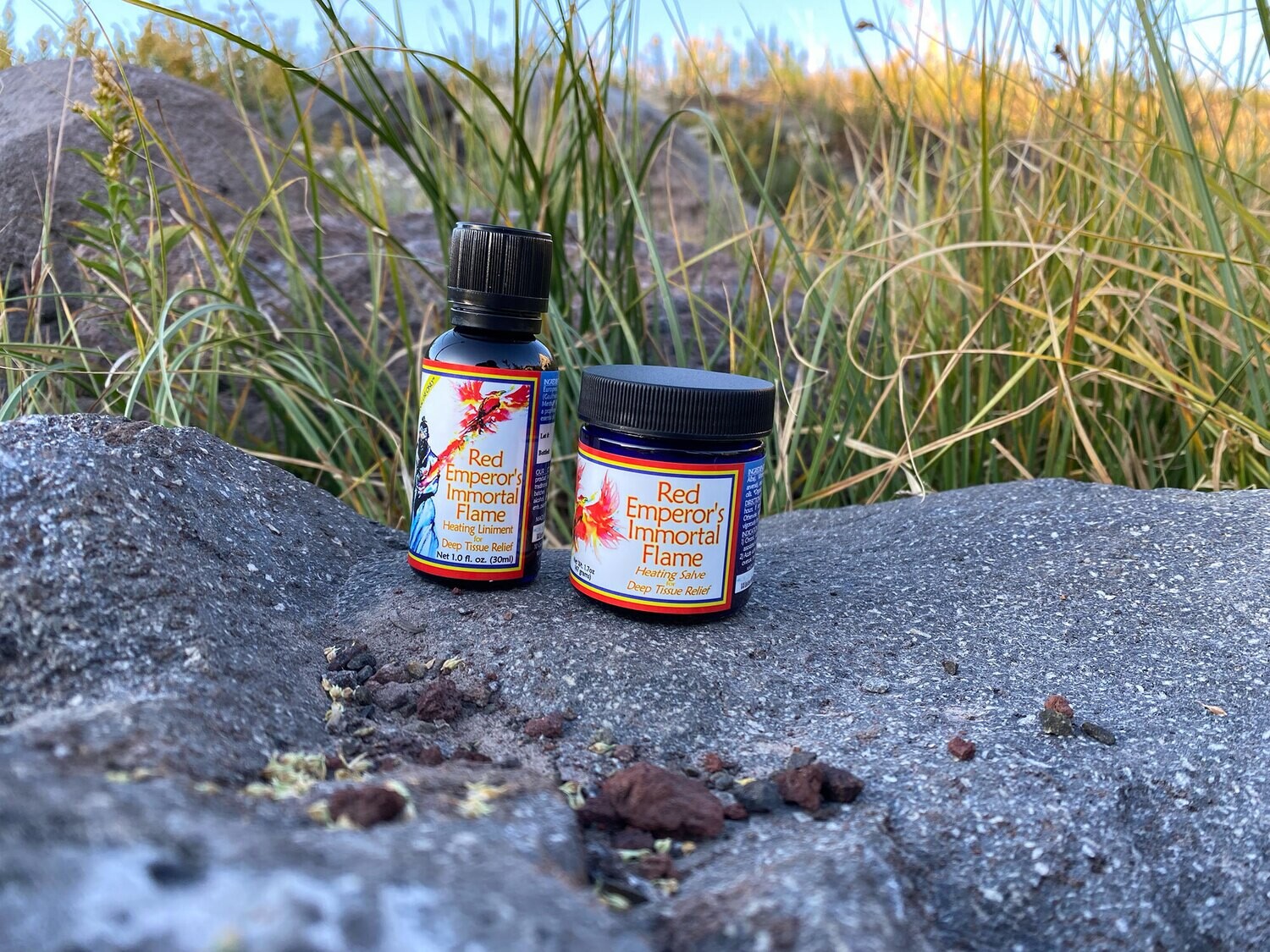
Red Emperor's Immortal Flame Liniment and Slave on Rock
12 minutes read

Why Joint Pain Gets Worse in Cold, Damp Weather

Willard Sheppy Dipl. OM, LAc, BS

Willard Sheppy is a licensed acupuncturist (LAc) and Founder of Valley Health Clinic specializing in using Traditional Chinese Medicine to treat acute injuries and chronic conditions, and to improve sports performance and rehabilitation.

Red Emperor's Immortal Flame Liniment and Slave on Rock

Table of Contents

If your knees, hips, or hands hurt more the moment the weather turns cold and wet, you’re not imagining it. It’s one of the most common things Hugh Turcotte, L.Ac., Dipl. O.M. — the acupuncturist and herbalist behind Red Emperor’s Immortal Flame — hears from patients and customers alike.

“It really does amazing things for joint pain and other types of musculoskeletal pain that are worse with cold exposure, worse in damp weather as well,” Hugh explains. “It has a warming effect. Promotes local circulation. Really almost erases pain in minutes, not hours.”

Below: why cold, damp weather hits joints the way it does, who tends to feel it worst, a real case study from Hugh’s own clinic, and what the research does and doesn’t say about the herbs involved.

Quick answer

Cold and damp weather constrict circulation and slow the movement of fluid through joints — the pattern Chinese medicine calls Wind-Cold-Damp Bi syndrome. Two groups feel it most: competitive athletes carrying heavy training loads, and people whose bodies are sedentary, whether that’s a desk job, long hours behind the wheel, or simply being 50-plus. A warming topical like Red Emperor’s Immortal Flame is designed to promote local circulation and move stuck cold out of the tissue, which is why Hugh has seen it help within minutes rather than hours for some patients.

Why Cold and Damp Weather Make Joint Pain Worse

In Chinese medicine, pain that flares with cold and damp exposure has a name: Wind-Cold-Damp Bi syndrome. The idea is straightforward even if the terminology isn’t — cold constricts, damp stagnates, and a joint that isn’t circulating well hurts more than one that is.

That’s the therapeutic target Red Emperor’s Immortal Flame was built around. “Its components have very evidence-backed anti-inflammatory effects,” Hugh says. “We try to pack as much anti-inflammatory, pain-relieving, circulation-promoting benefit into every drop of this stuff as possible. And it takes some effort — that’s the reason it’s a little bit different than what you’d typically think of as a warming topical. It has to be used with care.”

The Research on Sedentary Life and Joint Pain

Hugh points to a specific data point when he talks about why sedentary living is so hard on joints: “Harvard did a cadaver study, actually, and they found that the incidence of osteoarthritis — evidenced by inspecting joints in these cadavers — went up in populations who were more sedentary.”

That’s a real study, and it holds up under a closer look. Researchers led by Harvard’s Department of Human Evolutionary Biology examined more than 2,500 skeletons spanning the prehistoric era through the modern day and found knee osteoarthritis was 2.1 times more prevalent in the postindustrial sample than in the early industrial one — even after adjusting for age and body mass. Their conclusion was that longer lifespans and higher body weight alone can’t explain the increase, which points to other modern risk factors. Chief among them, in Hugh’s clinical read: how little we move.

A 2025 analysis in Frontiers in Public Health found something consistent in living patients. Combining U.S. health survey data (NHANES 2007–2020) with Mendelian randomization, the authors reported that people with osteoarthritis showed significantly higher sedentary behavior, and that genetically inferred sedentary behavior was associated with roughly 20% higher odds of osteoarthritis (OR 1.20, 95% CI 1.13–1.28).

Neither study shows that a topical liniment prevents or reverses arthritis. They’re evidence for the underlying mechanism Hugh is describing — that joints which don’t move enough don’t get lubricated and drained the way they need to.

Who This Actually Helps — Two Very Different Bodies

Hugh sees the same formula doing real work at opposite ends of the activity spectrum.

A Case Study — From 9/10 Pain to 1–2/10 in a Week

Hugh shared one story that’s stuck with him since 2011. An 83-year-old woman came to him distraught — she had a number of chronic illnesses, including a diagnosis of Graves’ disease, and family coming in to visit. She wanted one thing: to be able to get up and down and across her house so she could host, cook, and serve meals like she wanted to.

“I asked her if she was interested in applying a topical, and she was. She said, ‘Well, whatever helps, ’cause I’ve got family coming in and I don’t want to have to cancel.'”

Her subjective pain went from nine out of ten, constant, daily — down to one to two out of ten that week. When I saw something like that happen, I said, "Okay, we need to get this out to more people."

— Hugh Turcotte, L.Ac., Dipl. O.M.

Worth being clear about what that is and isn’t: it’s one practitioner’s account of a single patient’s self-reported pain, not a controlled trial. It’s the kind of result that made Hugh decide to get the formula out to more people — not a promise of what will happen for you.

What's Actually In the Formula

Red Emperor’s Immortal Flame is a proprietary blend of nine organic ingredients — no single “active ingredient,” but a combination chosen for warming, anti-inflammatory, and circulation-promoting effects:

Research — Where the Evidence Is Strong, and Where It Isn't

To Hugh’s point about “evidence-backed” anti-inflammatory effects — here’s an honest look at what’s actually been studied, ingredient by ingredient. None of these trials tested Red Emperor’s Immortal Flame itself; they tested individual components in isolation.

Arnica has the strongest human evidence of the group. A randomised, double-blind trial of 204 people with hand osteoarthritis found topical arnica gel performed no worse than 5% ibuprofen gel for pain and hand function over 21 days. A 2013 Cochrane systematic review reached a similar conclusion — arnica gel probably delivers benefits comparable to an NSAID gel, though with no better, and possibly a slightly worse, side-effect profile.

Capsaicin (the compound behind cayenne’s heat) has more mixed results. The same Cochrane review found capsicum extract gel probably does not improve pain or knee function in knee osteoarthritis, and came with a markedly higher rate of skin irritation and burning — adverse events in 80% of the capsicum group versus 20% on placebo.

The honest summary: this is a multi-ingredient traditional formula, not a single studied compound, and the formula as a whole hasn’t been through a clinical trial. What has been studied is consistent with what Hugh and his patients report — real anti-inflammatory activity, and real potential for skin irritation in sensitive people — which is exactly why the label says to use it with care.

How to Try It Safely

Red Emperor’s Immortal Flame is external use only and medicinal strength — Hugh is direct about that. Patch-test a small area first, especially if you have sensitive skin. Avoid broken skin, eyes, and mucous membranes. If you’re pregnant, nursing, or on blood thinners, talk to your provider before using any warming topical containing cayenne, wintergreen, or St. John’s Wort.

Beyond that: a little goes a long way. A 30ml bottle holds well over 500 drops, and a liberal application is only 6–8 drops.

Want the full story on Red Emperor’s Immortal Flame? See what’s in the formula, who created it and why, and exactly how to apply it.

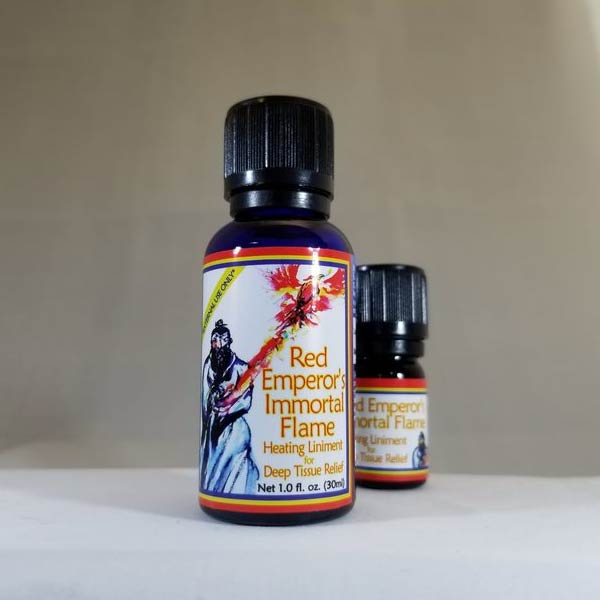
Red Emperor's Immortal Flame

Red Emperor's Immortal Flame

A warming topical, built for cold, damp joint pain.

Nine organic ingredients — ginger, arnica, cayenne, menthol, wintergreen and more — blended by acupuncturist and herbalist Hugh Turcotte to promote local circulation where cold and damp have settled in. Available as a fast-penetrating liniment or a slower-release salve.

References

Wallace IJ, Worthington S, Felson DT, Jurmain RD, Wren KT, Maijanen H, Woods RJ, Lieberman DE. “Knee osteoarthritis has doubled in prevalence since the mid-20th century.” Proceedings of the National Academy of Sciences. 2017;114(35):9332–9336. DOI: 10.1073/pnas.1703856114

He J, Zhang C, Yang L. “Association between sedentary behavior, physical activity, and osteoarthritis: results from NHANES 2007–2020 and Mendelian randomization analysis.” Frontiers in Public Health. 2025;12:1454185. Read the study

Widrig R, Suter A, Saller R, Melzer J. “Choosing between NSAID and arnica for topical treatment of hand osteoarthritis in a randomised, double-blind study.” Rheumatology International. 2007;27(6):585–591. DOI: 10.1007/s00296-007-0304-y

Cameron M, Chrubasik S. “Topical herbal therapies for treating osteoarthritis.” Cochrane Database of Systematic Reviews. 2013;2013(5):CD010538. DOI: 10.1002/14651858.CD010538

Richards BL, Whittle SL, Buchbinder R. “Neuromodulators for pain management in rheumatoid arthritis.” Cochrane Database of Systematic Reviews. 2012;(1):CD008921. DOI: 10.1002/14651858.CD008921.pub2

These statements have not been evaluated by the US Food & Drug Administration. This product is not intended to diagnose, treat, cure, or prevent any disease. For external use only.

Share on

Will Sheppy, Founder and Acupuncturist at Valley Health Clinic
Willard Sheppy
Willard Sheppy is a licensed acupuncturist (LAc) and Founder of Valley Health Clinic specializing in using Traditional Chinese Medicine to treat acute injuries and chronic conditions, and to improve sports performance and rehabilitation.

FAQ's

Why does my joint pain get worse in cold or rainy weather?

Cold constricts blood vessels and slows circulation to joints, while damp, low-pressure weather is widely reported by people with arthritis and old injuries to worsen stiffness and aching. In Chinese medicine this pattern is called Wind-Cold-Damp Bi syndrome.

No — it’s the opposite approach. Where ice reduces acute swelling, REIF is a warming liniment designed to promote local circulation in joints that are cold, stiff, or slow to heal, which is a different mechanism entirely.

In Hugh Turcotte’s clinical experience, two groups: high-level athletes managing heavy training loads, and people whose lifestyle is sedentary — desk workers, long-haul or gig drivers, and adults 50 and older.

Yes, though it’s mixed and ingredient-specific rather than formula-specific. Arnica has solid randomised-trial evidence for hand osteoarthritis; other components like capsaicin have weaker and more mixed results. See the research section above for the honest breakdown.

It’s designed for regular use as needed, external use only, at a small dose of 6–8 drops. Patch-test first if you have sensitive skin, and check with your provider first if you’re pregnant, nursing, or on blood thinners.

Recent Posts

Home Remedy Guide for Alleviating Hip Bursitis Pain

Question From A Customer 

After receiving an email from a valued customer seeking advice about hip bursitis, sharing this knowledge with our wider community seemed fitting. 

The customer wrote, “We purchased Evil Bone Water for ourselves, and while it helped my knee pain, my husband, suspected of suffering from hip bursitis, still relies on over-the-counter pain relievers. Any suggestions?” 

Hip bursitis is indeed a common condition affecting numerous individuals worldwide. Understanding this ailment, its causes, and effective treatments are helpful in managing the associated pain and discomfort.

So let’s delve into the specifics of hip bursitis, exploring at-home treatment methods, including the application of Evil Bone Water (EBW) and how to get the most out of its application. I will also offer tips for managing this condition and touch upon other potential diagnoses for hip pain. So, let’s dive in!

What is Hip Bursitis? Symptoms, Causes, and Diagnosis

The bursa is a small, fluid-filled sac that provides cushioning between bones and surrounding soft tissues in the joints. Hip bursitis often arises when the bursa over the greater trochanter (the protruding bone on the side of your hip) inflames due to overuse or injury, leading to significant discomfort. 

The largest hip bursa lies beneath the tensor fascia lata and gluteus maximus as they unite to form the Iliotibial band ( often called the IT band)  directly over the greater trochanter. 

Trochanter bursitis usually surfaces gradually from overuse but can also result from a direct, traumatic fall onto the hip. This typically happens when an individual significantly increases their walking volume or carries heavy loads while walking. In the clinic, I see this happening most with Disneyland vacations, hiking with a heavy, backpack, or even lengthy Costco shopping trips.

Identifying the symptoms of hip bursitis is crucial. Most sufferers report lateral hip pain that worsens during activity, and at night while lying on the affected side, leading to sleep disruptions.

Other Possible Causes of Hip Pain: Looking Beyond Bursitis

Hip bursitis pain is usually right over the greater trochanter. If pain is present in slightly different regions, it can implicate other muscles. 

For instance, pain above and behind the greater trochanter could result from the gluteus medius and minimus muscles, vital for walking. This can feel like back or posterior hip pain. 

Pain towards the front of the greater trochanter might indicate tension in the Tensor Fasciae Latae (TFL), a muscle involved in lifting the knee that can tighten with prolonged sitting. It is common to report pain in the front when exiting a car.

In the elderly population, hip arthritis is prevalent and often works in combination with other inflammations like bursitis. The most common presentation with hip arthritis is pain that refers to the groin, as hip socket pain often does. 

Bursitis often feels like inflammation. It can be tender to the touch, with a burning sensation. Tight muscles cause dull, achy pain surrounding the hip. There might be some pain referring down the leg, but if the sensation is tingling, nervy, or has a large area of referral pain, we must rule out back problems.

It is also important to realize that although we like to think one thing is wrong, oftentimes it can be a combination of all of the above.  You could have hip pain which is 10 % arthritis and 90% hip bursitis. This may present as pain radiating to the groin and lateral pain aggravated with walking.  So just realize if you don’t fit into one of these categories, this may be an why. .

At-Home Treatment for Hip Bursitis 

Despite its somewhat intimidating name, Evil Bone Water (EBW) is a trusted ally in the fight against pain and inflammation. This topical analgesic can be particularly beneficial for conditions like hip bursitis.

The trick with using topical analgesics for hip pain is absorption, which needs to penetrate deeper due to the thick tissue surrounding the hip’s bursa. Thus, our focus must be on increasing blood circulation and improving absorption, which can be achieved via heat and massage,. 

Additionally, we need to target ways to decrease muscle tension to reduce pressure and friction on the bursa sac, accomplished through stretching and rolling. 

Lastly, we need to use Kinesio tape or Muscle Melt Pain Patches to enhance muscle relaxation and stability. The sensation of instability or weakness in the hip, common in bursitis patients, can cause muscles to tighten in an attempt to support and protect the hip. This can often make walking uncomfortable, with patients finding relief in physically holding the hip. Applying Kinesio tape or a Muscle Melt Pain Patch over the hip can provide supportive pressure, increase proprioceptive feedback, and give the feeling of security. As a result, the muscles may be able to relax more effectively.

Here’s your step-by-step guide to using Evil Bone Water:

  1. Heat Therapy: Start with a hot shower or massage to the affected area to stimulate blood circulation. This process helps increase blood circulation to the skin and muscles and prepares them for EBW application.
  1. Apply EBW: spray or rub EBW over the hip area. Let it absorb into the skin; increasing blood circulation should enhance this process.
  1. Stretching: Following the EBW application, perform gentle hip stretches to help ease muscle tension and alleviate pressure on the bursa. For pain concentrated more in the front of the hip, focus on hip flexors and psoas stretches. For pain centered more towards the back, focus on gluteus medius stretches. Read the stretch section below for more details. For pain around the greater trochanter, gently apply pressure around the area with a small rolling ball.
  1. Muscle Melt Pain Patch: Applying a Muscle Melt Pain Patch or Kinesio tape to the affected area can help. This application offers extra support, aids in relaxing the muscles, and provides a slow release of the analgesic for sustained relief. The pressure from the patch or tape can also help alleviate tension over the bursa sac, contributing to decreased discomfort. This is most effective when used at night while sleeping or before a long walk or other activity that might aggravate symptoms. 

Stretching

Full-Body Side Stretch: Gathering the Heavenly Energy

This stretch targets the entire side of your body, perfect for those experiencing hip bursitis where more isolating stretches hurt. 

  1. Stand upright with your feet shoulder-width apart. 
  1. Inhale deeply, slowly raising your arms above your head as if performing a big morning yawn.
  1. Extend one arm higher, bending your torso to the opposite side. As you stretch, imagine the tension draining from your head and hands, replaced with a sense of lightness. 
  1. Use your breath to guide the stretch. Exhale as you reach the peak of your stretch, and inhale as you come back to the starting position. 
  1. Repeat the stretch on the other side. 

The aim of this stretch is to engage and elongate the connective tissues along the sides of your body. By breathing deeply into the stretch, you’re increasing circulation and promoting relaxation within these tissues.

Glute Medius and Quadratus Lumborum Stretch: Figure-4 Spinal Rotation


This stretch is designed to isolate the glute medius muscle and balance the quadratus lumborum in your lower back. Often times hip problems are caused by imbalances in the spine. You will often feel the pain radiating toward the back. This stretch will help with that. You should notice a difference between the two sides. If not, you can probably skip this one. 

  1. Lie on your back with both knees bent and your feet flat on the floor. 
  1. Rest the ankle of your affected leg on your opposite thigh, near your knee, creating a figure-4 position.
  1. Maintaining this position, slowly rotate your lumbar spine so that the foot of your raised leg touches the floor.
  1. Now, engage your glute muscles to gently push the elevated knee down and outward.

TFL Stretch: Lunge Position

This stretch focuses on the Tensor Fasciae Latae (TFL), a muscle that often becomes tight with hip bursitis.  You will have pain that is a little more to the front on the hip. 

  1. Start in a lunge position with your unaffected leg in front and your affected leg extended behind you. Ensure that both your front and back leg align with your hips.
  1. Shift your hips forward while squeezing your glute muscles. You should feel a stretch in the front of your hip.
  1. From this position, keeping your spine stable, extend your arms overhead.
  1. To enhance the stretch, you can add a gentle rotation of your trunk. Always use deep belly breathing to subtly increase the stretch, rather than forcing it.

Remember to keep these stretches gentle and within your comfort range. Overstretching can lead to additional pain or injury. The way to increase the stretch is by breathing deeply, not forcing it. Please consult a healthcare provider or a physiotherapist if you are unsure how to perform these stretches.

Other Things To Help Manage Hip Bursitis

Here are other strategies to effectively manage hip bursitis:

  • Rest: Rest is crucial. Avoid activities that intensify your pain and ensure a steady progression when resuming exercise.
  • Maintain a Healthy Weight: Extra weight can place additional stress on your hips, exacerbating bursitis.
  • Regular Low-Impact Exercise: 

Strength and stability are key to managing hip bursitis and keeping it for coming back. It is most important later in the healing process as the pain begins to go away. These low-impact exercises are designed to target the lateral hip muscles, promoting strength and stability in the joint without causing further discomfort.

Exercise 1: Lateral Band Walk

Lateral band walks target the gluteus medius, a key hip-stabilizing muscle. 

  1. Stand with your feet shoulder-width apart. Place a stretchy resistance band around your ankles.
  1. Slightly bend your knees and squat down into a half-squat position. This is your starting position.
  1. Slowly step to the right while keeping the band tight. Follow with your left foot so you return to the shoulder-width stance. 
  1. Repeat this for 10-15 steps, then switch direction and step to the left.
  1. Aim for 2-3 sets in each direction. 

Remember to keep your posture upright and your core engaged throughout the exercise.

Exercise 2: Single-Leg Balance

This exercise mimics the function of the hip during walking and is a good progression as you get stronger.

  1. Stand near a wall or chair in case you need support.
  1. Shift your weight onto your unaffected leg.
  1. Slowly lift your affected leg off the ground, maintaining balance on your standing leg.
  1. Try to hold this position for 10-20 seconds, then switch to the other leg.
  1. Aim for 2-3 sets on each leg.
  • As your balance improves, try to increase the duration of the exercise. This exercise promotes stability and strengthens the muscles supporting the hip.

Important Note

Please consult a healthcare provider or a physical therapist if you are unsure how to perform these exercises or if they cause pain. Individual responses can vary, and these exercises might not be suitable for everyone with hip bursitis. Your healthcare provider can help tailor an exercise program specifically for your condition and fitness level.

Don’t Forget 

Hip bursitis can be painful, but it can be effectively managed at home with the right knowledge and tools like Evil Bone Water. Remember, these strategies can help alleviate discomfort but should not replace professional medical advice. Should symptoms persist, please seek medical attention.

If you found this information useful and believe it could help someone you know, share this article with them. If you have questions or require more assistance, don’t hesitate to contact us. If you haven’t already tried Evil Bone Water to combat your hip bursitis, visit our store to order your supply today. We have a Power Patch combo that is perfect for this condition. 

Don’t suffer in silence; gain control of your hip bursitis today! Visit our store now to order your Evil Bone Water Power Patch Combo.  and start your journey towards pain-free living. Together, we can overcome the pain.

Buy Power Patch Combo Today!

Evil Bone Water (Zheng Gu Shui) is a Chinese topical medicinal hand-crafted with only empirical grade herbal ingredients in an approved facility.

Experience dual-action relief with our Evil Bone Water and Muscle Melt Patches combination. This dynamic duo promises round-the-Clock relief, combining the fast-acting power of Evil Bone Water with the long-lasting effects of Muscle Melt Patches.

.

About the Author

Author Willard Sheppy Exporing the Coast

Willard Sheppy is a writer and healthcare practitioner who seamlessly melds scientific knowledge with practical applications in engaging and authoritative articles. He holds a Bachelor of Science in Environmental Science from Oregon State University and a Master’s in Acupuncture and Oriental Medicine from the distinguished Oregon College of Oriental Medicine.

In his work, Willard skillfully combines his extensive educational background in scientific research with his practical experience as a healthcare practitioner. Willard balances his life with martial arts and cherished family adventures. As a father of three, he often leads his family on camping and hiking trips along the breathtaking Oregon coast.

Connect with Willard on LinkedIn at linkedin.com/in/valleyhealthclinic or learn more about his services at valleyhealthclinic.com. Embark on this journey towards holistic health with Willard!