
Category: Recovery

Stem & Leaf LumBear: Three Guide Herbs for the Low Back

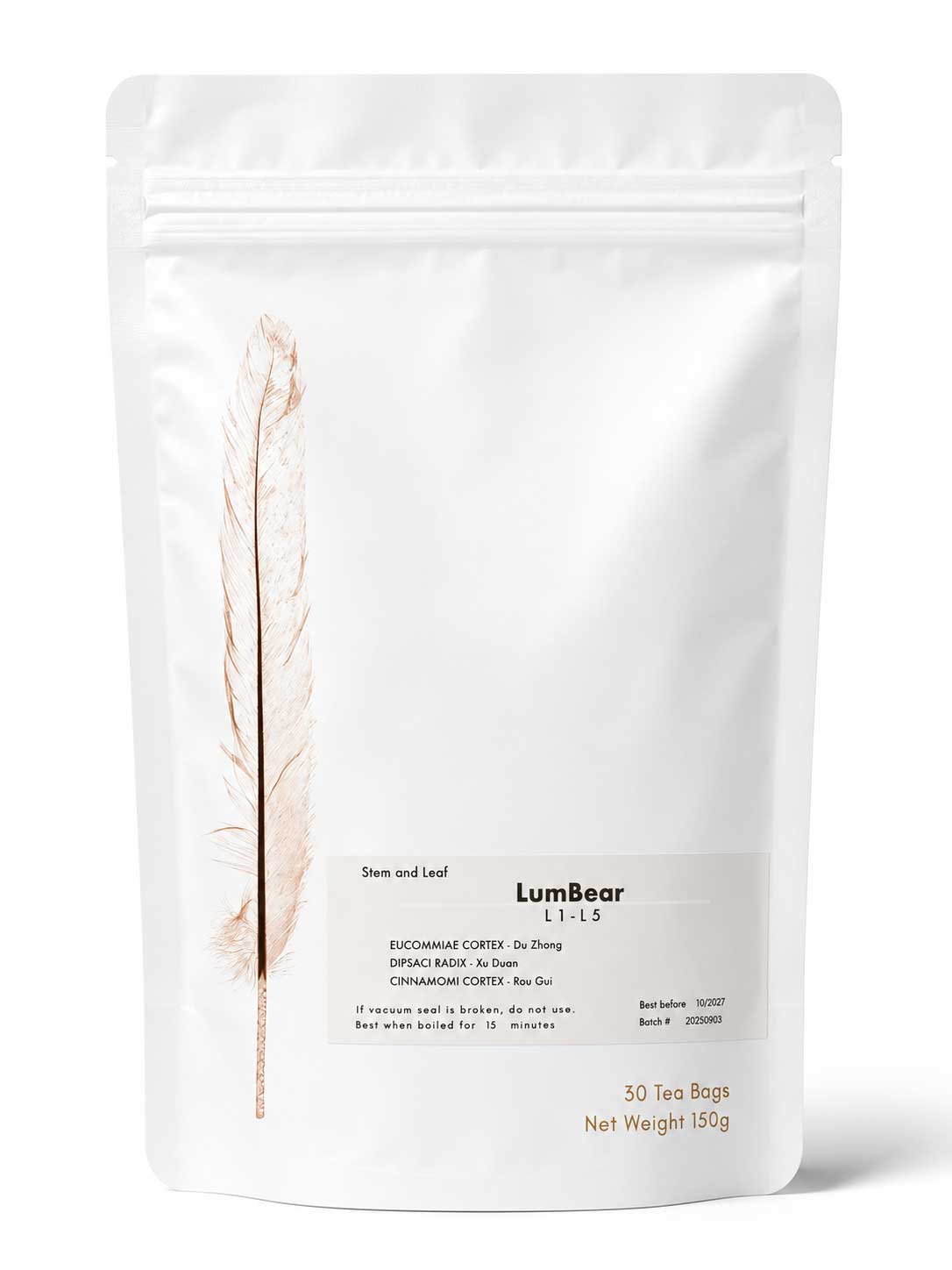
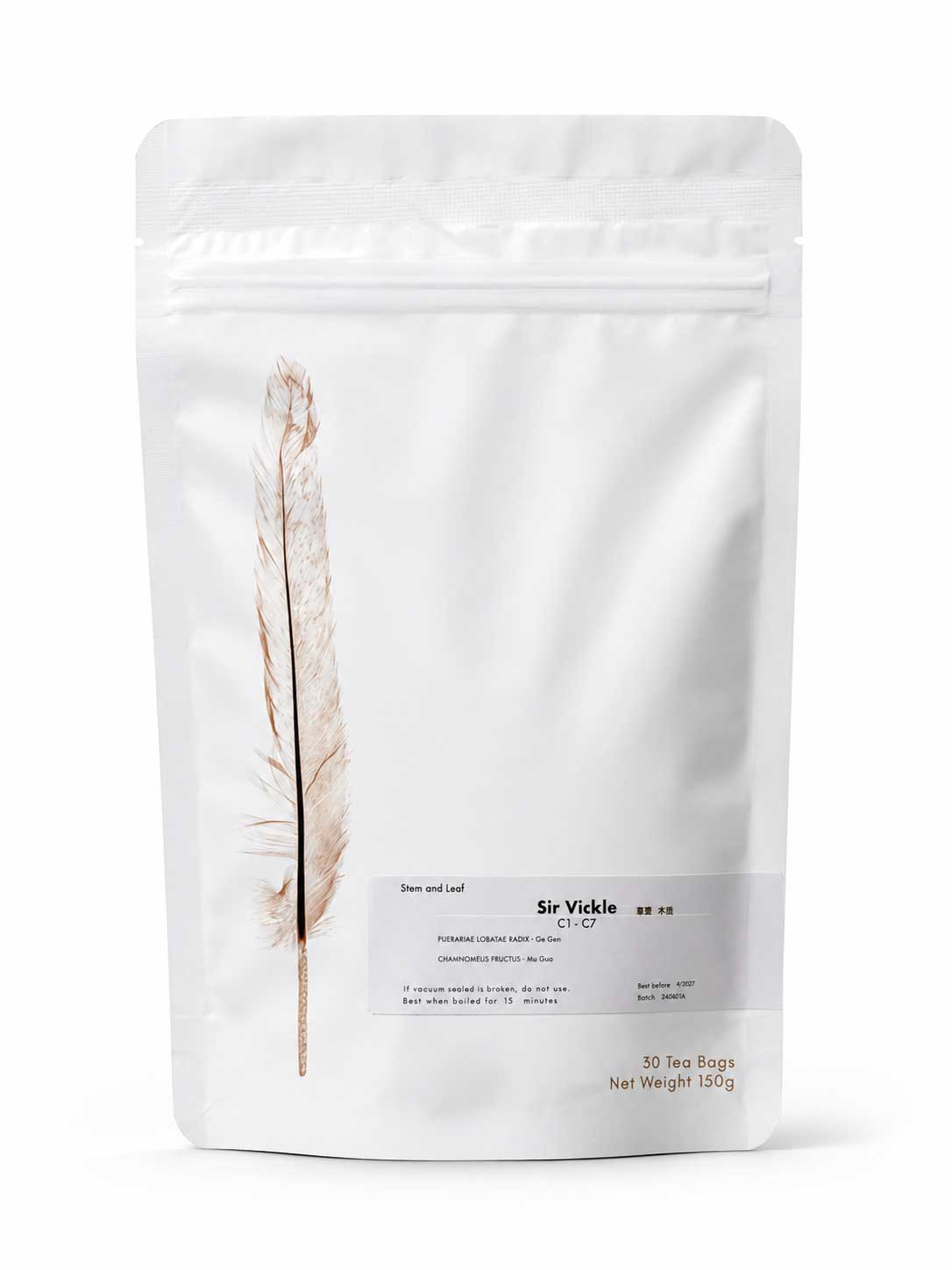
LumBear herbal tea product mockup
8 minutes read

Materia Medica · The Stem & Leaf Series

Stem & Leaf LumBear: Three Guide Herbs for the Low Back

Willard Sheppy Dipl. OM, LAc, BS

Willard Sheppy is a licensed acupuncturist (LAc) and Founder of Valley Health Clinic specializing in using Traditional Chinese Medicine to treat acute injuries and chronic conditions, and to improve sports performance and rehabilitation.


LumBear herbal tea product mockup

Table of Contents

Educational content from Valley Health Market. Not medical advice. Statements have not been evaluated by the FDA. This product is not intended to diagnose, treat, cure, or prevent any disease.

Chronic low back pain reorganizes a life quietly. It changes how you sleep, what you lift, and which chairs you avoid.

Stem & Leaf — LumBear is the lower-back formula in a line built region by region: three guide herbs, aimed at L1 through L5.

Here’s the guide-herb idea behind it, what’s inside, and when back pain needs a doctor instead.

Quick Answer

Stem & Leaf — LumBear is the lumbar formula in Botanical Biohacking’s region-by-region spinal line: three guide herbs aimed at L1 through L5. Du Zhong and Xu Duan have been paired for the low back for over a thousand years, and Rou Gui adds warming depth. It is a companion to the fundamentals — movement, posture, sleep, hands-on care — and new, severe, or radiating back pain, or pain with numbness, weakness, or loss of bladder or bowel control, needs prompt medical evaluation.

What Stem & Leaf LumBear Actually Is

The Stem & Leaf line takes a region-by-region approach to spinal support. Rather than one general back formula, each product is built around guide herbs — herbs that classical medicine understands as directing a formula’s action to a particular part of the body.

Stem & Leaf — LumBear is the lower back formula. Three guide herbs, aimed at one region.

That specificity is the whole idea, and it mirrors how a practitioner actually thinks about a back. The spine is not one thing.

The Guide Herb Principle

A guide herb carries a formula’s action toward a region. The lumbar spine has the most-developed guide herb tradition of any part of the back, because it is the region that fails most often.

Du Zhong and Xu Duan appear together in low-back formulas going back well over a thousand years. The pairing is close to canonical.

How It's Sourced and Tested

The same protocol runs across the entire Botanical Biohacking line: contamination testing covering heavy metals, pesticide residue, and microbial load.

Inside the Formula

This is the classical low-back trio. Du Zhong and Xu Duan are the two herbs most associated with lumbar support in the entire materia medica, and Rou Gui adds the warming depth that a cold, tired low back tends to want. Three guide herbs rather than two, because the lumbar region carries the most load.

The Lumbar Guide Herbs

Using the Line Together

A Practitioner’s Note

Spinal support formulas are a companion to the fundamentals, not a replacement. Movement, posture, sleep, and hands-on care do the heavy lifting. New, severe, or radiating back pain — or pain with numbness, weakness, or loss of bladder or bowel control — needs prompt medical evaluation.

The lumbar spine is the most heavily loaded region of the back, and it has the deepest guide-herb tradition behind it. Du Zhong and Xu Duan have been paired for the low back for over a thousand years. — Will Sheppy, L.Ac.

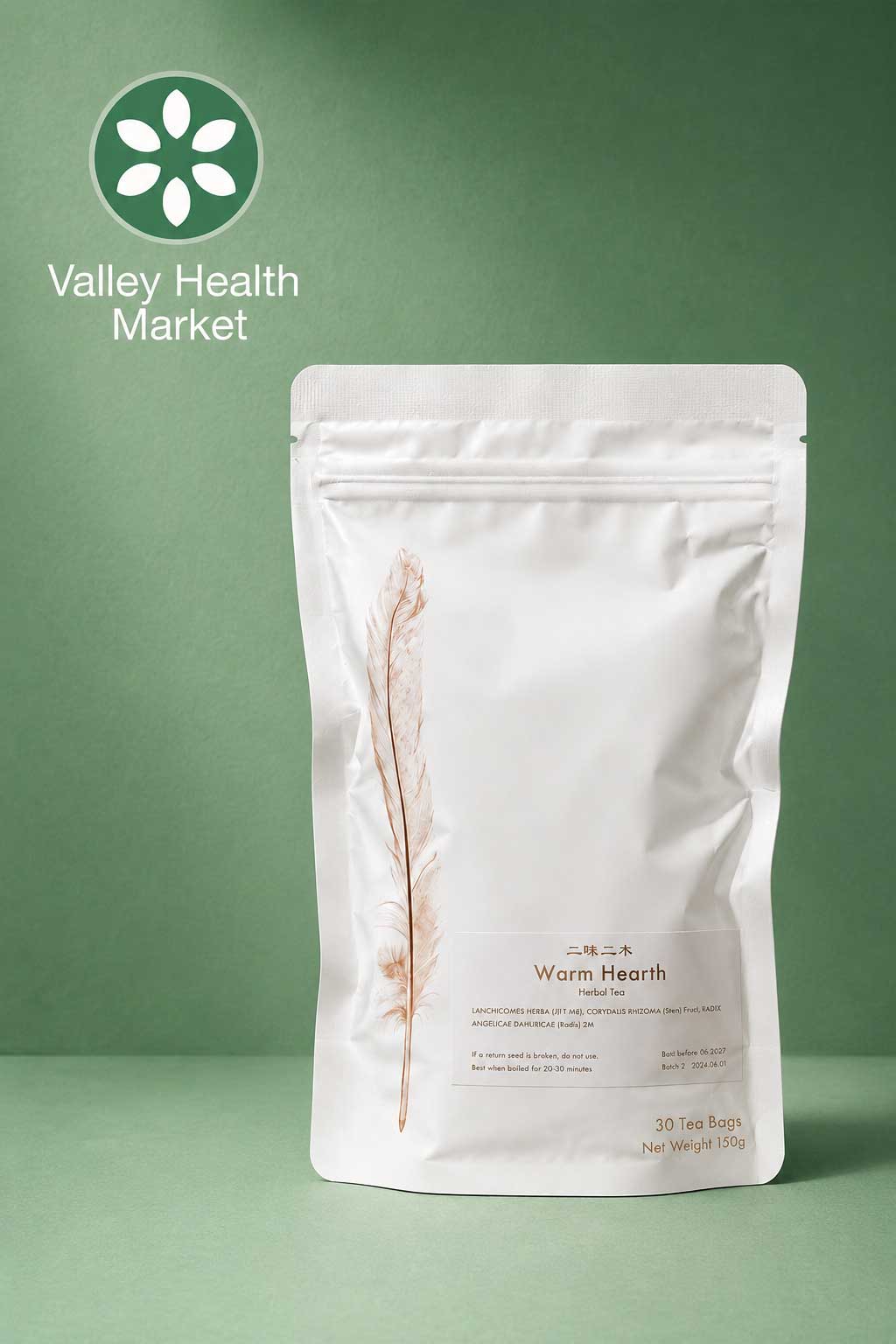
LumBear herbal tea product mockup with a green background by Valley Health Market

Stem & Leaf — LumBear

The lumbar formula from the Stem & Leaf line. Region-specific guide herbs, thirty teabags. Available at Valley Health Market.

Research & Resources

  1. Christopher M. Volesky, L.Ac., Rocky Mountain Herb Supply. Stem and Leaf guide herb formulations. Distributor product note, July 2026.
  2. Bensky D, Clavey S, Stöger E. Chinese Herbal Medicine: Materia Medica, 3rd ed. Eastland Press, 2004. (Reference for guide herbs and channel-directing action.)

A note on evidence: the Stem & Leaf line is a practitioner-formulated support product. We are not attaching clinical-trial claims to it. What we can tell you is which herbs are in it, why they were chosen, and who formulated them.

Educational content rooted in 20+ years of clinical practice in Traditional Chinese Medicine. The information provided is for educational purposes and is not intended to replace consultation with a qualified healthcare practitioner. Please consult your physician before starting any new herbal protocol, especially if pregnant, nursing, on anticoagulants, or managing a chronic condition.

Share on

Will Sheppy, Founder and Acupuncturist at Valley Health Clinic
Willard Sheppy
Willard Sheppy is a licensed acupuncturist (LAc) and Founder of Valley Health Clinic specializing in using Traditional Chinese Medicine to treat acute injuries and chronic conditions, and to improve sports performance and rehabilitation.

FAQ's

What is Stem & Leaf LumBear?

LumBear is the lower-back formula in the Stem & Leaf line, made by Botanical Biohacking. Instead of one general back formula, the line is built region by region around guide herbs — herbs classical medicine understands as directing a formula’s action to a particular part of the body. LumBear is aimed at the lumbar spine, L1 through L5, and comes as thirty teabags.

Three guide herbs: Du Zhong (eucommia bark), the classical lumbar herb that traditionally strengthens the low back and knees; Xu Duan (dipsacus root), whose name means “restore what is broken” and which traditionally knits and strengthens sinew and bone; and Rou Gui (cinnamon bark), which warms the deep interior and the lower back.

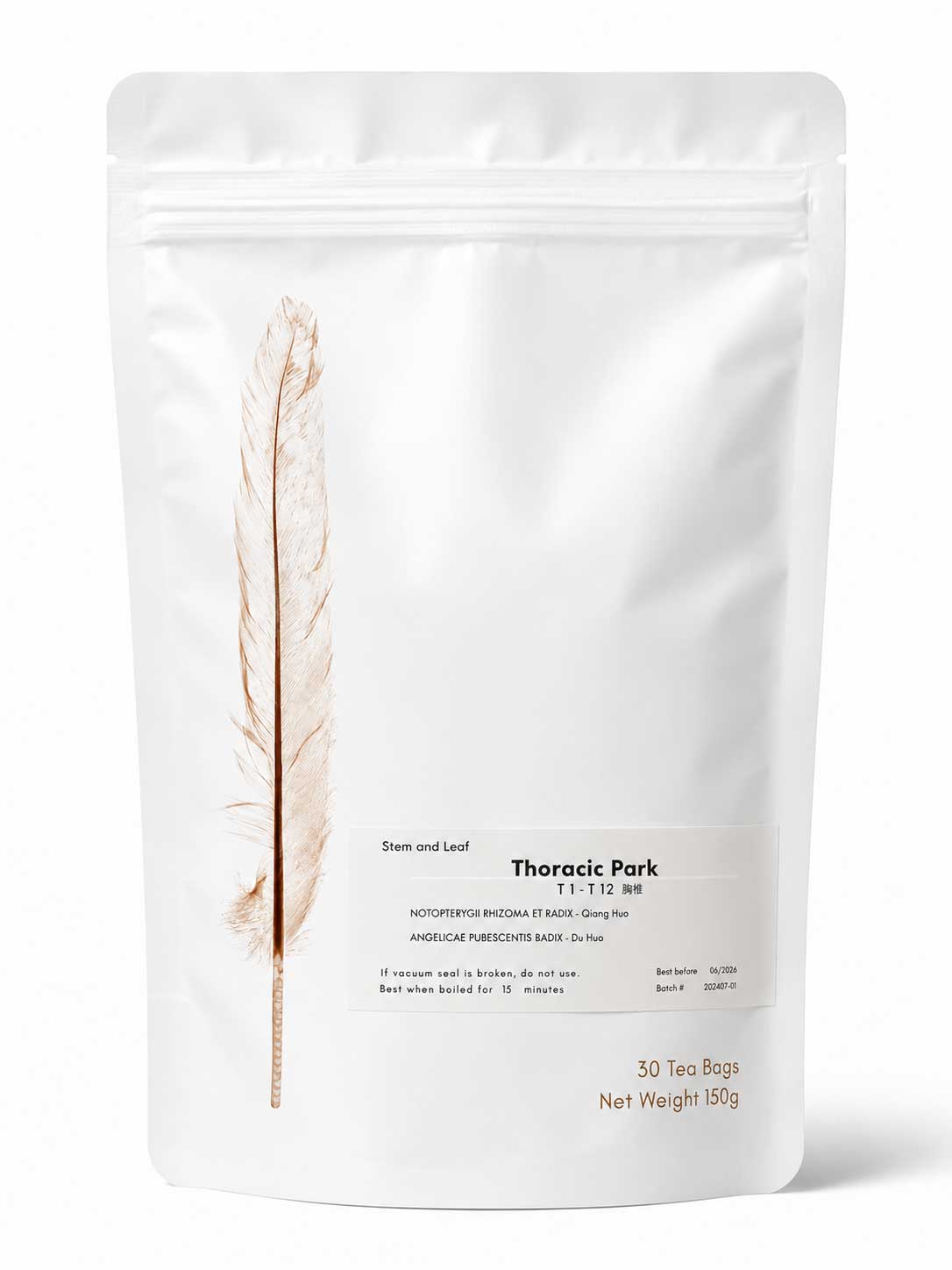
Yes — the Stem & Leaf teas can be used alone or combined to cover the better part of the neck and back: Sir Vickle for the cervical spine (C1–C7), Thoracic Park for the thoracic spine (T1–T12), LumBear for the lumbar spine (L1–L5), and Sacrocox for the sacrococcygeal region.

LumBear is a practitioner-formulated support product, and we are not attaching clinical-trial claims to it. What we can tell you is which herbs are in it, why they were chosen, and who formulated them. Du Zhong and Xu Duan have appeared together in classical low-back formulas for well over a thousand years.

New, severe, or radiating back pain — or pain with numbness, weakness, or loss of bladder or bowel control — needs prompt medical evaluation. Spinal support formulas are a companion to the fundamentals, not a replacement: movement, posture, sleep, and hands-on care do the heavy lifting.

Recent Posts

Sol Tea: For the Foggy, Heavy Head That Feels Waterlogged

Sol Tea product mockup
6 minutes read

Materia Medica · The Formula Series

Sol Tea: For the Foggy, Heavy Head That Feels Waterlogged

Willard Sheppy Dipl. OM, LAc, BS

Willard Sheppy is a licensed acupuncturist (LAc) and Founder of Valley Health Clinic specializing in using Traditional Chinese Medicine to treat acute injuries and chronic conditions, and to improve sports performance and rehabilitation.

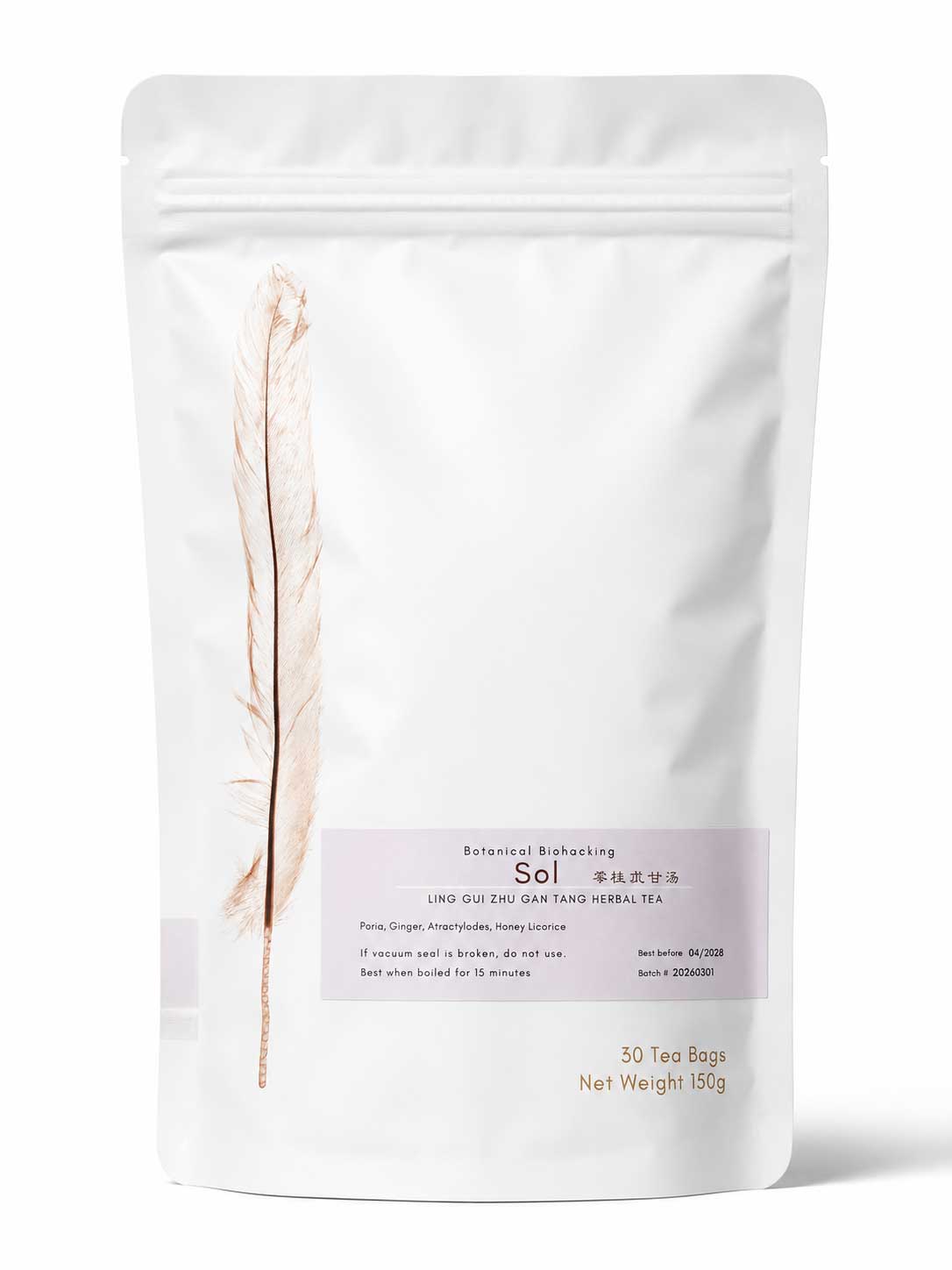
Sol Tea product mockup

Table of Contents

Educational content from Valley Health Market. Not medical advice. Statements have not been evaluated by the FDA. This product is not intended to diagnose, treat, cure, or prevent any disease.

Sometimes the head feels foggy because the body is waterlogged.

Sol Tea is built on Ling Gui Zhu Gan Tang — four herbs, two thousand years — written for the patient too depleted to tonify. Not enough heat to move fluid, so fluid pools and then rises.

Here’s what the formula actually is, why four herbs is the point, and what’s inside.

Quick Answer

Sol Tea is built on Ling Gui Zhu Gan Tang — Poria, Cinnamon Twig, Atractylodes and Licorice Decoction — one of the great phlegm-fluid formulas, in continuous use for roughly two thousand years. It was written for the heavy, dizzy, cotton-wool-head pattern where fluid pools because there isn’t enough warmth to move it, and for the patient who gets foggier when tonified. If head symptoms are new, severe, or worsening, get properly evaluated first — Sol is a fit for the right pattern, not a substitute for a diagnosis.

What Sol Tea Actually Is

Ling Gui Zhu Gan Tang — Poria, Cinnamon Twig, Atractylodes and Licorice Decoction — is one of the great phlegm-fluid formulas. It warms yang, strengthens the spleen’s handling of fluids, and transforms the thin, sloshing dampness that rises up to cloud the head.

That is the pattern behind the heavy, dizzy, cotton-wool feeling: not enough heat to move fluid, so fluid pools and then rises.

It is a small formula — only four herbs — but elegantly constructed, which is why it has stayed in constant use for roughly two thousand years and why so many later formulas are built on top of it.

Why Four Herbs Is the Point

There is a clinical situation this formula was made for: the patient who needs support but cannot tolerate being tonified. Rich, building formulas sit heavily on a system that is already damp, and the result is more fog, not less.

Sol works the other direction. It removes what is in the way first. Four of the safest, most-used herbs in the entire materia medica, doing one job cleanly.

How It's Sourced and Tested

The same protocol applies across the line — heavy metals, pesticide residue, and microbial load.

Inside the Formula

Four herbs, four clearly defined roles — classic monarch-to-envoy construction.

Warm and Drain

Strengthen and Harmonize

Before You Start

Dizziness has many causes, and not all of them are the fluid pattern this formula addresses. If head symptoms are new, severe, or worsening, get properly evaluated first. Sol is a good fit for the right pattern — not a substitute for a diagnosis.

This is the formula for the person who gets worse when you try to build them up. Clear what is in the way first, and the building becomes possible. — Will Sheppy, L.Ac.

Sol Tea

Ling Gui Zhu Gan Tang. Four herbs, thirty teabags. Gentle enough for people who cannot tolerate a tonic. Available at Valley Health Market.

Research & Resources

  1. Lu Y, et al. Lingguizhugan Decoction in the Treatment of Non-Alcoholic Fatty Liver Disease: A Systematic Review and Meta-Analysis. Endocr Metab Immune Disord Drug Targets. 2025;25(13):1060–1072. Link →
  2. Ma H, et al. Linggui Zhugan Decoction for peripheral vertigo: A protocol for systematic review and meta-analysis. Medicine (Baltimore). 2021;100(16):e25563. Link →
  3. Memorial Sloan Kettering Cancer Center. Ling Gui Zhu Gan Tang — About Herbs monograph. Link →

Educational content rooted in 20+ years of clinical practice in Traditional Chinese Medicine. The information provided is for educational purposes and is not intended to replace consultation with a qualified healthcare practitioner. Please consult your physician before starting any new herbal protocol, especially if pregnant, nursing, on anticoagulants, or managing a chronic condition.

Share on

Will Sheppy, Founder and Acupuncturist at Valley Health Clinic
Willard Sheppy
Willard Sheppy is a licensed acupuncturist (LAc) and Founder of Valley Health Clinic specializing in using Traditional Chinese Medicine to treat acute injuries and chronic conditions, and to improve sports performance and rehabilitation.

FAQ's

What is Sol Tea?

Sol Tea is built on Ling Gui Zhu Gan Tang — Poria, Cinnamon Twig, Atractylodes and Licorice Decoction — one of the great phlegm-fluid formulas of the Chinese medicine canon, in continuous use for roughly two thousand years. It comes as thirty teabags, a one-month supply.

It was written for the patient who needs support but cannot tolerate being tonified — the heavy, dizzy, cotton-wool-head pattern where fluid pools because there isn’t enough warmth to move it. Rich, building formulas make that person foggier; Sol works the other direction and removes what is in the way first.

No — and that is the point. It is a small, four-herb formula that clears fluid rather than builds. Four of the safest, most-used herbs in the entire materia medica, doing one job cleanly. Clear what is in the way first, and the building becomes possible.

Dizziness has many causes, and not all of them are the fluid pattern this formula addresses. If head symptoms are new, severe, or worsening, get properly evaluated first. Sol is a good fit for the right pattern — not a substitute for a diagnosis.

Recent Posts

Peak Tea: For the Illness That Never Fully Left

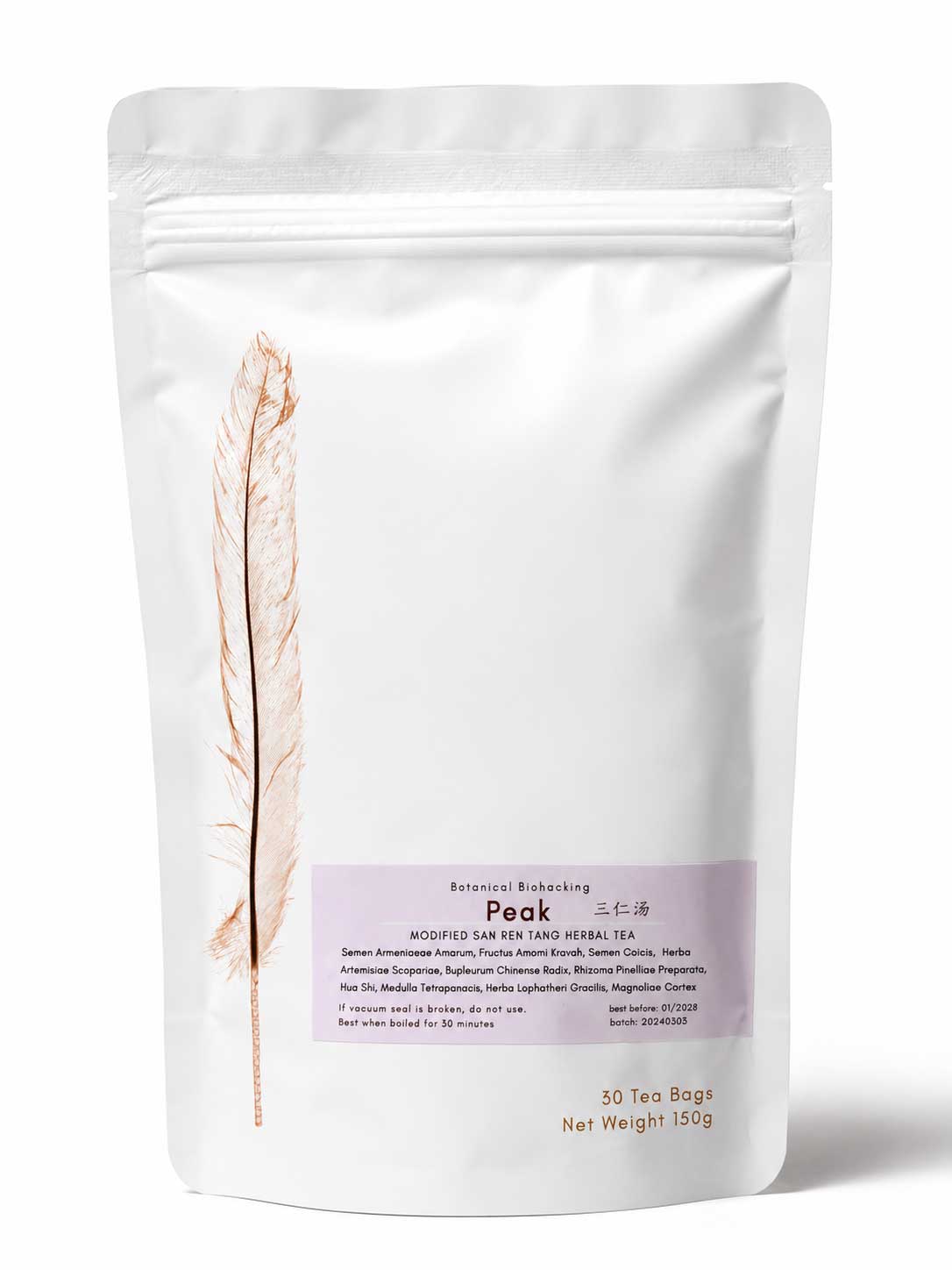
Peak Tea product mockup
8 minutes read

Materia Medica · The Formula Series

Peak Tea: For the Illness That Never Fully Left

Willard Sheppy Dipl. OM, LAc, BS

Willard Sheppy is a licensed acupuncturist (LAc) and Founder of Valley Health Clinic specializing in using Traditional Chinese Medicine to treat acute injuries and chronic conditions, and to improve sports performance and rehabilitation.

Peak Tea product mockup

Table of Contents

This one is for the illness that never fully left.

Here’s where the formula comes from, how Botanical Biohacking rebuilt it, how to tell Peak from its sibling Wind, and what’s inside.

Quick Answer

Peak Tea is San Ren Tang — Wu Ju Tong’s 1813 formula for the lingering damp pattern — remixed with Xiao Chai Hu Tang by Dr. Jin Zhao, with Yin Chen Hao and Tibetan Plateau Chai Hu strengthening the heat-clearing side. It suits the more excess, heated presentation; its sibling Wind (with white ginseng) suits relative deficiency. It is a targeted tool, not a daily tea: roughly two weeks, never longer than three months.

Where This Formula Comes From

Wu Ju Tong described this pattern in 1813, and the description still reads like a modern chart note.

San Ren Tang — the Three-Kernel Decoction — has a specific, datable origin, which is more than most herbal products can claim. It appears in the Wen Bing Tiao Bian (溫病條辨, Systematic Differentiation of Warm Diseases), published in 1813 by Wu Ju Tong.

His original description of the pattern reads almost like a modern symptom checklist: headache, aversion to cold, a heavy aching body, a pale tongue without thirst, a yellowish complexion, chest tightness, no appetite, and a fever that rises in the afternoon.

What makes his account genuinely sophisticated is the section on errors. He warns that sweating the patient makes them foggy and unwell, purging causes qi to leak away, and moistening drives the dampness deeper. It is a catch-22 — and San Ren Tang was his answer to it.

How Botanical Biohacking Rebuilt It

Peak is not a straight copy. It is a deliberate remix, formulated by Dr. Jin Zhao, DTCM and fine-tuned by pharmacology professor Dr. Zhong Shi Hong.

Dr. Jin brings in Xiao Chai Hu Tang, the Shang Han Lun classic, to help the Shaoyang layer govern the body. Then, for Peak specifically, they strengthen the heat-clearing side with Yin Chen Hao and Chai Hu sourced from the Tibetan Plateau.

Notably, they leave ginseng out of Peak. Its sibling formula, Wind, gets high-grade white ginseng added. Peak does not — because it is aimed at a different person entirely.

Peak or Wind? The Formulators’ Own Rule

This settles a question people ask constantly. Both are San Ren Tang remixes from the same team. They are not interchangeable:

Inside the Formula

Peak opens all three burners — the classical three seeds anchor each level.

Open the Top

Transform the Middle

Drain the Bottom

An Important Limit, From the Makers

San Ren Tang is not a long-term formula. Botanical Biohacking’s own guidance is roughly two weeks, and not longer than three months, because over time it can drain too much qi. Classical texts also caution against it when heat clearly outstrips damp. This is a targeted tool, not a daily forever-tea.

As with any new herbal protocol: talk with your practitioner or physician first, especially if you are pregnant, nursing, on anticoagulants, or managing a chronic condition.

Wu Ju Tong warned that you cannot sweat this pattern out, cannot purge it out, and cannot moisten it away. That is why he needed a new formula. Two hundred years later it is still the answer. — Will Sheppy, L.Ac.

Peak Tea product mockup with a green background by Valley Health Market

Peak Tea

San Ren Tang remixed with Xiao Chai Hu Tang, by Dr. Jin Zhao. Yin Chen Hao and Tibetan Plateau Chai Hu. Thirty teabags. Available at Valley Health Market.

Research & Resources

  1. Wu Ju Tong. Wen Bing Tiao Bian (溫病條辨, Systematic Differentiation of Warm Diseases), 1813. (Original source text for San Ren Tang.)
  2. Yin Y, et al. Hepatic transcriptome delineates the therapeutic effects of Sanren Tang on high-fat diet-induced non-alcoholic fatty liver disease. J Tradit Chin Med. 2023;43(6):1092-1102. Link →
  3. Andrew Miles, DOM & Qiu Xuelan, PhD, Botanical Biohacking. How to use Wind and Peak. Practitioner guidance, June 2025.

Educational content rooted in 20+ years of clinical practice in Traditional Chinese Medicine. The information provided is for educational purposes and is not intended to replace consultation with a qualified healthcare practitioner. Please consult your physician before starting any new herbal protocol, especially if pregnant, nursing, on anticoagulants, or managing a chronic condition.

Share on

Will Sheppy, Founder and Acupuncturist at Valley Health Clinic
Willard Sheppy
Willard Sheppy is a licensed acupuncturist (LAc) and Founder of Valley Health Clinic specializing in using Traditional Chinese Medicine to treat acute injuries and chronic conditions, and to improve sports performance and rehabilitation.

FAQ's

What is Peak Tea?

Peak Tea is San Ren Tang — the Three-Kernel Decoction, first published by Wu Ju Tong in 1813 — remixed with Xiao Chai Hu Tang by Dr. Jin Zhao, DTCM, and fine-tuned by pharmacology professor Dr. Zhong Shi Hong. The heat-clearing side is strengthened with Yin Chen Hao and Chai Hu sourced from the Tibetan Plateau. It comes as thirty teabags.

It was built for the lingering damp pattern Wu Ju Tong described: a heavy aching body, chest tightness, poor appetite, a pale tongue without thirst, and a fever that rises in the afternoon — the illness that never fully left. Within that pattern, Peak is the version for the more excess, heated presentation.

Both are San Ren Tang remixes from the same team, but they are not interchangeable. More excess and heat points to Peak, which has extra heat-clearing (Yin Chen Hao, Tibetan Plateau Chai Hu) and no ginseng. More relative deficiency points to Wind, which adds high-grade white ginseng so the formula doesn’t drain qi.

San Ren Tang is not a long-term formula. Botanical Biohacking’s own guidance is roughly two weeks, and not longer than three months, because over time it can drain too much qi. Classical texts also caution against it when heat clearly outstrips damp. It is a targeted tool, not a daily forever-tea.

Please consult your physician before starting any new herbal protocol, especially if you are pregnant, nursing, on anticoagulants, or managing a chronic condition. This is educational content, not medical advice.

Recent Posts

Neurogene Tea: For Numbness and Tingling in Hands and Feet

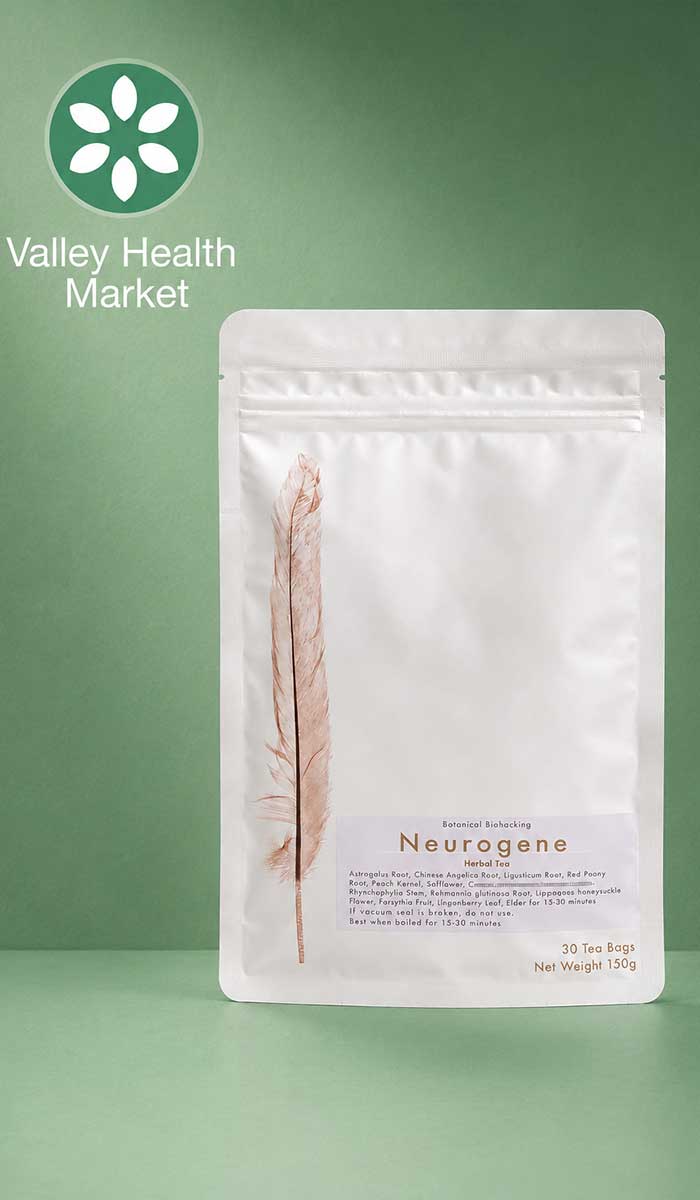
Neurogene Tea product with green backing Valley Health Market
7 minutes read

Materia Medica · The Formula Series

Neurogene Tea: For Numbness and Tingling in Hands and Feet

Willard Sheppy Dipl. OM, LAc, BS

Willard Sheppy is a licensed acupuncturist (LAc) and Founder of Valley Health Clinic specializing in using Traditional Chinese Medicine to treat acute injuries and chronic conditions, and to improve sports performance and rehabilitation.

Neurogene Tea product with green backing Valley Health Market

Table of Contents

Numbness and tingling are not always a nerve problem. Sometimes they are a delivery problem.

When circulation is too weak to reach the far end of a nerve, the sensation at the fingertips and toes is often the first thing to fade. Neurogene Tea was built for that picture — to support the pressure behind circulation rather than force it.

Here’s what the formula actually is, who formulates it, and what’s inside.

Quick Answer

Neurogene Tea is an Imperial-grade modification of Bu Yang Huan Wu Tang — the most-studied blood-moving formula in Chinese medicine — built for the picture where circulation is too weak to reach the far end of a nerve. A very large dose of Huang Qi (astragalus) supplies the push; a small team of blood-movers clears the path. It is a blood-moving formula: not used during pregnancy, and anyone on anticoagulants, with a bleeding disorder, or recovering from a stroke should talk with their physician and practitioner first.

What Neurogene Tea Actually Is

Neurogene is an Imperial-grade modification of Bu Yang Huan Wu Tang — Tonify the Yang to Restore Five-Tenths Decoction. In China it is the single most-used formula for post-stroke recovery, and it has been studied more than almost any other blood-moving prescription.

The classical logic is elegant. A very large dose of Huang Qi (astragalus) supplies the qi that pushes blood; a small team of blood-movers clears the obstruction that qi is pushing against. The formula does not force circulation. It restores the pressure behind it.

The modification adds herbs aimed at the neuro-inflammatory side of the picture — Tian Ma and Gou Teng to settle wind, Jin Yin Hua and Lian Qiao to clear heat, Da Huang to keep things moving downward.

Who Formulates This

Dr. Jin Zhao is the main formulator for Botanical Biohacking. He practices in Chengdu, sees up to 200 patients a day, and specializes in dampness. His approach was refined across tens of thousands of patients, working through the upper, middle, and lower jiao.

Pharmacology professor Dr. Zhong Shi Hong fine-tunes the formulas. Dr. Lan, PhD — Dr. Jin’s younger classmate — is the herbal pharmacologist who oversees testing and writes the practitioner letters.

A sourcing detail worth noting: this blend uses Qing Lian Qiao — unripe green forsythia — rather than the ripe fruit. It carries a higher concentration of forsythiaside. A small decision, made by someone paying attention.

How It's Sourced and Tested

Three categories of contamination matter for plant material from anywhere in the world: heavy metals, pesticide residue, and microbial load. Botanical Biohacking’s protocol addresses all three.

Inside the Formula

Eleven herbs, organized around one idea: supply the push, then clear the path.

Supply the Push

Move the Blood

Settle and Clear

Before You Start

This is a blood-moving formula. It is not used during pregnancy. If you take anticoagulants, have a bleeding disorder, or are recovering from a stroke or any neurological event, this belongs in a conversation with your physician and practitioner — not in a self-directed experiment.

Numbness at the fingertips and toes is often the last stop on a long supply line. When you improve what reaches the end of that line, the sensation frequently follows. — Will Sheppy, L.Ac.

Neurogene Tea product with green backing Valley Health Market

Neurogene Tea

An Imperial-grade modification of Bu Yang Huan Wu Tang. Eleven herbs, thirty teabags, one month’s supply. Available at Valley Health Market.

Research & Resources

  1. Wang R, Ren J, Li S, et al. Efficacy evaluation of Buyang Huanwu Decoction in the treatment of ischemic stroke in the recovery period: a systematic review of randomized controlled trials. Front Pharmacol. 2022;13:975816. Frontiers →
  2. Hao CZ, Wu F, Shen J, et al. Clinical efficacy and safety of Buyang Huanwu Decoction for acute ischemic stroke: a systematic review and meta-analysis of 19 randomized controlled trials. Evid Based Complement Alternat Med. 2012;2012:630124. PubMed →
  3. Wei RL, Teng HJ, Yin B, et al. A systematic review and meta-analysis of Buyang Huanwu Decoction in animal model of focal cerebral ischemia. Evid Based Complement Alternat Med. 2013;2013:138484. PubMed →

Educational content rooted in 20+ years of clinical practice in Traditional Chinese Medicine. The information provided is for educational purposes and is not intended to replace consultation with a qualified healthcare practitioner. Please consult your physician before starting any new herbal protocol, especially if pregnant, nursing, on anticoagulants, or managing a chronic condition.

Share on

Will Sheppy, Founder and Acupuncturist at Valley Health Clinic
Willard Sheppy
Willard Sheppy is a licensed acupuncturist (LAc) and Founder of Valley Health Clinic specializing in using Traditional Chinese Medicine to treat acute injuries and chronic conditions, and to improve sports performance and rehabilitation.

FAQ's

What is Neurogene Tea?

Neurogene Tea is an Imperial-grade modification of Bu Yang Huan Wu Tang (Tonify the Yang to Restore Five-Tenths Decoction) — the most-used and most-studied blood-moving formula in Chinese medicine. Botanical Biohacking builds it from eleven herbs and adds a team aimed at the neuro-inflammatory side of the picture. It comes as thirty teabags, a one-month supply.

It was written for the picture where circulation is too weak to reach the far end of a nerve — numbness and tingling at the fingertips and toes that behaves less like a nerve problem and more like a delivery problem. The formula’s strategy is to supply the push behind circulation with a large dose of Huang Qi (astragalus), then clear the path with blood-movers.

No — this is a blood-moving formula and it is not used during pregnancy. If you take anticoagulants, have a bleeding disorder, or are recovering from a stroke or any neurological event, this belongs in a conversation with your physician and practitioner, not a self-directed experiment.

Dr. Jin Zhao, Botanical Biohacking’s main formulator, practices in Chengdu and specializes in dampness, refining his approach across tens of thousands of patients. Pharmacology professor Dr. Zhong Shi Hong fine-tunes the formulas, and Dr. Lan, PhD, the herbal pharmacologist, oversees testing. One detail of their care: the blend uses unripe green forsythia (Qing Lian Qiao) for its higher forsythiaside content.

Recent Posts

Topical Pain Relief: The Ultimate Product Comparison Chart

Topical Pain Relief: The Ultimate Product Comparison Chart

No more squinting at product labels or flipping coins to decide. This chart breaks down each product’s key features, pros, and cons, making it easier to weigh your options and determine which one aligns with you..

This comparison chart proves helpful in your quest to find the perfect topical pain relief product. Remember, everyone’s preferences and needs are different, so take the time to evaluate the options and find the one that will work best for you. Happy shopping, and may you find relief soon!

When examining the chart, consider the following factors

Your specific needs: Are you looking for a product that provides a heating or cooling sensation? Do you have sensitive skin? Do you prefer a light or strong smell?

Price: Which product fits within your budget?

Size: How often will you be using the product, and for what purpose? Will you need a larger amount for frequent use or a smaller amount for occasional use?

Absorption: Do you prefer a fast-absorbing product, or are you looking for something with a slow time-release effect?

Application: Which method of application is most convenient and suitable for your needs?

By evaluating these factors, you’ll be able to make a more informed decision when selecting a topical pain relief product. The chart aims to provide a comprehensive comparison of the three products so you can choose the one that’s best for you.

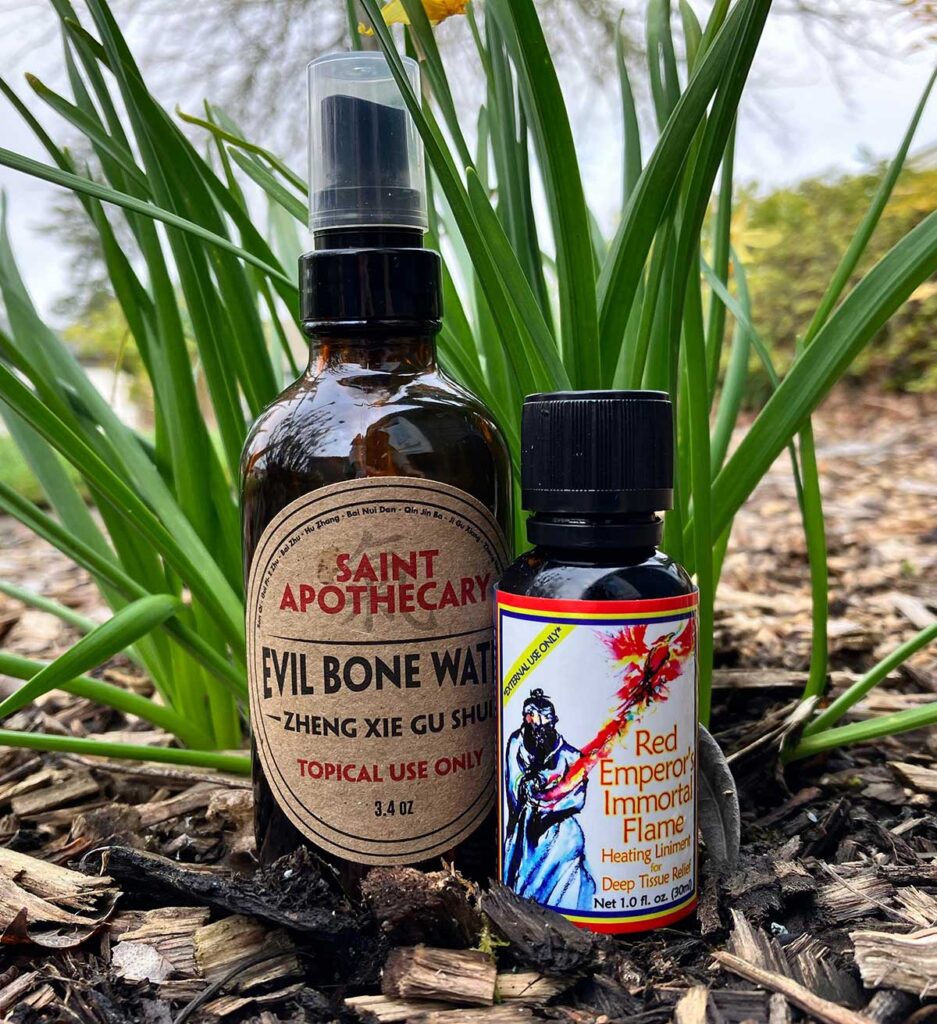
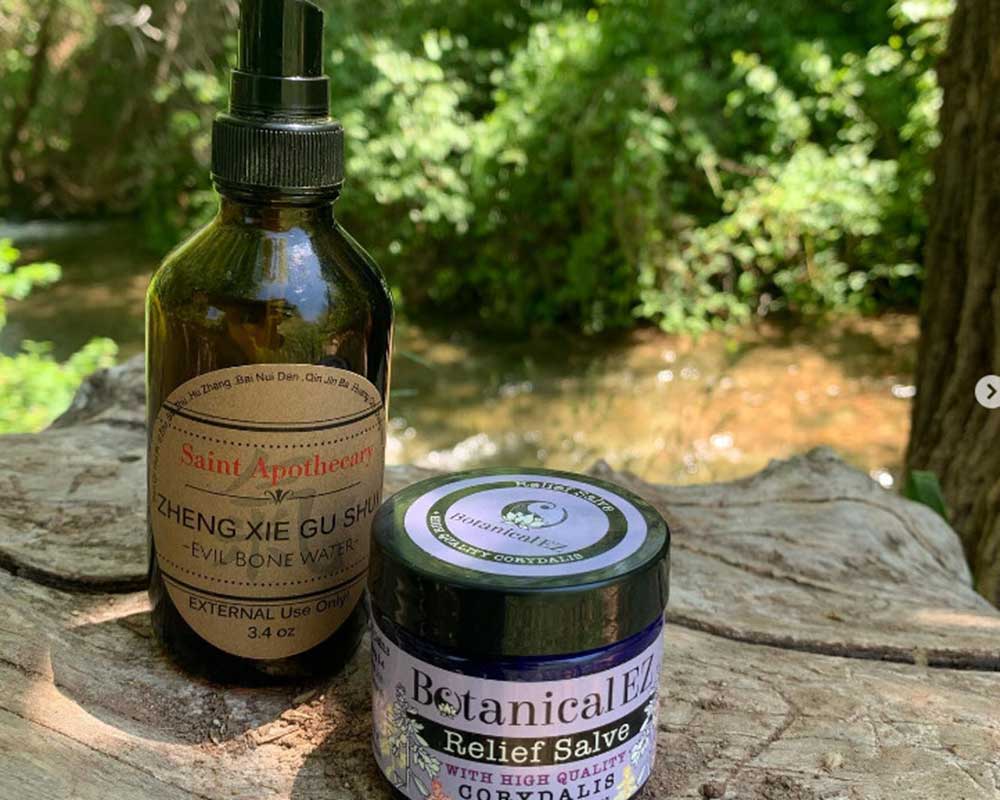
Evil Bone Water Corydalis Relief Salve Red Emperor's Immortal Flame
Price $40 $25 $45
Key Ingredients Natural menthol, camphor, cinnamon Corydalis plant extracts Organic wintergreen, menthol
Smell Strong (Herbal) Light/No (Floral) Strong (Wintergreen)
Absorption Fast Slow Medium
Application 3.4 oz Spray 2.2 oz Stick, 1.8 oz Jar 1 oz Bottle
Heating/Cooling Sensation Both, more cooling None Yes, more warming
Pros - Fast-acting
- Strong heating/cooling sensation
- Dries quickly
- Improves absorption when combined with other products
- Good for most things
- Easy to clean
- Slow time-release absorption
- Longer working time
- No strong smell,
- Effective for nerve pain
- Multiple application styles
- No/minimal stinging sensation
- Gentle on sensitive skin
- Medium acting speed
- Medium absorption time
- Effective in providing warmth and relieving cold-aggravated pain
- No/minimal stinging sensation,
Cons - Runny
- Strong smell
- Stings on open skin or after acupuncture
- Strong sensation may cause discomfort for people with sensitive skin
- Difficult to clean
- No hot/cool sensation
- Greasy feeling on skin
- Small bottle size
- May seem expensive
- Flow restriction top may be slow to use
- Not as suitable for applying to large areas easily
- Strong sensation may cause discomfort for people with sensitive skin

For those who want more information on each product, you can read the individual blog reviews for Evil Bone Water, Corydalis Relief Salve, and Red Emperor’s Immortal Flame.

By exploring these reviews, you’ll gain a deeper understanding of each product, allowing you to make a well-informed choice. We encourage you to take the time to read these reviews and find the ideal topical pain relief product that best meets your needs.

Buy Our Topical Pain Relief Products Today!

We make available natural products that have been observed to make a difference in the lives of our patients, friends and family. You’re in good hands shopping with us.

About the Author

Author Willard Sheppy Exporing the Coast

Willard Sheppy is a writer and healthcare practitioner who seamlessly melds scientific knowledge with practical applications in engaging and authoritative articles. He holds a Bachelor of Science in Environmental Science from Oregon State University and a Master’s in Acupuncture and Oriental Medicine from the distinguished Oregon College of Oriental Medicine.

In his work, Willard skillfully combines his extensive educational background in scientific research with his practical experience as a healthcare practitioner. Willard balances his life with martial arts and cherished family adventures. As a father of three, he often leads his family on camping and hiking trips along the breathtaking Oregon coast.

Connect with Willard on LinkedIn at linkedin.com/in/valleyhealthclinic or learn more about his services at valleyhealthclinic.com. Embark on this journey towards holistic health with Willard!

A Comprehensive Product Review of Corydalis Relief Salve

Discover Natural Pain Relief with Corydalis Relief Salve - A Comprehensive Product Review and Personal Experience

I. Introduction

A. Introducing Corydalis Relief Salve

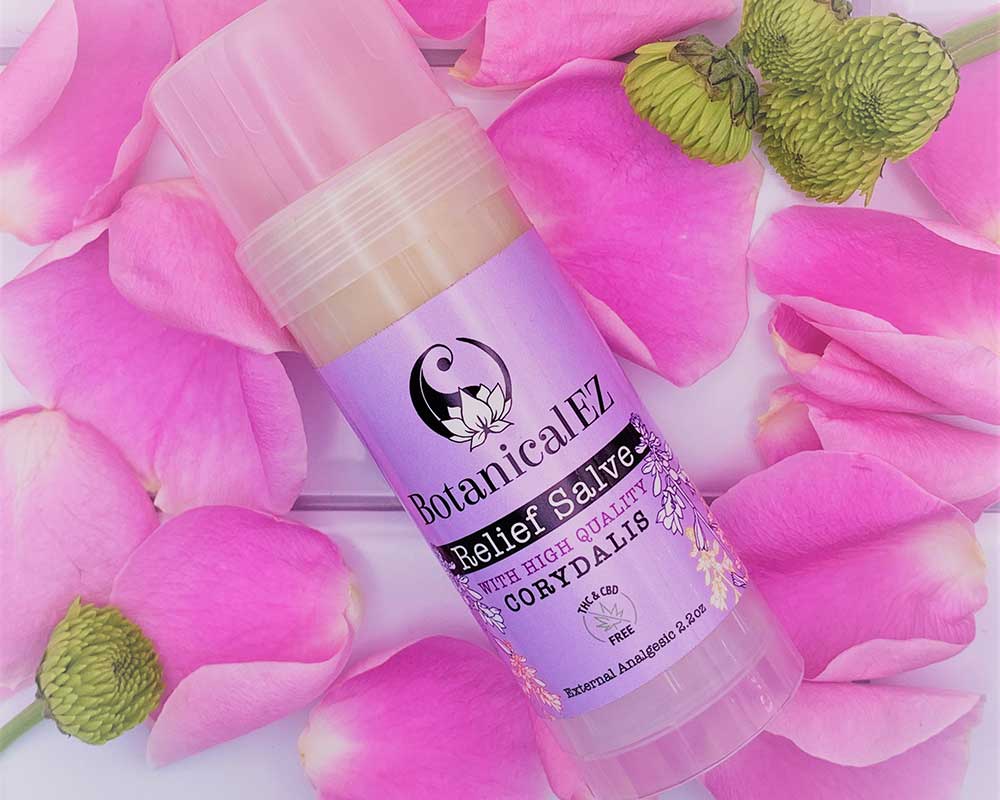
Corydalis Relief Salve, developed by Eliz Britton, DTCM, and CEO of Botanical EZ, LLC, is a unique, traditional Chinese medicinal treatment designed to provide topical pain relief. This innovative salve utilizes Yan Huo Suo, a traditional herb known to alleviate various types of pain. At an affordable price of $25, Corydalis Relief Salve offers an excellent alternative for those seeking a more natural and budget-friendly solution to manage pain and discomfort.

B. Purpose of the Review

This review aims to share personal experiences with Corydalis Relief Salve, help potential buyers make informed decisions, and provide an unbiased evaluation of the product. We will discuss the product’s appearance, design, key features, and personal experiences, along with its pros and cons, comparison to competitors, and additional information.

II. Product Description

A. Appearance and Design

Corydalis Relief Salve comes in two different packaging options: a stick for personal use and a jar for clinical settings. The stick offers a convenient, mess-free application, while the jar is ideal for healthcare professionals who will apply the product on many different patients. The stick packaging is made of plastic and is travel-friendly but may leak if exposed to high heat (I have not personally experienced this). On the other hand, the jar packaging is made of heavy-duty glass with a tight seal to ensure freshness and cleanliness.

B. Key Features and Specifications

Corydalis Relief Salve contains pain-relieving and anti-inflammatory compounds derived from the Corydalis plant. These compounds help alleviate pain by modulating pain signals in the nervous system and reducing inflammation in the affected area.

The product is free from CBD, THC, camphor, and menthol, resulting in a light floral scent that is pleasing and not overpowering.

The salve is designed to provide pain relief without creating addiction or causing irritation. Corydalis contains natural pain-relieving compounds that activate dopamine and opiate receptors without causing dependence.

III. Personal Experience

A. Purchasing and Unboxing

Corydalis Relief Salve can be purchased online for wholesale at Botanical EZ website or smaller orders at Valley Health Marketplace. The product arrives in secure packaging, ensuring a positive first impression.

B. Usage and Performance

The salve has a thicker, oil-based consistency that becomes more liquid when warmed. It is slow to absorb, providing a longer-acting, time-release effect. This makes it suitable for Cupping, Gua Sha, or Massage, as it remains smooth and doesn’t require frequent reapplication. However, the harder texture can make application slightly more challenging in colder environments.

The product’s oil-based nature also means that it takes more effort to clean off hands or tools, typically requiring two washes. But because there is no menthol or camphor, Corydalis does not have a strong smell, making it suitable for individuals sensitive to fragrances. The salve does not sting when applied after acupuncture, and it is gentle on sensitive skin areas such as the face and armpits.

Corydalis Relief Salve has shown promising results in reducing nerve and joint pain. As a healthcare practitioner, the reviewer has encountered numerous patients who require topical pain relief but cannot tolerate conventional over-the-counter treatments like Icy Hot. The chilling sensation of standard ointments can be uncomfortable for individuals with poor circulation, and the strong smell can be overpowering.

One particular patient, a dear friend of the reviewer, underwent cancer treatment and struggled with pain in her hands and feet due to chemotherapy-induced neuropathy. Poor circulation led to coldness in her extremities, making it difficult for her to tolerate traditional pain relief ointments. The smell nauseated her, and the icy sensation was too much for her already cold feet. In such cases, Corydalis Relief Salve proved to be an excellent alternative.

Corydalis Relief Salve can also be used in combination with other products like alcohol-based liniments, such as Evil Bone Water. Alcohol-based liniments have quicker absorption speed, allowing active ingredients to penetrate the skin rapidly and effectively. However, they tend to evaporate and dry quickly off the skin. In contrast, oil-based salves like Corydalis create a barrier on the skin, gradually releasing the active ingredients over time. Combining both types of topicals can offer the best of both worlds.

IV. Pros and Cons

A. Strengths

  • Slower time-release absorption
  • Longer working time before absorption, suitable for massage, gua sha, or cupping
  • No strong smell
  • Gentle on sensitive skin, no stinging after acupuncture
  • Suitable for sensitive, deficient, or weak individuals who dislike cold or heat sensations
  • Effective for nerve pain
  • Available in two different application styles: Stick and Jar for personal or Jar for public use

B. Weaknesses

  • Slightly more difficult to clean, it may take two washes to remove residue
  • The lack of a hot or cooling sensation may lead some users to doubt its effectiveness
  • Longer absorption time may leave a sticky or greasy feeling on the skin after treatment

V. Comparison to Competitors

A. Compared to similar products on the market, Corydalis Relief Salve offers a unique blend of natural ingredients without the use of CBD, THC, camphor, or menthol. Its affordable price, light scent, and gentle formulation make it an attractive option for those seeking a more natural, non-irritating pain relief solution.

B. Reasons for choosing Corydalis Relief Salve over competitors include its unique features, brand reputation, and the personal preference of individuals seeking a more gentle and natural pain relief option.

VI. Conclusion

A. Overall, Corydalis Relief Salve provides an effective, natural, and affordable solution for topical pain relief. Its unique formulation offers numerous benefits, such as slower time-release absorption, suitability for various therapeutic modalities, and gentle effects on sensitive skin.

B. We highly recommend Corydalis Relief Salve for those seeking a more natural and budget-friendly alternative to manage pain and discomfort. This product is especially suitable for individuals who cannot tolerate conventional over-the-counter treatments or prefer a gentler, non-irritating option.

Buy Corydalis Relief Salve Today!

If you don’t like strong medicinal smells or menthol and camphor cooling sensations, then this is the product for you. I have found this product to work exceptionally well for diabetics or cancer-induced peripheral neuropathy.

Combine the synergistic effect of our two best-selling topicals. They work together in separate but complementary ways to quickly eliminate your pain.

About the Author

Author Willard Sheppy Exporing the Coast

Willard Sheppy is a writer and healthcare practitioner who seamlessly melds scientific knowledge with practical applications in engaging and authoritative articles. He holds a Bachelor of Science in Environmental Science from Oregon State University and a Master’s in Acupuncture and Oriental Medicine from the distinguished Oregon College of Oriental Medicine.

In his work, Willard skillfully combines his extensive educational background in scientific research with his practical experience as a healthcare practitioner. Willard balances his life with martial arts and cherished family adventures. As a father of three, he often leads his family on camping and hiking trips along the breathtaking Oregon coast.

Connect with Willard on LinkedIn at linkedin.com/in/valleyhealthclinic or learn more about his services at valleyhealthclinic.com. Embark on this journey towards holistic health with Willard!

The 4 Stages of Healing

The 4 Stages of Healing - Valley Health Clinic, Albany Oregon

Acute, or Inflammatory Phase (48 hours to 72 hours)

The inflammatory phase begins immediately following your injury and is characterized by swelling, redness, and pain. Your body is dissolving blood elements and tissue debris. Often time pain leads to muscle spasms creating a pain spasm loop.

Reparative Stage-Post Acute (48hrs to 6 weeks)

At this stage your body is laying down fibrin collagen and fibroblasts to begin repairing the area. There is some redness, tenderness and a decrease in circulation and flexibility. It is during this time that your body is doing all it can to protect the affected area. This sense of guarding can echo into your mental state as well – many people tend to hole up in their homes to heal in private.

At Valley Health we encourage you to get out and move as soon as you are able – and what better incentive to do so than coming in for a healing, calming, therapeutic appointment? Our clients say how helpful and positive it is to have a reason to leave the house for compassionate, focused care. It’s easy to forget how powerful human touch can be, and welcoming into your recovery. It changes your journey from a solo expedition into a team effort.

Remodeling and Rehabilitation Phase (3 week to 12 months)

Your body transitions into this second phase of repair. The body has fibrous deposition (scar tissue) and possible chronic inflammatiory reaction. To remodel is to grow by rapid production, and that is exactly what your body is going through during this stage. The visible signs of inflammation will subside, and new tissue forms. This new tissue is fragile, and susceptible to injury.

It is during this phase that people feel like their mind is ready for them to be better, but their body is lagging behind. Oftentimes, remaining bruising and limited range of motion can bring about a sense of depression.

“Can I get back to work? What about exercise?”

“Is this my final result?”

“I thought I’d be better by now.”

The fear that tends to arise during this phase of healing can cause you to guard the area even further. You may be scared to move too much, and this anxiety can cause you to lock down and stay still in order to protect yourself. This fragile new tissue, however, is susceptible to more than just injury – it is also susceptible to stagnancy, and restricting movement can form adhesions. These adhesions can limit range of motion when movement is eventually reintroduced, so appropriate mobilization of the tissue during this stage is important.

The benefit of working with your acupuncturist lies in their knowledge of what will and won’t be best for you. Some people close down, and we remind them to get out and move. Some people push themselves too far too fast, and we remind them to slow down and allow themselves to heal. Your greatest benefit lies in getting answers to your questions, and support to get through your fears and anxieties.

Chronic, or Restorative Phase (Months to Years)

This phase can continue for a period from several months to several years. It is during this stage that there is no pain but the tissues do not function normally. Often time there is stiffness, muscle tightness some aching and weakness.

Your mind may continue to receive confusing messages from your body based on the memory of the trauma. Even when the body has fully healed, the alarm in your brain may still be turned on, and your body can continue working to heal the area of trauma. It is during this stage that these tissues may become stuck – your pain goes away, but you can be left with persisting symptoms that limit your range of motion and aggravate your mental well-being. This is when many people question when, or even if, they will ever be “back to normal.”

The answer to that question has a caveat – your body is different now. Your skin, muscles, and sometimes even your bones are all in new places, in positions they have never been before. Because of this, “back to normal” really translates to “discovering your new normal.”

Helping you discover your new normal is your acupuncturist primary goal. Remodeling can be difficult to push through, but much like the final few miles of a marathon, the support of your acupuncturist combined with your own awareness and strength will get you past the finish line.

Health Maintenance

Once you have passed through these four phases of healing, you once again have the freedom that comes with good health and well-being. You also gain the opportunity of choice when it comes to maintaining this health and well-being.

Oftentimes, our clients choose to transition into receiving health maintenance treatments – regular tune-ups to keep their bodies in a place of wellness. Other clients come in and out of receiving further treatments by returning to valley Health when new injuries arise. Some simply continue moving forward, content with their newfound independence and imbued, freshly healed spirit. Whatever your choice the door is always open, and allies in healing will always be here for you, through all the seasons of your life.


About the Author
Author Willard Sheppy Exporing the CoastWillard Sheppy is a writer and healthcare practitioner who seamlessly melds scientific knowledge with practical applications in engaging and authoritative articles. He holds a Bachelor of Science in Environmental Science from Oregon State University and a Master’s in Acupuncture and Oriental Medicine from the distinguished Oregon College of Oriental Medicine.
In his work, Willard skillfully combines his extensive educational background in scientific research with his practical experience as a healthcare practitioner. Willard balances his life with martial arts and cherished family adventures. As a father of three, he often leads his family on camping and hiking trips along the breathtaking Oregon coast.
Connect with Willard on LinkedIn at www.linkedin.com/in/valleyhealthclinic or learn more about his services at www.valleyhealthclinic.com. Embark on this journey towards holistic health with Willard guiding your way.