Tag: Corydalis

Corydalis Relief Salve and information on Yan Hu Suo

Corydalis for Cancer Neuropathy

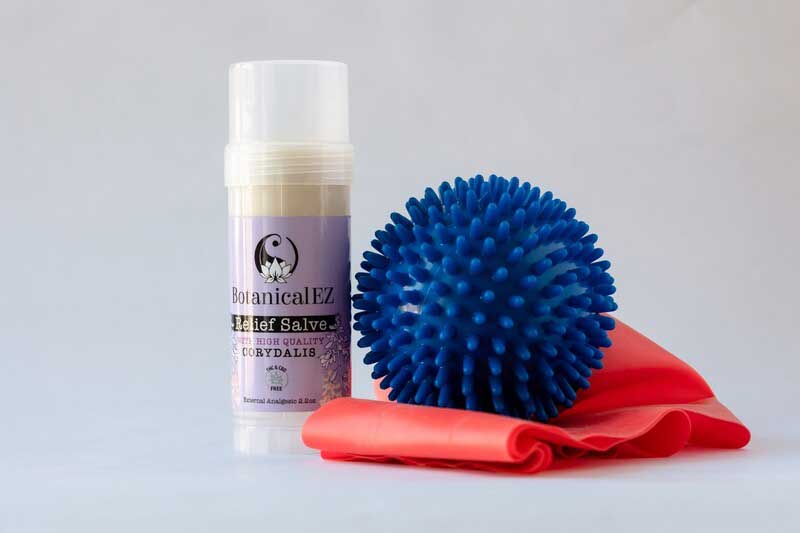
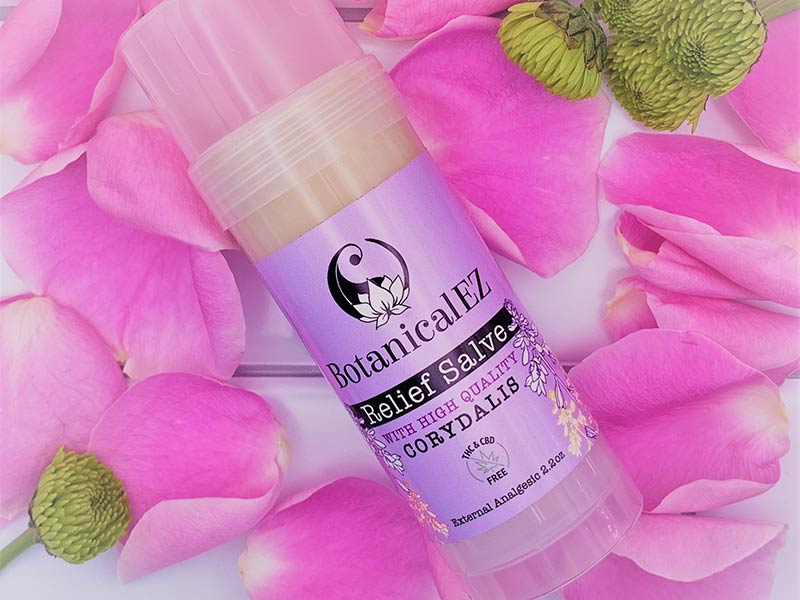
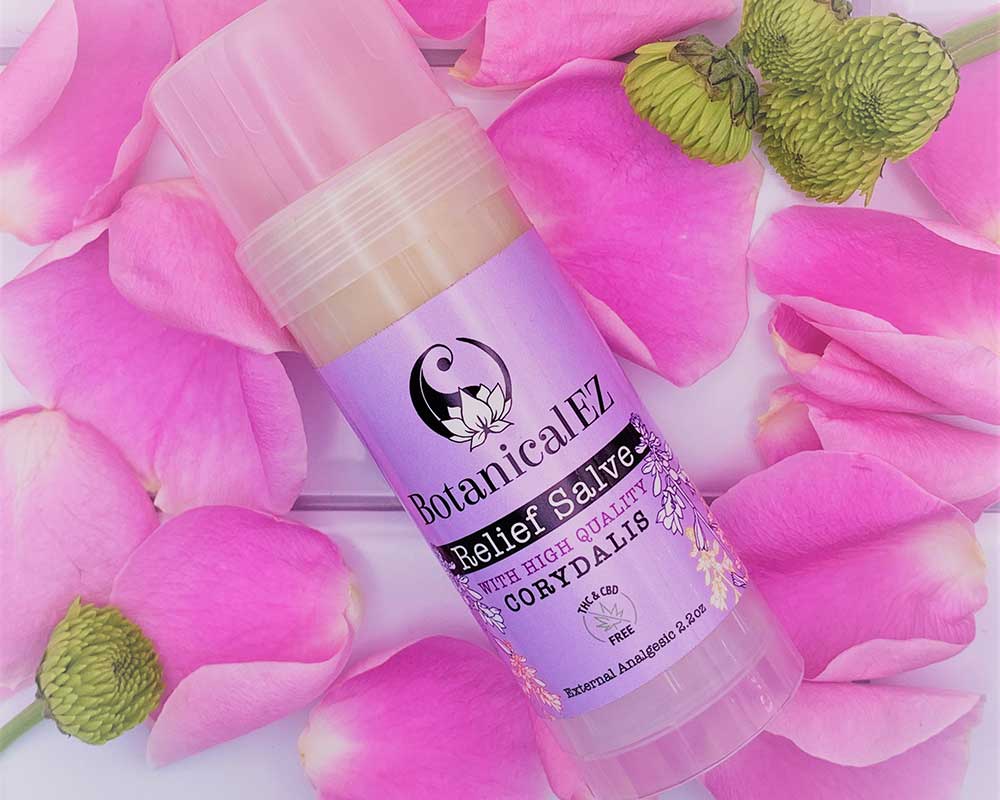
Corydalis Relief Stick

Corydalis for cancer neuropathy

Let’s delve into the promising relationship between corydalis and cancer neuropathy to better understand how this natural remedy may offer relief to those facing this challenging condition.

As a healthcare practitioner, I have encountered numerous patients who require topical pain relief but cannot tolerate conventional over-the-counter treatments like Icy Hot. The chilling sensation of standard ointments can be uncomfortable for individuals with poor circulation, and the strong smell can be overpowering.

One particular patient, a dear friend of mine, underwent cancer treatment and struggled with pain in her hands and feet due to chemotherapy-induced neuropathy. Poor circulation led to coldness in her extremities, making it difficult for her to tolerate traditional pain relief ointments. The smell nauseated her, and the icy sensation was too much for her already cold feet.

Determined to find a solution to ease her pain, I began searching for the ideal topical treatment: gentle enough for sensitive users, yet potent enough to address neuropathy and arthritis. This search led me to discover Corydalis Relief Salve. This salve features a subtle floral scent without any cooling effect and, most importantly, provides soothing relief for various types of pain.

Corydalis Relief Salve worked wonders for my dear friend, significantly improving her quality of life. Inspired by her experience, I introduced this powerful formula to my practice, allowing more patients to benefit from its pain-relieving properties.

Yan Hu Suo and Corydalis

Derived from the tuber of the Corydalis plant, Yan Hu Suo has been utilized in TCM to alleviate various types of pain, such as nerve pain, menstrual pain, and inflammatory pain. Studies have indicated that Corydalis possesses anti-inflammatory and sedative properties, which can benefit individuals suffering from conditions like arthritis, insomnia, anxiety, and stress (1).

Topical Application for Neuropathies

Neuropathies, or nerve-related pain conditions, can be debilitating for those affected. Research has shown that the active compounds in Corydalis, such as tetrahydropalmatine and dehydrocorybulbine, can effectively modulate pain signals in the nervous system (2). Topical application of Corydalis may offer a non-invasive, natural approach to managing neuropathies, making it an appealing option for those seeking alternative treatments.

Corydalis for Cancer Pain Management

Cancer pain can be challenging to manage, and many patients turn to natural supplements and herbal remedies to complement conventional treatments. Some studies have suggested that Corydalis may provide relief from cancer pain by inhibiting the release of pain-inducing substances in the body (3). Topical application of Corydalis products may be a useful adjunct therapy for cancer patients experiencing localized pain.

Buy Corydalis Relief Stick Today!

If you don’t like strong medicinal smells or menthol and camphor cooling sensations, then this is the product for you. I have found this product to work exceptionally well for diabetics or cancer-induced peripheral neuropathy.

Combine the synergistic effect of our two best-selling topicals. They work together in separate but complementary ways to quickly eliminate your pain.

Conclusion

Topical Yan Hu Suo and Corydalis products may offer a natural, non-invasive approach to managing neuropathies and cancer pain. By understanding the benefits and potential risks associated with these products, individuals can make informed decisions about their use. As with any health product, it is essential to consult a healthcare professional before incorporating Corydalis into a pain management regimen.

REFERENCES

Zhang Y, Wang C, Wang L, Parks GS, Zhang X, Guo Z, Ke Y, Li KW, Kim MK, Vo B, Borrelli E, Ge G, Yang L, Wang Z, Garcia-Fuster MJ, Luo ZD, Liang X, Civelli O. A novel analgesic isolated from a traditional Chinese medicine. Current Biology. 2014 Jan 6;24(1):117-23.

Chu H, Jin G, Friedman E, Zhen X. Recent development in studies of tetrahydroprotoberberines

About the Author

Author Willard Sheppy Exporing the Coast

Willard Sheppy is a writer and healthcare practitioner who seamlessly melds scientific knowledge with practical applications in engaging and authoritative articles. He holds a Bachelor of Science in Environmental Science from Oregon State University and a Master’s in Acupuncture and Oriental Medicine from the distinguished Oregon College of Oriental Medicine.

In his work, Willard skillfully combines his extensive educational background in scientific research with his practical experience as a healthcare practitioner. Willard balances his life with martial arts and cherished family adventures. As a father of three, he often leads his family on camping and hiking trips along the breathtaking Oregon coast.

Connect with Willard on LinkedIn at linkedin.com/in/valleyhealthclinic or learn more about his services at valleyhealthclinic.com. Embark on this journey towards holistic health with Willard!

Which Topical Medicine to Use?

An Interview with Jeremy Cornish about Which Topical Medicines to Us

An interview between Jeremy Cornish and Willard Sheppy: A person-focused method

Welcome to this exclusive interview between Jeremy Cornish and Willard Sheppy. Jeremy is a renowned expert in the treatment of complex chronic conditions using Traditional Chinese Medicine and the founder of Modern Vitality, while Willard is an accomplished acupuncturist and founder of Valley Health Clinic, specializing in sports acupuncture. Both experts have dedicated their careers to helping individuals achieve optimal health and well-being.

In this interview, we will delve into Jeremy’s and Willard’s expertise in the field of acupuncture and Traditional Chinese Medicine. They will discuss the benefits of alternative medicine, particularly in the use of topical medicine use for injuries. We will also discuss the importance of treating the root cause of illness and focus on appropriateness and clinical clarity in the decision-making process

We make available natural products that have been observed to make a difference in the lives of our patients, friends and family. You’re in good hands shopping with us.

Quick Links to the Sections Below

Question: Jeremy, What topicals do you use?

One of the major mistakes we can make in the profession is to focus on things (our tools, herbs, protocols, etc) instead of focusing on the person and their problem/goal.

Various topicals make sense in varying situations depending on the person and the problem.

I’ve used premium herbal foot soaks, liniments, “secret” martial art lineage hit formulas…

And I’ve also improvised poultices when out hiking in the middle of nowhere by chewing up herbs like dandelion and plantain and applying the wet paste to the injured area.

In choosing which topicals to use, the primary thing I keep in mind is appropriateness. It has to be the right formulation for the situation. Then quality, which is extremely important. But quality is a second place because even the highest quality can’t make up for being the inappropriate/wrong formula entirely.

Question: Jeremy, How do you decide which product to use?

In deciding how to use one product over another, it really comes down to having a clinical algorithm for decision-making.

Most practitioners collect “heuristics,” which are rules of thumb. “X remedy is good for Y problem” It’s a matching type of thinking.

When we organize all of our heuristics, we can start to create clinical algorithms which are much more comprehensive and robust.

Algorithms use more of an “if, then” type of framework. The treatments live at the ends of a robust decision tree.

Using the diagnostic process of Eastern medicine, we can start to figure out which topicals are most appropriate for any given situation.

Question: Willard, How does a Sports Acupuncturist make a diagnosis to understand which topicals are appropriate?

Traditional Chinese Medicine is based on the principles of balance and harmony, and it focuses on treating the root cause of illness rather than just the symptoms. TCM has a unique approach to diagnosing and treating pain, which is based on the quality of the pain.

In TCM, the quality of the pain is considered an important diagnostic tool. Practitioners ask patients questions about the type and quality of their pain, including how it feels, where it is located, and what makes it better or worse. The answers to these questions help the practitioner to determine the underlying pathology and create an appropriate treatment plan.

Stage One

The initial stage of an injury is usually dominated by heat. The duration of this stage varies from a few days to several weeks, depending on the severity and type of injury. The treatment approach involves clearing heat and toxins, dispersing stasis, and relieving pain. The formulas used in the first stage of injury are the coldest formulas and aim to eliminate heat toxins while facilitating the removal of damaged tissue.

Heat
Pain that is warm to the touch and maybe inflamed is often associated with heat. Heat is usually accompanied by localized redness, but in some cases, patients may feel a sensation of heat without visible redness. This type of pain may have a burning sensation.

Treatment typically involves clearing the heat with acupuncture, herbs, and other modalities.

The herbal formula known as Evil Bone Water is a well-balanced composition that exhibits both cooling and warming properties. Its versatility makes it suitable for treating acute injuries, as well as for long-term use.

In contrast, San Huang San, also referred to as herbal ice, is a very cooling formula that is recommended for use only during the first week of an injury. It is not advisable to use this formula for an extended period due to its potency.

Stage Two

The second stage of trauma occurs after the initial inflammation subsides, leaving behind blood stagnation and qi stagnation, which presents as congestion of swelling and fluids in the affected area. This congestion leads to stiffness and pain. If the injury was severe or not treated sufficiently during the first stage, swelling may persist.

The second stage of trauma requires a treatment approach similar to the first stage, but with a greater focus on moving blood and dispersing stasis than on clearing heat. Herbs are added to dispel wind and dampness to prevent these pathogenic factors from becoming chronic bi syndrome. Blood stasis is a constant factor in traumatic injuries, resulting from primary vessel damage, extravasation, pressure from swelling, and increased adhesion. The goal of dispersing stasis in the second stage is to alleviate pain and facilitate tissue regeneration in the third stage.

Blood Stagnation
Sharp and stabbing pain that is fixed in location is often associated with blood stagnation. This type of pain is usually worse with pressure and may have a burning or electrical sensation. Treatment typically involves moving the blood and resolving the stagnation with acupuncture, herbs, and other modalities.

Qi Stagnation
Dull, achy pain that is tight or tense and better with movement is often associated with Qi stagnation. This type of pain may also feel better after moving around. Treatment typically involves moving the Qi and resolving the stagnation with acupuncture, herbs, and other modalities.

Both Evil Bone Water and Red Emperor’s Immortal Flame have a rich history and origin in Martial Arts Trauma Liniments, which have been used for centuries to address a wide range of injuries, pain, and discomfort.

These two formulas are highly effective in moving qi and blood,

Evil Bone Water is a well-balanced formula that combines cooling and warming properties, making it highly effective in treating most injuries, while Red Emperor’s Immortal Flame is a warming formula that is ideal for conditions aggravated with cold.

Both Evil Bone Water and Red Empeor’s Immortal Flame have there roots in Martial Arts Trauma Liniments and are good and moving qi and blood.

Cold Stagnation
Sharp and stabbing pain that is fixed in location and worse in cold weather is often associated with cold stagnation. This type of pain may also have a cold sensation or the skin my have a white hue. People with cold stagnation will have a natural avoidance to putting ice on injury or using topicals with a cooling menthol sensation. Treatment typically involves warming the area with acupuncture, herbs, and other modalities.

Red Empeor’s Immortal Flame is a renowned Traditional Chinese Medicine formula that is widely used for its warming properties, which make it ideal for treating Cold Stagnation. Unlike other liniments that may have a cooling effect, Red Empeor’s Immortal Flame is designed to provide warmth to the affected area, making it a great choice for individuals who do not respond well to cooling sensations like mentho

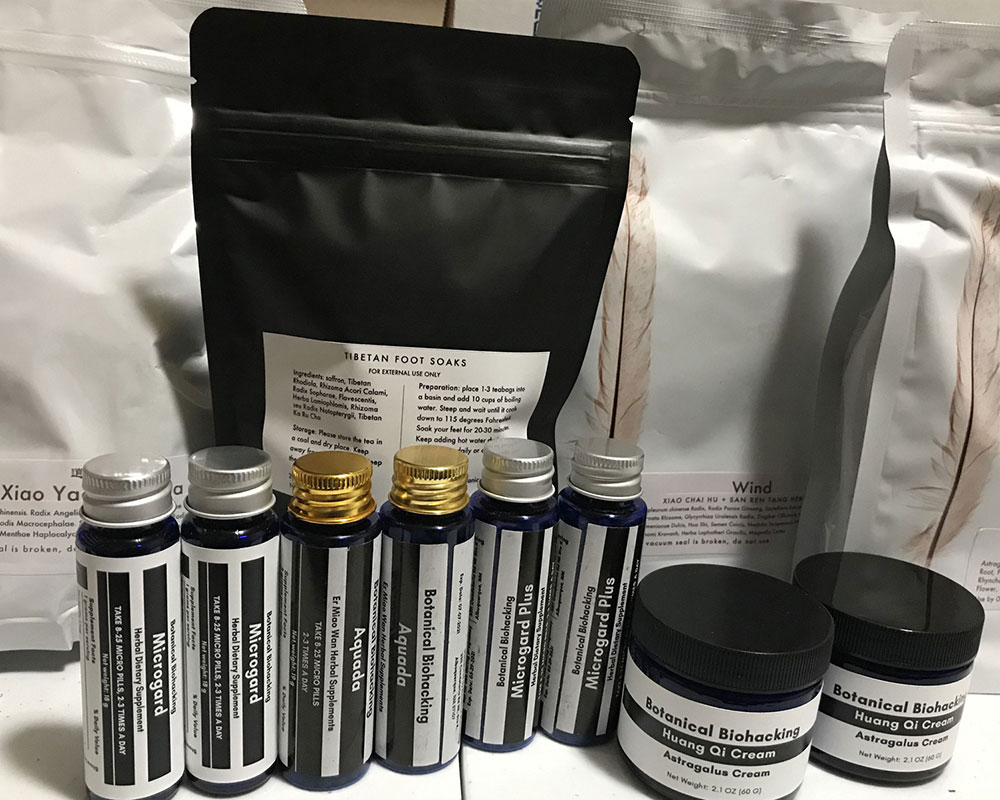
Tibetan herbal foot soaks have been used for centuries to treat a wide range of conditions, including cold injuries. The unique blend of herbs used in the foot soak has a warming effect on the body and helps to improve circulation, which can be especially beneficial for individuals who suffer from cold extremities or injuries caused by exposure to cold temperatures. In addition to its warming properties, the foot soak also has anti-inflammatory and pain-relieving effects that can help to reduce swelling and discomfort. Overall, Tibetan foot soaks are a safe and effective way to promote healing and provide relief for a variety of cold-related injuries and conditions.

Stage Three

At this stage, your body has fibrous deposition (scar tissue) and possible chronic inflammatory reactions. To remodel is to grow by rapid production, and that is exactly what your body is going through during this stage. The visible signs of inflammation will subside, and new tissue forms. This new tissue is fragile, and susceptible to injury.

It is during this phase that people feel like their mind is ready for them to be better, but their body is lagging behind. Oftentimes, remaining bruising, swelling and limited range of motion can bring about a sense of depression.

The fear that tends to arise during this phase of healing can cause you to guard the area even further. You may be scared to move too much, and this anxiety can cause you to lock down and stay still in order to protect yourself. This fragile new tissue, however, is susceptible to more than just injury – it is also susceptible to stagnancy, and restricting movement can form adhesions. These adhesions can limit range of motion when movement is eventually reintroduced, so appropriate mobilization of the tissue during this stage is important.

The benefit of working with your acupuncturist lies in their knowledge of what will and won’t be best for you. Some people close down, and we remind them to get out and move. Some people push themselves too far too fast, and we remind them to slow down and allow themselves to heal. Your greatest benefit lies in getting answers to your questions, and support to get through your fears and anxieties.

Rehabilitative exercises during this stage place increased demands on the tissues and some patients may have difficulty in performing the exercises due to tension in a sinew channel.

The treatment principles of this stage include: strengthening and warming the sinews and bone, tonify gi and nourishing blood, activating qi and blood, dispersing residual swelling, promoting tissue healing and decreasing pain. As always, these formulas must be prescribed for the appropriate CM presentation according to a thorough differential diagnosis.

Blood Deficiency
Dull, achy pain that is weak or stiff and worse with exertion and better with rest is often associated with blood deficiency. Treatment typically involves nourishing the blood with acupuncture, herbs, and other modalities.

Qi Deficiency
Mild, dull, achy pain that is weak and worse with exertion and better with rest is often associated with Qii deficiency. Treatment typically involves tonifying the Qii with acupuncture, herbs, and other modalities.

Corydalis relief stick is an effective and gentle formula that can be used to alleviate pain in patients who are weak or sensitive to stronger pain relief methods. One of the main benefits of using this formula is that it helps to decrease pain in patients who have a deficiency of Qi and Blood. This can be particularly useful for patients who have undergone chemotherapy and are experiencing pain as a result of the treatment. Many patients find that traditional pain relief methods such as Evil Bone Water and Red Emperor’s Immortal Flame can be too strong for their sensitive systems. The Corydalis relief stick provides a milder yet effective alternative, making it a valuable addition to any holistic pain relief regimen. Overall, the Corydalis relief stick has proven to be an invaluable resource for practitioners looking to provide gentle yet effective pain relief for their patients.

Dampness
Heavy pain is often associated with dampness. This type of pain may also have a sensation of swelling or numbness. Treatment typically involves resolving the dampness with acupuncture, herbs, and other modalities.

Wind
Moving, itchy pain is often associated with wind. If blood deficiency persists for a long period of time, it can lead to wind, which can cause pain that travels or moves around.

This type of pain may also be accompanied by tingling or numbness. Paresthesia is often related to the presence of wind in the jing luoTreatment typically involves dispelling the wind with acupuncture, herbs, and other modalities.

Corydalis relief stick is my go-to product for Nerve pain.

Tibetan foot soaks work very well for neuropathies, and also more internal conditions like chronic pain and menstrual problems when combined with other therapies and a comprehensive plan.

Question: Jeremy, What are some other examples of the right topical for the right situation?

When you use the right topicals for the situation, you’ll see the appropriate results.

For example, one obvious distinction is broken skin.

There are some liniments and other topicals that are fantastic to use, but only on unbroken skin.

So if the skin is broken, we really ought to start with something more appropriate.

For example, if it’s broken skin from a cut or scrape Yunnan Pai Yao is fantastic. When there’s bleeding from a wound, I’ve used Yunnan Pai Yao to stop the bleeding swiftly.

If it’s broken skin from a burn, then shiunko, zi cao, or even the old reliable Chung Wang Hun can work wonders . Burns responds extremely well to herbal burn cream. Especially reducing the pain, speeding the wound healing, and minimizing scar damage. This is quite reliable.

We need to be able to triage the situation and figure out the urgency of what’s going on. Is it a first-aid situation?

For example, one of my kids was wearing shorts and brushed up against a bunch of stinging nettles out in a field. His calf was red, painful, and welting up.

A formula like San Huang San makes a great poultice in that situation, however, it was much faster for me to chew up a bunch of fresh dandelion and then smear the poultice and the juice onto his leg for immediate relief right there. Poultices like San Huang San work reliably well for fresh injuries with closed skin like an acute sprain etc, when there’s redness and swelling. Also, anything similarly inflamed, such as mastitis.

If he had been bleeding, I would have chosen plantain.

Tibetan foot soaks work very well for neuropathies, and also more internal conditions like chronic pain and menstrual problems when combined with other therapies and a comprehensive plan. That’s the kind of work I do at Modern Vitality. Complex chronic conditions.

Evil Bone Water is great for sports injuries with closed skin. It has other uses too that are a bit more advanced, including oral and certain broken skin issues.

Yin Care works exceedingly well for yeast infections. There’s another company offering a similar formulation called Kuan Yin Apothecary Yoni Wash which I’m interested in as well.

Martial Arts liniments and other Dit Da formulations are usually pretty good at whatever they’re designed for. For example, some of the very warming liniments can be great for chronic injuries that are worse with cold.

Patients can soak their feet in Ginger tea for general coldness, and pain, and when coming down with a cold.

Most liniments are great for taking the sting out of mosquito bites.

Conclusion

In conclusion, Traditional Chinese Medicine has a unique approach to diagnosing and treating pain based on the quality of the pain. By asking yourself questions about the type and quality of the pain, you can better understand the underlying pathology and pick an appropriate topical and treatment plan for you.

Jeremy Cornish

Jeremy Cornish is a renowned expert in the field of Traditional Chinese Medicine. He is the founder of Modern Vitality, an international group that helps people with complex chronic health conditions, and the Damn Good Doctors Club, a community of practitioners with non-linear practice models. Cornish has spent over two decades studying and practicing Traditional Chinese Medicine, and has helped countless individuals achieve optimal health and wellbeing.

Will Sheppy

Willard Sheppy is an accomplished acupuncturist and founder of Valley Health Clinic, a medical facility that provides comprehensive healthcare services to patients in Albany, Oregon. With over 15 years of experience in the field of acupuncture, Willard has established himself as a leading expert in Sports Acupuncture. He is known for his compassionate and personalized approach to patient care, and his dedication to helping his patients achieve optimal health and Sport Performance Goals.

About the Author

Author Willard Sheppy Exporing the Coast

Willard Sheppy is a writer and healthcare practitioner who seamlessly melds scientific knowledge with practical applications in engaging and authoritative articles. He holds a Bachelor of Science in Environmental Science from Oregon State University and a Master’s in Acupuncture and Oriental Medicine from the distinguished Oregon College of Oriental Medicine.

In his work, Willard skillfully combines his extensive educational background in scientific research with his practical experience as a healthcare practitioner. Willard balances his life with martial arts and cherished family adventures. As a father of three, he often leads his family on camping and hiking trips along the breathtaking Oregon coast.

Connect with Willard on LinkedIn at linkedin.com/in/valleyhealthclinic or learn more about his services at valleyhealthclinic.com. Embark on this journey towards holistic health with Willard!

Corydalis: A Revolution in Holistic Pain Relief

Corydalis Relief Salve is a traditional Chinese medicinal treatment for topical pain relief. It works to manage all types of pain, including chronic conditions, neuropathic symptoms, inflammation, and circulation.

Corydalis Relief Salve is a traditional Chinese medicinal treatment for topical pain relief. It works to manage all types of pain, including chronic conditions, neuropathic symptoms, inflammation, and circulation.

Quick Links to the Sections Below

What is Corydalis?

Corydalis (traditional name: Yan Hu Suo) is a natural remedy for pain relief. It is a member of the Poppy (Papaveraceae) family of plants. Corydalis interacts with opiate and dopamine receptor sites to reduce pain. Unlike prescription pain medication, Corydalis is non-addictive, has no adverse side effects for topical use, and users will not test positive for opiate use.

We have cultivated a premium formulation of Corydalis to support pain relief, tissue recovery, and inflammation reduction. Corydalis Salve Relief has a soft floral scent that is not overwhelming like other topical ointments. Complementary herbs have been combined and added to provide a synergistic formula that may support your pain management needs.

How Does Corydalis Work?

Corydalis interacts with pain receptors to safely and naturally provide relief. It directly affects the central nervous system to treat chronic pain, inflammation, and poor circulation. Corydalis calms overactive and painful nerves. As a result, Corydalis Salve Relief is ideal for managing neuropathic pain.

Benefits of Using Corydalis

Our salve provides all of Corydalis’ benefits, including the following:

  • 2-8 hours of soothing pain relief
  • Pain management treatment of chronic pain conditions, including arthritis and neuropathy
  • Non-addictive, safe, and all-natural formula
  • A calming floral scent that isn’t overwhelming
  • It targets the same pain receptors as prescription pain pills without the risks and harmful side effects
  • Formulas do not contain THC or CBD
  • Safe for use by people who need pain relief at work and are required to pass drug tests

Who Should Use Corydalis Pain Relief?

Corydalis in topical form is effective for all types of pain relief. The combined botanical compounds may provide a pain relief solution for those struggling with addiction, chronic pain, or acute discomfort. Unlike prescription medications or other supplements that include THC in their formulations, Corydalis contains no addictive ingredients. The gentle formula composition and soothing scent are agreeable to most adults and children. Corydalis supplements work for all types of pain relief. It calms nerves, reduces inflammation, and improves circulation, making Corydalis perfect for pain management. However, the unique formulation relieves pain commonly experienced by cancer patients, diabetics, and the elderly. In addition, the gentle formula composition and soothing scent are agreeable to most people.

As a non-addictive sustenance, Corydalis is a great pain relief solution for those struggling with addiction. Unlike prescription medications or other supplements that include THC in their formulations, Corydalis contains no addictive ingredients.

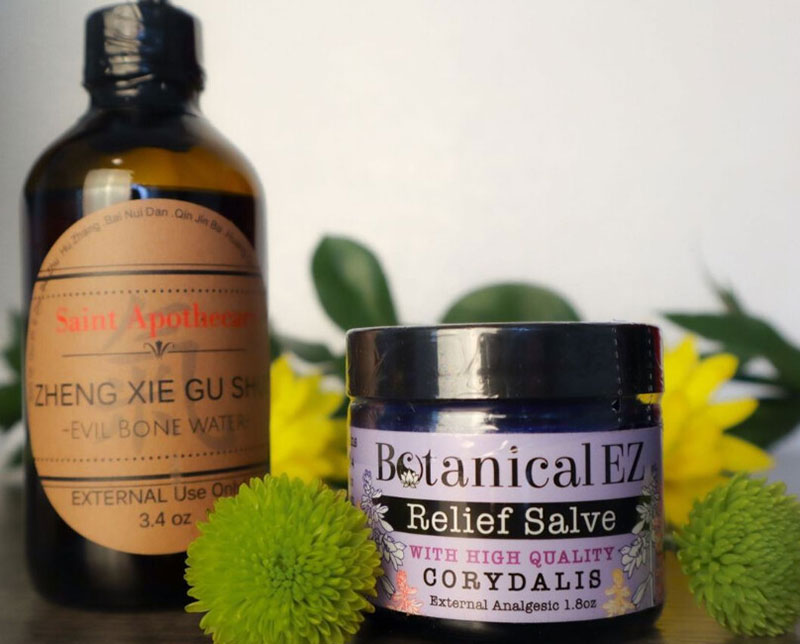
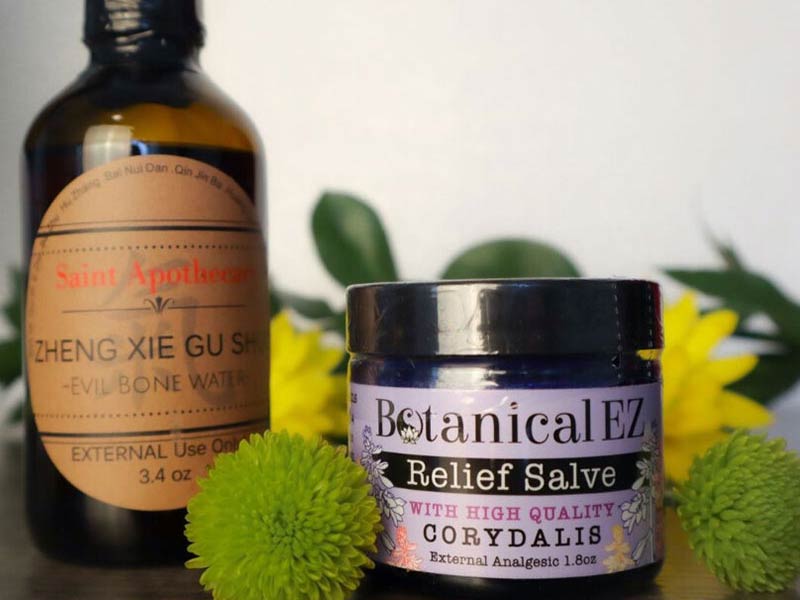
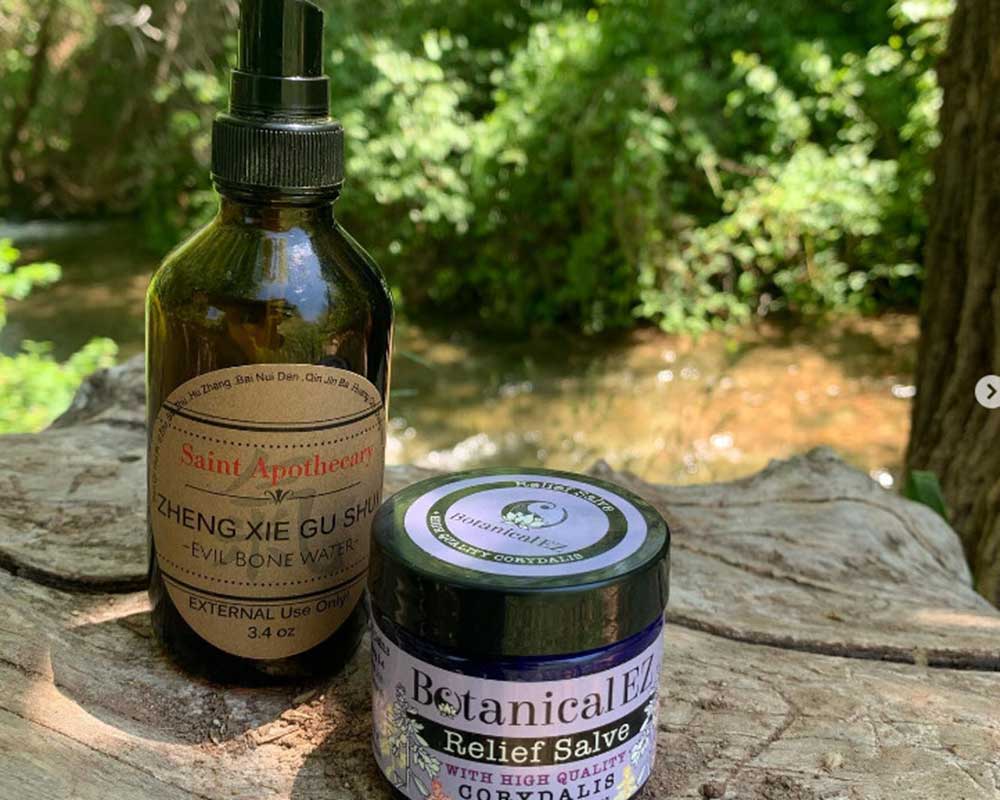
The Pain Relief Power Combo: Corydalis Salve and Evil Bone Water

Take advantage of the synergistic effect of our two bestselling topical ointments for ultimate pain relief. Corydalis Relief Salve and Evil Bone Water are like the Yin and Yang of pain relief. Each topical works in separate yet complementary ways in managing pain. First, apply Evil Bone Water for fast and powerful pain relief. It will immediately soothe symptoms. Then, apply Corydalis Relief Salve for a longer-lasting, soothing effect.

Choose Corydalis Relief Salve and Evil Bone Water to eradicate any physical discomforts.

Evil Bone Water Benefits

  • Opens up pores for quick absorption
  • Intense stimulation with natural menthol and camphor
  • Natural pain-relieving compounds move blood faster, speeds healing, and decreases inflammation
  • Alcohol base

Corydalis Relief Salve Benefits

  • Soothes skin for prolonged absorption
  • Gentle stimulation with Corydalis, lavender, frankincense, and myrrh
  • Natural pain-relieving compounds activate dopamine and opiate receptors to decrease pain.
  • Coconut oil, Shea Butter and Beeswax base

Discovering Corydalis

I work with many patients in my clinic who need topical pain relief but can’t tolerate regular over-the-counter treatments like Icy Hot. The chilly feeling of typical ointments is uncomfortable for people with poor circulation. In addition, most have a potent smell that can be overpowering.

One of my dear friends underwent cancer treatment and struggled with pain in her hands and feet from chemotherapy. Her circulation was poor, causing coldness in her extremities. Like many patients, she couldn’t tolerate traditional pain relief ointments. The smell sickened her, and the icy feeling was too much for her cold feet.

This woman was kind and gentle. But unfortunately, she had already suffered so much from exhaustive cancer treatments, and I wanted to find a solution that eased her pain. And so I began my search for the perfect topical: gentle enough for sensitive users but powerful enough to treat neuropathy and arthritis.

I discovered Corydalis Relief Salve. It has a soft floral scent with no cooling effect. Most importantly, it provides soothing relief for all types of pain. Corydalis Relief Salve worked wonders for my dear friend. As a result, I brought this powerful formula to my practice to share with the rest of my patients.

The History of Corydalis in Traditional Chinese Medicine

Corydalis is a perennial herb native to most Asian countries. The first reported uses of a Corydalis painkiller date back to 618 AD and has been used for over 1,100 years as an analgesic agent in traditional Chinese medicine. Corydalis was initially prescribed to treat various forms of stasis, poor blood circulation, and pain relief.

Now, combinations of Corydalis herbs are given to patients struggling with chest, abdominal, and menstrual pain. It is also recommended to treat inflammation, depression, bacterial infections, and more. Corydalis Relief Salve is a staple ointment in traditional Chinese medicine and continues to provide pain relief to millions worldwide.

Doctors Recommend Corydalis for Topical Pain Relief

I sat down with Eliz Britton, DTCM, the CEO of Botanical EZ, LLC, to learn about her experience with Corydalis Relief Salve and why she considers it an essential traditional Chinese medicinal treatment.

Why did you start making Corydalis Relief Salve?

I started making Corydalis to help manage my pain and discomfort more naturally. When I was 16, I experienced a sports injury requiring back surgery two years later. At that time, I was diagnosed with degenerative disc disease and early-onset arthritis. I was on a long list of narcotics and pain medications to help me get through the day, and I didn’t like how I functioned on them. My body can no longer tolerate ibuprofen due to the large dosages I was prescribed as a teenager, so I was left with seeking some sort of medical intervention every time I had an issue with my injury. Decades later, I still found this massive gap in my pain management regimen. I began playing with Corydalis in 2018 to see if I could create an intermediate relief option to add to my self-care routine.

Why weren’t other topical pain relief products working for you?

The side effects. Not just the obvious ones like disorientation, nausea, and drowsiness, but the limitations of how often I could use them and how they smelled. Many prescribed and OTC drugs used to manage inflammation and pain also wreak havoc on your physical organs over time. I am unwilling to accept that my physical body needs to be jeopardized to manage my pain and discomfort successfully. The majority of topical products that are available for anti-inflammatory actions or pain relief smell terrible! I smelled like a cheap camphor factory trying to run errands. People knew I was in some kind of pain because they could just smell me, and that affected my social life negatively.

What specific results have you seen since using Corydalis Relief Salve?

The biggest results I have personally experienced are a reduction in nerve and joint pain, inflammation reduction, faster recovery from exercise and physical therapy sessions, the ability to perform everyday errands with less discomfort, and easing menstrual pain. In addition, I can do more activities with less pain and recover faster from musculoskeletal issues. Experiencing these results has increased the way I enjoy my life. Other Clinicians have reported using this product for various manifestations and injuries that involve the nervous system, joint issues, and acute or chronic musculoskeletal concerns.

How does a Cordydalis supplement work?

Corydalis (aka Yan Hu Sou) contains high concentrations of alkaloids (mainly Dehydrocorydaline) and berberine. Dehydrochorydaline attaches to Dopamine and Opiate receptors to inhibit pain and relieve pain without creating an addiction. It does this by avoiding Dopamine receptors 2 and 4 (responsible for cravings) and instead stimulates and attaches to Dopamine receptors 1,3, and 5. Receptors 1,3, and 5 allow you to experience relief but are also the shutoff buttons for craving and wanting more Corydalis. The high concentrations of berberine support reducing inflammation in various tissues. The other plants and oils in the Relief Salve also contain compounds that help support the two main functions of Corydalis. The most notable helper in the formula is Copaiba which stimulates Cannabinoid (CBD) receptors in the same way as hemp.

Can you name 2-3 things that make your products stand out?

Contains no CBD, THC camphor or menthol. It has a pleasing light floral

How has it affected your life?

For starters, I have shifted my career from practicing in a clinic to brewing plants and procuring high-quality ingredients! As a result, I can function better as a mom, a wife, and a human because I can manage my pain easily. Saving money on Doctor’s office copays and prescriptions have also been a huge bonus. I am grateful to be able to make an impact in this area of health and wellness, and I see myself continuing to make this product for the rest of my life.

What type of person or patient would you recommend Corydalis Relief Salve to, and why?

I recommend this product to anyone old or young because pain management looks different for everyone. If you are looking for a natural option for relief, this product provides a first line of support or can easily be integrated into an existing healthcare plan.

If you have a history of addiction or are concerned about becoming addicted to prescription medications, this product would be a good fit and worth trying.

Individuals who need pain relief on the job or get subjected to drug screenings could also safely use this product. Four years ago, I ingested Corydalis and covered myself in salve; then had a urinalysis and labs drawn to see if I tested positive for opiates or any other drugs. All tests came back clear. If you can not afford to continue investing in CBD products or find that they do not work for you, the plant combinations in our salve may give you a different experience for relief.
Buy Corydalis Relief Salve Today!

If you don’t like strong medicinal smells or menthol and camphor cooling sensations, then this is the product for you. I have found this product to work exceptionally well for diabetics or cancer-induced peripheral neuropathy.

Combine the synergistic effect of our two best-selling topicals. They work together in separate but complementary ways to quickly eliminate your pain. These two products are the Yin and Yang of pain relief!

About the Author

Author Willard Sheppy Exporing the Coast

Willard Sheppy is a writer and healthcare practitioner who seamlessly melds scientific knowledge with practical applications in engaging and authoritative articles. He holds a Bachelor of Science in Environmental Science from Oregon State University and a Master’s in Acupuncture and Oriental Medicine from the distinguished Oregon College of Oriental Medicine.

In his work, Willard skillfully combines his extensive educational background in scientific research with his practical experience as a healthcare practitioner. Willard balances his life with martial arts and cherished family adventures. As a father of three, he often leads his family on camping and hiking trips along the breathtaking Oregon coast.

Connect with Willard on LinkedIn at linkedin.com/in/valleyhealthclinic or learn more about his services at valleyhealthclinic.com. Embark on this journey towards holistic health with Willard!