Category: Pain Management

Different Herbal products that help with Pain.

Stem & Leaf Sacrocox: For Tailbone Pain You Can’t Sit Through

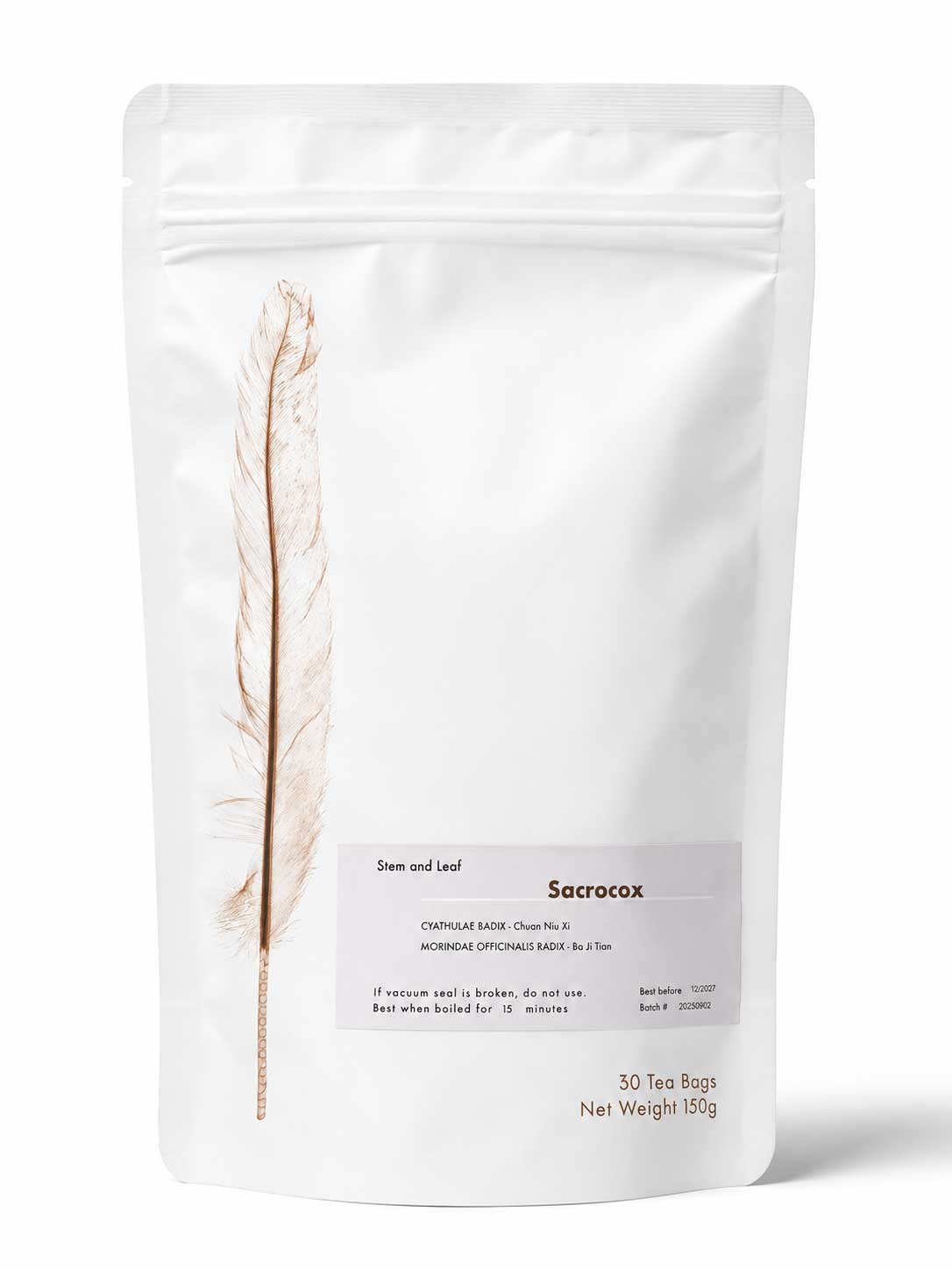
Sacrocox Herbal Tea product mockup
7 minutes read

Materia Medica · The Stem & Leaf Series

Stem & Leaf Sacrocox: For Tailbone Pain You Can’t Sit Through

Willard Sheppy Dipl. OM, LAc, BS

Willard Sheppy is a licensed acupuncturist (LAc) and Founder of Valley Health Clinic specializing in using Traditional Chinese Medicine to treat acute injuries and chronic conditions, and to improve sports performance and rehabilitation.

Sacrocox Herbal Tea product mockup

Table of Contents

Sacral and tailbone pain is the kind you cannot stretch out and cannot sit through.

The sacrum and tailbone anchor everything above them — and in classical herbal medicine, reaching them is a question of not just direction but depth.

Here’s what Stem & Leaf — Sacrocox actually is, how the guide-herb principle works, and what’s inside.

Quick Answer

Stem & Leaf — Sacrocox is the sacrum-and-tailbone formula in Botanical Biohacking’s region-by-region spinal line. Two guide herbs, aimed at one region: Chuan Niu Xi, the classical downward-guiding herb, carries the action all the way to the base of the spine, and Ba Ji Tian warms and strengthens it. It is a companion to the fundamentals — and new, severe, or radiating pain, or pain with numbness, weakness, or loss of bladder or bowel control, needs prompt medical evaluation.

What Stem & Leaf — Sacrocox Actually Is

The Stem & Leaf line takes a region-by-region approach to spinal support. Rather than one general back formula, each product is built around guide herbs — herbs that classical medicine understands as directing a formula’s action to a particular part of the body.

Stem & Leaf — Sacrocox is the sacrum and tailbone formula. Two guide herbs, aimed at one region.

That specificity is the whole idea, and it mirrors how a practitioner actually thinks about a back. The spine is not one thing.

The Guide Herb Principle

A guide herb carries a formula’s action toward a region. For the very base of the spine, the challenge is not just direction but depth — the action has to travel all the way down.

Chuan Niu Xi is the classical answer to that problem. It is used across the tradition specifically to lead other herbs downward, to the lowest reaches of the body.

How It's Sourced and Tested

The same protocol runs across the entire Botanical Biohacking line.

Inside the Formula

Chuan Niu Xi is the herb classical medicine uses when action needs to go down — it is the descending guide, and it is why this formula reaches the sacrum rather than stopping at the lumbar spine. Ba Ji Tian adds warming, strengthening support to the base.

The Sacrococcygeal Guide Herbs

Using the Line Together

A Practitioner’s Note

Spinal support formulas are a companion to the fundamentals, not a replacement. Movement, posture, sleep, and hands-on care do the heavy lifting. New, severe, or radiating back pain — or pain with numbness, weakness, or loss of bladder or bowel control — needs prompt medical evaluation.

The sacrum and tailbone anchor everything above them. Chuan Niu Xi is the herb the tradition uses to send a formula all the way down there. — Will Sheppy, L.Ac.

Stem & Leaf — Sacrocox

The sacrococcygeal formula from the Stem & Leaf line. Region-specific guide herbs, thirty teabags. Available at Valley Health Market.

Research & Resources

  1. Christopher M. Volesky, L.Ac., Rocky Mountain Herb Supply. Stem and Leaf guide herb formulations. Distributor product note, July 2026.
  2. Bensky D, Clavey S, Stöger E. Chinese Herbal Medicine: Materia Medica, 3rd ed. Eastland Press, 2004. (Reference for guide herbs and channel-directing action.)

A note on evidence: the Stem & Leaf line is a practitioner-formulated support product. We are not attaching clinical-trial claims to it. What we can tell you is which herbs are in it, why they were chosen, and who formulated them.

Educational content rooted in 20+ years of clinical practice in Traditional Chinese Medicine. The information provided is for educational purposes and is not intended to replace consultation with a qualified healthcare practitioner. Please consult your physician before starting any new herbal protocol, especially if pregnant, nursing, on anticoagulants, or managing a chronic condition.

Share on

Will Sheppy, Founder and Acupuncturist at Valley Health Clinic
Willard Sheppy
Willard Sheppy is a licensed acupuncturist (LAc) and Founder of Valley Health Clinic specializing in using Traditional Chinese Medicine to treat acute injuries and chronic conditions, and to improve sports performance and rehabilitation.

FAQ's

What is Stem & Leaf — Sacrocox?

Sacrocox is the sacrum-and-tailbone formula in Botanical Biohacking’s Stem & Leaf line, which takes a region-by-region approach to spinal support. It is built around two guide herbs aimed at the sacrococcygeal region and comes as thirty teabags.

A guide herb is an herb that classical medicine understands as directing a formula’s action to a particular part of the body. For the very base of the spine the challenge is not just direction but depth — Chuan Niu Xi is the herb the tradition uses specifically to lead other herbs downward, to the lowest reaches of the body.

Two guide herbs: Chuan Niu Xi (cyathula root), the classical downward-guiding herb that directs the formula’s action to the lowest part of the body, and Ba Ji Tian (morinda root), which traditionally warms and strengthens the base, supporting the low back and legs.

Yes — the Stem & Leaf teas can be used alone or combined to cover the better part of the neck and back: Sir Vickle for the cervical spine (C1–C7), Thoracic Park for the thoracic spine (T1–T12), LumBear for the lumbar spine (L1–L5), and Sacrocox for the sacrum and tailbone.

Spinal support formulas are a companion to the fundamentals — movement, posture, sleep, and hands-on care — not a replacement. New, severe, or radiating back pain, or pain with numbness, weakness, or loss of bladder or bowel control, needs prompt medical evaluation.

Recent Posts

Sir Vickle: For the Neck That Has Hurt for Years

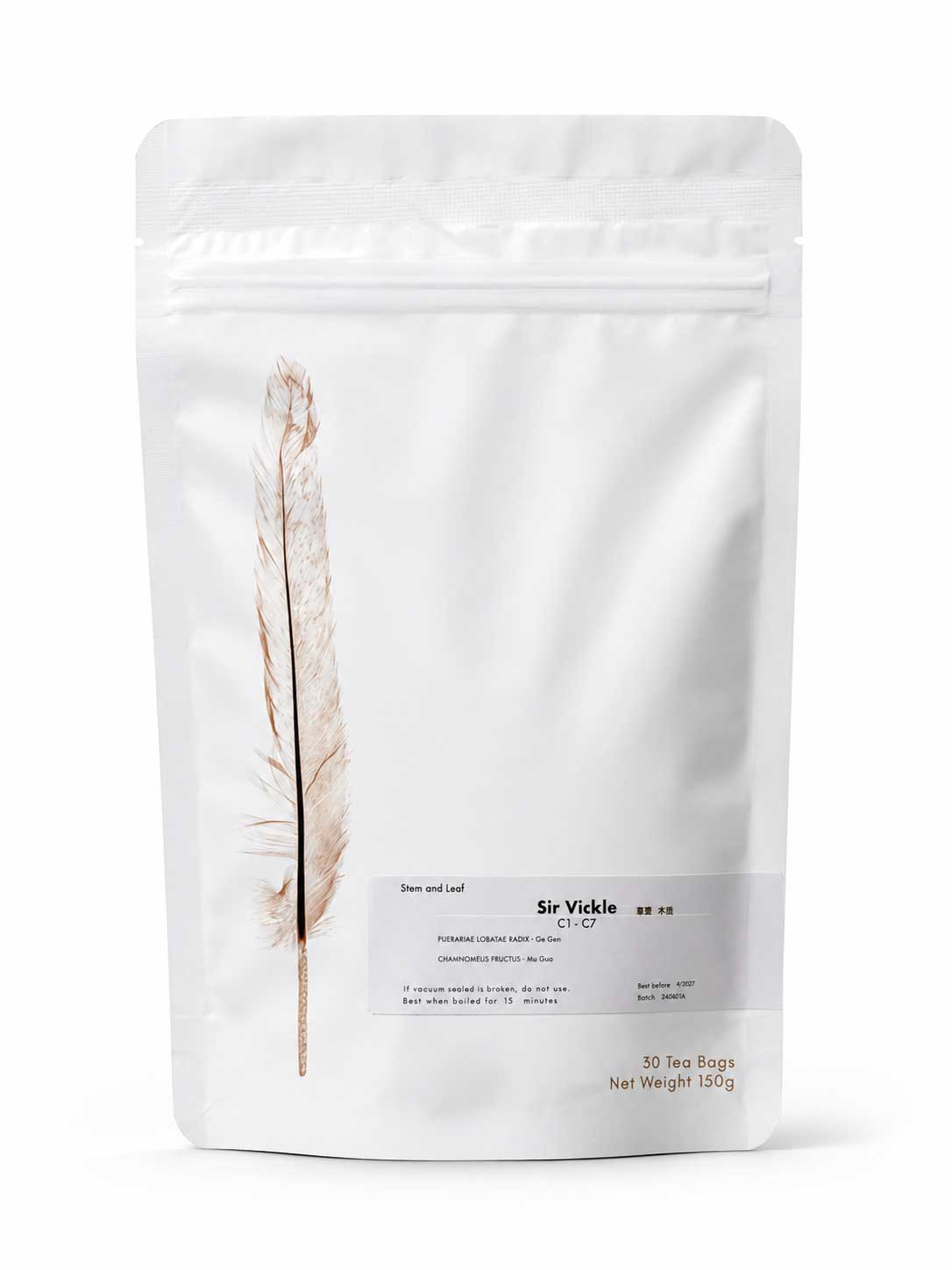
Sir Vickle Herbal Tea product mockup
7 minutes read

Materia Medica · The Stem & Leaf Series

Sir Vickle: For the Neck That Has Hurt for Years

Willard Sheppy Dipl. OM, LAc, BS

Willard Sheppy is a licensed acupuncturist (LAc) and Founder of Valley Health Clinic specializing in using Traditional Chinese Medicine to treat acute injuries and chronic conditions, and to improve sports performance and rehabilitation.

Sir Vickle Herbal Tea product mockup

Table of Contents

If your neck has hurt for years rather than weeks, you have probably already tried the imaging and the ergonomic chair.

Stem & Leaf — Sir Vickle is the neck formula: two guide herbs, aimed at one region, C1 through C7.

Here’s the guide-herb principle behind it, what’s inside, and how the line fits together.

Quick Answer

Stem & Leaf — Sir Vickle is the cervical formula in Botanical Biohacking’s region-by-region spinal line: two guide herbs aimed at C1 through C7. Ge Gen has been used for cervical tension and stiffness for roughly two thousand years; Mu Gua adds the damp-clearing, circulation-moving side. It is a companion to the fundamentals — and new, severe, or radiating pain, or pain with numbness, weakness, or loss of bladder or bowel control, needs prompt medical evaluation.

What Stem & Leaf — Sir Vickle Actually Is

The Stem & Leaf line takes a region-by-region approach to spinal support. Rather than one general back formula, each product is built around guide herbs — herbs that classical medicine understands as directing a formula’s action to a particular part of the body.

Stem & Leaf — Sir Vickle is the neck formula. Two guide herbs, aimed at one region.

That specificity is the whole idea, and it mirrors how a practitioner actually thinks about a back. The spine is not one thing.

The Guide Herb Principle

A guide herb is not a filler. In classical formula construction, certain herbs are understood to carry a formula’s action toward a specific region — the way a courier carries a letter to an address rather than to a city.

For the neck, that herb is Ge Gen. It has been used for cervical tension and stiffness for roughly two thousand years, and it remains one of the first things a practitioner reaches for when someone’s shoulders are up around their ears.

How It's Sourced and Tested

The same protocol runs across the entire Botanical Biohacking line.

Inside the Formula

Ge Gen is the neck herb — it is the reason formulas like Ge Gen Tang exist at all. Pairing it with Mu Gua adds the damp-clearing, circulation-moving side. This is described as a combination commonly used by Dr. Jin Zhao for neck problems, which is exactly the provenance you want on a product like this.

The Cervical Guide Herbs

Using the Line Together

A Practitioner’s Note

Spinal support formulas are a companion to the fundamentals, not a replacement. Movement, posture, sleep, and hands-on care do the heavy lifting. New, severe, or radiating back pain — or pain with numbness, weakness, or loss of bladder or bowel control — needs prompt medical evaluation.

Ge Gen is the herb practitioners reach for when the shoulders have crept up toward the ears and stayed there. Pair it with Mu Gua and you have a formula aimed at one region, not at the whole back. — Will Sheppy, L.Ac.

Sir Vickle Herbal Tea product mockup with a green background by Valley Health Market

Stem & Leaf — Sir Vickle

The cervical formula from the Stem & Leaf line. Region-specific guide herbs, thirty teabags. Available at Valley Health Market.

Research & Resources

  1. Christopher M. Volesky, L.Ac., Rocky Mountain Herb Supply. Stem and Leaf guide herb formulations. Distributor product note, July 2026.
  2. Bensky D, Clavey S, Stöger E. Chinese Herbal Medicine: Materia Medica, 3rd ed. Eastland Press, 2004. (Reference for guide herbs and channel-directing action.)
  3. A note on evidence: the Stem & Leaf line is a practitioner-formulated support product. We are not attaching clinical-trial claims to it. What we can tell you is which herbs are in it, why they were chosen, and who formulated them.

Educational content rooted in 20+ years of clinical practice in Traditional Chinese Medicine. The information provided is for educational purposes and is not intended to replace consultation with a qualified healthcare practitioner. Please consult your physician before starting any new herbal protocol, especially if pregnant, nursing, on anticoagulants, or managing a chronic condition.

Share on

Will Sheppy, Founder and Acupuncturist at Valley Health Clinic
Willard Sheppy
Willard Sheppy is a licensed acupuncturist (LAc) and Founder of Valley Health Clinic specializing in using Traditional Chinese Medicine to treat acute injuries and chronic conditions, and to improve sports performance and rehabilitation.

FAQ's

What is Stem & Leaf — Sir Vickle?

Sir Vickle is the neck formula in Botanical Biohacking’s Stem & Leaf line, which takes a region-by-region approach to spinal support. It is built around two guide herbs — Ge Gen and Mu Gua — aimed at the cervical spine, C1 through C7. It comes as thirty teabags.

In classical formula construction, certain herbs are understood to carry a formula’s action toward a specific region of the body — the way a courier carries a letter to an address rather than to a city. For the neck, that herb is Ge Gen, which has been used for cervical tension and stiffness for roughly two thousand years.

Yes — the Stem & Leaf teas can be used alone or combined to cover the better part of the neck and back: Sir Vickle for the cervical region (C1–C7), Thoracic Park for the thoracic (T1–T12), LumBear for the lumbar (L1–L5), and Sacrocox for the sacrococcygeal region.

New, severe, or radiating back pain — or pain with numbness, weakness, or loss of bladder or bowel control — needs prompt medical evaluation. Spinal support formulas are a companion to the fundamentals, not a replacement: movement, posture, sleep, and hands-on care do the heavy lifting.

Recent Posts

Thoracic Park: For Mid-Back Pain That Gets Minimised

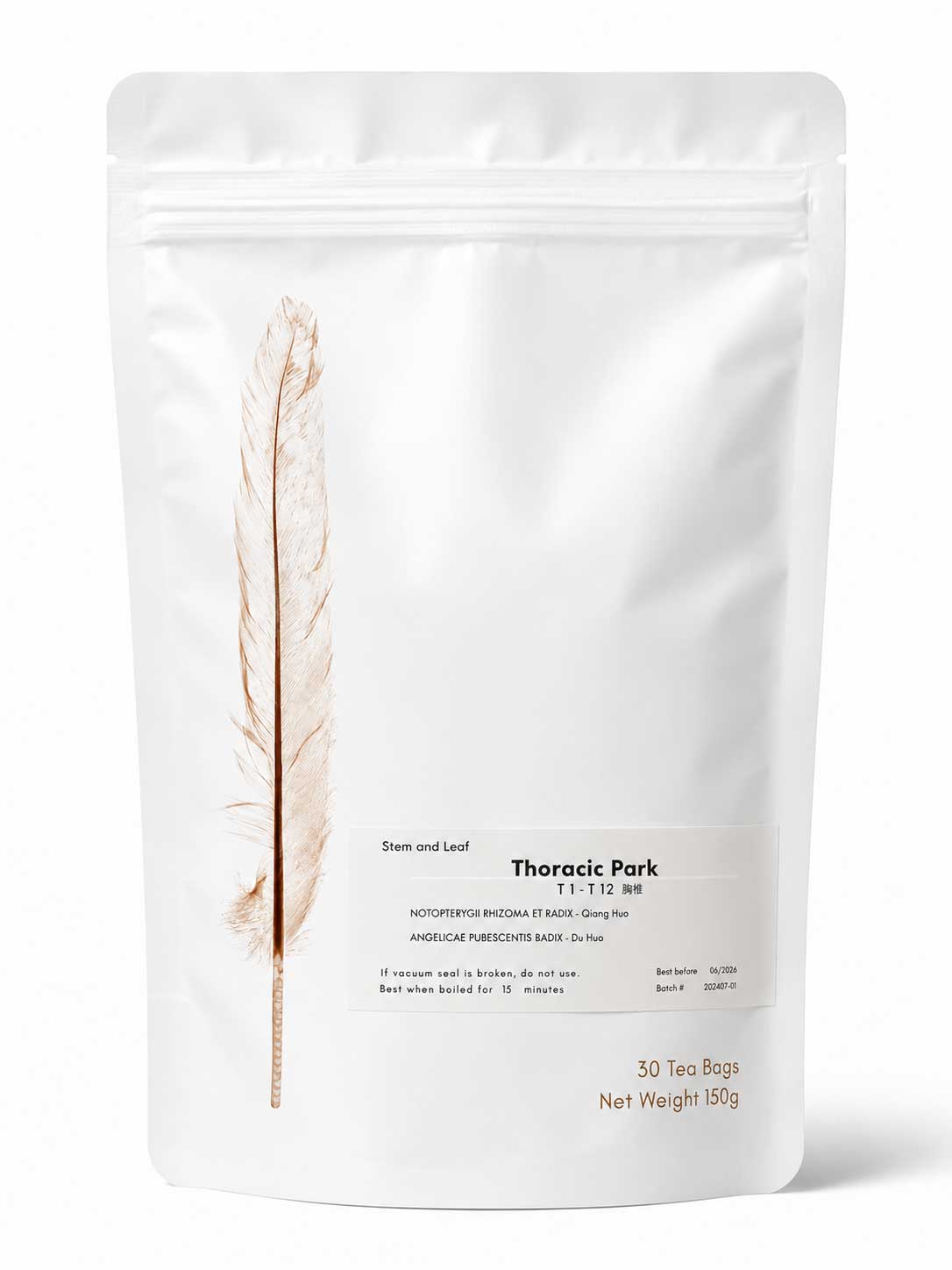
Thoracic Park Herbal Tea product mockup
7 minutes read

Materia Medica · The Stem & Leaf Series

Thoracic Park: For Mid-Back Pain That Gets Minimised

Willard Sheppy Dipl. OM, LAc, BS

Willard Sheppy is a licensed acupuncturist (LAc) and Founder of Valley Health Clinic specializing in using Traditional Chinese Medicine to treat acute injuries and chronic conditions, and to improve sports performance and rehabilitation.

Thoracic Park Herbal Tea product mockup

Table of Contents

Educational content from Valley Health Market. Not medical advice. Statements have not been evaluated by the FDA. This product is not intended to diagnose, treat, cure, or prevent any disease.

Mid-back pain is the one that gets minimised. It rarely shows cleanly on imaging and it does not radiate anywhere dramatic.

Stem & Leaf — Thoracic Park is the mid-back formula: two guide herbs, aimed at T1 through T12.

Here’s what the formula actually is, how the guide-herb principle works, and what’s inside.

Quick Answer

Stem & Leaf — Thoracic Park is the mid-back formula in Botanical Biohacking’s region-by-region spinal line: two guide herbs aimed at T1 through T12. Du Huo works from below and Qiang Huo from above — together they cover the length of the Du channel, which is why the pair appears in spinal formulas going back centuries. It is a companion to the fundamentals — and new, severe, or radiating pain, or pain with numbness, weakness, or loss of bladder or bowel control, needs prompt medical evaluation.

What Thoracic Park Actually Is

The Stem & Leaf line takes a region-by-region approach to spinal support. Rather than one general back formula, each product is built around guide herbs — herbs that classical medicine understands as directing a formula’s action to a particular part of the body.

Stem & Leaf — Thoracic Park is the mid-back formula. Two guide herbs, aimed at one region.

That specificity is the whole idea, and it mirrors how a practitioner actually thinks about a back. The spine is not one thing.

The Guide Herb Principle

A guide herb carries a formula’s action toward a specific region. For the mid-back, the classical answer is a pair rather than a single herb: Du Huo working from below, Qiang Huo from above.

Between them they cover the length of the Du channel, which is why this combination shows up again and again in spinal formulas going back centuries.

How It's Sourced and Tested

The same sourcing and testing protocol runs across the entire Botanical Biohacking line.

Inside the Formula

Du Huo and Qiang Huo together are described as one of the few specific herb combinations that hone to the Du channel — the channel running up the midline of the back — which is what makes the pair particularly suited to the thoracic spine. The same combination is also used for shoulder problems and for musculoskeletal pain that worsens with cold and damp weather changes.

The Thoracic Guide Herbs

Using the Line Together

A Practitioner’s Note

Spinal support formulas are a companion to the fundamentals, not a replacement. Movement, posture, sleep, and hands-on care do the heavy lifting.

New, severe, or radiating back pain — or pain with numbness, weakness, or loss of bladder or bowel control — needs prompt medical evaluation.

The thoracic spine carries the rib cage and absorbs every hour you spend at a desk. It deserves a formula aimed at it specifically, not a general back remedy. — Will Sheppy, L.Ac.

Thoracic Park Herbal Tea product mockup ith a green background by Valley Health Market

Stem & Leaf — Thoracic Park

The thoracic formula from the Stem & Leaf line. Region-specific guide herbs, thirty teabags. Available at Valley Health Market.

Research & Resources

  1. Christopher M. Volesky, L.Ac., Rocky Mountain Herb Supply. Stem and Leaf guide herb formulations. Distributor product note, July 2026.
  2. Bensky D, Clavey S, Stöger E. Chinese Herbal Medicine: Materia Medica, 3rd ed. Eastland Press, 2004. (Reference for guide herbs and channel-directing action.)
  3. A note on evidence: the Stem & Leaf line is a practitioner-formulated support product. We are not attaching clinical-trial claims to it. What we can tell you is which herbs are in it, why they were chosen, and who formulated them.

Educational content rooted in 20+ years of clinical practice in Traditional Chinese Medicine. The information provided is for educational purposes and is not intended to replace consultation with a qualified healthcare practitioner. Please consult your physician before starting any new herbal protocol, especially if pregnant, nursing, on anticoagulants, or managing a chronic condition.

Share on

Will Sheppy, Founder and Acupuncturist at Valley Health Clinic
Willard Sheppy
Willard Sheppy is a licensed acupuncturist (LAc) and Founder of Valley Health Clinic specializing in using Traditional Chinese Medicine to treat acute injuries and chronic conditions, and to improve sports performance and rehabilitation.

FAQ's

What is Stem & Leaf — Thoracic Park?

Thoracic Park is the mid-back formula in the Stem & Leaf line by Botanical Biohacking — a region-by-region approach to spinal support. It is built around two guide herbs, Du Huo and Qiang Huo, aimed at the thoracic spine (T1 through T12), and comes as thirty teabags.

A guide herb carries a formula’s action toward a specific region of the body. For the mid-back, the classical answer is a pair: Du Huo working from below and Qiang Huo from above. Between them they cover the length of the Du channel — the channel running up the midline of the back — which is why this combination appears in spinal formulas going back centuries.

Yes — the Stem & Leaf teas can be used alone or combined to cover the better part of the neck and back: Sir Vickle for the cervical spine (C1–C7), Thoracic Park for the thoracic spine (T1–T12), LumBear for the lumbar spine (L1–L5), and Sacrocox for the sacrococcygeal region.

New, severe, or radiating back pain — or pain with numbness, weakness, or loss of bladder or bowel control — needs prompt medical evaluation. Spinal support formulas are a companion to the fundamentals, not a replacement: movement, posture, sleep, and hands-on care do the heavy lifting.

Recent Posts

Stem & Leaf LumBear: Three Guide Herbs for the Low Back

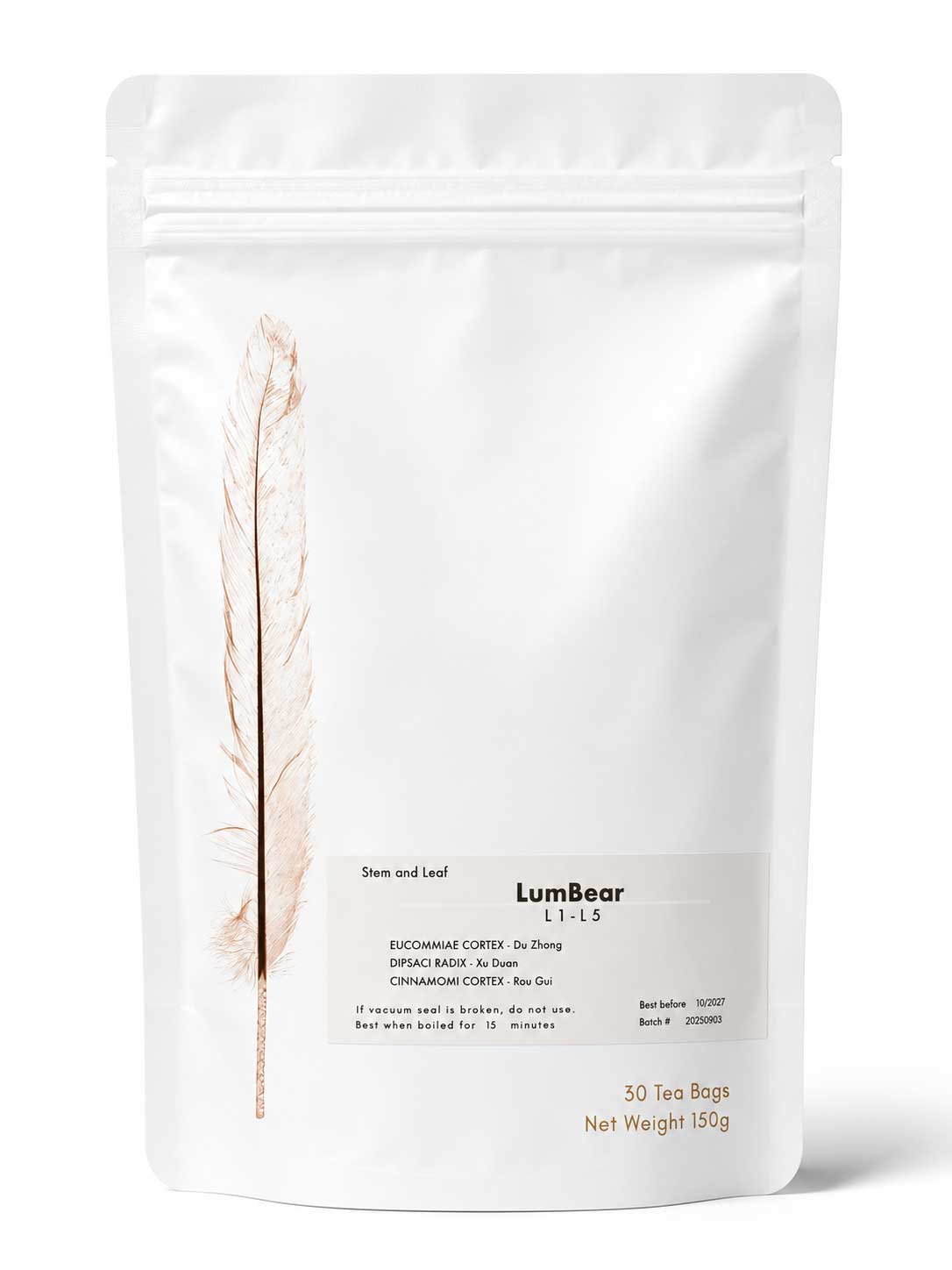
LumBear herbal tea product mockup
8 minutes read

Materia Medica · The Stem & Leaf Series

Stem & Leaf LumBear: Three Guide Herbs for the Low Back

Willard Sheppy Dipl. OM, LAc, BS

Willard Sheppy is a licensed acupuncturist (LAc) and Founder of Valley Health Clinic specializing in using Traditional Chinese Medicine to treat acute injuries and chronic conditions, and to improve sports performance and rehabilitation.

LumBear herbal tea product mockup

Table of Contents

Educational content from Valley Health Market. Not medical advice. Statements have not been evaluated by the FDA. This product is not intended to diagnose, treat, cure, or prevent any disease.

Chronic low back pain reorganizes a life quietly. It changes how you sleep, what you lift, and which chairs you avoid.

Stem & Leaf — LumBear is the lower-back formula in a line built region by region: three guide herbs, aimed at L1 through L5.

Here’s the guide-herb idea behind it, what’s inside, and when back pain needs a doctor instead.

Quick Answer

Stem & Leaf — LumBear is the lumbar formula in Botanical Biohacking’s region-by-region spinal line: three guide herbs aimed at L1 through L5. Du Zhong and Xu Duan have been paired for the low back for over a thousand years, and Rou Gui adds warming depth. It is a companion to the fundamentals — movement, posture, sleep, hands-on care — and new, severe, or radiating back pain, or pain with numbness, weakness, or loss of bladder or bowel control, needs prompt medical evaluation.

What Stem & Leaf LumBear Actually Is

The Stem & Leaf line takes a region-by-region approach to spinal support. Rather than one general back formula, each product is built around guide herbs — herbs that classical medicine understands as directing a formula’s action to a particular part of the body.

Stem & Leaf — LumBear is the lower back formula. Three guide herbs, aimed at one region.

That specificity is the whole idea, and it mirrors how a practitioner actually thinks about a back. The spine is not one thing.

The Guide Herb Principle

A guide herb carries a formula’s action toward a region. The lumbar spine has the most-developed guide herb tradition of any part of the back, because it is the region that fails most often.

Du Zhong and Xu Duan appear together in low-back formulas going back well over a thousand years. The pairing is close to canonical.

How It's Sourced and Tested

The same protocol runs across the entire Botanical Biohacking line: contamination testing covering heavy metals, pesticide residue, and microbial load.

Inside the Formula

This is the classical low-back trio. Du Zhong and Xu Duan are the two herbs most associated with lumbar support in the entire materia medica, and Rou Gui adds the warming depth that a cold, tired low back tends to want. Three guide herbs rather than two, because the lumbar region carries the most load.

The Lumbar Guide Herbs

Using the Line Together

A Practitioner’s Note

Spinal support formulas are a companion to the fundamentals, not a replacement. Movement, posture, sleep, and hands-on care do the heavy lifting. New, severe, or radiating back pain — or pain with numbness, weakness, or loss of bladder or bowel control — needs prompt medical evaluation.

The lumbar spine is the most heavily loaded region of the back, and it has the deepest guide-herb tradition behind it. Du Zhong and Xu Duan have been paired for the low back for over a thousand years. — Will Sheppy, L.Ac.

LumBear herbal tea product mockup with a green background by Valley Health Market

Stem & Leaf — LumBear

The lumbar formula from the Stem & Leaf line. Region-specific guide herbs, thirty teabags. Available at Valley Health Market.

Research & Resources

  1. Christopher M. Volesky, L.Ac., Rocky Mountain Herb Supply. Stem and Leaf guide herb formulations. Distributor product note, July 2026.
  2. Bensky D, Clavey S, Stöger E. Chinese Herbal Medicine: Materia Medica, 3rd ed. Eastland Press, 2004. (Reference for guide herbs and channel-directing action.)

A note on evidence: the Stem & Leaf line is a practitioner-formulated support product. We are not attaching clinical-trial claims to it. What we can tell you is which herbs are in it, why they were chosen, and who formulated them.

Educational content rooted in 20+ years of clinical practice in Traditional Chinese Medicine. The information provided is for educational purposes and is not intended to replace consultation with a qualified healthcare practitioner. Please consult your physician before starting any new herbal protocol, especially if pregnant, nursing, on anticoagulants, or managing a chronic condition.

Share on

Will Sheppy, Founder and Acupuncturist at Valley Health Clinic
Willard Sheppy
Willard Sheppy is a licensed acupuncturist (LAc) and Founder of Valley Health Clinic specializing in using Traditional Chinese Medicine to treat acute injuries and chronic conditions, and to improve sports performance and rehabilitation.

FAQ's

What is Stem & Leaf LumBear?

LumBear is the lower-back formula in the Stem & Leaf line, made by Botanical Biohacking. Instead of one general back formula, the line is built region by region around guide herbs — herbs classical medicine understands as directing a formula’s action to a particular part of the body. LumBear is aimed at the lumbar spine, L1 through L5, and comes as thirty teabags.

Three guide herbs: Du Zhong (eucommia bark), the classical lumbar herb that traditionally strengthens the low back and knees; Xu Duan (dipsacus root), whose name means “restore what is broken” and which traditionally knits and strengthens sinew and bone; and Rou Gui (cinnamon bark), which warms the deep interior and the lower back.

Yes — the Stem & Leaf teas can be used alone or combined to cover the better part of the neck and back: Sir Vickle for the cervical spine (C1–C7), Thoracic Park for the thoracic spine (T1–T12), LumBear for the lumbar spine (L1–L5), and Sacrocox for the sacrococcygeal region.

LumBear is a practitioner-formulated support product, and we are not attaching clinical-trial claims to it. What we can tell you is which herbs are in it, why they were chosen, and who formulated them. Du Zhong and Xu Duan have appeared together in classical low-back formulas for well over a thousand years.

New, severe, or radiating back pain — or pain with numbness, weakness, or loss of bladder or bowel control — needs prompt medical evaluation. Spinal support formulas are a companion to the fundamentals, not a replacement: movement, posture, sleep, and hands-on care do the heavy lifting.

Recent Posts

Glow Tea: For Period Pain

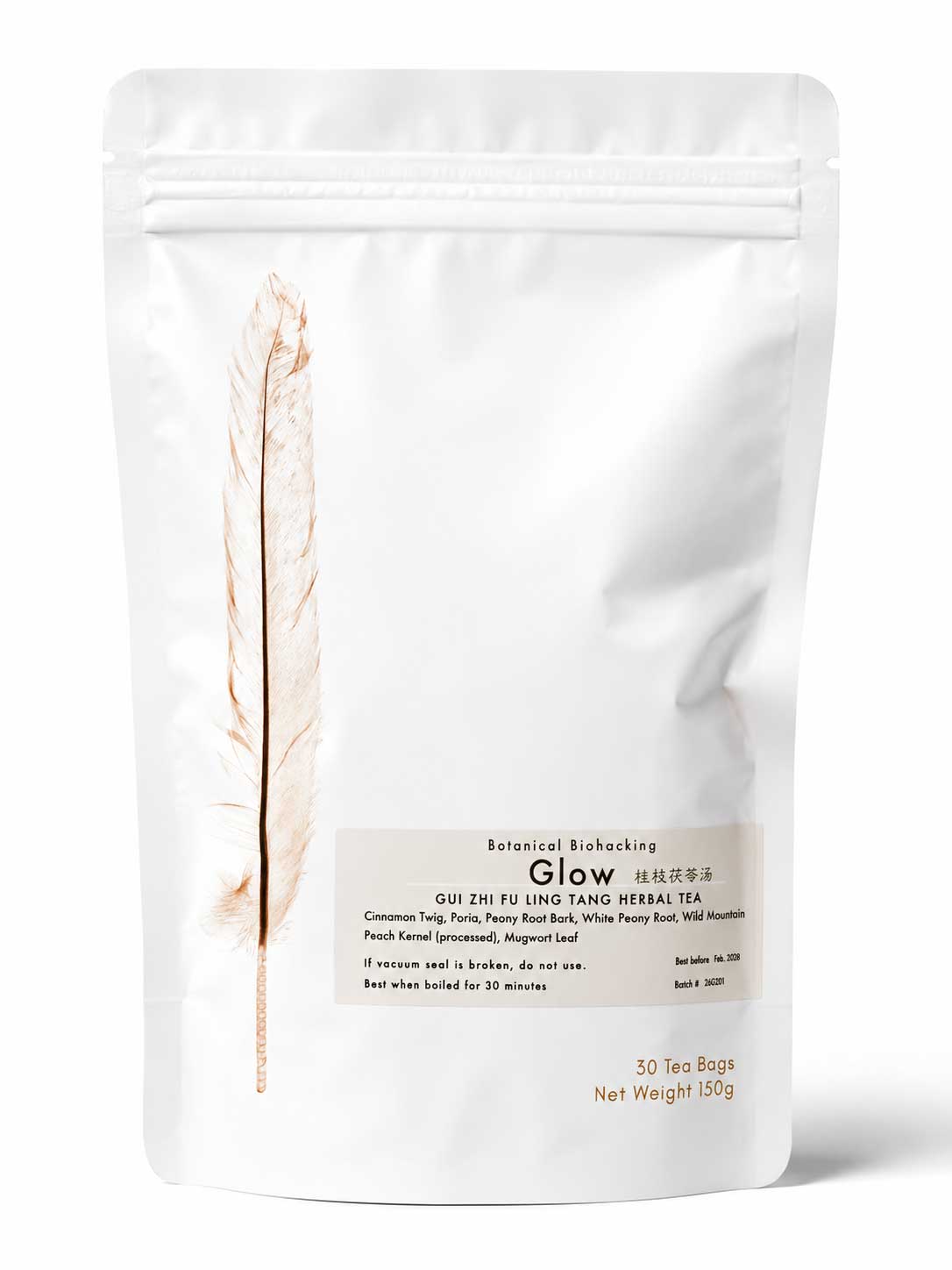
Glow Herbal Tea product mockup
7 minutes read

Materia Medica · The Formula Series

Glow Tea: For Period Pain

Willard Sheppy Dipl. OM, LAc, BS

Willard Sheppy is a licensed acupuncturist (LAc) and Founder of Valley Health Clinic specializing in using Traditional Chinese Medicine to treat acute injuries and chronic conditions, and to improve sports performance and rehabilitation.

Glow Herbal Tea product mockup

Table of Contents

This one is for period pain that keeps getting called normal.

In classical medicine, moving blood is a strategy — not a catch-all. Glow Tea is for stasis-type patterns: blood stasis with cold congealing. It is a specific pattern, and it has a specific answer.

Here’s what the formula actually is, who it was written for, and what’s inside.

Quick Answer

Glow Tea is built on Gui Zhi Fu Ling — Cinnamon Twig and Poria — with Ai Ye (mugwort) added, made for one specific pattern: blood stasis with cold congealing. That pattern looks like heaviness in the days before the cycle, period pain that over-the-counter options don’t quite settle, and spotting on no predictable schedule. It is not used during pregnancy — and if you take anticoagulant medication or have a bleeding condition, talk with your practitioner first.

What Glow Tea Actually Is

Glow is built on Gui Zhi Fu Ling — Cinnamon Twig and Poria — one of the most enduring formulas in the canon. You will see it written both as Wan (a pill) and Tang (a decoction). Botanical Biohacking builds theirs on the decoction form, with Ai Ye (mugwort) added.

The traditional strategy is deliberately balanced: warm the channels enough that blood moves, soften what has hardened, drain the damp — without ever being harsh. It is a formula of steady pressure rather than force.

That balance is why it has survived two thousand years of continuous use, and why it remains one of the most-studied formulas in modern Chinese medicine research.

The Patient This Was Written For

Botanical Biohacking’s herbal pharmacologist, Dr. Lan, PhD, is specific about who this is for, and her description is worth reading closely.

Heaviness in the days before the cycle. Period pain that no over-the-counter option quite settles. Spotting on no predictable schedule. Skin that loses its composure in the warmer months. She notes this pattern shows up most in her colleagues’ practices through May and June.

She also flags something practitioners care about more than patients expect: the taste is mild. She frames that as a compliance issue, not a luxury. People finish it.

How It's Sourced and Tested

Botanical Biohacking’s contamination protocol covers heavy metals, pesticide residue, and microbial load.

Inside the Formula

Glow layers its herbs the way the classical formula does — each with a defined job.

The Movers

The Softeners

Before You Start

Moving blood is a specific strategy, not a general tonic. This formula is not used during pregnancy. If you take anticoagulant medication or have a bleeding condition, talk with your practitioner or physician first.

In classical medicine, moving blood is a strategy — not a catch-all. Glow is for stasis-type patterns. That precision is the point. — Will Sheppy, L.Ac.

Glow Tea

Gui Zhi Fu Ling with Ai Ye. Thirty teabags, one month’s supply. Mild enough that people actually finish it. Available at Valley Health Market.

Research & Resources

  1. Lei Y, et al. The efficacy and safety of Chinese herbal medicine Guizhi Fuling capsule combined with low dose mifepristone in the treatment of uterine fibroids: a systematic review and meta-analysis of 28 randomized controlled trials. BMC Complement Med Ther. 2023;23(1):54. Link →
  2. Bensky D, Barolet R. Chinese Herbal Medicine: Formulas & Strategies. Eastland Press. (Standard reference for Gui Zhi Fu Ling Wan.)
  3. Dr. Lan, PhD, Botanical Biohacking. Glow Tea, a practical note. Practitioner letter, May 2026.

Educational content from Valley Health Market. Not medical advice. Statements have not been evaluated by the FDA. This product is not intended to diagnose, treat, cure, or prevent any disease. Valley Health Market Educational content rooted in 20+ years of clinical practice in Traditional Chinese Medicine. The information provided is for educational purposes and is not intended to replace consultation with a qualified healthcare practitioner. Please consult your physician before starting any new herbal protocol, especially if pregnant, nursing, on anticoagulants, or managing a chronic condition.

© Valley Health Market · Albany, Oregon

Share on

Will Sheppy, Founder and Acupuncturist at Valley Health Clinic
Willard Sheppy
Willard Sheppy is a licensed acupuncturist (LAc) and Founder of Valley Health Clinic specializing in using Traditional Chinese Medicine to treat acute injuries and chronic conditions, and to improve sports performance and rehabilitation.

FAQ's

What is the most common trigger for Meniere’s attacks?
Stress is the most consistently reported trigger, and research backs it: one large study found attack odds nearly tripled on stressful days. Just before an attack, the sympathetic nervous system spikes — which is why a stress-pattern attack often feels like a panic attack.
For some people, yes — especially those with a damp, fluid-retaining pattern. Honestly, the research on strict salt restriction is mixed, so it helps some people far more than others. It’s a low-risk lever worth trying, but it isn’t a guaranteed fix, and it matters most for the congested pattern rather than the stress-driven or heat-driven ones.
The inner ear is pressure-sensitive, and falling barometric pressure and higher temperatures are documented to correlate with more attacks — risk is roughly 1.3 times higher when pressure drops below 1013 hectopascal. This hits the hot, inflamed pattern hardest. You can’t change the weather, but you can use the forecast as an early-warning system and tighten your routine on those days.
Because your underlying terrain is different. The same diagnosis sits on top of different patterns — stressed, damp, or hot — and each is loaded by a different lever. That’s why a generic trigger list helps less than learning your own pattern, and why two people with Meniere’s often need different plans.
Start by confirming the diagnosis itself — Meniere’s is often confused with BPPV, vestibular neuritis, and vestibular migraine, which are treated very differently. Our companion article, “Meniere’s vs. BPPV vs. Vestibular Disorders,” walks through how to tell them apart by duration, trigger, and hearing change.

Recent Posts

Ao Yi Acupoint Pain Patches: Needle Free Herbal Support

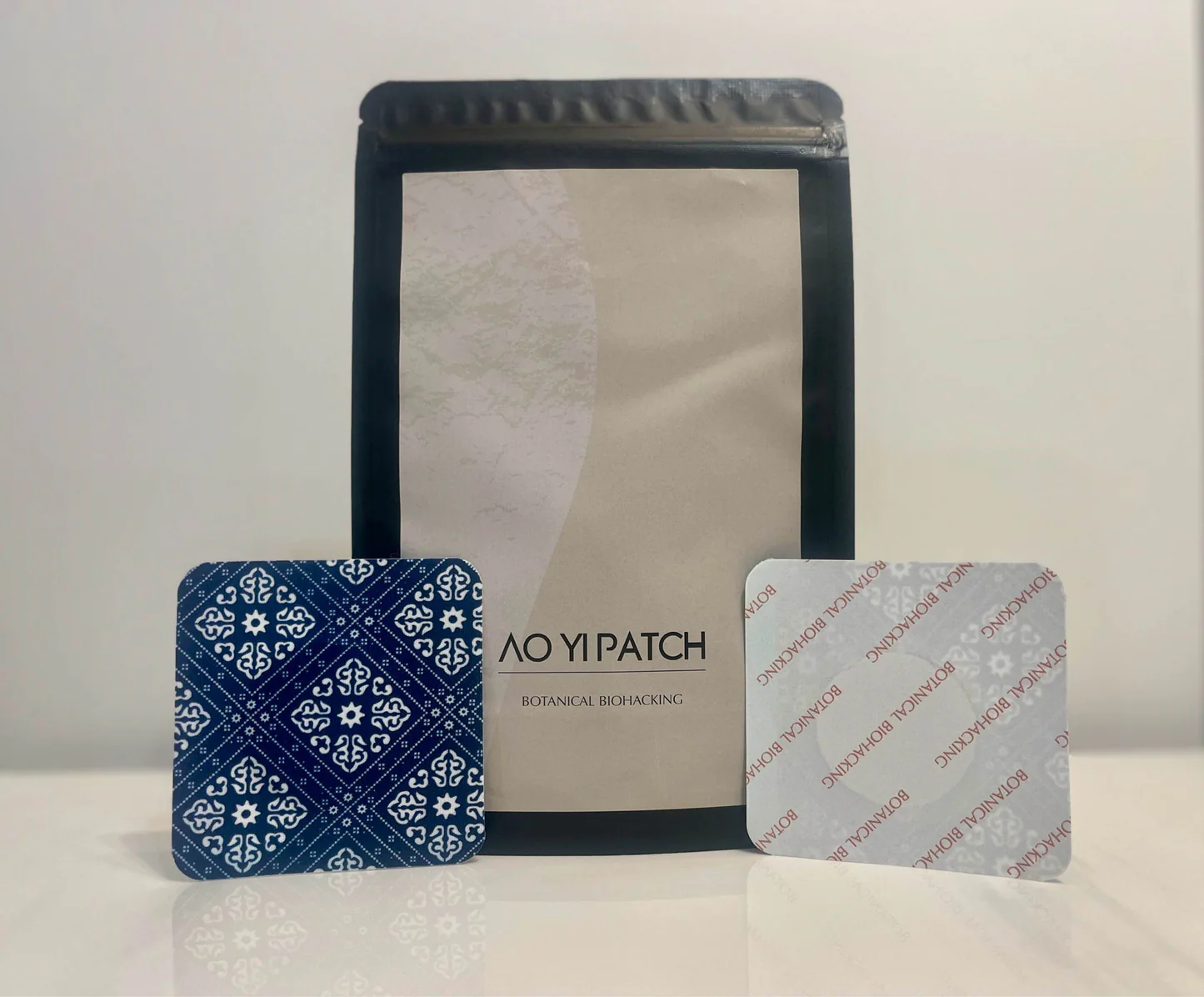
Ao Yi Acupoint Pain Patches package with example patches in front
3 minutes read

Ao Yi Acupoint Pain Patches: Needle Free Herbal Support

Willard Sheppy Dipl. OM, LAc, BS

Willard Sheppy is a licensed acupuncturist (LAc) and Founder of Valley Health Clinic specializing in using Traditional Chinese Medicine to treat acute injuries and chronic conditions, and to improve sports performance and rehabilitation.

Ao Yi Acupoint Pain Patches package with example patches in front

Table of Contents

What the Ao Yi Patch Actually Is

Acupuncture’s point-based logic, in something you can apply yourself.

Long before adhesive patches existed, many folk traditions applied warming, moving herbs directly over sore, stuck areas — the topical cousin of acupuncture’s point-based logic. The Ao Yi Patch, pronounced “owie,” modernizes that idea using Miao minority medicine into a clean, reusable, acupoint-sized patch.

The Miao are one of China’s oldest ethnic minorities, with a distinct and highly developed tradition of topical herbal medicine. This is not a generic warming patch with a story attached. It is a specific lineage of practice.

The Three-Stage Design

What makes these different from a drugstore patch is that the design follows an arc — the same progression a practitioner might follow over a course of care.

Stage One - Open and Move

Traditionally aimed at removing pain and opening the channels where things feel stuck

Stage Two - Warm and Spread

Warming the area to spread and free the collaterals — the small, surface-level channels

Stage Three - Nourish and Support

Finishing by tonifying yang and helping clear lingering damp

A Practitioner’s Note:

This is a nice bridge for people who want the point-based logic of acupuncture without needles — and a useful thing to send home between visits. It is not a substitute for evaluating new, severe, or radiating pain. If you’re pregnant or have sensitive skin, check with your practitioner first.

How to Use Them

The practical instructions matter more here than with most products, because the wear time is deliberately short.

These give people a genuinely traditional, needle-free way to work with points at home. That makes them a natural companion to the work we do in the treatment room.

Ao Yi Acupoint Pain Patches packaging Valley Health Market

Ao Yi Acupoint Pain Patches

Needle-free, reusable up to three days.
Acupoint-sized herbal patches drawn from Miao minority medicine.

Research & Resources

  1. Bensky D, Clavey S, Stöger E. Chinese Herbal Medicine: Materia Medica, 3rd ed. Eastland Press, 2004. (Reference for topical herbal strategy and channel theory.)
  2. Overview of transdermal and acupoint herbal application in traditional Chinese medicine. PubMed →
  3. Botanical Biohacking product documentation, Miao minority medicine lineage. (Supplier material.)

Share on

Will Sheppy, Founder and Acupuncturist at Valley Health Clinic
Willard Sheppy
Willard Sheppy is a licensed acupuncturist (LAc) and Founder of Valley Health Clinic specializing in using Traditional Chinese Medicine to treat acute injuries and chronic conditions, and to improve sports performance and rehabilitation.

Recent Posts

Understanding Meniere’s Disease Triggers

How to Fix Chronic Neck Tension
8 minutes read

Understanding Meniere’s Disease Triggers

Willard Sheppy Dipl. OM, LAc, BS

Willard Sheppy is a licensed acupuncturist (LAc) and Founder of Valley Health Clinic specializing in using Traditional Chinese Medicine to treat acute injuries and chronic conditions, and to improve sports performance and rehabilitation.

Migraine Acupuncture
How to Fix Chronic Neck Tension

Table of Contents

You can’t always control when the room will spin — but you can understand why it happens, learn to read your own warning signs, and move from the fear of the unknown to a plan you trust.
If you’ve just been told you have Meniere’s disease — or you’ve been living with the spinning, the ringing, and the ear pressure for years — there’s a good chance the hardest part isn’t any single attack. It’s the not knowing. You feel completely fine, and then the floor tilts. There’s nothing on the outside to point to, nothing that explains it, and no reliable way to predict when the next episode is coming. That uncertainty is its own kind of exhausting, and it wears on people in a way the medical charts don’t always capture.
I want you to know that the fear is normal, and it makes sense. People living with Meniere’s tend to carry more day-to-day stress and a lower quality of life than they should have to — and that burden often grows the longer the condition goes unexplained. So the goal of this article, and of the short class I teach, is simple: help you understand what is actually happening in your inner ear, why it feels so frightening, and how to move from “I have no idea what’s going on” to “I have a plan I believe in.” Here’s a preview of what we cover.

What Is Meniere’s Disease, and Why Does It Feel So Frightening?

Meniere’s is a disorder of the inner ear — the part of you responsible for both hearing and balance. Your sense of balance is really a team effort between three inputs: your inner ear (the vestibular system), your eyes, and the position sensors in your body. When all three agree, you feel steady and never think about it. With Meniere’s, the inner ear sends the brain false information, so one member of the team starts lying. The result is that the whole system panics, and the world appears to spin even though you haven’t moved.
That’s why Meniere’s is uniquely unsettling. It’s an invisible condition. You can’t point to a cast or a wound, others can’t see it, and that can make you feel dismissed or alone. But invisible is not the same as unknowable. Once you understand the machinery, the experience starts to feel less like a betrayal by your own body and more like a system you can learn to work with.
Many people have a mix of both. That overlap is exactly why dizziness can be so frustrating to pin down — and why the neck is so often overlooked.

What Are the Symptoms of Meniere’s Disease?

Meniere’s usually affects one ear, and most people experience some combination of four hallmark symptoms:
Knowing this pattern matters, because the specific mix — how long an attack lasts, what sets it off, and whether your hearing changes — is exactly what helps tell Meniere’s apart from other causes of dizziness.

What Causes Meniere’s Disease? Why “Idiopathic” Isn’t a Dead End

Here’s the honest truth: medicine classifies Meniere’s as idiopathic, which simply means the single root cause isn’t known. For years the focus was on a buildup of fluid in the inner ear (endolymphatic hydrops). The current thinking is that this fluid is more of a marker of Meniere’s than the whole explanation. Leading theories also point to stress and an over-revved nervous system, allergies and autoimmune activity, migraine biology, circulation, and genetics.
If that sounds discouraging, stay with me. “Idiopathic” does not mean “unknowable,” and it definitely doesn’t mean there’s nothing you can do. It just means we stop hunting for one universal cause and start looking for your pattern — the specific things that load your system and tip you into an attack. That shift, from chasing a cure to mapping your own terrain, is where people start getting traction.

Bai Zhu Balance

Ancient Wisdom for Modern Balance
The natural supplement designed to treat Ménière’s disease at its root—relieve vertigo, reduce fluid buildup, calm inflammation, and restore clarity.

Is It Really Meniere’s? How It Differs From BPPV and Vestibular Migraine

Not all vertigo is Meniere’s, and getting the right name on the problem removes a whole layer of fear. Three clues do most of the work: how long an attack lasts, what triggers it, and whether your hearing changes. BPPV lasts seconds, is set off by head position, and doesn’t change your hearing. Meniere’s lasts 20 minutes to hours and brings hearing changes, ringing, and ear fullness. Vestibular migraine varies in length and usually carries migraine features like sensitivity to light, sound, and visual motion — often without any headache at all.
This is why a proper diagnosis matters. An ENT or a neuro-otologist who focuses on balance disorders can confirm Meniere’s and rule out look-alikes. Please treat this article as education, not a diagnosis — the most powerful first step is getting an accurate name for what you’re dealing with.

What Triggers a Meniere’s Attack?

Meniere’s can feel random, but unpredictable is not the same as random. Attacks usually have triggers — it’s just that yours may be different from someone else’s. The most common ones include:
Which of these set off your attacks depends on your individual terrain. That’s genuinely good news, because triggers can be tracked, anticipated, and managed. When you can see your own warning signs coming, the attacks stop feeling like ambushes.

Is There a Cure for Meniere’s Disease — and What Can You Actually Do?

There is no cure for Meniere’s, and I won’t pretend otherwise. But “no cure” and “nothing you can do” are very different statements. Meniere’s is often quite manageable. A reasonable plan usually combines dietary adjustments (commonly a lower-sodium approach and limiting caffeine and alcohol), stress regulation, protecting your sleep, balance-focused rehabilitation when appropriate, and steady medical care. The aim isn’t a perfect, symptom-free life on day one. The aim is simpler and more humane: more good days than bad.

Where Acupuncture and Chinese Medicine Fit In

As an acupuncturist, my lens is pattern-based. Rather than treating “Meniere’s” as one thing, I look at how it shows up in you — whether your picture leans stressed and wired, damp and congested, or hot and inflamed — and tailor care to that. In practice that often means calming an over-active nervous system, supporting healthy fluid balance, and reducing the stress load that so often precedes a flare.
On the evidence: reviews of the research suggest acupuncture, on its own or alongside conventional care, may help reduce dizziness, tinnitus, and ear fullness more than conventional care alone. I want to be straight with you that these studies are still small and imperfect, so I treat acupuncture as one supportive piece of a larger plan — a complement to your ENT care, not a replacement for it. Used that way, it can help many people feel steadier, calmer, and more in control.

From Fear and the Unknown to a Plan for More Good Days

Notice the throughline in everything above. When you understand how your balance system works, name the uncertainty honestly, learn to read your personal triggers, and build a plan around them, something shifts. You won’t control every variable — nobody can — but you stop feeling powerless in the face of it. That move, from fear and the unknown toward a clear plan, is the whole point. It’s also exactly what I built my class to do.

What You’ll Learn in the Class: The Vertigo & Meniere’s Map

This is a short, plain-English class — no jargon, no scare tactics. We walk the same map this article sketches, with time for your questions. You’ll leave understanding:

Join Me for the Class

If the spinning, the ringing, or the not-knowing has been running your life, come spend a focused hour building your own Vertigo & Meniere’s Map. It’s for anyone recently diagnosed, still seeking answers, or supporting someone who is.

Recent Posts

Is Your Neck Making You Dizzy?

6 minutes read

Is Your Neck Making You Dizzy?

Willard Sheppy Dipl. OM, LAc, BS

Willard Sheppy is a licensed acupuncturist (LAc) and Founder of Valley Health Clinic specializing in using Traditional Chinese Medicine to treat acute injuries and chronic conditions, and to improve sports performance and rehabilitation.

Table of Contents

Cervicogenic dizziness, vestibular migraine, and the simple chin-tuck test you can try at home.
If you feel off-balance, foggy, or lightheaded but you are not sure it is the classic spinning vertigo, your neck may be part of the picture. In the clinic I see this constantly: people who have been chasing an inner-ear diagnosis for months, when a big piece of their dizziness is actually coming from tight muscles at the base of the skull.
This article explains how your neck talks to your balance system, how that kind of dizziness feels different from true vertigo, and a quick self-test you can do right now to find out whether your neck is involved.

The Three Systems That Keep You Balanced

Your sense of balance is not one thing. It is a team of three systems that constantly compare notes:
When all three agree, you feel steady and you do not think about balance at all. When one sends a signal that does not match the others, the brain gets a conflicting report — and that mismatch is often felt as lightheadedness, unsteadiness, or a vague “off” feeling.

Lightheadedness vs. True Spinning Vertigo

This distinction matters, because it points to a different cause.

True vertigo

Usually feels like the room is spinning or the world is moving around you. It often comes from the inner ear and can come on in sudden, intense episodes.

Cervicogenic dizziness

Dizziness driven by the neck — tends to feel different. People describe it as lightheaded, floaty, foggy, or unsteady rather than truly spinning. It often shows up alongside neck tension or stiffness, gets worse after long hours at a desk or on a phone, and changes with head and neck position.
Many people have a mix of both. That overlap is exactly why dizziness can be so frustrating to pin down — and why the neck is so often overlooked.

Where the Neck Comes In: The Suboccipital Muscles

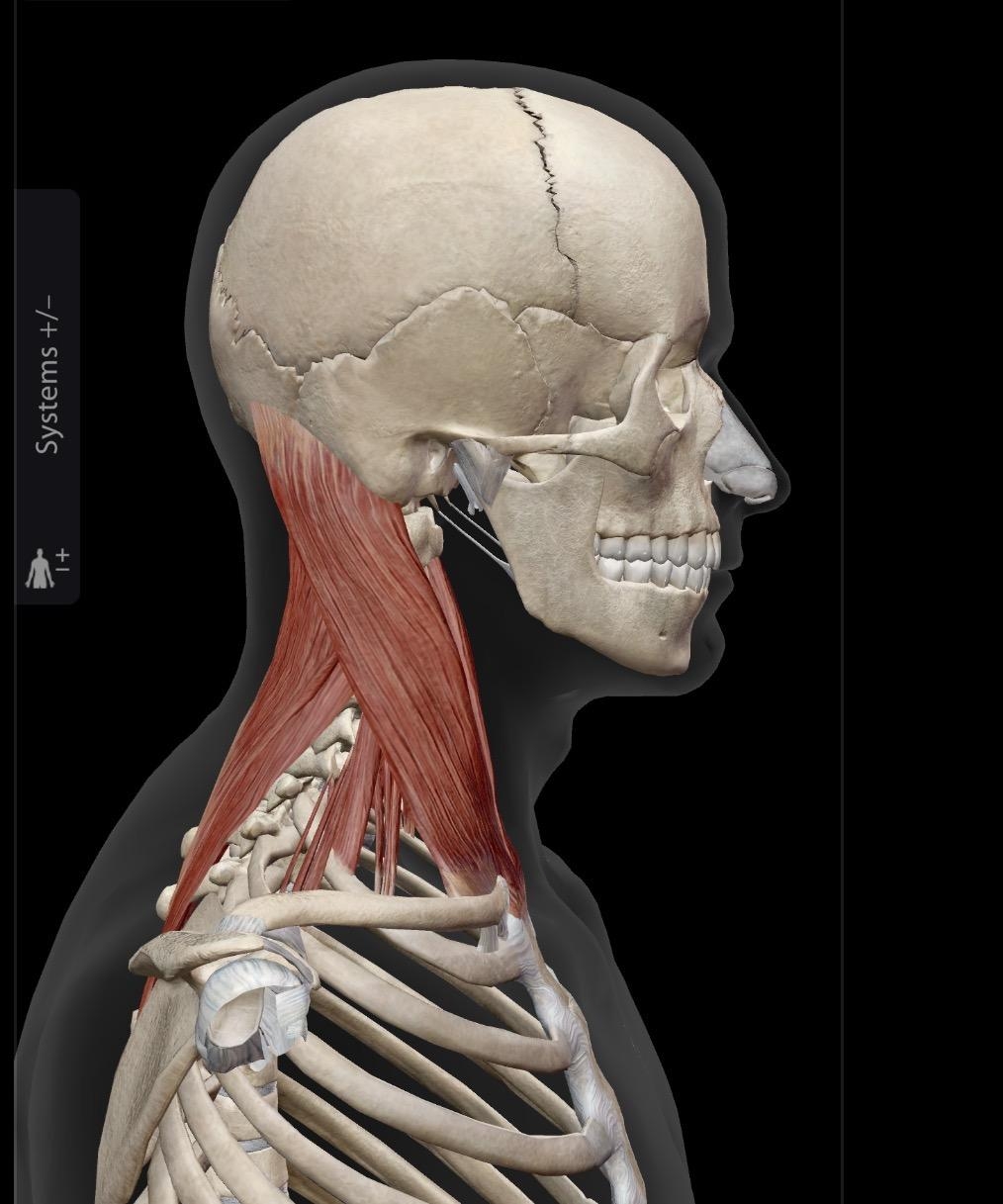
At the very top of your spine, a set of tiny muscles connects your first cervical vertebra to the base of your skull — the occipital region. These suboccipital muscles are densely packed with position sensors. They are constantly telling your brain where your head is relative to your body.
When those muscles are tight, guarded, or irritated — from posture, stress, an old injury, or simply too many hours looking down — they can feed faulty position information into the balance system. Your eyes and inner ears say one thing, your neck says another, and the resulting mismatch can leave you feeling lightheaded or unsteady. In people prone to vestibular migraine, this kind of neck tension can also act as an aggravating trigger.

Bai Zhu Balance

Ancient Wisdom for Modern Balance
The natural supplement designed to treat Ménière’s disease at its root—relieve vertigo, reduce fluid buildup, calm inflammation, and restore clarity.

A Simple Self-Test: The Double Chin

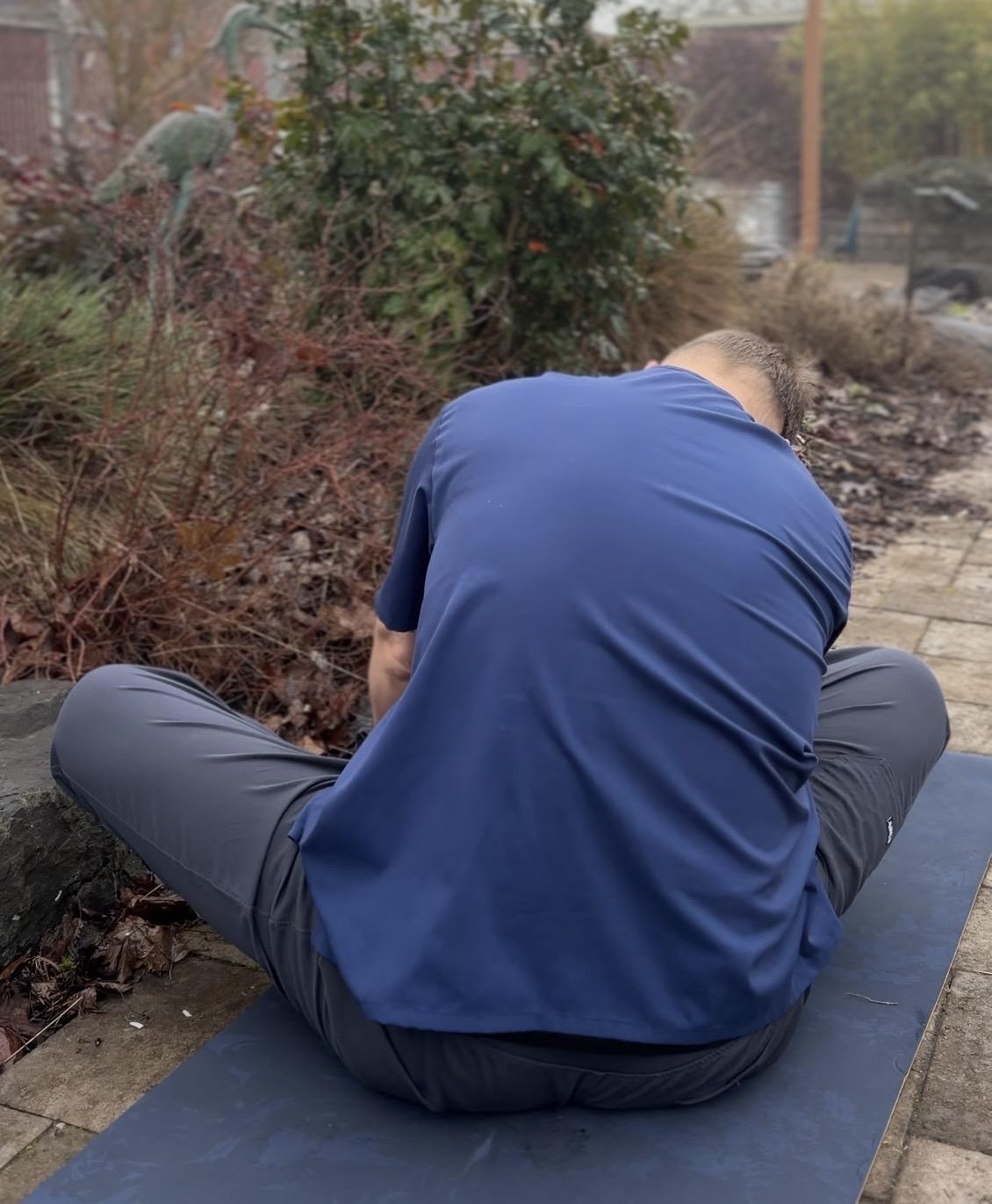
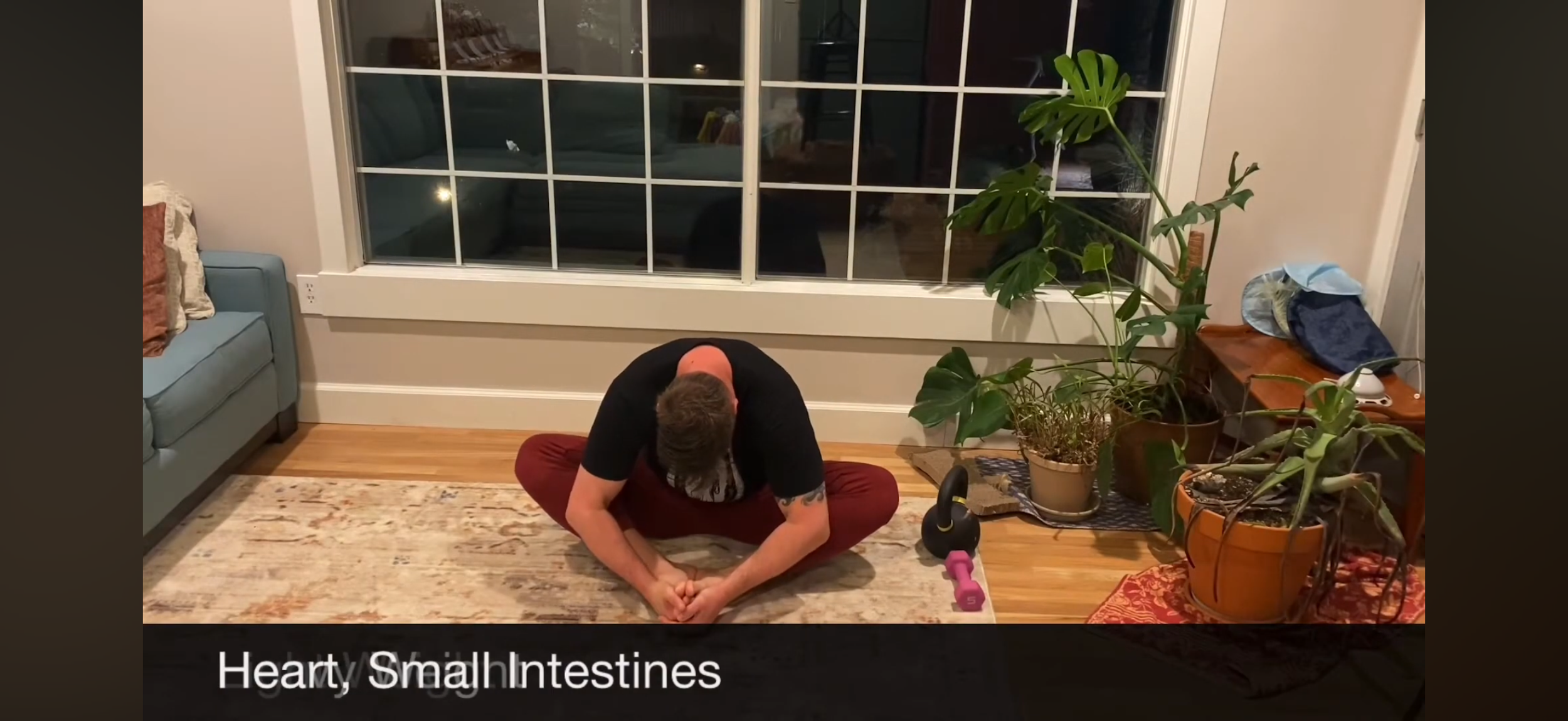
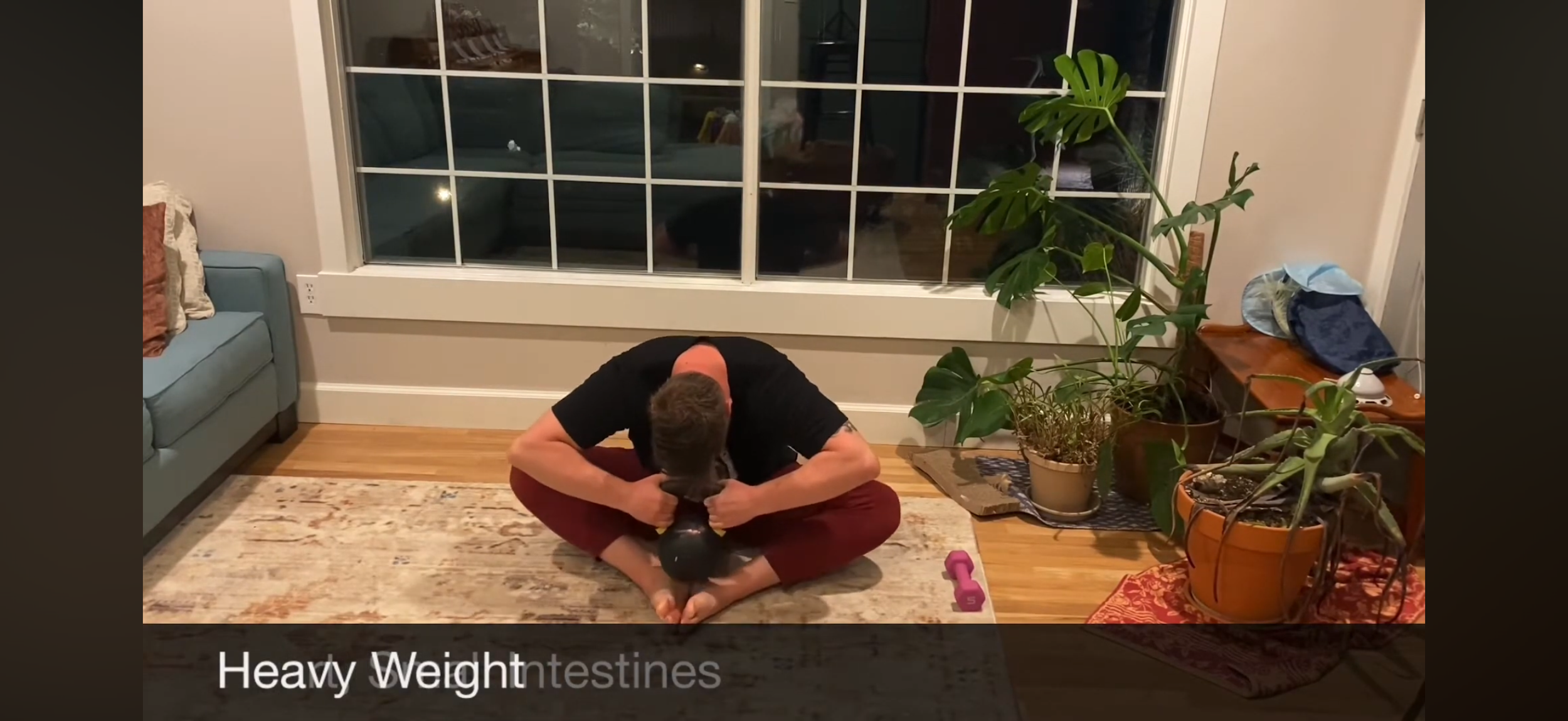
Here is a quick test you can try to see whether your neck is contributing to your dizziness. The video at the top of this article demonstrates it.
That movement stretches those very small muscles running from your first cervical vertebra up into the occipital area. If you feel tightness, tension, or pain in the back of your neck as you tuck, that is a clue your neck may be part of what is driving your dizziness.

What to Do If Your Neck Is the Culprit

If the chin tuck reproduces tension or pain at the base of your skull, a few simple things can help — and they double as a way to confirm the connection:

Stretch the neck gently

Slow, easy neck stretches — including the chin tuck itself — can release the suboccipital muscles over time.

Use gua sha at the occiput

Light scraping along the base of the skull, where those muscles attach, can help ease the tension.

Watch what happens to the dizziness

As that neck pain and tightness settles down, you should notice your dizziness or lightheadedness ease too. That relationship is the tell: when the neck calms, the head clears.
In the clinic I often combine hands-on work and acupuncture for the neck with these home practices, because what you do consistently at home is what keeps the muscles — and the dizziness — from creeping back.

When to Get It Checked Out

Dizziness has many possible causes, and not all of them are the neck. If your dizziness is new, severe, or sudden — or comes with symptoms like slurred speech, weakness, double vision, fainting, a bad headache, or hearing loss — please get evaluated by a medical professional promptly. The self-test here is a helpful starting point, not a diagnosis. If you are unsure what is driving your symptoms, that is exactly the kind of thing we can help sort out in the clinic.

Related Reading

Share on

Will Sheppy, Founder and Acupuncturist at Valley Health Clinic
Willard Sheppy
Willard Sheppy is a licensed acupuncturist (LAc) and Founder of Valley Health Clinic specializing in using Traditional Chinese Medicine to treat acute injuries and chronic conditions, and to improve sports performance and rehabilitation.

Recent Posts

Meniere’s vs. BPPV vs. Vestibular Disorders: How Vertigo Conditions Are Different

16 minutes read

Meniere’s vs. BPPV vs. Vestibular Disorders: How Vertigo Conditions Are Different

Willard Sheppy Dipl. OM, LAc, BS

Willard Sheppy is a licensed acupuncturist (LAc) and Founder of Valley Health Clinic specializing in using Traditional Chinese Medicine to treat acute injuries and chronic conditions, and to improve sports performance and rehabilitation.

Table of Contents

Not all vertigo is the same. The duration of an attack, what sets it off, and whether your hearing changes are the clues that tell these conditions apart — and point toward the right treatment.

Quick answer

The fastest way to tell vertigo conditions apart is by three things — how long an attack lasts, what triggers it, and whether your hearing changes. BPPV lasts seconds and is triggered by head position, with no hearing change. Meniere’s lasts 20 minutes to hours and brings hearing loss, ringing, and ear fullness. Vestibular neuritis and labyrinthitis last days; neuritis spares hearing while labyrinthitis doesn’t. Vestibular migraine varies and carries migraine features like light, sound, and visual-motion sensitivity — often without a headache.

“Vertigo” is a symptom, not a diagnosis

In years of clinical practice, I’ve watched the same scene play out again and again. A patient comes in carrying a diagnosis — usually Meniere’s disease — that they were handed after a single appointment, and when I ask them to describe what actually happens, the story doesn’t fit the label. They describe quick spins that last seconds, not the long, arduous attacks of true Meniere’s. Or they describe daily floating with no hearing change at all. The word “vertigo” had become a destination instead of a starting point.
This matters more than it might seem. Benign paroxysmal positional vertigo, Meniere’s disease, vestibular neuritis, labyrinthitis, and vestibular migraine all produce spinning, nausea, and the loss of footing. But underneath, they are entirely different problems — a loose crystal in a canal is not a fluid-pressure disorder, and neither is an inflamed nerve or a migraine brain. Treating all of them as “vertigo” is like treating every fever as the flu. The good news is that you don’t need a laboratory to start sorting them. You need to understand the ear, and you need three questions.

Vertigo is the room spinning — a false signal of motion. Dizziness is “I’m not spinning, but I don’t feel steady.” Telling those two apart is where the entire investigation begins.

How the parts of the ear shape the kind of dizziness you feel

Before we sort the conditions, it helps to know that the ear has three parts, and each one produces a different flavor of symptom. Where the problem sits largely determines what you experience.

Outer ear

The outer ear is the canal you can see — swimmer’s-ear and childhood-ear-infection territory. On its own it’s essentially just a tube and doesn’t affect balance. But here’s a subtlety most textbooks skip: people with chronic vertigo often have tenderness on the outer ear on the affected side. It isn’t causing the spinning, but it’s a clue — and calming the pain around the ear is often an easy early win.

Middle ear

The middle ear sits behind the eardrum — the small bones and the Eustachian tube that pressurizes everything. When it inflames, you get fullness, congestion, and a muffled, pressurized feeling that affects hearing. Because the sinuses and throat connect directly into this space through the Eustachian tube, congestion and allergy reach the ear from here — which is why so much of vertigo care runs through the sinuses and the gut.

Inner ear

The inner ear sits deep in the skull and is where true vertigo lives. It has two parts that explain why symptoms split apart the way they do. The cochlea handles hearing; the labyrinth — the fluid-filled semicircular canals — handles motion and balance. They’re connected, but they can fail separately. That’s why you can lose hearing with intact balance, or have crystals tumbling in the canals causing dizziness with no hearing change at all. When you understand that the cochlea governs hearing and the labyrinth governs motion, the whole list of vertigo conditions starts to organize itself by which structure is involved.

The three questions that sort almost everything

With that anatomy in mind, nearly every vestibular condition narrows down by answering three things honestly:

How long does a single attack last?

Seconds point to a loose crystal. Twenty minutes to hours points to fluid pressure. Days of constant spinning point to an inflamed nerve.

What sets it off?

Rolling over in bed or tipping your head back is the signature of a crystal. Spontaneous, out-of-nowhere attacks point elsewhere.

Does your hearing change?

Ringing, muffling, or fullness during an attack implicates the cochlea — and strongly suggests Meniere’s over a purely mechanical problem.

BPPV — the loose crystal

BPPV is the most common cause of vertigo, and it is purely mechanical — a labyrinth problem, not a fluid or hearing problem. Tiny calcium crystals called otoconia, which normally sit in the gravity-sensing organs, break loose and tumble into one of the semicircular canals. When you move your head into a certain position, those misplaced crystals drag the canal fluid the wrong way, and your ear fires off a brief, intense signal that you’re spinning when you’re not.
Duration: very short, typically 30 to 60 seconds.
Trigger: position changes — rolling over in bed, looking up, bending down.
Hearing: unchanged. No ringing, no fullness. The direction the world spins even tells a trained eye which canal the crystal landed in — a diagonal, upward-beating pattern is the fingerprint of the posterior canal, where BPPV usually lives.

Research

Duration is the cleanest dividing line (StatPearls, 2024)
BPPV episodes endure roughly 30 to 60 seconds, while Meniere’s attacks may last hours, vestibular neuritis or labyrinthitis can run for several days, and central causes may be constant. Episode length alone separates most cases.
Because the problem is a misplaced crystal, the fix is mechanical too. A trained provider can perform a repositioning maneuver — the Epley is the best known — that walks the crystal back where it belongs. If your spins last seconds and fire when you roll over, this is the first thing to rule in or out, because it’s the most directly treatable of the group.

Meniere’s disease — the fluid disorder

Meniere’s is the one most people have heard of, and the one most often misapplied. Its hallmark is endolymphatic hydrops — a buildup of fluid pressure inside the membranous labyrinth. But here’s the nuance I want you to hold: that fluid buildup shows up on imaging in ears that have no symptoms at all. So hydrops is a fingerprint of the condition, not a complete explanation. Meniere’s is better understood as a final common pathway that several different triggers can lead to — and because it involves both the labyrinth and the cochlea, it hits balance and hearing together.
Duration: the defining feature — 20 minutes to several hours, never just seconds.
Trigger: usually spontaneous, though stress, salt, and pressure changes raise the odds.
Hearing: the giveaway. True Meniere’s brings a fluctuating low-frequency hearing loss, tinnitus, and a distinctive fullness or pressure in the affected ear — the cochlea announcing itself alongside the labyrinth.

Research

The formal diagnostic criteria (Bárány Society)
Definite Meniere’s requires two or more spontaneous vertigo episodes each lasting 20 minutes to 12 hours, audiometrically documented low-to-mid frequency sensorineural hearing loss in the affected ear, and fluctuating aural symptoms — hearing, tinnitus, or fullness — in that same ear. Many people carry an MD diagnosis without ever meeting these criteria.
If you’ve been told you have Meniere’s but you’ve never had true room-spinning lasting longer than 20 minutes, or your hearing has never changed during an episode, it’s worth revisiting the diagnosis. The treatment paths diverge sharply, and being on the wrong one costs you time.

The botanical approach

Bai Zhu Balance — our flagship formula for the Meniere’s pattern
For the classic Meniere’s picture — damp, heat, and stagnation together, with that top-heavy fullness and fluid congestion — Bai Zhu Balance is the formula I reach for first. It’s built to resolve dampness, dissolve phlegm, and settle the rising, stress-driven pattern that sits underneath so many attacks, working from the inside the way breathing and foot soaks work from the outside.
Work with Will Sheppy, L.Ac. through Gut Brain Synchrony — join the community free

Vestibular neuritis & labyrinthitis — the inflamed nerve

These two are usually viral, and they’re where understanding the inner ear’s two structures pays off directly. Both involve inflammation deep in the inner ear, often following an upper respiratory infection — because the structures sit so deep, these tend to be viral rather than bacterial. The difference between them comes down to a single question: is hearing involved?
Vestibular neuritis is inflammation of the vestibular nerve — the balance nerve — alone. The labyrinth’s motion side is inflamed, so you get severe, continuous vertigo, but the cochlea is untouched, so hearing is spared. Pure spinning, no hearing change.
Labyrinthitis is inflammation of the whole labyrinth — motion side and cochlea together. So you get the same severe vertigo plus hearing loss and tinnitus. When hearing drops alongside the spinning in an acute viral attack, you’re looking at labyrinthitis rather than neuritis.
Duration: the longest of the group — severe, continuous vertigo lasting days, not minutes.
Trigger: a single acute onset, often after a virus, rather than recurring episodes.
Intensity is the tell — this is not a quick spin, it’s an overwhelming, sustained sense of motion that leaves people unable to stand.
The acute phase is brutal but usually self-limiting. What lingers afterward — and what so often gets missed — is the unsteadiness left behind once the nerve calms down. That residual imbalance is a separate problem from the original storm, and it responds to a completely different, slower approach focused on retraining balance.

When the violent attacks fade and you’re left with a background unsteadiness, that’s not failure. That’s often the first sign you’re getting better — the storm has passed, and the slower work of rebuilding balance begins.

Vestibular migraine — the migraine brain

Vestibular migraine is where the dizziness originates in the brain’s processing rather than the ear’s hardware — and it behaves like a migraine, because it is one. It is the great imitator, able to mimic almost any of the others, which is exactly why it gets missed. The key to recognizing it is to look for the fingerprints of migraine itself.
Crucially, you do not need a headache to have it. Many people with vestibular migraine have little or no head pain. Instead, look for the other classic migraine features traveling with the dizziness:

Sensory sensitivity

Sensitivity to light, sound, and especially visual motion — grocery-store aisles, scrolling screens, busy patterns, and fluorescent or flickering light become genuinely intolerable. This visual-motion sensitivity is a migraine hallmark.

Migraine triggers

The same provocations that drive headache migraines — sleep disruption, skipped meals, certain foods, hormonal shifts, stress let-down — set off the dizziness.

A personal or family history of migraine

This is one of the strongest clues; vestibular migraine rarely appears in someone with no migraine background.

Aura-like features

Visual aura, nausea, and the build-and-fade arc of a migraine episode — minutes to days — rather than the fixed duration of Meniere’s or BPPV.
Hearing is usually spared, though some people report fullness, which is part of why it gets confused with Meniere’s. The two overlap and can even coexist — and when they travel together, treating the migraine pattern often quiets the vertigo as well.

Vertigo conditions at a glance

Here is the same information side by side — the quickest way to locate where your own pattern fits.
Condition Duration Trigger Hearing First-line care
BPPV Seconds (30–60s) Head position — rolling over, looking up No change Repositioning maneuver (Epley)
Meniere’s 20 min — hours Often spontaneous; stress, salt, pressure Fluctuating loss, tinnitus, fullness Calm terrain; Bai Zhu Balance
Vestibular neuritis Days, continuous Single viral onset Spared Rest, vestibular rehab
Labyrinthitis Days, continuous Single viral onset Loss + tinnitus Rest, vestibular rehab
Vestibular migraine Minutes — days Sleep, food, light, hormones Usually spared Migraine management

Same symptom, different terrain

Here is the thread that runs through all of these. The ear is the hardware, but the terrain it sits in is the body. A loose crystal is mechanical and gets a mechanical fix. But the recurring, fluctuating conditions — Meniere’s and vestibular migraine especially — are aggravated by the same systemic forces: stress and an overactive sympathetic nervous system, inflammation from allergy or autoimmunity, fluid and dietary patterns, and the state of the neck. We can’t see inside the inner ear in real time, but we can read the rest of the body, and it’s a reasonable bet that what’s happening across the whole system reflects what’s happening in that tiny ear.
This is why the same diagnosis behaves so differently from person to person, and why naming the condition correctly is only the first step. Once you know which problem you’re working with, the real question becomes: what in your terrain keeps tipping it over? That’s the question we spend our time on — restoring the conditions where balance can hold, rather than only chasing the spin after it arrives.

Your next step

Name it correctly, then treat the terrain
The right diagnosis points you toward the right care. Inside Gut Brain Synchrony, you can work directly with Will Sheppy, L.Ac. — learning the full vertigo map, sorting your own pattern, and building a plan for the terrain underneath your symptoms.
 Work with Will Sheppy, L.Ac. through Gut Brain Synchrony — join the community free

Bai Zhu Balance

Ancient Wisdom for Modern Balance
The natural supplement designed to treat Ménière’s disease at its root—relieve vertigo, reduce fluid buildup, calm inflammation, and restore clarity.

References

Palmeri R, Kumar A. Benign Paroxysmal Positional Vertigo. StatPearls, NCBI Bookshelf, 2024. NBK470308
Lopez-Escamez JA, et al. (2015). Diagnostic criteria for Meniere’s disease. Journal of Vestibular Research, 25(1), 1–7. doi:10.3233/VES-150549
Muelleman T, et al. (2017). Dizziness: Approach to Evaluation and Management. American Family Physician, 95(3), 154–162.
Watanabe Y, et al. (2022). Relationship Between the Onset of Meniere’s Disease and Sympathetic Hyperactivity. Frontiers in Neurology, 13, 804777. doi:10.3389/fneur.2022.804777

Share on

Will Sheppy, Founder and Acupuncturist at Valley Health Clinic
Willard Sheppy
Willard Sheppy is a licensed acupuncturist (LAc) and Founder of Valley Health Clinic specializing in using Traditional Chinese Medicine to treat acute injuries and chronic conditions, and to improve sports performance and rehabilitation.

FAQ's

Can you have BPPV and Meniere’s at the same time?
Yes. They’re separate problems — a loose crystal versus a fluid-pressure disorder — and one ear can have both. It’s also common for the repositioning maneuver that fixes BPPV to leave behind the longer attacks of Meniere’s, which is why a careful history matters.
The three questions are the starting point: duration, trigger, and whether your hearing changes. True spinning that comes with ear fullness or hearing change points to the inner ear. Lightheadedness or unsteadiness without spinning more often points to the neck, the eyes, blood pressure, or the nervous system. Any new vertigo with neurological symptoms — slurred speech, weakness, double vision, severe headache — needs urgent medical evaluation.
No — and this is why it’s so often missed. Many people have the dizziness, the light and sound sensitivity, and the visual-motion intolerance with little or no head pain. A personal or family history of migraine is one of the strongest clues.
Both are usually viral inflammation deep in the inner ear, and both cause days of severe, continuous vertigo. The difference is hearing: neuritis affects only the balance nerve, so hearing is spared, while labyrinthitis also reaches the cochlea, so it adds hearing loss and ringing.
Common triggers include stress, salt and fluid shifts, barometric-pressure and seasonal changes, poor sleep, and inflammation — but which ones matter most depends on your individual pattern. We cover this in detail in our companion article, “What Triggers Meniere’s Disease? Common Causes and How to Avoid Flare-Ups.” Learning your own triggers is the heart of preventing flares.

Recent Posts

What Triggers Meniere’s Disease? Common Causes and How to Avoid Flare-Ups

15 minutes read

What Triggers Meniere’s Disease? Common Causes and How to Avoid Flare-Ups

Willard Sheppy Dipl. OM, LAc, BS

Willard Sheppy is a licensed acupuncturist (LAc) and Founder of Valley Health Clinic specializing in using Traditional Chinese Medicine to treat acute injuries and chronic conditions, and to improve sports performance and rehabilitation.

Table of Contents

Meniere’s may be unpredictable, but it is rarely random. The triggers that tip you over depend on your own terrain — and once you learn to read yours, the attacks stop feeling like ambushes.

Quick answer

The most common Meniere’s triggers are stress, salt and fluid shifts, barometric-pressure and seasonal changes, poor sleep, and inflammation from allergies or autoimmunity. But which triggers set off your attacks depends on your individual terrain — stress-driven vertigo tends to feel like a panic attack, a damp and congested pattern responds most to fluid and diet, and a hot, inflamed pattern flares with allergies and weather. Finding your pattern is how you prevent flares.

Unpredictable is not the same as random

The cruelest part of Meniere’s disease isn’t the spinning. It’s the unpredictability — the sense that an attack can drop out of a clear sky and steal your afternoon, your drive home, your evening. But here is the single most powerful shift I can offer you: unpredictable is not the same as random.
If the inner ear were simply broken, you would have no good days. But Meniere’s has good days and bad days — and the difference between them is rarely luck. It’s terrain. When your body is calm, rested, and in balance, the ear holds steady. When the terrain gets loaded — by stress, by salt, by a poor night’s sleep, by a front rolling in — the threshold drops and the ear tips over. Triggers are the levers that load the terrain.

If the ear were simply broken, you’d have no good days. The fact that good days exist tells you the terrain can be tipped one way or the other — and that’s exactly where the leverage is.

Your terrain decides which triggers matter

Here is the idea that changes everything about managing this condition: not everyone’s triggers are the same, because not everyone’s terrain is the same. Two people can both have Meniere’s and be set off by completely different things — because underneath, their bodies are running different patterns. In Chinese medicine we read those patterns by how they feel and behave, and each one has its own signature trigger.
Broadly, three constitutional pictures show up again and again, and each is loaded by a different lever:
Most people are a blend, with one dominant. The goal isn’t to fear every item on a generic trigger list — it’s to figure out which lever loads your terrain fastest, and pull that one first. Here’s how the three patterns line up:
Your pattern How it feels Main trigger Where to start
Stressed / wound-up Vertigo feels like a panic attack — racing heart, dread; flares with stress Stress & nervous system Calm the nervous system: breath, foot soaks
Damp / congested Heavy, foggy, phlegmy, ear fullness; swollen scalloped tongue Salt, fluid & diet Cut phlegm-forming foods; Bai Zhu Balance
Hot / inflamed Runs warm and reactive; worse in heat and allergy season Allergies & barometric pressure Cool and calm inflammation; manage allergies

Trigger 1 — Stress, and the panic-attack pattern

If I had to name one trigger above all others, it’s stress — and the research now backs what patients have reported for decades. Just before an attack, the sympathetic nervous system on the affected side becomes strongly overactivated. That’s why, for this pattern, the vertigo so often feels like a panic attack — the racing heart, the sweating, the surge of dread arriving right alongside the spinning. The stress response and the ear are wired together. If your attacks come on during high-pressure stretches, big emotions, or the moment you finally stop and crash after pushing too hard, this is very likely your dominant pattern.

Research

Stress nearly triples attack odds (longitudinal study, 2017)
A large longitudinal study tracking over 1,000 people through a daily app found the odds of a Meniere’s attack were nearly three times higher on days with unusual or stressful events, with risk rising for each increase in reported stress — detectable both 24 hours before and after.

Your terrain

If your dizziness carries that panicky, adrenaline-flooded quality and tracks with stress, the lever to pull first is the nervous system — not the salt shaker.

How to work with it

The goal is to bring the nervous system out of sympathetic overdrive. Slow nasal breathing with a long exhale — in for four, out for eight, humming on the way out — is free and you can do it right now. Warm foot soaks pull that top-heavy, rising energy back down. Gentle, daily, consistent practice beats any heroic one-off: what you do most of the time matters more than what you do some of the time.

Trigger 2 — Salt and fluid, and the damp pattern

Because Meniere’s involves fluid pressure in the inner ear, sodium is the classic dietary lever — too much salt encourages fluid retention. But here’s the nuance: dietary change helps some people far more than others, and the people it helps most are the ones running a damp, congested pattern. This is the person who feels heavy, foggy, and thick-headed, with a lot of phlegm, a drippy or stuffy nose, and that waterlogged fullness in the ear. The classic tongue sign is a swollen body with teeth-marks scalloped along the edges — the body telling you it’s holding too much fluid.

Research

Why Meniere’s responds to almost anything — and what that means
Meniere’s shows a striking 60–80% response rate to almost any intervention, partly reflecting its naturally fluctuating, remitting course. This is exactly why chasing single fixes is unreliable — and why matching the intervention to your actual pattern, then tracking your good-days-to-bad-days ratio over time, is the more honest measure of progress.

Your terrain

If you’re damp and congested — heavy, phlegmy, foggy, with ear fullness — fluid and diet are your fastest levers. This is the pattern where cutting the phlegm-forming foods pays off most.

How to work with it

watch sodium, and cut the foods that generate phlegm and congestion — dairy, heavy greasy foods, anything that makes you clear your throat or reach for a tissue. If it congests your sinuses, it’s likely congesting your ear, since the two connect directly through the Eustachian tube. Lean toward gently cooling foods — the green things that grow above the ground. Celery is a quiet favorite: cooling, a natural mild diuretic, high in fiber. Keep it sustainable, not punishing.

The botancal approach

Bai Zhu Balance — built for the damp Meniere’s pattern
For the damp, congested picture especially — the fullness, the phlegm, the foggy heaviness — Bai Zhu Balance is the formula I reach for first. It’s built to resolve dampness, dissolve phlegm, and drain the excess fluid that loads this terrain, while settling the rising, stress-driven pattern underneath. It works from the inside the way breathing and foot soaks work from the outside.

Work with Will Sheppy, L.Ac. through Gut Brain Synchronyjoin the community free

Trigger 3 — Allergies and weather, and the heat pattern

If you’ve ever felt an attack coming on as a storm front rolls in, or noticed you flare every spring, you’re reading a real pattern. The inner ear is pressure-sensitive, and changes in barometric pressure, temperature, and humidity are well-documented aggravators — and they hit one constitution hardest: the hot, inflamed pattern. This is the person who runs warm and reactive, whose symptoms worsen in heat and in allergy season, often with sinus inflammation feeding the ear. Allergic and barometric triggers tend to cluster in this heat-and-inflammation terrain.

Research

Low pressure and higher temperature correlate with attacks
Research has found Meniere’s attack onset significantly correlated with lower atmospheric pressure and higher temperature — with one analysis placing attack risk roughly 1.3 times higher when atmospheric pressure drops below 1013 hectopascal. The seasonal pattern of more attacks in warmer months fits the same heat-driven picture.

Your terrain

If you flare in the heat, in spring, or when the barometer drops — and you tend to run warm and reactive — allergies and weather are your levers, and cooling and calming inflammation is the work.

How to work with it

You can’t change the weather, but you can use the forecast as an early-warning system. When a pressure drop or heat wave is coming, that’s the day to be extra consistent with your calming routine, manage allergies actively if the sinuses feed your ear, and lean harder on the cooling tools. Anticipation turns a trigger you can’t control into one you can prepare for.

My own case is the multifactorial picture sitting in one body — stress, a seasonal heat-and-allergy pattern, phlegm from my diet, and an old ear injury, all stacked together. Because I know my terrain, I know exactly what to do when spring rolls around.

Bai Zhu Balance

Ancient Wisdom for Modern Balance
The natural supplement designed to treat Ménière’s disease at its root—relieve vertigo, reduce fluid buildup, calm inflammation, and restore clarity.

The amplifiers — sleep, fatigue, and inflammation

Two more forces cut across all three patterns and lower everyone’s threshold. The first is fatigue and poor sleep: overwork and broken sleep keep the nervous system revved and the reserves depleted, and a bad night makes you more vulnerable to every other trigger on this list. The second is the inflammatory load itself — allergic or autoimmune. Meniere’s frequently travels with inflammatory and autoimmune conditions, and calming that load downstream often quiets the ear.

Research

The autonomic fingerprint of Meniere’s (Frontiers, 2022)
In 211 patients with Meniere’s, researchers documented a cluster of stress-linked comorbidities: neck and shoulder stiffness (96%), cold extremities (87%), irritable bowel syndrome (73%), tension headache (69%), and migraine (58%). They concluded that just before an attack, the sympathetic nervous system on the affected side is strongly overactivated — tying stress, the gut, and the ear into one connected system.

How to work with it

Protect sleep the way you’d protect medication — same wind-down, same hours. And treat the terrain upstream: the gut-brain axis touches allergy, autoimmunity, and the nervous system all at once, which is why so much of lasting flare prevention runs through digestion and the microbiome

Find your pattern, then pull your lever

Notice what every one of these triggers has in common: none of them is the ear itself. They’re all forces in the wider body that load the terrain the ear sits in. And which lever loads your terrain fastest depends on which pattern you’re running — panicky and stressed, damp and congested, or hot and inflamed.
So the work isn’t to memorize a generic list and live in fear of all of it. The work is to find yours. Keep a simple log for a few weeks — note each attack alongside your stress, sleep, diet, and the weather — and your pattern will surface fast. Then you pull that lever first. This is why two people with the same diagnosis need different plans, and why reading your terrain is the whole game.

Your Next Step

Read your terrain with someone who does this every day
Inside Gut Brain Synchrony, you can work directly with Will Sheppy, L.Ac. — identifying your pattern, mapping your personal triggers, and building a plan that fits the terrain you actually have, not a generic one.
Work with Will Sheppy, L.Ac. through Gut Brain Synchrony — join the community free

References

Schmidt W, et al. (2017). Stress and Unusual Events Exacerbate Symptoms in Meniere’s Disease: A Longitudinal Study. Otology & Neurotology, 38(10), 1532–1539. PMID: 29065087
Watanabe Y, et al. (2022). Relationship Between the Onset of Meniere’s Disease and Sympathetic Hyperactivity. Frontiers in Neurology, 13, 804777. doi:10.3389/fneur.2022.804777
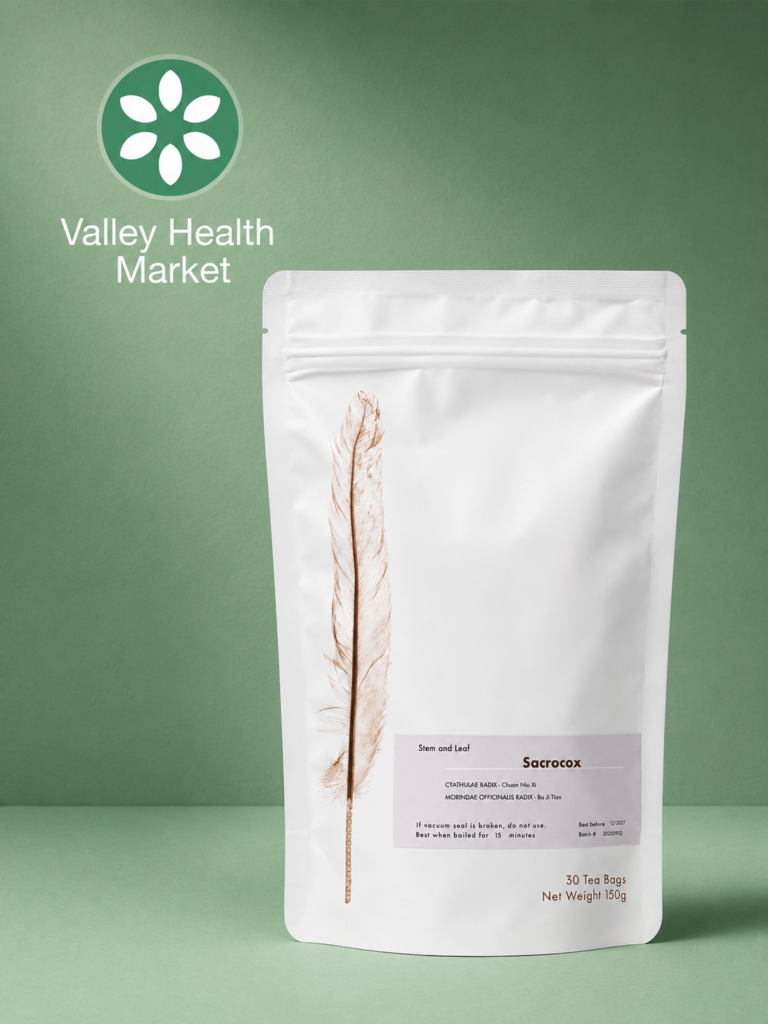
Mohseni-Dargah M, et al. (2023). Meniere’s disease: Pathogenesis, treatments, and emerging approaches. Environmental Research, 238, 116972. doi:10.1016/j.envres.2023.116972
Atmospheric pressure and temperature correlation with Meniere attack. Auris Nasus Larynx, 2022. doi:10.1016/j.anl.2022.07.007

Share on

Will Sheppy, Founder and Acupuncturist at Valley Health Clinic
Willard Sheppy
Willard Sheppy is a licensed acupuncturist (LAc) and Founder of Valley Health Clinic specializing in using Traditional Chinese Medicine to treat acute injuries and chronic conditions, and to improve sports performance and rehabilitation.

FAQ's

What is the most common trigger for Meniere’s attacks?
Stress is the most consistently reported trigger, and research backs it: one large study found attack odds nearly tripled on stressful days. Just before an attack, the sympathetic nervous system spikes — which is why a stress-pattern attack often feels like a panic attack.
For some people, yes — especially those with a damp, fluid-retaining pattern. Honestly, the research on strict salt restriction is mixed, so it helps some people far more than others. It’s a low-risk lever worth trying, but it isn’t a guaranteed fix, and it matters most for the congested pattern rather than the stress-driven or heat-driven ones.
The inner ear is pressure-sensitive, and falling barometric pressure and higher temperatures are documented to correlate with more attacks — risk is roughly 1.3 times higher when pressure drops below 1013 hectopascal. This hits the hot, inflamed pattern hardest. You can’t change the weather, but you can use the forecast as an early-warning system and tighten your routine on those days.
Because your underlying terrain is different. The same diagnosis sits on top of different patterns — stressed, damp, or hot — and each is loaded by a different lever. That’s why a generic trigger list helps less than learning your own pattern, and why two people with Meniere’s often need different plans.
Start by confirming the diagnosis itself — Meniere’s is often confused with BPPV, vestibular neuritis, and vestibular migraine, which are treated very differently. Our companion article, “Meniere’s vs. BPPV vs. Vestibular Disorders,” walks through how to tell them apart by duration, trigger, and hearing change.

Recent Posts