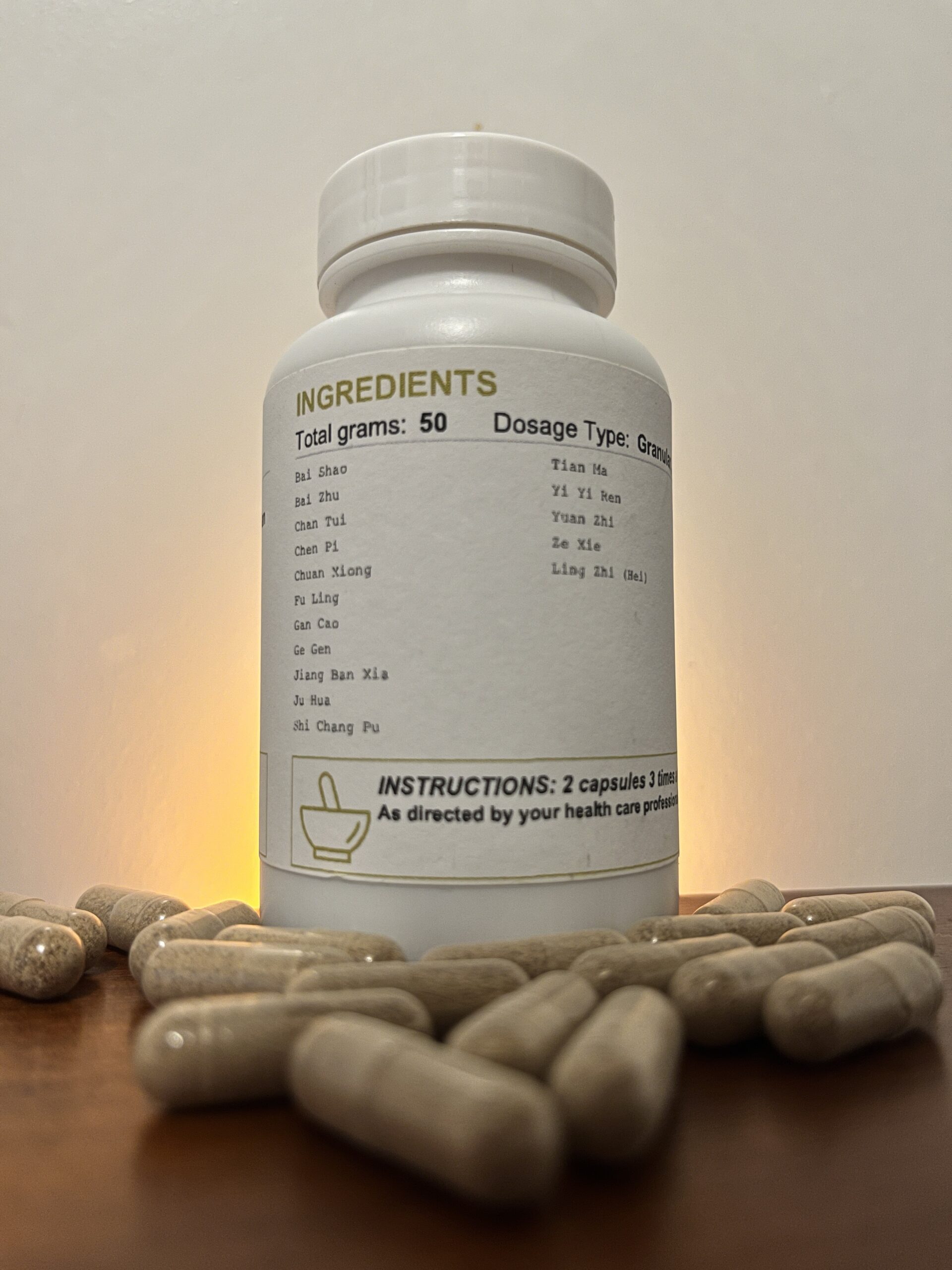
The Best Medicine for Meniere's Disease
Bai Zhu Balance
The best medicine for Meniere’s disease is the one specifically made to treat it. A lot of other formulas generally address vertigo and dizziness but don’t treat the problem that makes Meniere’s so frustrating and unique
What You’ll Learn in This Article
You’ll learn how Dampness, Heat, and Stagnation contribute to your Meniere’s Disease, and how specific herbs in Bai Zhu Balance work together to support your health.
Meniere’s Disease Causes
Meniere's disease is more than just ear problems. Learn how Dampness (fluid), Heat (inflammation), and Stagnation (muslces tension) aggravate symptoms.
Natural Diuretics
Bai Zhu Balance uses gentle herbal diuretics to clear excess fluid from the inner ear. It also supports healthy blood pressure without the harsh side effects of pharmaceuticals
Calming the Nervous System And Reducing Stress
Stress can trigger or worsen Ménière’s attacks. Bai Zhu Balance helps calm your mind, ease anxiety, and reduce nervous system overactivity
FAQ About Bai Zhu Balance
Find answers about Bai Zhu Balance's ingredients, recommended dosage, safety guidelines, and what makes this formula uniquely effective
Bai Zhu Balance
the best medicine for Meniere’s disease is the one specifically made to treat it
If you‘re suffering, don‘t just look for any new treatment for Meniere’s disease… the solution instead can be found in the most ancient of herbs! Bai Zhu, a Chinese herb also known as Atractylodes macrocephala, uses centuries old wisdom and modern research to help address imbalances with Dampness, Heat, and Stagnation in the body that often comes with Meniere‘s Disease. Each herb in the formula plays a specific role in restoring balance, decreasing symptoms, and the frequency of Menieres attacks.
What is the best medicine for Meniere's disease?
The best medicine for Meniere’s disease is the one specifically made to treat it
Bai Zhu Balance
Just like with any pain or sickness, treating something at its source is going to be a lot more effective than treating just the symptoms. So, logically, the best medicine for Meniere’s disease is the one specifically made to treat it.
Bai Zhu Balance is a Traditional Chinese Medicine formula specifically tailored for managing Meniere’s disease, this herb acts as a natural diuretic and addresses the causes of Meniere‘s Disease‘s worst symptoms.
Why?
A lot of other formulas available will typically address only Meniere’s symptoms, like vertigo and dizziness, but don’t treat the problem that makes Meniere’s so frustrating and unique
What is it?
Bai Zhu Balance is a mixture of herbs in a powerful Chinese formula that can help you find symptom relief and restore the overall balance in your body.
How?
Let‘s break down Meniere‘s causes and then how the role of each herb will help you fight it at its source!
Meniere’s Disease Causes
To truly explain Meniere‘s disease, let‘s take a closer look at the root of the illness, and what causes its attacks. Once we understand that imbalance, we can work hard on correcting it!
When there is an imbalance of Dampness, Heat, and Stagnation in your body, there is no flow of movement, energy, and even blood, disrupting so many core body functions! This unevenness causes Meniere‘s, and when left untreated or left to its own devices, it also makes symptoms worse. When there is no flow, when the body‘s temperatures are too hot, and when digestion is interrupted, this will break patterns of the body’s natural ability to decrease the severity and frequency of Meniere‘s attacks.
Addressing Dampness
Clearing and Draining Excess Fluid
Dampness refers to the fluid buildup in the body. In Meniere‘s disease, this often presents as fluid accumulation in the ear, causing fullness and vertigo. By improving digestion, and the overall movement of your body‘s lymphatic system, this formula helps to reduce symptoms.
Combatting Dampness
Natural Remedying Herbs
The Bai Zhu Balance herbal formula is specifically designed to help people with Meniere‘s disease, here are the active herbal ingredients in it to help combat Dampness

Ban Xia
Rhizoma Pinelliae
- Helps target phlegm and fluid congestion in the upper body, such as in the ears, head, or chest.
Chen Pi
Pericarpium Citri Reticulatae
- Helps digestion by reducing bloating and mucus
Bai Zhu
Rhizoma Atractylodis Macrocephalae
- Prevents Dampness from forming in the first place
Natural Diuretics
Natural diuretics that can help with Meniere‘s Disease
Diuretics are commonly prescribed for Meniere’s disease to reduce inner ear fluid buildup. Natural herbal diuretics offer a powerful and gentle alternative to most common Western medicines.
Fu Ling
Poria
- A gentle diuretic herb that helps drain Dampness and calms the mind.
Ze Xie
Rhizoma Alismatis
- A powerful diuretic that enhances urination, promoting the removal of excess fluids from the body and reduces ear fluid buildup and high blood pressure
Yi Yi Ren
Semen Coicis
- A gentle diuretic that helps support digestion, which often gets disrupted with Meniere‘s.
Addressing Heat
Reducing Inflammation and Excessive Vasodilation
Heat is often related to inflammation, but you also may be suffering from it if you‘re feeling flushed or overheated. Heat can often be found in patients with autoimmune conditions with chronic inflammation.
Wind is another important concept. In TCM, Wind describes sudden or unpredictable movement in the body. It’s called Wind because, just like real wind outside, it moves quickly and can change direction without warning. In your body, Wind can cause symptoms that come and go or move around.
Combatting Heat and Wind
Natural Remedying Herbs
To help calm these symptoms, we use specific herbs that clear Heat (reduce inflammation) and extinguish Wind (settle sudden movement), working to restore balance and stability. Addressing both the Heat and Wind patterns together gives a stronger, more lasting approach to managing Ménière’s disease
Tian Ma
Rhizoma Gastrodiae
- Calms the liver and settles Wind, directly addressing vertigo and helps prevent dizziness.
Herbs That Help Inflamation and Dizziness
Ju Hua
Flos Chrysanthemi
- A cooling herb that reduces inflammation, clears Heat, and provides gentle relief for the eyes and head
Addressing Stagnation
Restoring Movement and Decreasing Pain
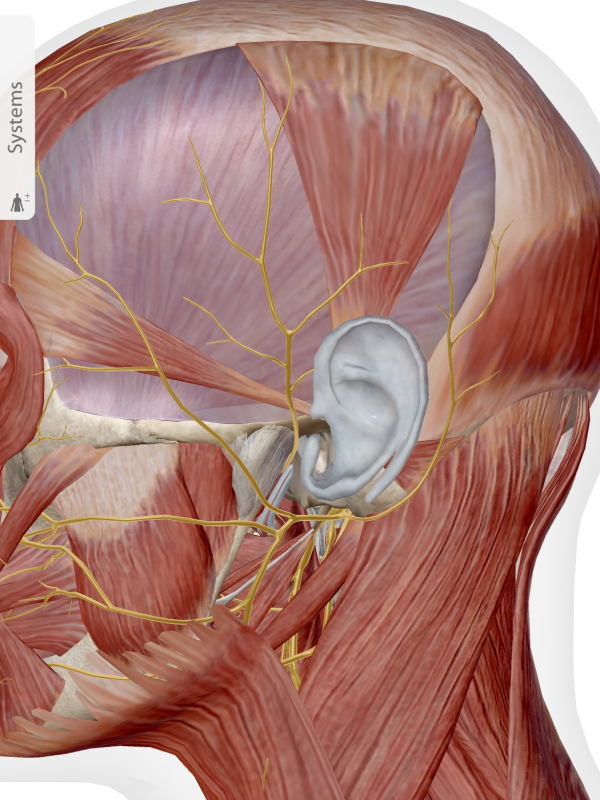
Stagnation refers to restricted movement within the body. Neck pain, migraines, jaw tension, and pressure in the head are all common signs of Stagnation, and these issues can aggravate vertigo, ear fullness, and dizziness. When there is pain or tightness in the neck and head, it can irritate the nerves and blood flow connected to the ear, making Ménière’s symptoms more frequent and intense
Combatting Stagnation
Natural Remedying Herbs
These three herbs help break the cycle of muscle tension, poor circulation, that can aggravate Ménière’s symptoms. By improving blood flow and relaxing muscles in the neck
Ge Gen
Radix Puerariae
- Helps ease tension and improve circulation. Known for relaxing muscles in the head and neck
Chuan Xiong
Ligusticum Striatum
- Invigorates blood flow in the upper body, relieving pressure and supporting the free movement of Qi and blood
Bai Shao
Radix Paeoniae Alba
- Works with Chuan Xiong to ease muscular tension and relieve discomfort, particularly in the neck and head area
Calming the Nervous System
Decreasing Stress
Elevated sympathetic nervous system the “fight or flight” response is closely tied to Ménière’s attacks.
For many people, panic attacks and dizziness team up, creating a vicious cycle. The dizziness makes you feel panicked, and the panic makes the dizziness even worse.
Combatting Stress
Natural Remedying Herbs
These three herbs support a relaxed, calm mind, helping to prevent the nervous system from becoming overactive and exacerbating symptoms.
Shi Chang Pu
Rhizoma Acori
- Opens the orifices and clears the head
Yuan Zhi
Radix Polygalae
- Helps keep you less susceptible to anxiety and stress. Known for its calming effects on the mind.
Ling Zhi
Ganoderma Lucidum
- Strengthens the body to become more resilient under stress
Ready to take control of your balance?
Watch our video on Bai Zhu Balance and discover how this natural formula can help you manage Ménière’s symptoms and support a steadier, healthier life!
Frequently Ask Questions
Learn more about Bai Zhu Balance
In this FAQ, you’ll find answers about Bai Zhu Balance’s ingredients, recommended dosage, safety guidelines, and what makes this formula uniquely effective
Questions About Bai Zhu Balance
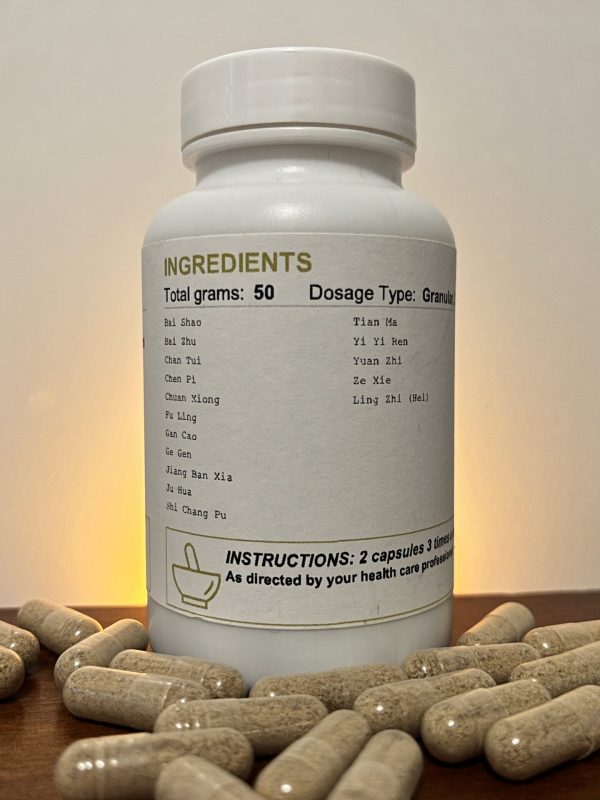
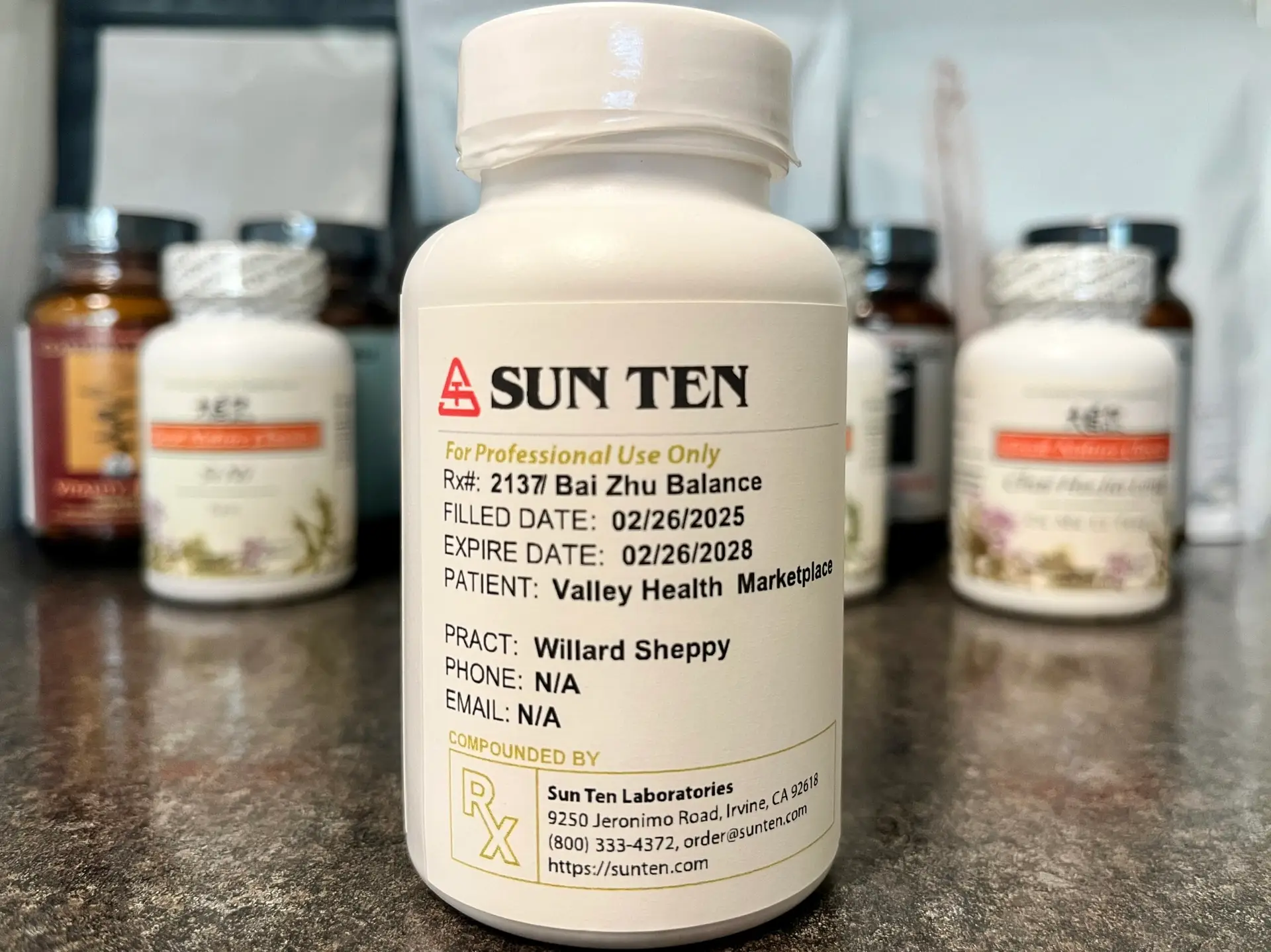
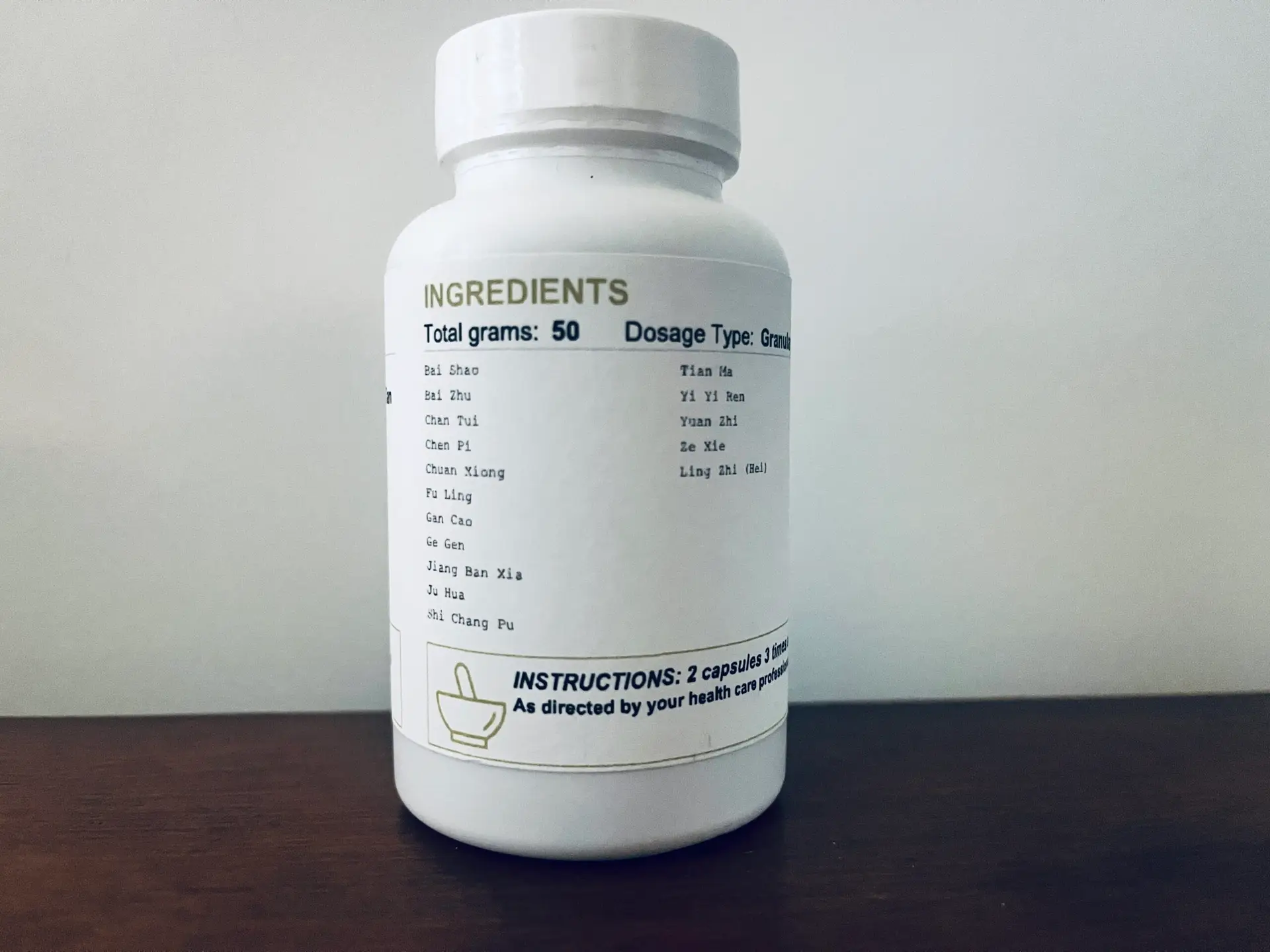
Serving Size: 2 Capsules = 1 gram
Servings Per Container: 50
Total grams: 50g
Dosage Type: Granular, Capsules
Granules of Herbs in Each Bottle
- Bai Shao (White Peony Root) – 3.00g
- Bai Zhu (Atractylodes – White) – 8.88g
- Chen Pi (Citrus Peel) – 3.38g
- Chuan Xiong (Ligusticum) – 3.50g
- Fu Ling (Poria/Hoelen) – 1.00g
- Gan Cao (Licorice) – 0.88g
- Ge Gen (Pueraria) – 4.00g
- Jiang Ban Xia (Pinellia) – 2.88g
- Ju Hua (Chrysanthemum) – 3.00g
- Ling Zhi (Hei) (Ganoderma) – 1.12g
- Shi Chang Pu (Acorus) – 3.75g
- Tian Ma (Gastrodia) – 2.50g
- Yi Yi Ren (Coix) – 1.50g
- Yuan Zhi (Polygala) – 2.62g
- Ze Xie (Alisma) – 8.00g
Total weight: 50g
Other Ingredients
- Gelatin Capsules
- Microcrystalline Cellulose
- Non-GMO Corn Starch
Directions
Take 2 capsules 3 times daily after meals with a glass of warm water or follow your healthcare practitioner’s instructions.
Caution
Consult with your healthcare practitioner if you are nursing, pregnant or taking medications. Keep out of reach of children. Tamper-resistant: do not use if the safety seal is missing or broken.
It is not ment to cure or treat Meniere’s disease
This statement has not been evaluated by the Food and Drug Administration. This product is not intended to diagnose, treat, cure or prevent any disease.
Storage
Keep tightly closed in a cool dry place.
Laboratory tested for microbiological contaminants, heavy metals, & pesticide residues.
Formulated to deliver more active ingredients.
Does not contain: dyes, sugars
Compounded by Sun Ten Laboratories (GMP Certified)
9250 Jeronimo Road, Irvine, CA, 92618
Phone: (800) 333-4372
Email: order@sunten.com
Website: https://sunten.com
Manufactured in a certified GMP factory.
If you’re ready to experience targeted support for dizziness, vertigo, and fluid imbalance, now is the perfect time to start
Order Bai Zhu Balance today and take the first step toward feeling in control again.