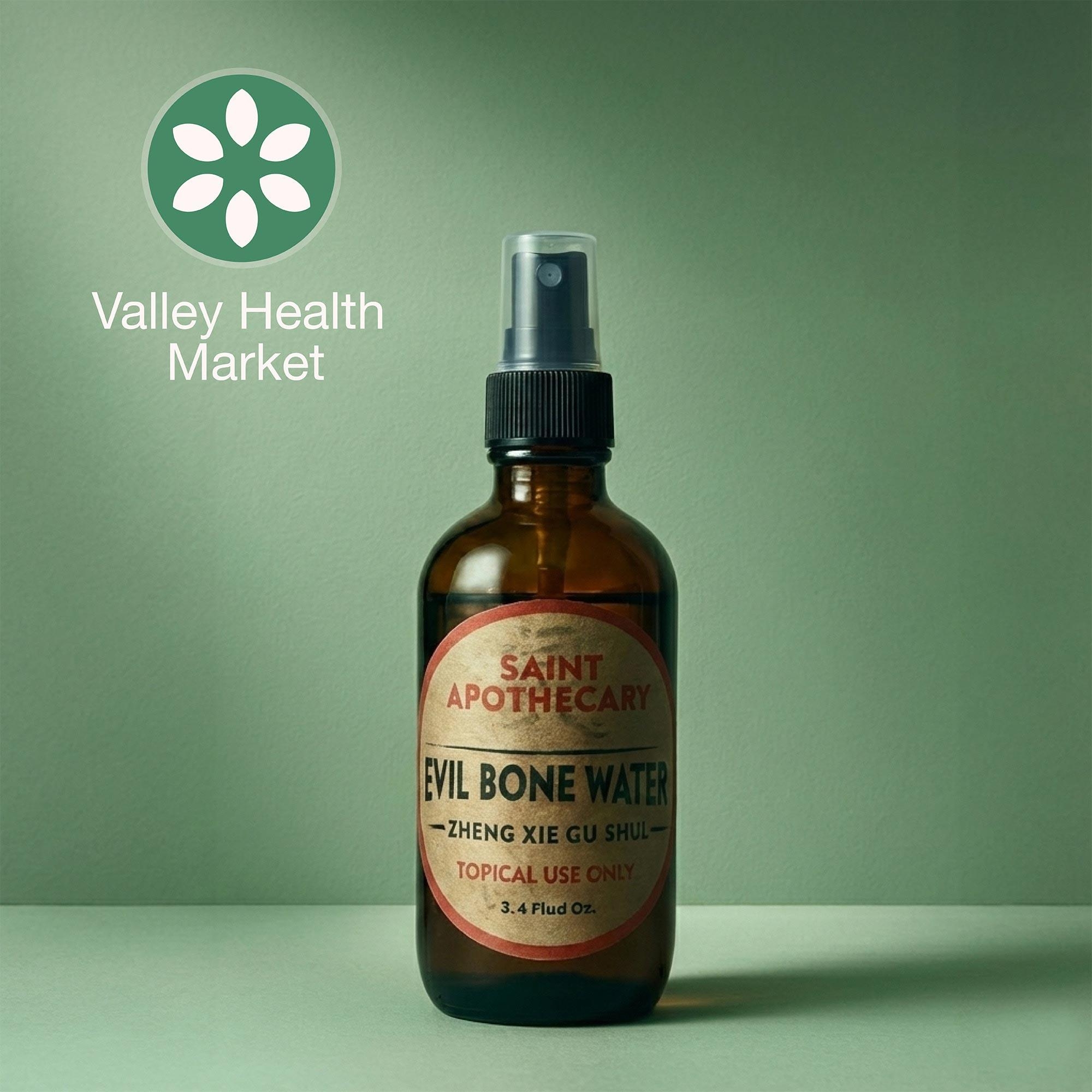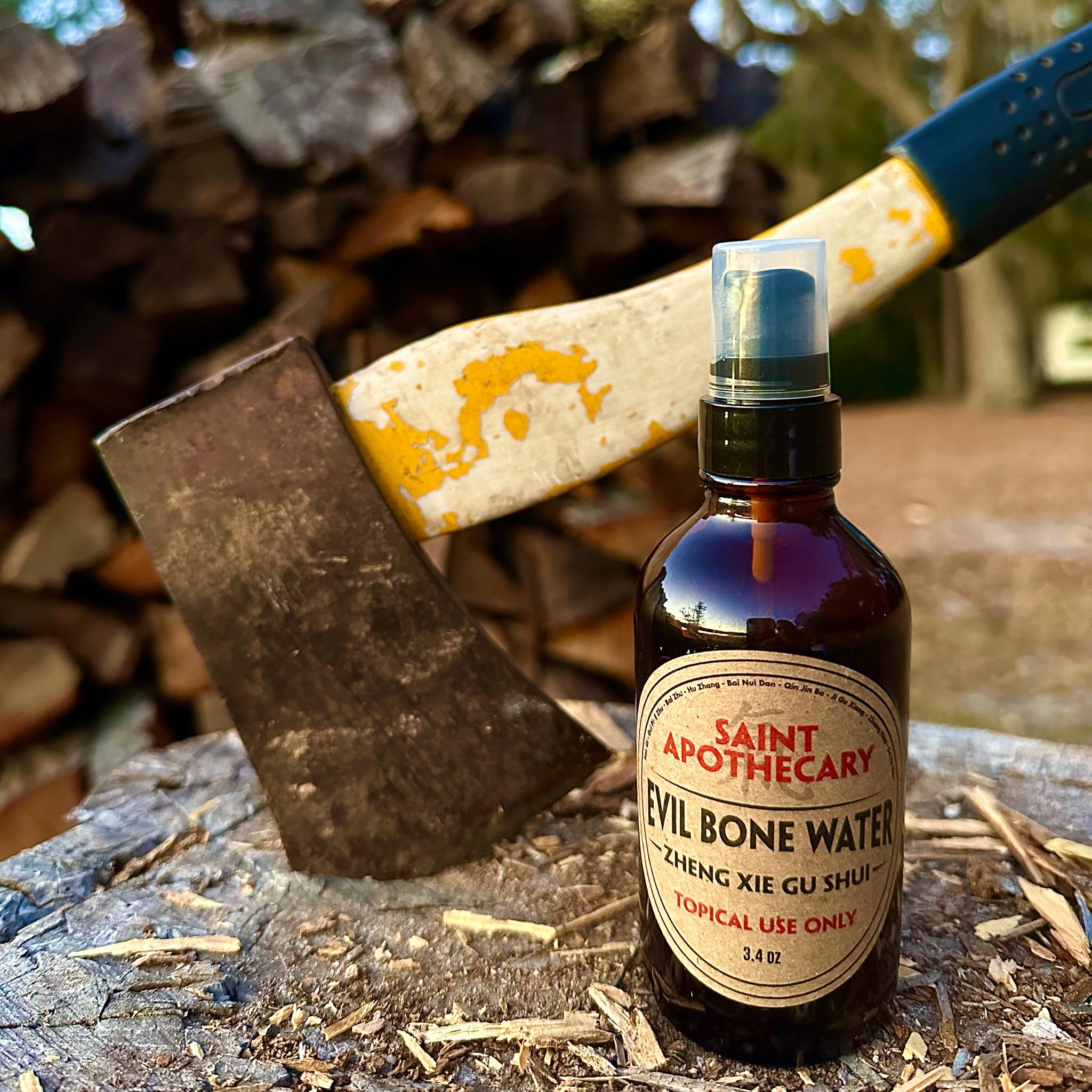
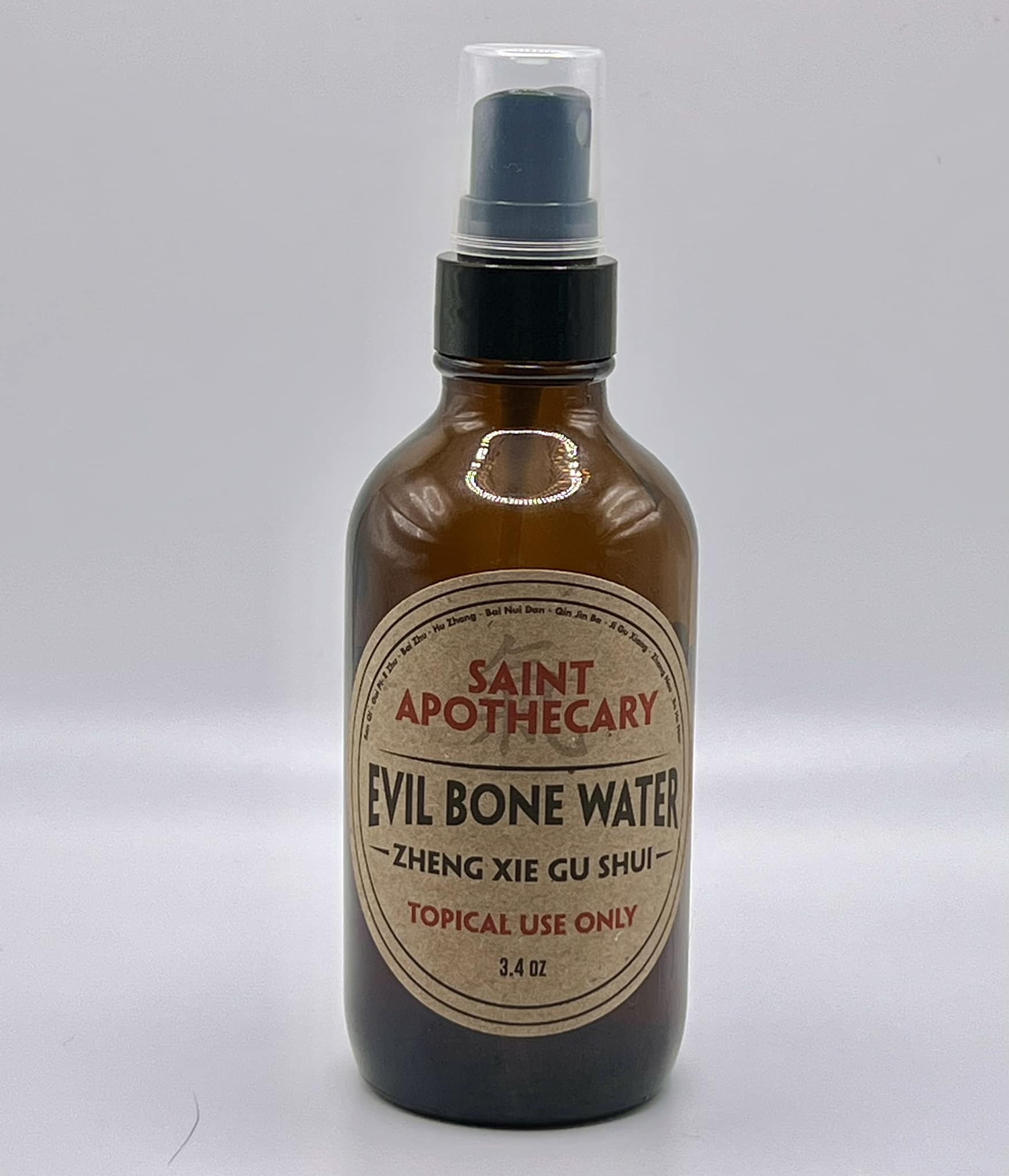
Zheng Gu Shui (Evil Bone Water)

Willard Sheppy Dipl. OM, LAc, BS
Willard Sheppy is a licensed acupuncturist (LAc) and Founder of Valley Health Clinic specializing in using Traditional Chinese Medicine to treat acute injuries and chronic conditions, and to improve sports performance and rehabilitation.
Table of Contents
Evil Bone Water
ZHENG GU SHUI · ZHENG XIE GU SHUI · 正骨水
The Finest Zheng Gu Shui Ever Made
- Imperial-Grade Herbs
- 500-Year Formula
- Double Extracted
- Ships in 3 Days
- Clinic-Tested
- Imperial-Grade Herbs
- Imperial-Grade Herbs
- Imperial-Grade Herbs
- Imperial-Grade Herbs
- Imperial-Grade Herbs
What Is Zheng Gu Shui?
What Does Zheng Xie Gu Shui Mean?
Zhèng (正)
Xié (邪)
Gǔ (骨)
Shuǐ (水)
What Does Zheng Xie Gu Shui Mean?
Zhèng (正)
To rectify, to correct
Xié (邪)
Something that must be expelled (the “evil” that must leave the body)
Shuǐ (水)
What Does Zheng Gu Shui Treat?
- Sprains, strains & impact injuries
- Arthritis & chronic joint pain
- Muscle aches & stiffness
- Bruises & contusions
- Bone fractures (applied above the break)
- Plantar fasciitis & bursitis
- Carpal tunnel syndrome
- Bug bites & skin irritation
- Tension headaches (temples & occiput)
- Menstrual & stomach cramps
"As an acupuncturist with years of clinical practice, Evil Bone Water is the topical I reach for first — because it works for the widest range of pain conditions of anything I've used."
— Willard Sheppy, M.S. Acupuncture & Oriental Medicine, Valley Health Clinic
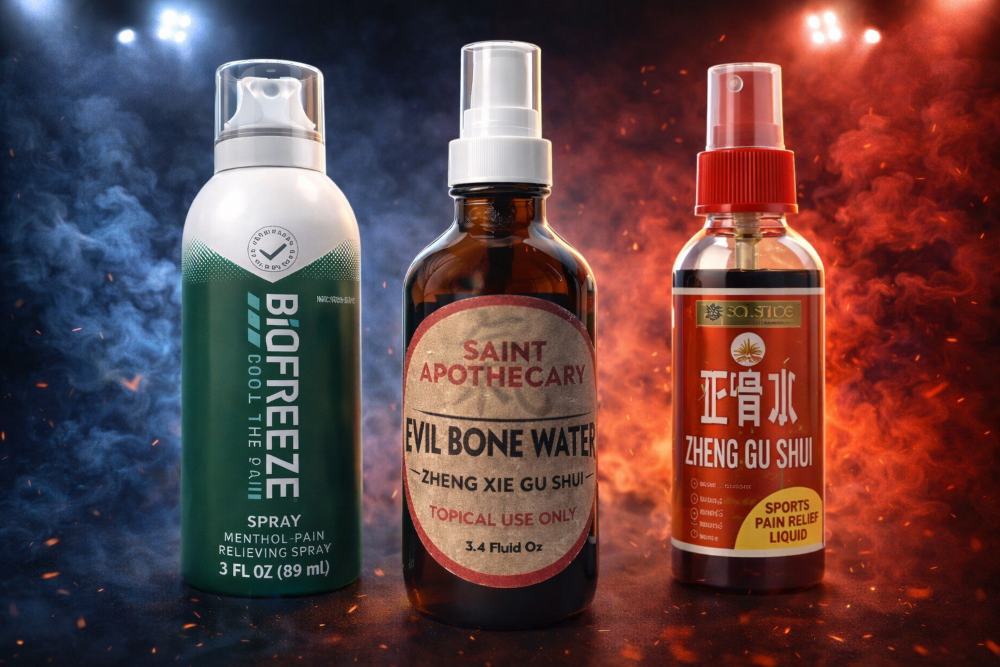
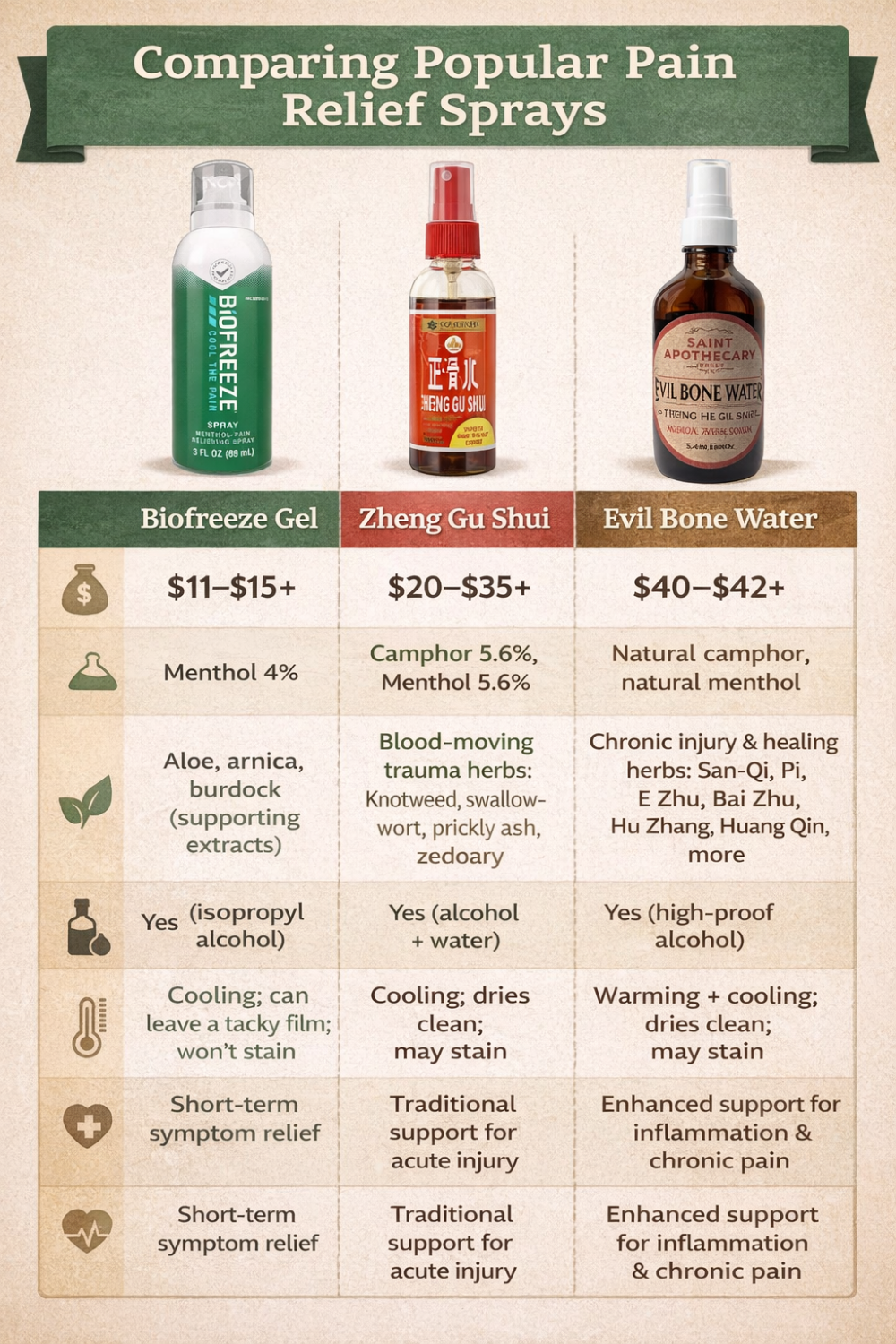
Zheng Gu Shui vs. Evil Bone Water vs. Biofreeze
| Key Features | Biofreeze Pharmaceutical gel | Zheng Gu Shui — Solstice Mass-market formula | Evil Bone Water ★ Imperial-grade Zheng Xie Gu Shui |
|---|---|---|---|
| Price | $11–$15 / 3 oz | $20–$35 / 3 oz | $40 / 3.4 oz (often more) |
| Active Ingredients | Menthol 4% (synthetic) | Camphor 5.6% + Menthol 5.6% | Natural camphor + natural menthol |
| Herbal Content | Aloe, arnica — supporting extracts only | 5 herbs (left from original) | 9 imperial-grade herbs, full formula restored |
| Alcohol Base | Isopropyl alcohol | Alcohol + water | 190-proof Everclear grain alcohol |
| Residue | Leaves filmy, crusty residue on skin and surfaces | Dyes may stain; dries cleanly | Dries clean, no film |
| Healing Support | Temporary symptom relief only | Traditional support for acute injuries | Circulation, inflammation, chronic & acute pain |
| Verdict |
Good for quick cooling and massage lubrication. Not a healing formula.
|
Authentic lineage, but missing key herbs. Better for acute, short-term use.
|
The only Zheng Gu Shui spray I use in clinical practice for lasting tissue healing.
|
How Evil Bone Water Is Made.
Water Decoction
Each batch starts as ~135 gallons of traditional water decoction. Roots, barks, and rhizomes are simmered to extract polysaccharides, glycosides, and hydrophilic compounds. Cinnamon bark (Gui Pi) is pre-soaked in Everclear for 12–72 hours to preserve its volatile oils.
Alcohol Extraction
190-proof Everclear is introduced, bringing the batch to 300+ gallons. As alcohol concentration climbs toward the critical 74–76% threshold, fat-soluble medicinals — camphor, menthol, essential oils — enter solution alongside the water-based compounds.
Clarifying Day
Natural Zhang Nao (camphor) and Bo He Nao (menthol) are carefully dissolved through agitation, air exposure, and patient mixing. Weather matters — temperature and humidity affect how compounds dissolve. This step cannot be rushed.
Double Extraction Finish
Herb dregs are never discarded. They go into fresh alcohol for weeks or months, pulling residual medicine for the next batch generation — a traditional step that ensures maximum potency in every bottle.
Lab Testing
Every herb is microscopically tested for proper variety, contaminants, and potency before use. No animal products, no GMOs, no synthetic pesticides. Sustainably and ethically sourced.
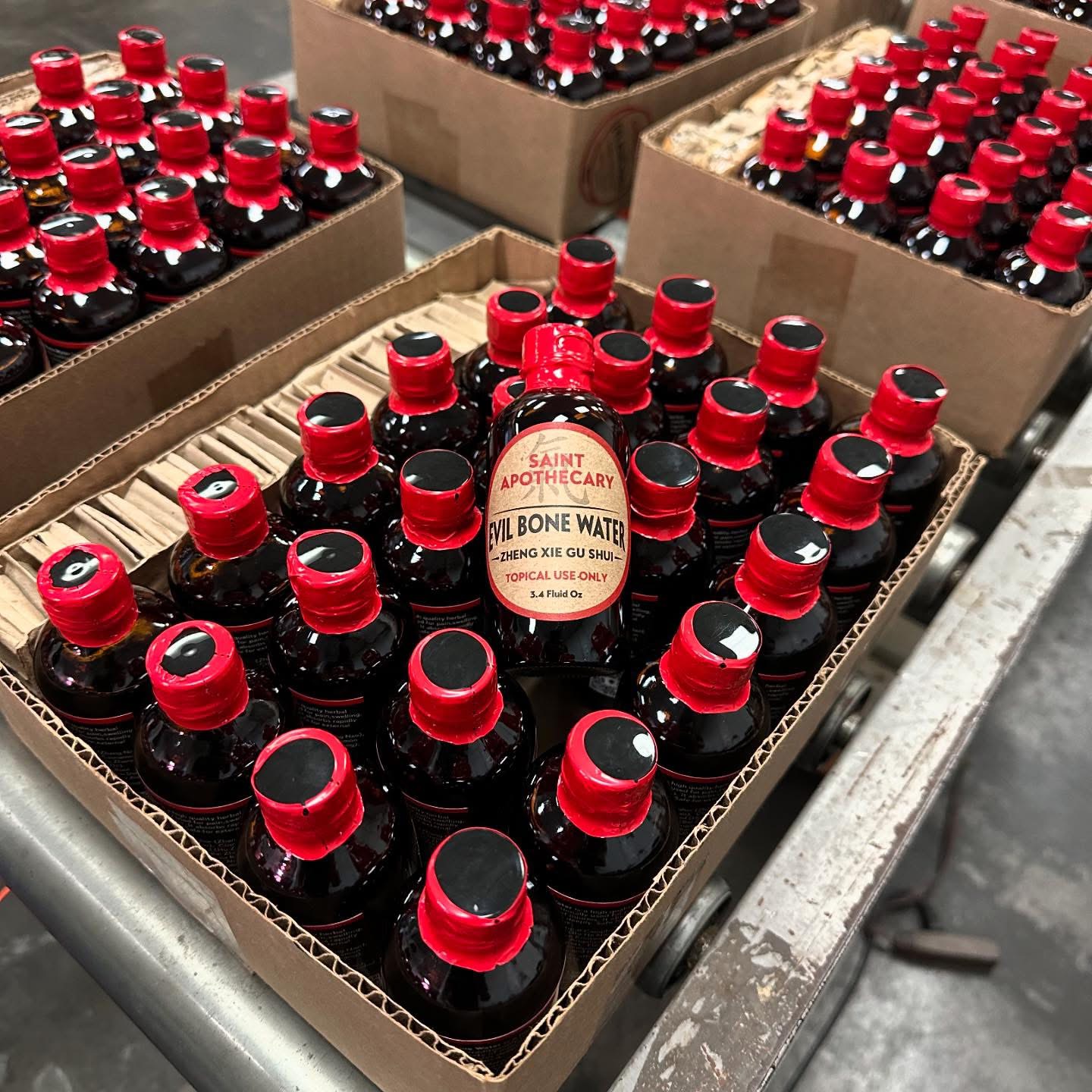
Handcrafted Bottling
Each batch is handcrafted in an approved facility. The amber glass Boston Round protects the formula from UV degradation. Bottles are filled above the labeled 3.4 fl oz — you always get a full bottle.
How to Use Zheng Gu Shui Spray
Spray Method — Direct Application
Apply Evil Bone Water directly to the affected area up to 4 times daily. Spray or pour onto a cotton ball and rub in fully. Allow the formula to dry naturally — removing it too early stops it from working. Best absorbed into warm skin after a shower or light massage.
Compress Method — Deep-Penetrating Wrap
Saturate a cotton ball or gauze pad with Evil Bone Water. Apply to the area and wrap lightly for 30–90 minutes. Especially effective for tendon injuries, fractures, and stubborn chronic pain. Do not use plastic wrap — let the formula breathe.
Layering Method — Combined Protocol
Apply Evil Bone Water first — its alcohol base opens the skin barrier. Then layer an oil or salve over the top. This dramatically increases absorption of the second product. Foundation of our Pain Power Combo and Trifecta protocols.
Soak Method — Hand & Foot Soak
Add Evil Bone Water to a basin of warm water. Soak hands or feet for targeted relief of arthritis, carpal tunnel, and neuropathy. Warm water increases blood flow, allowing the formula to penetrate more deeply.
Safety Notes:
Do not apply to open wounds or broken skin — Evil Bone Water is alcohol-based and will sting. Do not ingest. Keep away from eyes and mouth. Camphor crosses the placental barrier — consult a practitioner before use during pregnancy. In children with a history of febrile convulsions, use with caution.
Ready to Heal?
Get the Best Zheng Gu Shui Available Today
These statements have not been evaluated by the Food and Drug Administration.
This product is not intended to diagnose, treat, cure, or prevent any disease
Zheng Gu Shui & Evil Bone Water FAQ
What is the difference between Zheng Gu Shui and Zheng Xie Gu Shui?
Is Evil Bone Water better than regular Zheng Gu Shui?
Does Evil Bone Water come as a spray?
Can I buy Zheng Gu Shui / Evil Bone Water on Amazon?
How often should I apply Zheng Gu Shui / Evil Bone Water?
Is Zheng Gu Shui / Evil Bone Water safe?
Will Evil Bone Water stain my clothes?
INGREDIENTS
Imperial-Grade Herbs in Zheng Xie Gu Shui
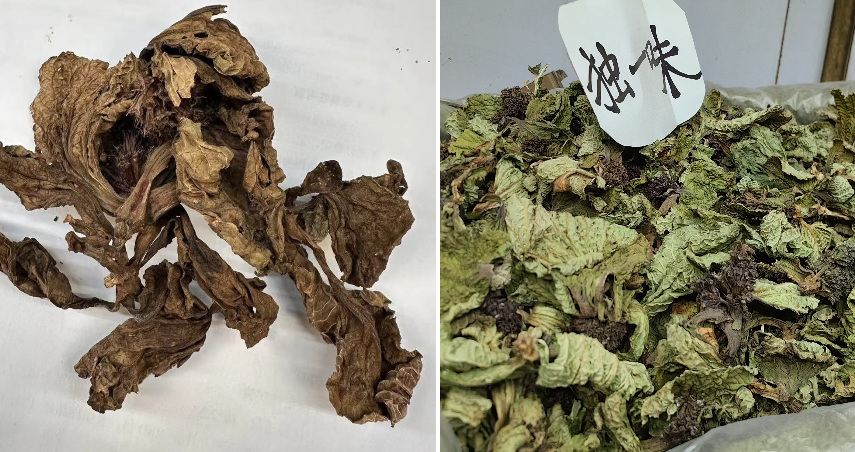
Zhang Nao · Natural Camphor (Cinnamomum camphora)
Increases local circulation and relieves pain. Natural camphor from 50-year-old camphor laurel trees in Southeast Asia — more than twice as safe as the synthetic version used by competitors.
Bo He Nao · Natural Menthol (Mentha haplocalyx)
Aromatic cooling agent that clears heat and vents inflammation. Natural peppermint-derived menthol — not synthesized — for a cleaner cooling sensation.
San Qi · Notoginseng (Panax notoginseng)
Stops bleeding without clotting. Reduces swelling, bruising, and inflammation. A rare herb requiring special extraction, with unmatched circulatory benefits.
Gui Pi · Cinnamon Bark (Cinnamomum cassia)
Releases muscles, promotes circulation, warms cold channels. Sourced from trees 20–30 years old. Pre-soaked in Everclear to preserve volatile oils that would otherwise escape during decoction.
Ji Gu Xiang - Japanese Knot Weed
This potent ingredient is incredibly rare and difficult to source, even in its native country of China. Ji Gu Xiang is effective in treating bruises, sprains, and inflammation. It also helps to alleviate pain.
E Zhu · Zedoary Rhizome (Rhizoma Curcumae)
Promotes blood circulation and breaks accumulations. Contains curdione, a bioactive compound with demonstrated anti-platelet aggregation and antithrombotic activity.
Bai Zhi · Angelica Root (Angelica dahurica)
Deeply aromatic — gives Evil Bone Water its distinctive warm, maple-like scent. Anti-inflammatory, analgesic, antiviral, and antimicrobial properties.
Qian Jin Ba · Flemingia Root (Flemingia philippinensis)
Strengthens tendons and bones. Acrid and warming — removes cold and dampness underlying arthritis, bone pain, and sciatica. Wildcrafted for maximum potency.
Hu Zhang · Knotweed Root (Reynoutria japonica)
Invigorates blood and disperses stasis. Clears heat and discharges toxins. Rich in resveratrol, polysaccharides, and flavonoids for inflammation control.
Recent Posts
Evil Bone Water Wholesale for Massage Therapists | Buy Evil Bone Water in Bulk
Discover how Evil Bone Water (Zheng Xie Gu Shui) is made using a precise double extraction
How To Get Rid of Hot Tub Rash Naturally
Learn how to get rid of hot tub rash naturally. Learn about Folliculitis, recognize hot tub
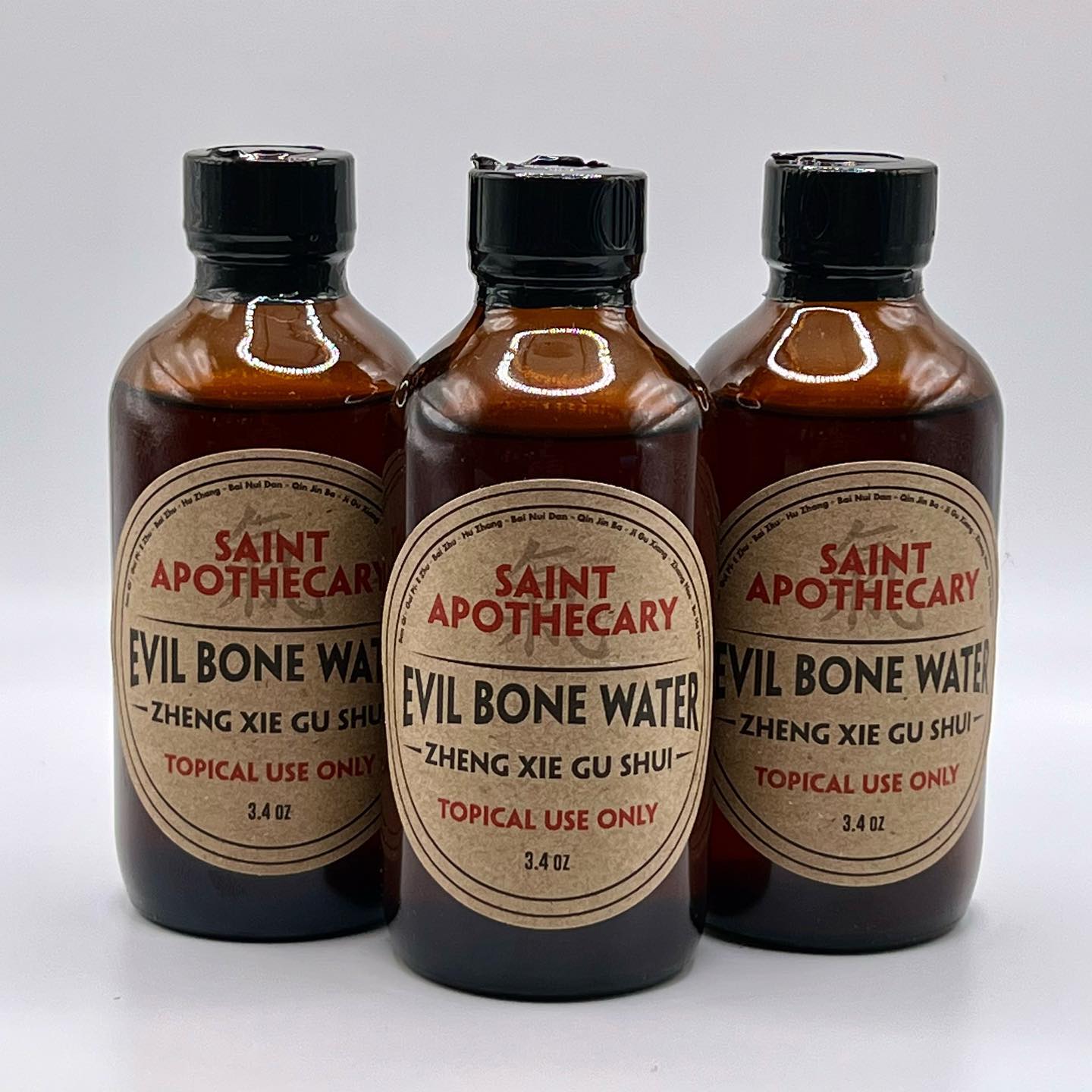
What Is Evil Bone Water Good For?
What is Evil Bone Water good for besides pain? In this article, I share how I