
Willard Sheppy is a licensed acupuncturist (LAc) and Founder of Valley Health Clinic specializing in using Traditional Chinese Medicine to treat acute injuries and chronic conditions, and to improve sports performance and rehabilitation.


A few months ago, a patient came into my clinic that I’ll call Sarah. She was in her mid-forties and had been dealing with chronic bloating, irregular digestion, and a persistent heaviness after meals that no one had been able to fully explain. We started working on her gut health, and within a few weeks she came back to her appointment and said something that caught me off guard.
“My dentist told me my gums look better.”
She hadn’t changed her brushing routine. She hadn’t started flossing more. What had changed was her gut — and that seemingly unrelated shift had shown up in her mouth.
This is the kind of connection that Chinese medicine has understood for a long time, and that modern research is only beginning to catch up to. Your mouth and your stomach are not separate systems. They are two ends of the same tube, and what happens in one affects the other in ways most people never think about.
The human microbiome the trillions of bacteria that live in and on your body does not stop at your stomach. It starts in your mouth. In fact, the oral cavity harbors over 700 species of bacteria, making it one of the most complex microbial environments in the body.
Here is where it gets important: the bacteria in your mouth travel. Every time you swallow, oral bacteria make their way into your digestive tract. When the balance of those bacteria is off — what researchers call dysbiosis those imbalanced microbes can colonize the gut lining, disrupt digestion, and drive systemic inflammation. Studies have linked oral bacteria like Porphyromonas gingivalis (the main driver of gum disease) to inflammatory conditions throughout the body, including the gut.
The reverse is equally true. When the gut microbiome is damaged or out of balance, the body’s immune regulation suffers. This shows up as increased inflammation in the gums and oral tissues. Poor gut health is also linked to slower tissue repair, which is exactly what your gums need to stay healthy.
Put simply: an unhealthy gut makes it harder to keep a healthy mouth, and an unhealthy mouth makes it harder to maintain a healthy gut.
When the gut lining is compromised, what is commonly called “leaky gut,” undigested food particles and bacterial byproducts enter the bloodstream. This triggers a chronic, low-grade inflammatory response throughout the body. The gums, which are richly supplied with blood vessels, are one of the first places that inflammation shows up. Redness, bleeding, and recession are all inflammatory responses.
A disrupted gut has a harder time absorbing the vitamins and minerals needed for strong teeth and healthy oral tissues. Vitamin D, calcium, magnesium, and vitamin K2 are all critical for tooth remineralization and bone density in the jaw, and they all depend on a healthy gut to be properly absorbed.
About 70% of your immune system lives in your gut. When the gut microbiome is out of balance, immune signaling throughout the body becomes dysregulated. This makes it harder for your body to defend against the bacterial biofilm that causes gum disease.
Poor gut motility can lead to reflux, which allows stomach acid to enter the mouth. Over time, this erodes enamel, and enamel does not grow back.
Periodontal disease, a chronic infection and inflammation of the gum tissue, produces a steady stream of inflammatory cytokines and pathogenic bacteria that enter the bloodstream every time you chew. These bacteria have been found in the gut, the liver, and even the plaques in cardiovascular disease.
Research from the Journal of Oral Microbiology has shown that periodontal pathogens can disrupt the gut microbiome by outcompeting beneficial bacteria and promoting pro-inflammatory microbial shifts. One study found that people with gum disease had measurably different gut microbial profiles than those with healthy gums even after controlling for other factors.
This creates a cycle: gut dysbiosis worsens gum disease, and gum disease worsens gut dysbiosis. You cannot fully fix one without addressing the other.
In Chinese medicine, we have a simple and powerful diagnostic tool that most Western practitioners never use: the tongue.
When I assess a new patient, the tongue coat, the layer of coating on the tongue’s surface, tells me a tremendous amount about the state of their digestive system. A healthy tongue has a thin, white, moist coat. This reflects a balanced gut microbiome and proper digestive function.
A thick, greasy, or yellow coat tells a different story. It often indicates what we call “dampness” in Chinese medicine: a buildup of metabolic byproducts, poor gut motility, digestive tract inflammation, or a microbiome out of balance. The thickness and color of that coat correlate directly with how the gut is functioning.
When Sarah first came in, she had a notably thick tongue coat. It was one of the first things I documented. As we worked on her digestion over the following weeks, that coating began to thin. And her gums began to improve.
This is not a coincidence. The tongue coat is a window into the gut, and the gums are another expression of the same underlying health.
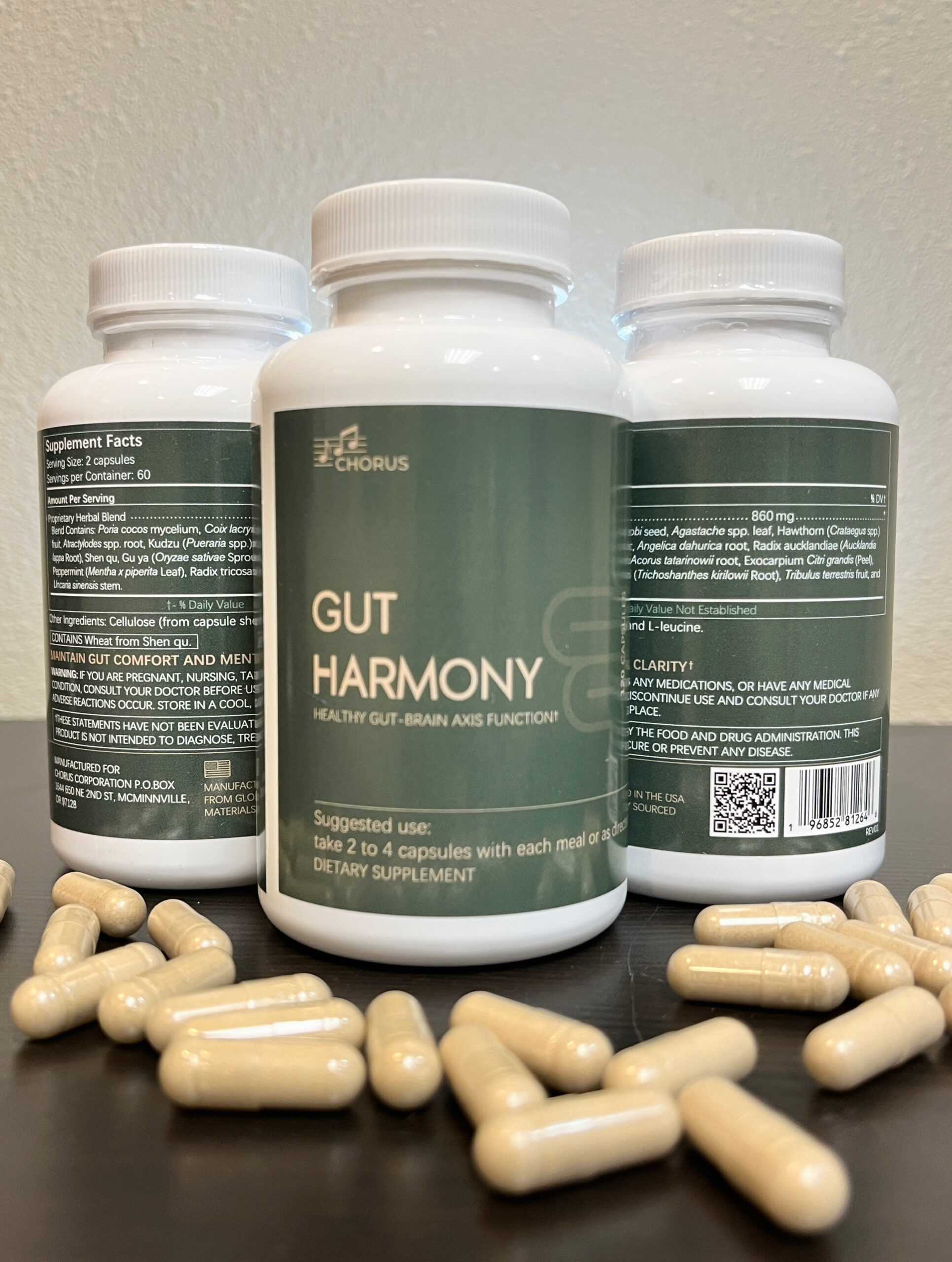
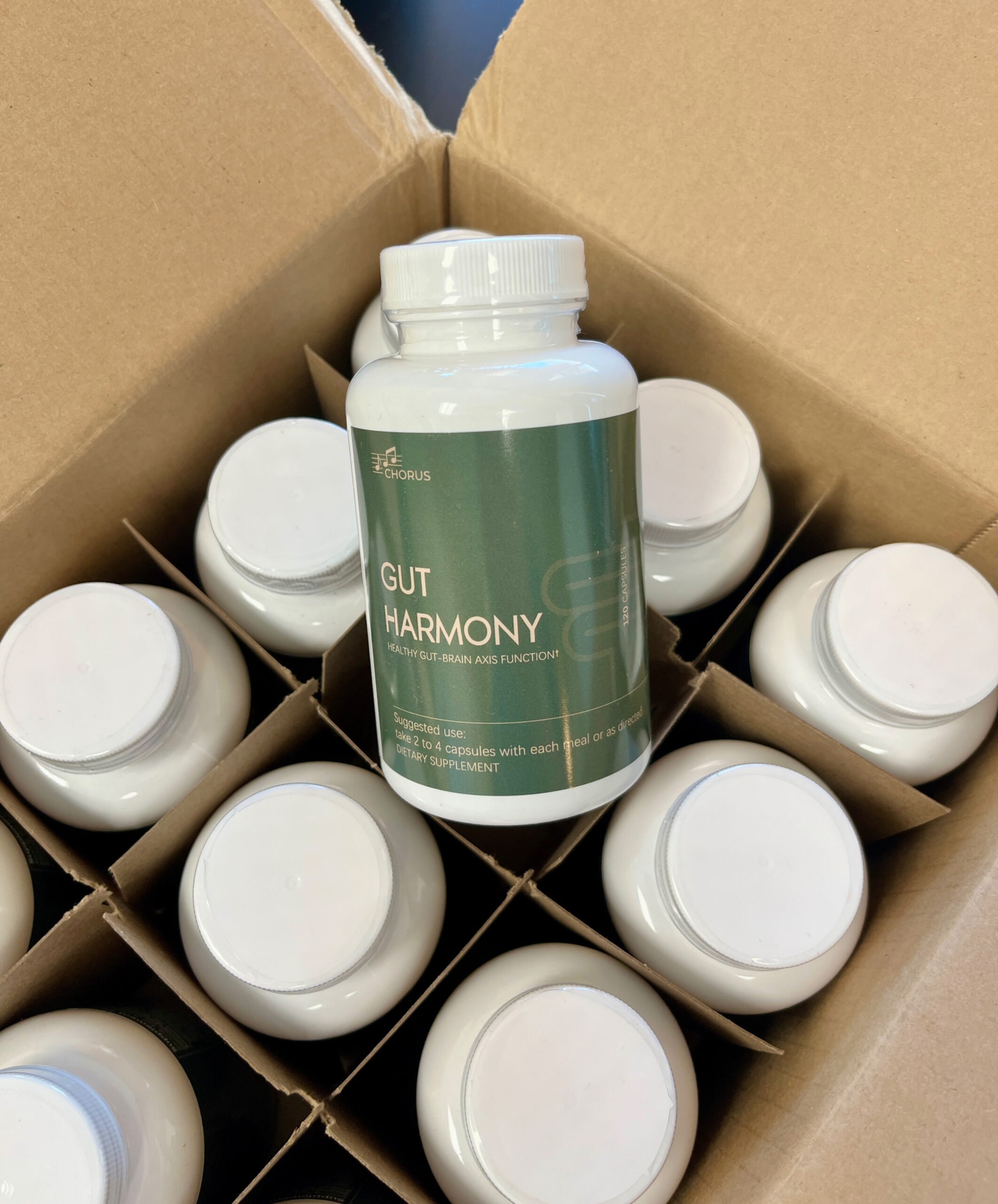
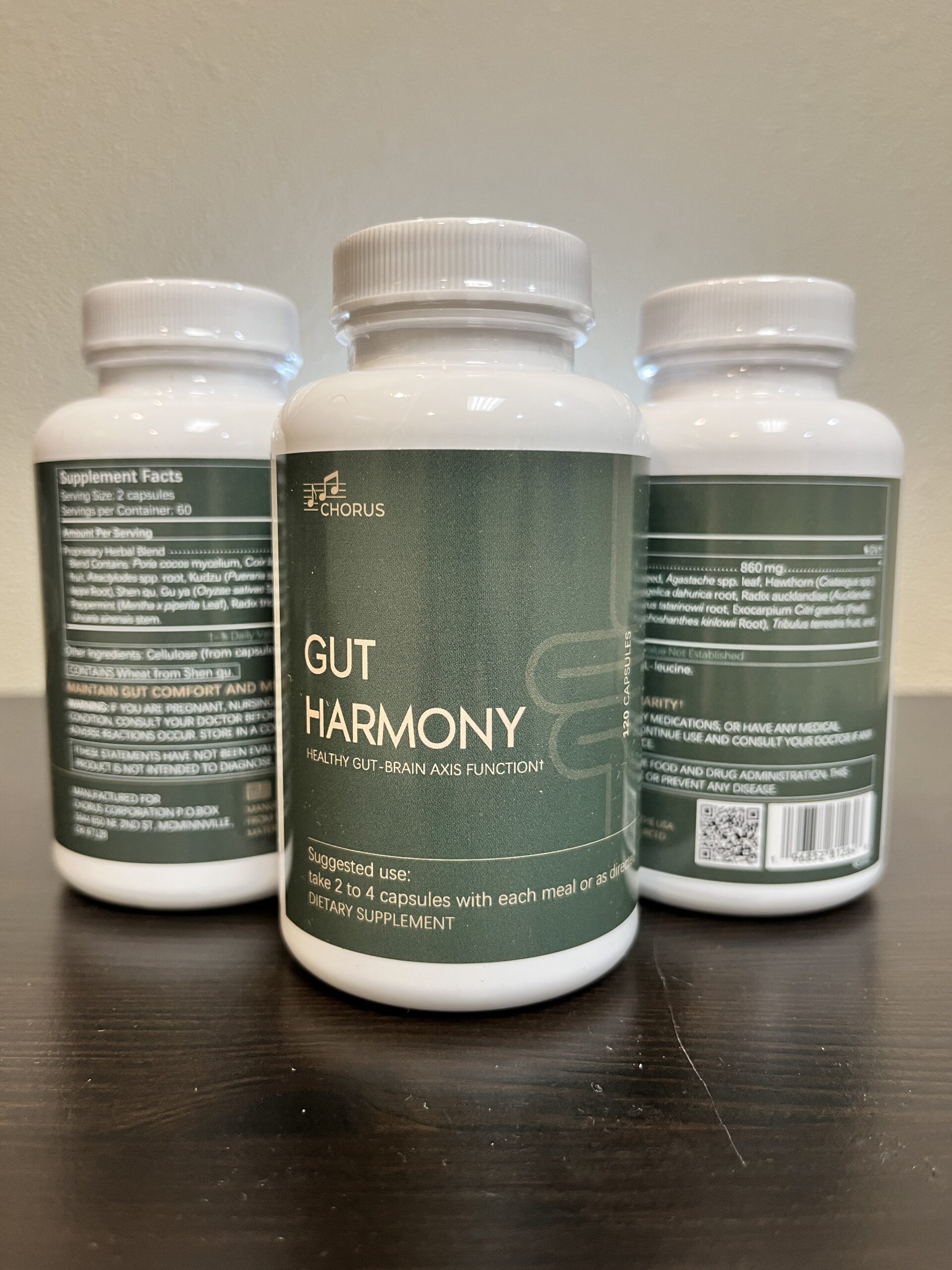
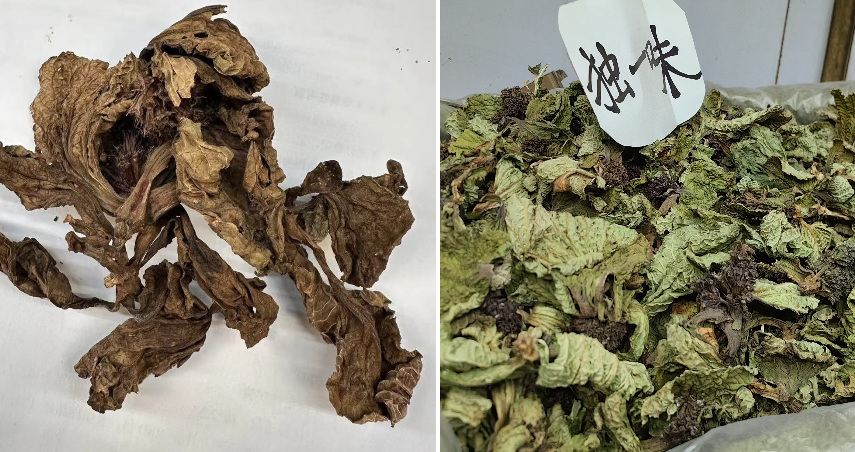
After evaluating Sarah’s tongue coat, her digestion, and her symptoms, I recommended we start with Gut Harmony, a 16-herb formula designed to reduce bloating, improve gut motility, and restore microbiome balance.

What I appreciate about Gut Harmony is that it does not just mask symptoms the way antacids or even probiotics often do.
Within about three weeks, Sarah’s tongue coat had thinned noticeably. Her bloating was much improved. Her energy was better. And her dentist — who had no idea she was working on her gut health — commented that her gum tissue looked healthier and less inflamed.
Your mouth and your gut are in constant communication. The bacteria you harbor in your gums can affect your intestinal microbiome, and the health of your gut microbiome directly influences the strength of your immune response in your oral tissues. A thick tongue coat, gum inflammation, and chronic bloating are often three expressions of the same underlying imbalance..
When Sarah’s digestion improved, her gums followed. That is not magic, it is the body working as an integrated system, the way Chinese medicine has always understood it to work.
If you are dealing with digestive issues and oral health concerns and have not seen a connection between the two, I would encourage you to look at both together. Start with your tongue. Start with your gut. The results may surprise you.
Try Gut Harmony and let your gut rebalance itself.