I didn’t want to sell Mild soap.
That’s the honest truth. When I started Valley Health Marketplace, I was focused on topical Chinese medicine — liniments, salves, herbal oils for pain. Soap felt like a completely different category, and I wasn’t interested in adding it just to have more stuff on the shelf.
Then my daughters started telling me their skin itched and turned red after every shower.
And it wasn’t like we were using cheap, dollar-store soap. We had decent products. But decent wasn’t cutting it. And that moment forced me to think about something I say to patients all the time when it comes to pain management:
What you do most of the time is more important than what you do some of the time.
I say that about exercise, diet, topical medicine. But I had never applied it to skin care. Soap is something most of us use every single day. If you’re trying to heal your skin — eczema, dryness, irritation, nerve sensitivity — and your daily cleanser is quietly making things worse, you’re fighting yourself twice a day, every day.
That realization sent me looking for a truly mild soap. And that search led me to Mike Arsenault and Emily Skin Soothers.
Before I get into the specific products I now carry, I want to explain what mild soap actually means — not from a marketing perspective, but from a skin science perspective.
Your skin has an outer layer called the stratum corneum — think of it as a brick wall made of lipids and proteins. Its job is to hold moisture in and keep irritants and pathogens out. When this barrier is healthy, your skin feels soft, resilient, and calm. When it’s compromised — which is the baseline for people with eczema, psoriasis, rosacea, or chronically dry skin — your skin becomes reactive, itchy, and hard to heal.
A truly mild soap is one that cleans without stripping that barrier. Research published in the International Journal of Cosmetic Science confirms that traditional soaps can significantly disrupt the skin barrier, raise skin pH, and leave residue that continues to irritate after rinsing — especially in people with already-compromised skin. Milder cleansing formulations (sometimes called syndets, or carefully formulated natural soaps) are consistently preferred for reactive or damaged skin.
The problem is that most commercial soaps — even ones labeled “sensitive” or “gentle” — still contain ingredients that undermine barrier health:
if your skin flares up every time you shower, your cleanser is probably part of the problem. Changing to a genuinely mild soap can be one of the highest-impact, most repeatable changes you make for your skin — precisely because you do it every single day.
Mike Arsenault didn’t set out to sell soap either. He developed Emily Skin Soothers because his own daughters had eczema and nothing on the market worked well enough. Sound familiar?
What I noticed immediately when I received my first order was the smell. It didn’t smell like soap. It didn’t smell like fragrance. It smelled fresh — like quality raw ingredients. That might sound like a small thing, but when you work with herbal products daily, you know the difference between a product that smells like its ingredients and one that smells like what someone sprayed on top of the ingredients. This was the former.
Mike also has an extraordinary track record. His reviews speak for themselves — people healing skin conditions all across the country. And as someone who uses Chinese herbal medicine in my clinic every day, I can see exactly why his formulas work. He’s pulling from the same tradition I practice, applying herbs that have thousands of years of use for reactive, inflamed skin.
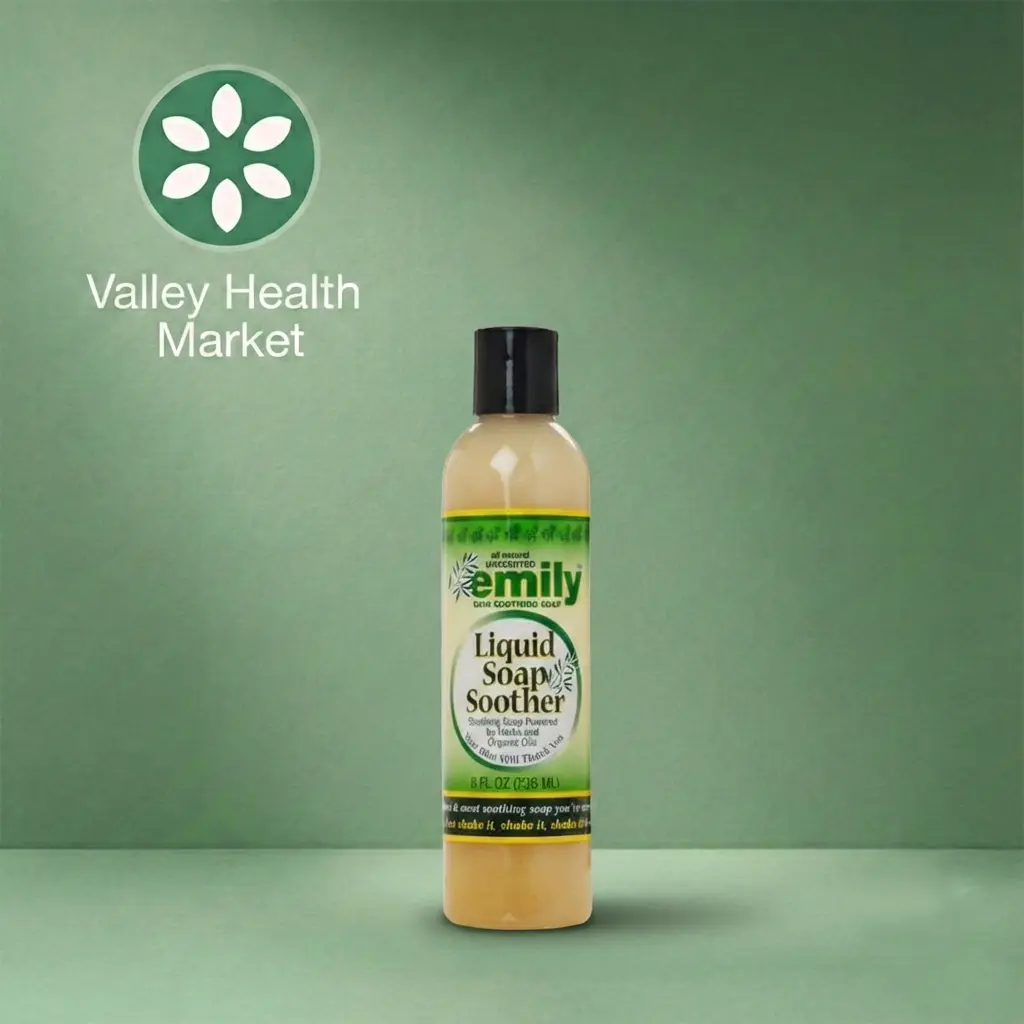
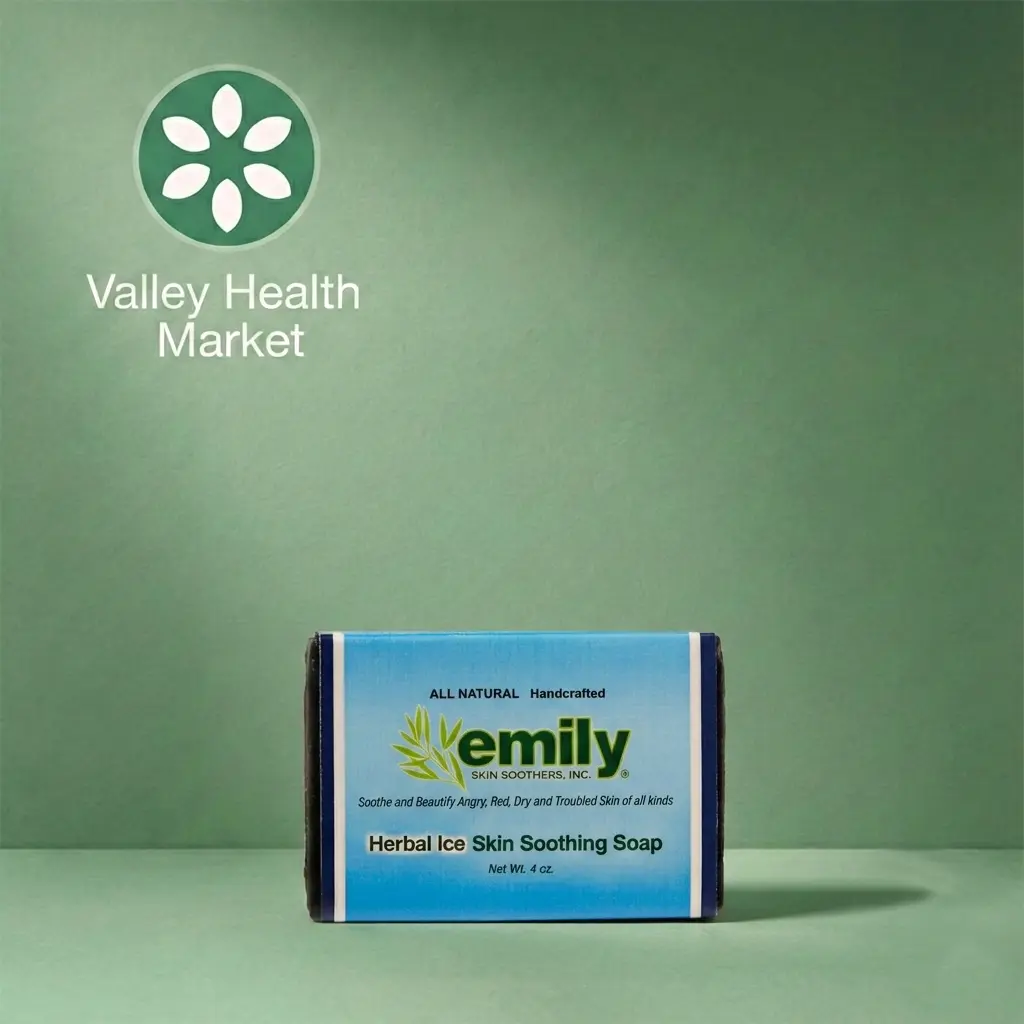
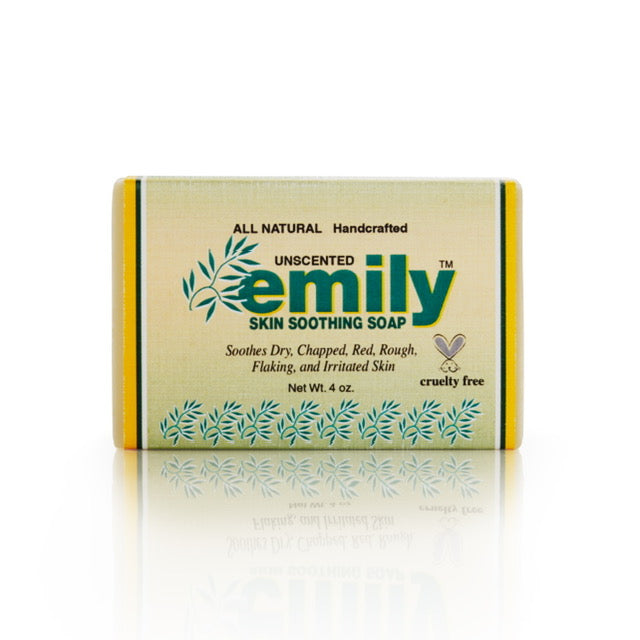
I now carry two of his products: the Mild Bar Soap and the Mild Liquid Soap Soother. Let me walk you through both.
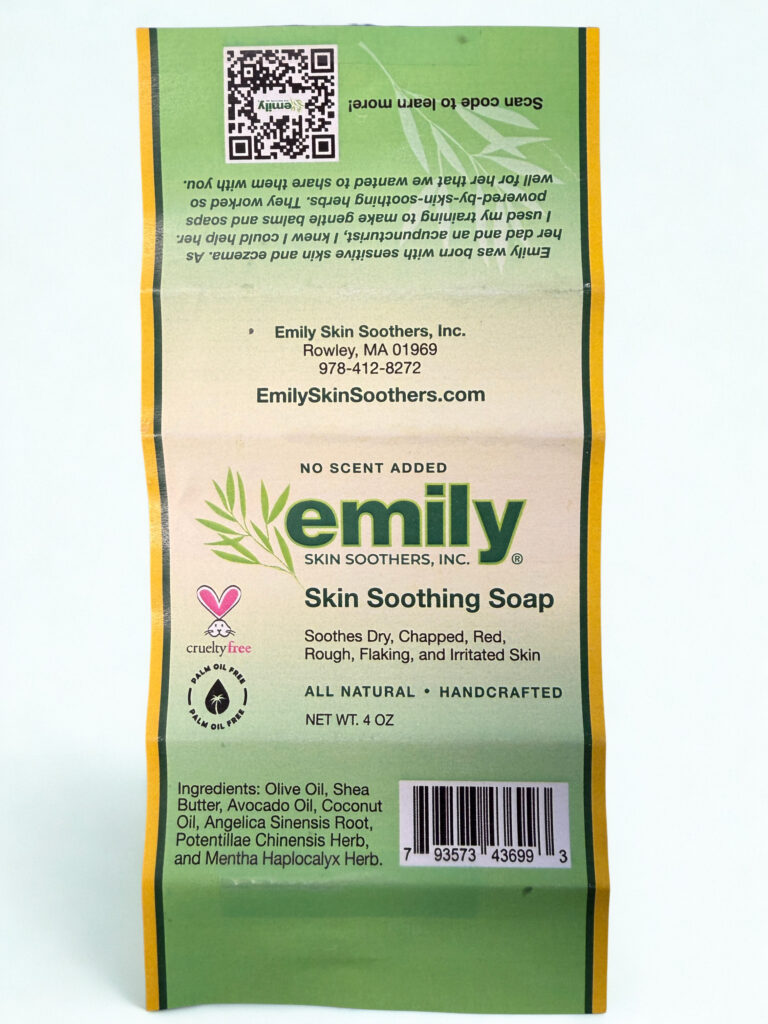
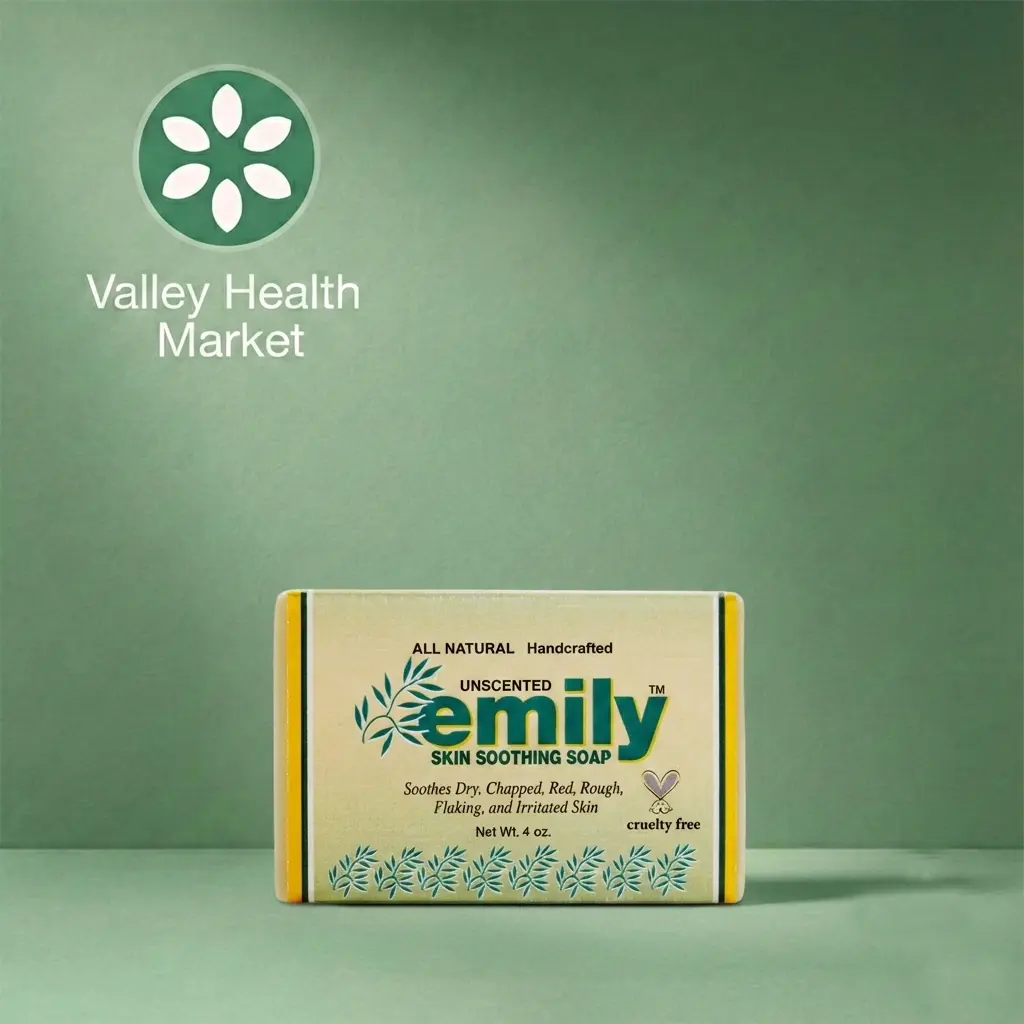
Size: 4 oz | Skin Type: Sensitive, dry, reactive | Palm Oil Free
This is the bar I reach for when people ask me about a mild soap for eczema or a mild soap for sensitive skin. It’s formulated around a simple principle: what you leave out matters as much as what you put in.
No added fragrances. No added colors. No unnecessary fillers. No palm oil.
The palm oil decision is worth mentioning. About 85% of global palm oil comes from Indonesia and Malaysia, where production is linked to deforestation, habitat destruction, and the endangerment of orangutans and Sumatran tigers. Mike made the decision to go completely palm oil-free — not because it changes outcomes for most skin types, but because of where he stands ethically. I respect that. So do my customers.
The cleansing base is saponified olive, avocado, and coconut oils, plus shea butter. It’s a simple formula designed to clean without stripping. You’ll notice a gentle, natural scent — that’s coming from the raw ingredients, not from anything added.
The bar is also powered by three traditional Chinese herbs — the same trio used in Emily’s Baby and Adult Skin Soother salves:The cleansing base is saponified olive, avocado, and coconut oils, plus shea butter. It’s a simple formula designed to clean without stripping. You’ll notice a gentle, natural scent — that’s coming from the raw ingredients, not from anything added.
Mike told me directly: “Bei Zi Cao is rarely used and is great to clear toxic heat and especially alleviate itch — which is a real issue in eczema.” When a maker knows their herbs at that level of specificity, you’re not dealing with someone who just threw popular ingredients into a bottle. You’re dealing with a craftsperson.
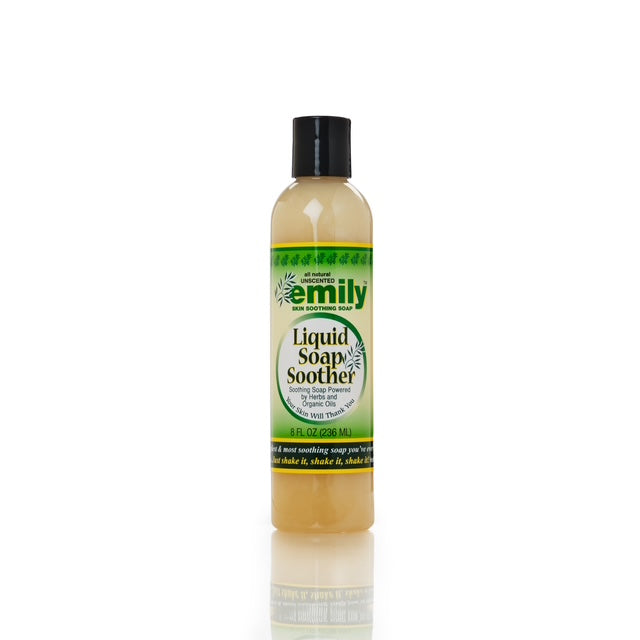
Size: 8 fl oz | Certified Organic | Head-to-Toe Free of: Parabens · SLS · Fragrances · Added Colors
If the bar soap is for your morning routine, the liquid soap is your everything-wash. It’s certified organic, head-to-toe safe, and built around a feature you almost never see in liquid cleansers: it’s super-fatted.
In traditional soap making, super-fatting means adding extra oils back into the finished product — oils that don’t saponify (convert to soap) but instead remain in the formula as free emollients. The result is a wash that leaves your skin feeling moisturized and silky instead of tight and dry.
You’ll notice that over time, the oils may settle to the bottom of the bottle. This is not a defect. It’s the mechanism. Shake before use.
The base is saponified organic coconut, olive, and jojoba oils, plus organic aloe vera — a genuinely moisturizing foundation. No SLS. No parabens. No added fragrance or color. For people with reactive or eczema-prone skin, removing those ingredients from a daily wash is a significant shift.
The liquid also contains four skin herbs (a different blend from the bar, intentionally, so you have options if you have sensitivities to specific botanicals):
Changing your cleanser is step one. How you wash matters just as much.
One of the reasons I finally decided to carry soap was this: I was seeing patients use our herbal salves and get great results, then unknowingly undo a lot of that work by washing with a harsh cleanser the next morning.
Think of it as protecting your investment. Every time you use a great salve and then follow it with a stripping, SLS-loaded body wash, you’re starting over. Emily Skin Soothers’ mild soaps are designed specifically to complement and enhance the effects of topical medicine.
I mentioned this above, but I want to be specific, because I think it matters that this approach is backed by science, not just tradition:
Removing those triggers from your daily routine, and replacing them with a genuinely mild, barrier-aware soap, is one of the most practical and impactful steps you can take.
A mild cleanser for sensitive skin that actually respects your skin barrier. This palm oil-free bar is formulated to be noticeably less drying than standard soaps, with a simple base of saponified olive, avocado, and coconut oils plus rich shea butter. It was designed to pair perfectly with our salves, so your skin feels clean without feeling “stripped.”