Not all vertigo is the same. The duration of an attack, what sets it off, and whether your hearing changes are the clues that tell these conditions apart — and point toward the right treatment.
The fastest way to tell vertigo conditions apart is by three things — how long an attack lasts, what triggers it, and whether your hearing changes. BPPV lasts seconds and is triggered by head position, with no hearing change. Meniere’s lasts 20 minutes to hours and brings hearing loss, ringing, and ear fullness. Vestibular neuritis and labyrinthitis last days; neuritis spares hearing while labyrinthitis doesn’t. Vestibular migraine varies and carries migraine features like light, sound, and visual-motion sensitivity — often without a headache.
In years of clinical practice, I’ve watched the same scene play out again and again. A patient comes in carrying a diagnosis — usually Meniere’s disease — that they were handed after a single appointment, and when I ask them to describe what actually happens, the story doesn’t fit the label. They describe quick spins that last seconds, not the long, arduous attacks of true Meniere’s. Or they describe daily floating with no hearing change at all. The word “vertigo” had become a destination instead of a starting point.
This matters more than it might seem. Benign paroxysmal positional vertigo, Meniere’s disease, vestibular neuritis, labyrinthitis, and vestibular migraine all produce spinning, nausea, and the loss of footing. But underneath, they are entirely different problems — a loose crystal in a canal is not a fluid-pressure disorder, and neither is an inflamed nerve or a migraine brain. Treating all of them as “vertigo” is like treating every fever as the flu. The good news is that you don’t need a laboratory to start sorting them. You need to understand the ear, and you need three questions.
Before we sort the conditions, it helps to know that the ear has three parts, and each one produces a different flavor of symptom. Where the problem sits largely determines what you experience.
The outer ear is the canal you can see — swimmer’s-ear and childhood-ear-infection territory. On its own it’s essentially just a tube and doesn’t affect balance. But here’s a subtlety most textbooks skip: people with chronic vertigo often have tenderness on the outer ear on the affected side. It isn’t causing the spinning, but it’s a clue — and calming the pain around the ear is often an easy early win.
The middle ear sits behind the eardrum — the small bones and the Eustachian tube that pressurizes everything. When it inflames, you get fullness, congestion, and a muffled, pressurized feeling that affects hearing. Because the sinuses and throat connect directly into this space through the Eustachian tube, congestion and allergy reach the ear from here — which is why so much of vertigo care runs through the sinuses and the gut.
The inner ear sits deep in the skull and is where true vertigo lives. It has two parts that explain why symptoms split apart the way they do. The cochlea handles hearing; the labyrinth — the fluid-filled semicircular canals — handles motion and balance. They’re connected, but they can fail separately. That’s why you can lose hearing with intact balance, or have crystals tumbling in the canals causing dizziness with no hearing change at all. When you understand that the cochlea governs hearing and the labyrinth governs motion, the whole list of vertigo conditions starts to organize itself by which structure is involved.
With that anatomy in mind, nearly every vestibular condition narrows down by answering three things honestly:
Seconds point to a loose crystal. Twenty minutes to hours points to fluid pressure. Days of constant spinning point to an inflamed nerve.
Rolling over in bed or tipping your head back is the signature of a crystal. Spontaneous, out-of-nowhere attacks point elsewhere.
Ringing, muffling, or fullness during an attack implicates the cochlea — and strongly suggests Meniere’s over a purely mechanical problem.
BPPV is the most common cause of vertigo, and it is purely mechanical — a labyrinth problem, not a fluid or hearing problem. Tiny calcium crystals called otoconia, which normally sit in the gravity-sensing organs, break loose and tumble into one of the semicircular canals. When you move your head into a certain position, those misplaced crystals drag the canal fluid the wrong way, and your ear fires off a brief, intense signal that you’re spinning when you’re not.
Duration: very short, typically 30 to 60 seconds.
Trigger: position changes — rolling over in bed, looking up, bending down.
Hearing: unchanged. No ringing, no fullness. The direction the world spins even tells a trained eye which canal the crystal landed in — a diagonal, upward-beating pattern is the fingerprint of the posterior canal, where BPPV usually lives.
Duration is the cleanest dividing line (StatPearls, 2024)
BPPV episodes endure roughly 30 to 60 seconds, while Meniere’s attacks may last hours, vestibular neuritis or labyrinthitis can run for several days, and central causes may be constant. Episode length alone separates most cases.
Because the problem is a misplaced crystal, the fix is mechanical too. A trained provider can perform a repositioning maneuver — the Epley is the best known — that walks the crystal back where it belongs. If your spins last seconds and fire when you roll over, this is the first thing to rule in or out, because it’s the most directly treatable of the group.
Meniere’s is the one most people have heard of, and the one most often misapplied. Its hallmark is endolymphatic hydrops — a buildup of fluid pressure inside the membranous labyrinth. But here’s the nuance I want you to hold: that fluid buildup shows up on imaging in ears that have no symptoms at all. So hydrops is a fingerprint of the condition, not a complete explanation. Meniere’s is better understood as a final common pathway that several different triggers can lead to — and because it involves both the labyrinth and the cochlea, it hits balance and hearing together.
Duration: the defining feature — 20 minutes to several hours, never just seconds.
Trigger: usually spontaneous, though stress, salt, and pressure changes raise the odds.
Hearing: the giveaway. True Meniere’s brings a fluctuating low-frequency hearing loss, tinnitus, and a distinctive fullness or pressure in the affected ear — the cochlea announcing itself alongside the labyrinth.
The formal diagnostic criteria (Bárány Society)
Definite Meniere’s requires two or more spontaneous vertigo episodes each lasting 20 minutes to 12 hours, audiometrically documented low-to-mid frequency sensorineural hearing loss in the affected ear, and fluctuating aural symptoms — hearing, tinnitus, or fullness — in that same ear. Many people carry an MD diagnosis without ever meeting these criteria.
If you’ve been told you have Meniere’s but you’ve never had true room-spinning lasting longer than 20 minutes, or your hearing has never changed during an episode, it’s worth revisiting the diagnosis. The treatment paths diverge sharply, and being on the wrong one costs you time.
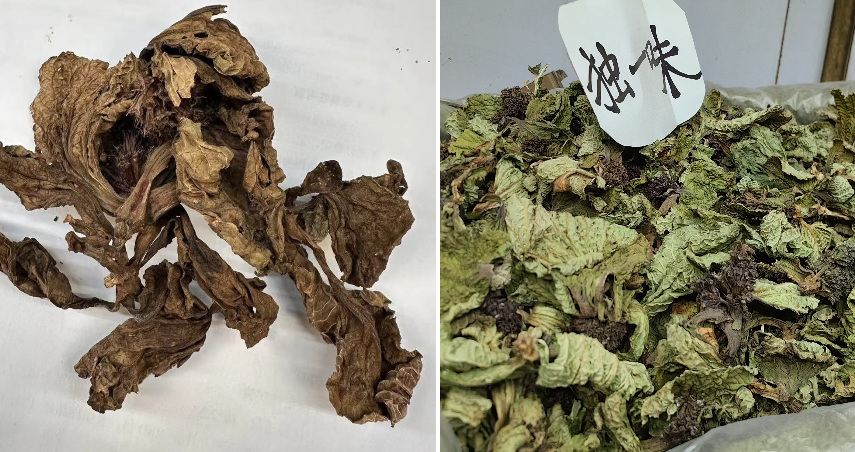
Bai Zhu Balance — our flagship formula for the Meniere’s pattern
For the classic Meniere’s picture — damp, heat, and stagnation together, with that top-heavy fullness and fluid congestion — Bai Zhu Balance is the formula I reach for first. It’s built to resolve dampness, dissolve phlegm, and settle the rising, stress-driven pattern that sits underneath so many attacks, working from the inside the way breathing and foot soaks work from the outside.
These two are usually viral, and they’re where understanding the inner ear’s two structures pays off directly. Both involve inflammation deep in the inner ear, often following an upper respiratory infection — because the structures sit so deep, these tend to be viral rather than bacterial. The difference between them comes down to a single question: is hearing involved?
Vestibular neuritis is inflammation of the vestibular nerve — the balance nerve — alone. The labyrinth’s motion side is inflamed, so you get severe, continuous vertigo, but the cochlea is untouched, so hearing is spared. Pure spinning, no hearing change.
Labyrinthitis is inflammation of the whole labyrinth — motion side and cochlea together. So you get the same severe vertigo plus hearing loss and tinnitus. When hearing drops alongside the spinning in an acute viral attack, you’re looking at labyrinthitis rather than neuritis.
Duration: the longest of the group — severe, continuous vertigo lasting days, not minutes.
Trigger: a single acute onset, often after a virus, rather than recurring episodes.
Intensity is the tell — this is not a quick spin, it’s an overwhelming, sustained sense of motion that leaves people unable to stand.
The acute phase is brutal but usually self-limiting. What lingers afterward — and what so often gets missed — is the unsteadiness left behind once the nerve calms down. That residual imbalance is a separate problem from the original storm, and it responds to a completely different, slower approach focused on retraining balance.
Vestibular migraine is where the dizziness originates in the brain’s processing rather than the ear’s hardware — and it behaves like a migraine, because it is one. It is the great imitator, able to mimic almost any of the others, which is exactly why it gets missed. The key to recognizing it is to look for the fingerprints of migraine itself.
Crucially, you do not need a headache to have it. Many people with vestibular migraine have little or no head pain. Instead, look for the other classic migraine features traveling with the dizziness:
Sensitivity to light, sound, and especially visual motion — grocery-store aisles, scrolling screens, busy patterns, and fluorescent or flickering light become genuinely intolerable. This visual-motion sensitivity is a migraine hallmark.
The same provocations that drive headache migraines — sleep disruption, skipped meals, certain foods, hormonal shifts, stress let-down — set off the dizziness.
This is one of the strongest clues; vestibular migraine rarely appears in someone with no migraine background.
Visual aura, nausea, and the build-and-fade arc of a migraine episode — minutes to days — rather than the fixed duration of Meniere’s or BPPV.
Hearing is usually spared, though some people report fullness, which is part of why it gets confused with Meniere’s. The two overlap and can even coexist — and when they travel together, treating the migraine pattern often quiets the vertigo as well.
Here is the same information side by side — the quickest way to locate where your own pattern fits.
Here is the thread that runs through all of these. The ear is the hardware, but the terrain it sits in is the body. A loose crystal is mechanical and gets a mechanical fix. But the recurring, fluctuating conditions — Meniere’s and vestibular migraine especially — are aggravated by the same systemic forces: stress and an overactive sympathetic nervous system, inflammation from allergy or autoimmunity, fluid and dietary patterns, and the state of the neck. We can’t see inside the inner ear in real time, but we can read the rest of the body, and it’s a reasonable bet that what’s happening across the whole system reflects what’s happening in that tiny ear.
This is why the same diagnosis behaves so differently from person to person, and why naming the condition correctly is only the first step. Once you know which problem you’re working with, the real question becomes: what in your terrain keeps tipping it over? That’s the question we spend our time on — restoring the conditions where balance can hold, rather than only chasing the spin after it arrives.
Name it correctly, then treat the terrain
The right diagnosis points you toward the right care. Inside Gut Brain Synchrony, you can work directly with Will Sheppy, L.Ac. — learning the full vertigo map, sorting your own pattern, and building a plan for the terrain underneath your symptoms.
Palmeri R, Kumar A. Benign Paroxysmal Positional Vertigo. StatPearls, NCBI Bookshelf, 2024. NBK470308
Lopez-Escamez JA, et al. (2015). Diagnostic criteria for Meniere’s disease. Journal of Vestibular Research, 25(1), 1–7. doi:10.3233/VES-150549
Muelleman T, et al. (2017). Dizziness: Approach to Evaluation and Management. American Family Physician, 95(3), 154–162.
Watanabe Y, et al. (2022). Relationship Between the Onset of Meniere’s Disease and Sympathetic Hyperactivity. Frontiers in Neurology, 13, 804777. doi:10.3389/fneur.2022.804777