Meniere’s may be unpredictable, but it is rarely random. The triggers that tip you over depend on your own terrain — and once you learn to read yours, the attacks stop feeling like ambushes.
The most common Meniere’s triggers are stress, salt and fluid shifts, barometric-pressure and seasonal changes, poor sleep, and inflammation from allergies or autoimmunity. But which triggers set off your attacks depends on your individual terrain — stress-driven vertigo tends to feel like a panic attack, a damp and congested pattern responds most to fluid and diet, and a hot, inflamed pattern flares with allergies and weather. Finding your pattern is how you prevent flares.
The cruelest part of Meniere’s disease isn’t the spinning. It’s the unpredictability — the sense that an attack can drop out of a clear sky and steal your afternoon, your drive home, your evening. But here is the single most powerful shift I can offer you: unpredictable is not the same as random.
If the inner ear were simply broken, you would have no good days. But Meniere’s has good days and bad days — and the difference between them is rarely luck. It’s terrain. When your body is calm, rested, and in balance, the ear holds steady. When the terrain gets loaded — by stress, by salt, by a poor night’s sleep, by a front rolling in — the threshold drops and the ear tips over. Triggers are the levers that load the terrain.
Here is the idea that changes everything about managing this condition: not everyone’s triggers are the same, because not everyone’s terrain is the same. Two people can both have Meniere’s and be set off by completely different things — because underneath, their bodies are running different patterns. In Chinese medicine we read those patterns by how they feel and behave, and each one has its own signature trigger.
Broadly, three constitutional pictures show up again and again, and each is loaded by a different lever:
Most people are a blend, with one dominant. The goal isn’t to fear every item on a generic trigger list — it’s to figure out which lever loads your terrain fastest, and pull that one first. Here’s how the three patterns line up:
If I had to name one trigger above all others, it’s stress — and the research now backs what patients have reported for decades. Just before an attack, the sympathetic nervous system on the affected side becomes strongly overactivated. That’s why, for this pattern, the vertigo so often feels like a panic attack — the racing heart, the sweating, the surge of dread arriving right alongside the spinning. The stress response and the ear are wired together. If your attacks come on during high-pressure stretches, big emotions, or the moment you finally stop and crash after pushing too hard, this is very likely your dominant pattern.
Stress nearly triples attack odds (longitudinal study, 2017)
A large longitudinal study tracking over 1,000 people through a daily app found the odds of a Meniere’s attack were nearly three times higher on days with unusual or stressful events, with risk rising for each increase in reported stress — detectable both 24 hours before and after.
If your dizziness carries that panicky, adrenaline-flooded quality and tracks with stress, the lever to pull first is the nervous system — not the salt shaker.
The goal is to bring the nervous system out of sympathetic overdrive. Slow nasal breathing with a long exhale — in for four, out for eight, humming on the way out — is free and you can do it right now. Warm foot soaks pull that top-heavy, rising energy back down. Gentle, daily, consistent practice beats any heroic one-off: what you do most of the time matters more than what you do some of the time.
Because Meniere’s involves fluid pressure in the inner ear, sodium is the classic dietary lever — too much salt encourages fluid retention. But here’s the nuance: dietary change helps some people far more than others, and the people it helps most are the ones running a damp, congested pattern. This is the person who feels heavy, foggy, and thick-headed, with a lot of phlegm, a drippy or stuffy nose, and that waterlogged fullness in the ear. The classic tongue sign is a swollen body with teeth-marks scalloped along the edges — the body telling you it’s holding too much fluid.
Why Meniere’s responds to almost anything — and what that means
Meniere’s shows a striking 60–80% response rate to almost any intervention, partly reflecting its naturally fluctuating, remitting course. This is exactly why chasing single fixes is unreliable — and why matching the intervention to your actual pattern, then tracking your good-days-to-bad-days ratio over time, is the more honest measure of progress.
If you’re damp and congested — heavy, phlegmy, foggy, with ear fullness — fluid and diet are your fastest levers. This is the pattern where cutting the phlegm-forming foods pays off most.
watch sodium, and cut the foods that generate phlegm and congestion — dairy, heavy greasy foods, anything that makes you clear your throat or reach for a tissue. If it congests your sinuses, it’s likely congesting your ear, since the two connect directly through the Eustachian tube. Lean toward gently cooling foods — the green things that grow above the ground. Celery is a quiet favorite: cooling, a natural mild diuretic, high in fiber. Keep it sustainable, not punishing.
Bai Zhu Balance — built for the damp Meniere’s pattern
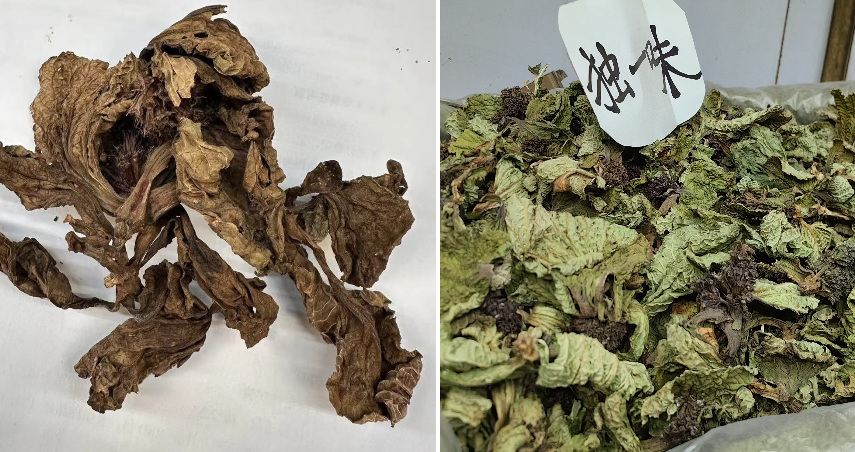
For the damp, congested picture especially — the fullness, the phlegm, the foggy heaviness — Bai Zhu Balance is the formula I reach for first. It’s built to resolve dampness, dissolve phlegm, and drain the excess fluid that loads this terrain, while settling the rising, stress-driven pattern underneath. It works from the inside the way breathing and foot soaks work from the outside.
If you’ve ever felt an attack coming on as a storm front rolls in, or noticed you flare every spring, you’re reading a real pattern. The inner ear is pressure-sensitive, and changes in barometric pressure, temperature, and humidity are well-documented aggravators — and they hit one constitution hardest: the hot, inflamed pattern. This is the person who runs warm and reactive, whose symptoms worsen in heat and in allergy season, often with sinus inflammation feeding the ear. Allergic and barometric triggers tend to cluster in this heat-and-inflammation terrain.
Low pressure and higher temperature correlate with attacks
Research has found Meniere’s attack onset significantly correlated with lower atmospheric pressure and higher temperature — with one analysis placing attack risk roughly 1.3 times higher when atmospheric pressure drops below 1013 hectopascal. The seasonal pattern of more attacks in warmer months fits the same heat-driven picture.
If you flare in the heat, in spring, or when the barometer drops — and you tend to run warm and reactive — allergies and weather are your levers, and cooling and calming inflammation is the work.
You can’t change the weather, but you can use the forecast as an early-warning system. When a pressure drop or heat wave is coming, that’s the day to be extra consistent with your calming routine, manage allergies actively if the sinuses feed your ear, and lean harder on the cooling tools. Anticipation turns a trigger you can’t control into one you can prepare for.
Two more forces cut across all three patterns and lower everyone’s threshold. The first is fatigue and poor sleep: overwork and broken sleep keep the nervous system revved and the reserves depleted, and a bad night makes you more vulnerable to every other trigger on this list. The second is the inflammatory load itself — allergic or autoimmune. Meniere’s frequently travels with inflammatory and autoimmune conditions, and calming that load downstream often quiets the ear.
The autonomic fingerprint of Meniere’s (Frontiers, 2022)
In 211 patients with Meniere’s, researchers documented a cluster of stress-linked comorbidities: neck and shoulder stiffness (96%), cold extremities (87%), irritable bowel syndrome (73%), tension headache (69%), and migraine (58%). They concluded that just before an attack, the sympathetic nervous system on the affected side is strongly overactivated — tying stress, the gut, and the ear into one connected system.
Protect sleep the way you’d protect medication — same wind-down, same hours. And treat the terrain upstream: the gut-brain axis touches allergy, autoimmunity, and the nervous system all at once, which is why so much of lasting flare prevention runs through digestion and the microbiome
Notice what every one of these triggers has in common: none of them is the ear itself. They’re all forces in the wider body that load the terrain the ear sits in. And which lever loads your terrain fastest depends on which pattern you’re running — panicky and stressed, damp and congested, or hot and inflamed.
So the work isn’t to memorize a generic list and live in fear of all of it. The work is to find yours. Keep a simple log for a few weeks — note each attack alongside your stress, sleep, diet, and the weather — and your pattern will surface fast. Then you pull that lever first. This is why two people with the same diagnosis need different plans, and why reading your terrain is the whole game.
Read your terrain with someone who does this every day
Inside Gut Brain Synchrony, you can work directly with Will Sheppy, L.Ac. — identifying your pattern, mapping your personal triggers, and building a plan that fits the terrain you actually have, not a generic one.
Schmidt W, et al. (2017). Stress and Unusual Events Exacerbate Symptoms in Meniere’s Disease: A Longitudinal Study. Otology & Neurotology, 38(10), 1532–1539. PMID: 29065087
Watanabe Y, et al. (2022). Relationship Between the Onset of Meniere’s Disease and Sympathetic Hyperactivity. Frontiers in Neurology, 13, 804777. doi:10.3389/fneur.2022.804777
Mohseni-Dargah M, et al. (2023). Meniere’s disease: Pathogenesis, treatments, and emerging approaches. Environmental Research, 238, 116972. doi:10.1016/j.envres.2023.116972
Atmospheric pressure and temperature correlation with Meniere attack. Auris Nasus Larynx, 2022. doi:10.1016/j.anl.2022.07.007